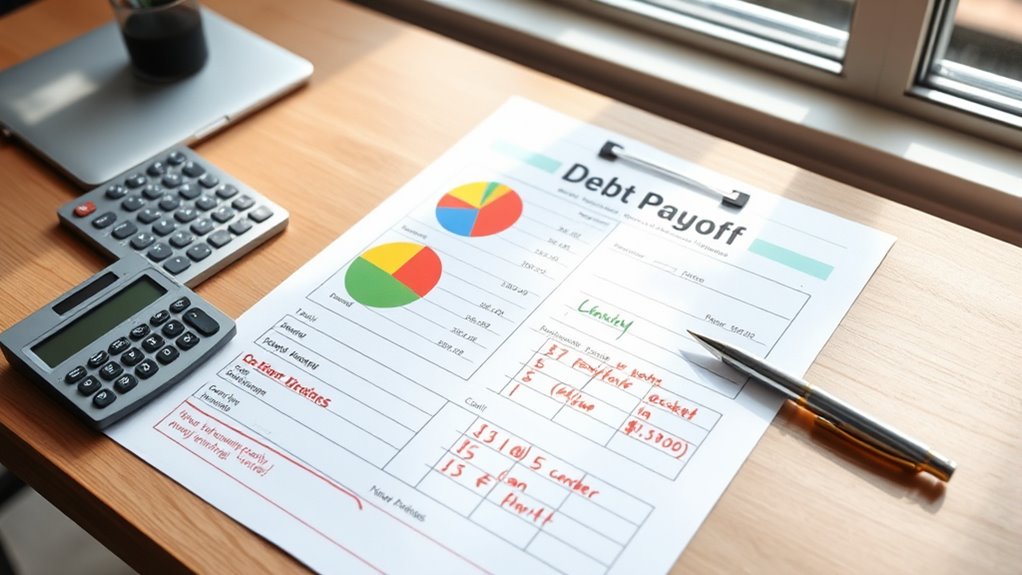

A debt payoff worksheet is a crucial tool for newly single individuals to gain control over their finances. It helps you see your total debt, set clear repayment goals, and track your progress over time. By organizing your payments and expenses, you can stay motivated and avoid feeling overwhelmed. Staying proactive with your debt management boosts confidence and financial independence. Keep going, and you’ll discover how to make your debt repayment plan even more effective.
Key Takeaways
- A debt payoff worksheet helps newly single individuals visualize and track their debt reduction progress effectively.
- It aids in setting clear, achievable repayment goals with deadlines tailored to their financial situation.
- The worksheet supports budget planning by identifying available funds for debt payments and expense management.
- It encourages proactive credit management, including monitoring due dates, balances, and prioritizing high-interest debts.
- Using the worksheet regularly boosts confidence, accountability, and strategic decision-making during the debt repayment journey.

Are you tired of feeling overwhelmed by your debt? Taking control starts with a clear plan, and a debt payoff worksheet can be your best tool to achieve that. When you’re newly single, managing finances becomes even more essential. Your first step is to focus on budget planning, which involves understanding exactly where your money goes each month. By tracking your income and expenses, you can identify areas where you might cut back, freeing up more funds to pay down debt. Budget planning isn’t about restricting yourself; it’s about making intentional choices to prioritize debt repayment. Once you’ve set a realistic budget, you’ll have a clearer picture of how much money you can allocate toward paying off your debts each month. This clarity helps prevent missed payments and reduces financial stress.
Credit management also plays a key role in your debt payoff journey. As a newly single individual, you might have more control over your credit, but it’s essential to stay disciplined. Avoid taking on new debt while you’re trying to pay off existing balances. Keep track of your credit card due dates, balances, and interest rates. Using a debt payoff worksheet allows you to see the bigger picture—how much debt you have, what the interest costs are, and which debts to target first. Prioritizing high-interest debts can save you money in the long run, and a worksheet makes it easier to visualize your progress. Regularly updating your worksheet keeps you accountable and motivated.
A debt payoff worksheet isn’t just a static document; it’s a dynamic tool that helps you stay organized. It allows you to set specific goals, like paying off a certain debt by a particular date, and then track your progress toward those goals. With your budget planning in place, you’ll know exactly how much extra money you can put toward debt repayment each month. This proactive approach helps you avoid feeling overwhelmed by debt because you’re taking deliberate steps. As you see your debts decrease, your confidence will grow, reinforcing your commitment to financial independence.

Debt Payoff Planner: Monthly Debt Budget Workbook with Snowball and Avalanche Method Worksheets Bill Payment Checklist Extra Payment Log Savings Goal 170 Pages, 8.5×11 Large Print, Undated
As an affiliate, we earn on qualifying purchases.
As an affiliate, we earn on qualifying purchases.
Frequently Asked Questions
How Often Should I Update My Debt Payoff Worksheet?
You should update your debt payoff worksheet at least monthly to stay on top of your financial planning. Regular updates help you track progress, adjust payments, and stay motivated. During tough times, seek emotional support from friends or support groups to keep focused. Consistent updates build confidence and clarity, making your journey toward debt freedom more manageable and less stressful. Staying proactive guarantees you remain aligned with your financial goals.
Can I Include Joint Debts in My Personal Worksheet?
Yes, you can include joint debts in your personal worksheet, but consider joint account management and how you’re tracking these debts. Make certain to monitor your credit report regularly to stay aware of any changes and guarantee accurate updates. Including joint debts helps you see your complete financial picture, but stay vigilant about your responsibilities. This way, you can plan your payoff strategy effectively and monitor progress closely.
What Tools Are Best for Tracking Debt Progress?
In the days of dial-up, tracking debt progress might’ve been old school, but now, digital tools reign supreme. You should use budgeting apps or spreadsheets that let you set goals and monitor debt payoff, especially if you’re considering debt consolidation. These tools help you stay organized, adjust your plan, and see your progress in real-time. Keep your focus, and you’ll be debt-free faster than you can say “retro.”
How Do I Prioritize Debts for Repayment?
You should prioritize debts with the highest interest rates first, known as the avalanche method, to save money. Consider debt consolidation to combine multiple debts into one lower-interest payment. Credit counseling can also help you develop a manageable repayment plan and negotiate better terms. Focus on paying off high-interest debts first, then tackle smaller or lower-interest debts to steadily reduce your overall debt.
What Should I Do if I Miss a Payment?
A stitch in time saves nine, so if you miss a payment, act quickly. Contact your lender to explain the situation and explore options like a payment plan. Stay calm and practice emotional resilience; setbacks happen. Consider seeking financial counseling for guidance and support. By addressing the missed payment promptly, you help protect your credit and keep your debt payoff journey on track.
Conclusion
Using this debt payoff worksheet is like having a map for your financial journey. It helps you stay focused and motivated as you work toward becoming debt-free. Remember, every small payment is a step closer to your goal—like turning a tiny spark into a blazing fire. Stay committed, celebrate your progress, and trust the process. Before you know it, you’ll be standing tall, free from debt, ready to embrace your new financial chapter with confidence.