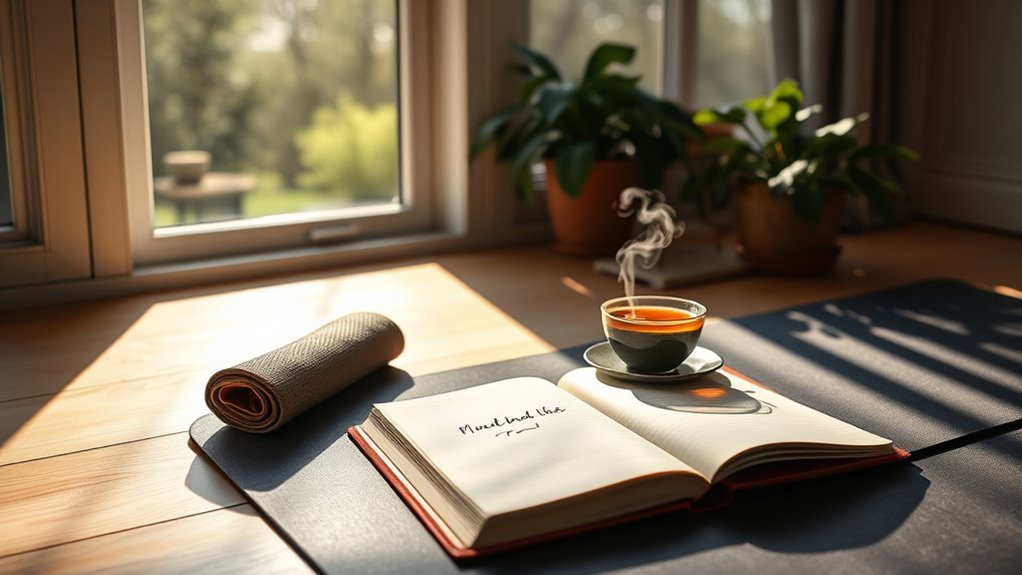

Creating healthy routines for emotional stability involves establishing consistent habits that promote mindfulness and good sleep. Start small by dedicating a few minutes daily to mindfulness practices like breathing exercises or meditation, and gradually adjust your sleep schedule to maintain regular sleep and wake times. These routines help you feel more in control and resilient during stressful times. Keep in mind that integrating these habits might take time, but continuing your efforts will deepen your emotional balance and well-being.
Key Takeaways
- Establish consistent daily routines that incorporate mindfulness practices to promote emotional regulation.
- Prioritize sleep hygiene by maintaining regular sleep schedules and creating a calming bedtime environment.
- Start small with manageable habits, gradually increasing routine complexity to build lasting emotional resilience.
- Use mindfulness techniques like breath focus or guided meditation to stay present and reduce stress.
- Focus on progress over perfection, integrating routines into daily life for sustained emotional stability.

Establishing healthy routines is essential for maintaining emotional stability, especially during stressful or uncertain times. When your days feel unpredictable, creating consistent habits helps ground you, providing a sense of control and predictability. One of the most effective ways to foster this stability is by incorporating mindfulness practices into your daily schedule. Mindfulness encourages you to stay present, observe your thoughts without judgment, and reduce feelings of anxiety or overwhelm. You might start with just a few minutes each morning, focusing on your breath or engaging in a guided meditation. Over time, these practices become a reliable anchor, helping you manage emotional ups and downs more effectively. Developing a routine around mindfulness also signals your brain that it’s time to pause, reset, and regain clarity, which can be particularly helpful during stressful periods. Additionally, adopting evidence‑based strategies can enhance your ability to sustain these routines and reinforce emotional resilience.
Equally important is prioritizing sleep hygiene. Good sleep habits are the foundation of emotional resilience, yet many overlook their significance. To improve your sleep hygiene, set a consistent bedtime and wake-up time, even on weekends. This helps regulate your internal clock and enhances sleep quality. Avoid screens at least an hour before bed, as the blue light emitted can interfere with melatonin production, making it harder to fall asleep. Instead, opt for relaxing activities such as reading, gentle stretching, or listening to calming music. Creating a sleep-friendly environment also matters—keep your bedroom cool, dark, and quiet. When you’re well-rested, your mood stabilizes, your stress response becomes more balanced, and you’re better equipped to handle life’s challenges.
Incorporating these routines doesn’t mean overhauling your entire day overnight. Start small—perhaps by dedicating five minutes to mindfulness in the morning and making minor adjustments to your sleep schedule. Consistency is key; even minor daily efforts compound over time, strengthening your emotional resilience. When you stick to these routines, you create a reliable framework that supports mental clarity and emotional health. Remember, establishing healthy routines isn’t about perfection; it’s about progress. Over time, these habits become second nature, empowering you to face stress with greater ease and maintain a more balanced emotional state. By making mindful practices and sleep hygiene integral parts of your daily life, you set yourself up for lasting emotional stability, even amidst chaos or uncertainty.

Breathing Lamp Guided Visual Meditation Tool for Mindfulness,Anxiety Relief&Calm Your Mind for Stress&Visual Relaxation and Restful Sleep,478 Seconds Breathing Rate Change 3 Colors,Gift for Kids
Breathing Lamp Function: A mindful breathing lamp is a powerful and effective tool that can help you reduce…
As an affiliate, we earn on qualifying purchases.
As an affiliate, we earn on qualifying purchases.
Frequently Asked Questions
How Long Does It Take to See Emotional Stability Improvements?
You might start noticing emotional stability improvements within a few weeks, but timing expectations can vary. Consistent routines often lead to gradual progress measurement over one to three months. Stay patient and track small wins, like better mood or reduced stress. Remember, everyone’s different, so focus on your journey rather than exact timelines. With persistence, you’ll see positive changes that build over time, fostering lasting emotional resilience.
Can Routines Be Adjusted During Stressful Periods?
Absolutely, you can tweak your routines during stressful times without losing progress. Think of adaptive habits as your emotional safety net, allowing you to maintain balance even when life throws chaos your way. Incorporating routine flexibility helps you respond to stress effectively, preventing setbacks. You might adjust your sleep schedule or incorporate calming activities, knowing that these small shifts support your long-term emotional stability while keeping your routine resilient and adaptable.
Are There Routines Suitable for Severe Emotional Distress?
Yes, during severe emotional distress, routines like mindfulness practices and journaling techniques are especially helpful. You should focus on simple, calming activities that ground you, such as deep breathing or mindful meditation. Journaling allows you to process your feelings and gain clarity. Stick to these routines daily, even if they’re brief, to foster stability and emotional resilience. These practices support your mental health when you need it most.
How Do Routines Impact Mental Health Medication Effectiveness?
You might notice that routine consistency and medication adherence often go hand in hand, unexpectedly improving your mental health. When you stick to a daily schedule, it helps your medication work more effectively, reducing fluctuations and side effects. Coincidentally, maintaining these routines boosts your overall emotional stability, making it easier to manage your condition. By prioritizing consistency, you guarantee your medication’s benefits are maximized and your mental health improves steadily.
What Are Quick Daily Exercises for Emotional Balance?
You can boost emotional balance with quick daily exercises like mindfulness meditation and gratitude journaling. Spend five minutes each morning focusing on your breath to practice mindfulness, helping you stay present and reduce stress. Then, write down three things you’re grateful for, which shifts your focus to positivity. These simple exercises can improve your mood, increase resilience, and promote emotional stability throughout your day.

MZOO Luxury Sleep Eye Mask for Side Sleeper Men Women, Zero Eye Pressure 3D Sleeping Mask, Light Blocking Patented Design Night Blindfold, Soft Eye Shade Cover for Travel, Black
Zero Eye Pressure: The Deepest 13mm arc-shaped widened eye cups provide makeup-safe space and allow natural blinking
As an affiliate, we earn on qualifying purchases.
As an affiliate, we earn on qualifying purchases.
Conclusion
By establishing healthy routines, you build a steady rhythm that supports your emotional well-being. Consistency in activities like exercise, mindfulness, and sleep creates a sense of stability, helping you handle life’s ups and downs more effectively. Remember, small daily habits lay the foundation for lasting emotional resilience. Embrace these routines, and over time, you’ll notice a calmer, more balanced you. Keep moving forward—your emotional health depends on it.

Syrinx Guided Meditation Light – Meditation Aid with Rhythmic Glow for Focus, Mindfulness Tool for Calm Down Corner, Quiet Rooms, Home or Office Use
WHAT IS IT — The Syrinx Meditation Breath Light is a rechargeable guided breathing tool that helps you…
As an affiliate, we earn on qualifying purchases.
As an affiliate, we earn on qualifying purchases.

Zen Sleep Essential Oil Roll-On 10 ml – Calming Blend for Serenity & Deep Sleep with Lavender, Rosemary – Easy-to-Use Roller Ball – Nexon Botanics
Essential Oil Sleep Blend: Experience the harmony of our proprietary blend of essential oils in a convenient roll-on…
As an affiliate, we earn on qualifying purchases.
As an affiliate, we earn on qualifying purchases.