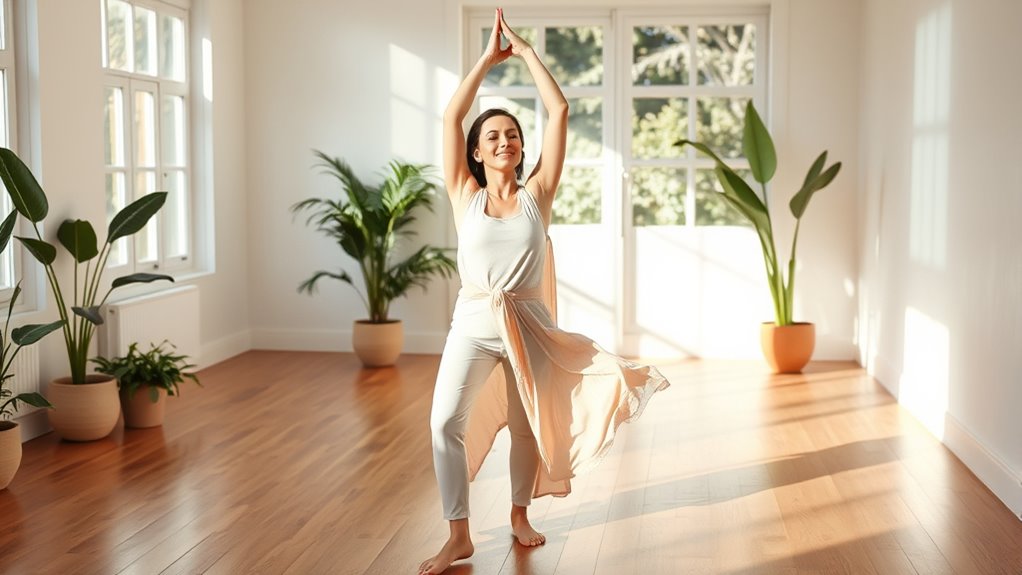

To find emotional balance through yoga and movement, focus on integrating mindful breath with your physical practice. Gentle movements combined with slow, intentional breathing help you stay present, reduce stress, and ease emotional tension. Over time, this routine builds self-awareness and resilience, allowing you to respond thoughtfully rather than react impulsively. Consistently practicing these techniques can boost your mood and calm your mind—discover more ways to cultivate harmony between body and emotions as you continue on this journey.
Key Takeaways
- Incorporate mindful breathing exercises during yoga to activate relaxation and reduce emotional stress.
- Use movement practices to release tension and foster emotional release and clarity.
- Develop a regular routine that combines breath awareness with physical activity for sustained emotional resilience.
- Focus on present-moment awareness in movement to enhance self-awareness and emotional regulation.
- Integrate breath and movement to cultivate calm, balance, and a deeper connection between body and mind.
Achieving emotional balance is essential for living a fulfilling life, yet it often feels elusive amid daily stresses and challenges. One effective way to regain your footing is through mindful breathing. When you focus on your breath, you anchor yourself in the present moment, which helps reduce feelings of overwhelm. By taking slow, deliberate breaths—inhale deeply through your nose, hold for a moment, then exhale slowly—you activate your body’s relaxation response. This simple practice can be done anywhere, anytime, and it consistently offers quick stress relief. As you become more aware of your breathing patterns, you’ll notice your mind settling, anxiety diminishing, and emotional clarity emerging. Mindful breathing isn’t just about calming your nerves; it’s a powerful tool to reconnect with your inner self and cultivate a sense of calm amidst chaos.
Mindful breathing anchors you in the present, reducing overwhelm and fostering emotional clarity anytime, anywhere.
Incorporating mindful breathing into your daily routine can profoundly improve your emotional resilience. Whether you’re sitting at your desk, waiting in line, or lying in bed, taking a few moments to focus solely on your breath helps break the cycle of racing thoughts and emotional turbulence. Over time, this practice trains your mind to stay present and respond thoughtfully rather than react impulsively. When you notice your stress levels rising, pause and take a series of mindful breaths. Doing so signals your nervous system to switch from fight-or-flight mode to a state of relaxation, easing tension and fostering emotional stability. This simple yet powerful act enhances your overall well-being, making it easier to navigate life’s ups and downs with composure.
Beyond immediate stress relief, mindful breathing also supports your long-term emotional health. As you develop this habit, you’ll find it easier to handle difficult emotions—anger, sadness, frustration—without becoming overwhelmed. It creates a foundation for greater self-awareness, allowing you to recognize emotional triggers early and respond with greater clarity. This awareness encourages a more balanced perspective, helping you avoid overreacting or suppressing feelings. Regularly practicing mindful breathing can lead to an improved mood and greater emotional resilience over time, making it an indispensable component of your journey toward finding emotional balance. Additionally, engaging in movement and yoga can deepen these benefits by integrating breath with physical activity, promoting harmony between body and mind.
Ultimately, integrating mindful breathing into your daily movement and yoga practice amplifies its benefits. As you become more in tune with your breath, you’ll notice increased stress relief and a deeper sense of calm. This simple act keeps you grounded, supports emotional stability, and nurtures your overall health. The more you practice, the more natural it becomes to access that tranquility whenever you need it most, guiding you toward a more balanced, resilient emotional state.

Mindfulness Breathing Necklace Stress Relief Pendant (Steel)
- Stress Relief Design: Breathing necklace and fidget spinner combo
- Premium Material: Stainless steel, hypoallergenic, tarnish-resistant
- Durable Chain: Thickened 2.4mm pearl chain, adjustable length
As an affiliate, we earn on qualifying purchases.
As an affiliate, we earn on qualifying purchases.
Frequently Asked Questions
Can Yoga Help With Severe Emotional Trauma?
Yes, yoga can help with severe emotional trauma by facilitating emotional release and supporting trauma recovery. When you practice yoga, you actively engage in mindful movement and breathwork, which can help you process difficult emotions safely. Regular practice encourages relaxation, reduces stress, and fosters a sense of grounding. Over time, yoga supports your journey toward healing, allowing you to manage trauma more effectively and regain emotional balance.
What Style of Yoga Is Best for Emotional Healing?
You should try gentle Hatha or restorative yoga, as they foster the mind-body connection and promote emotional release. It’s funny how coincidentally, these styles help you slow down and tune into your feelings, creating space for healing. By focusing on breath and gentle stretches, you allow emotions to surface naturally, helping you process trauma and find emotional balance. This mindful approach supports your journey toward inner peace and resilience.
How Often Should I Practice for Emotional Balance?
You should practice yoga and movement daily to maintain emotional balance. Incorporate mindfulness practices into your daily routines, such as deep breathing or gentle stretches, to help manage stress and emotions. Consistency is key, so aim for at least 20-30 minutes each day. Regular practice helps you stay grounded, increases emotional resilience, and fosters a sense of calm and well-being over time.
Can Movement Therapy Replace Traditional Therapy?
Movement therapy can’t fully replace traditional therapy, but it deeply taps into the mind-body connection, offering profound physiological effects that boost emotional well-being. You might feel a shift, a kind of healing that traditional methods alone can’t provide. Yet, the true power lies in combining both approaches, creating a synergy that addresses your emotional and mental health holistically. Don’t underestimate the impact of movement—it could be the key you’re missing.
Are There Specific Poses for Calming Anxiety?
Yes, there are specific yoga poses that help calm anxiety. Poses like Child’s Pose and Legs-Up-The-Wall promote relaxation, especially when combined with breathing techniques and mindfulness practices. Focus on slow, deep breaths during these poses to activate your parasympathetic nervous system. Regularly practicing these calming poses can reduce anxiety levels, helping you feel more centered and peaceful in stressful moments.
Conclusion
By incorporating yoga and mindful movement into your daily routine, you’ll open a wellspring of emotional resilience you never knew existed. As you embrace each pose and breath, you’ll feel your stress melt away faster than ice in the sun, leaving you calmer, more centered, and ready to conquer anything. Remember, you hold the power to transform your emotional landscape—so take that first step today and watch your inner world flourish like a blooming garden in spring.