

Art and music therapy techniques for divorce recovery help you process complex emotions, rebuild hope, and foster resilience. Through creative activities like drawing, symbolic art, or music-making, you can externalize feelings, find meaning, and promote emotional regulation. These methods create a safe space to release stress and empower you to move forward. If you want to explore specific approaches and how they can support your healing journey, there’s more to discover below.

Get gifts for the two of you delivered free with Prime
- Fast, free delivery on millions of items
- Prime Video, Amazon Music and more included
- Member-only deals all year
Key Takeaways
- Use expressive art activities to facilitate emotional release and process complex feelings related to divorce.
- Incorporate symbolic creations, like clay figures or painted symbols, to externalize internal conflicts and foster understanding.
- Apply Accelerated Resolution Therapy (ART) techniques, such as guided imagery and eye movements, to quickly reduce trauma and emotional distress.
- Employ music therapy to enhance emotional regulation, promote hope, and strengthen resilience during recovery.
- Create a safe, supportive environment that encourages self-expression, empowerment, and long-term emotional well-being.
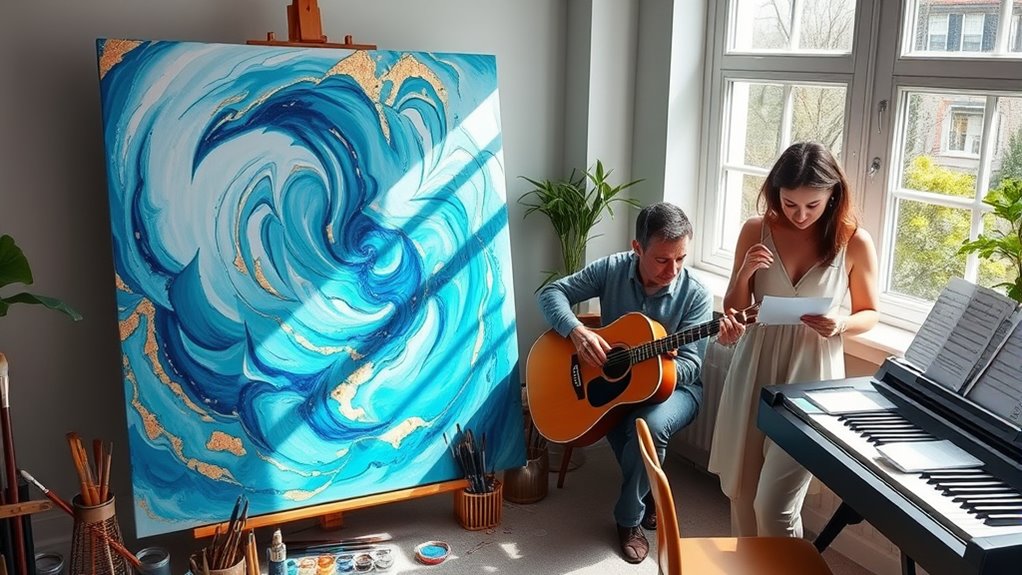
Divorce can be an emotionally overwhelming experience, but art and music therapy offer powerful tools for healing and recovery. These therapies help you express and release difficult feelings, which are essential steps in rebuilding your mental health. In art therapy, you’re encouraged to create freely, allowing your emotions to flow through your artwork. This process fosters emotional release and self-expression, supporting frameworks like CHIME—Connectedness, Hope, Identity, Meaning, and Empowerment. When you participate in art projects, you often feel more hopeful and optimistic because engaging in creative activities provides a sense of purpose and accomplishment. The supportive, inclusive environment of art therapy nurtures your sense of empowerment and self-worth, helping you regain confidence that might have been lost during divorce. Research shows that engaging in creative activities can significantly reduce stress and improve emotional well-being.
For children going through divorce, art-making offers a way to validate their feelings. Symbolic objects and artwork serve as reflective tools that help children understand and process complex emotions. Using transitional objects—like a clay figure or a painted symbol—can act as coping mechanisms, giving children a sense of control and safety during turbulent times. Symbolic creations, such as a clay pot with bulbs planted inside, can represent moving on from pain and embracing new beginnings. These metaphorical works enable you or your children to communicate indirectly, which reduces ego-threat and makes sharing difficult feelings less intimidating. Incorporating parts work into art therapy helps identify conflicting internal emotions or parts of yourself, externalizing internal conflicts like anger, sadness, or hope, making them easier to manage and understand. Additionally, understanding the neurobiological benefits of art therapy reveals how engaging in these creative processes can positively influence brain activity related to emotional regulation. Furthermore, integrating evidence-based methods into therapy enhances its effectiveness in trauma recovery.
Accelerated Resolution Therapy (ART), adapted for divorce recovery, accelerates emotional healing by reducing the intensity of trauma-related feelings. Using techniques like eye movements and guided imagery, ART helps process painful memories swiftly, fostering a sense of relief. It also emphasizes mind-body integration through relaxation exercises that promote inner peace and emotional stability. This holistic approach encourages resilience, equipping you with coping strategies to navigate ongoing challenges outside therapy sessions. As a result, ART not only relieves emotional distress but also builds your capacity to handle future stressors with confidence.
art therapy supplies for emotional healing
As an affiliate, we earn on qualifying purchases.
As an affiliate, we earn on qualifying purchases.
Frequently Asked Questions
How Do Art and Music Therapy Help Manage Emotional Pain?
Art and music therapy help you manage emotional pain by providing a safe space to express feelings non-verbally, which can be hard to do otherwise. You can release complex emotions, improve your mood, and gain insights into your emotional state through creative activities. These therapies also reduce stress, promote resilience, and help you process trauma, making it easier to navigate the intense emotions associated with divorce and move toward healing.
Can Therapy Techniques Be Tailored for Children and Teens?
Yes, you can tailor therapy techniques for children and teens. You should adapt activities to their developmental levels, making them engaging and age-appropriate. Use creative outlets like art and music to help them express feelings they might not verbalize easily. Focus on creating a safe, supportive environment, and incorporate family or peer support when appropriate. This personalized approach encourages emotional healing and resilience during their divorce recovery journey.
What Are the Signs That Therapy Is Working?
You’ll notice therapy is working when your emotional symptoms, like anger, sadness, or anxiety, lessen and you start feeling more balanced. You’ll find it easier to express your feelings in healthier ways, communicate better, and rebuild trust with others. You may also see increased motivation, reduced isolation, and improved relationships. These positive changes often happen within a few sessions, showing that your healing process is gaining momentum and guiding you toward acceptance and growth.
How Long Does Divorce Recovery Through Therapy Typically Take?
Divorce recovery through therapy usually takes around 3 to 12 months, with most people completing about 20 sessions over six months. The exact duration depends on factors like marriage length, the complexity of issues, and your commitment to the process. You’ll experience milestones such as feeling comfortable alone, reestablishing interests, and forming new connections, gradually leading to emotional stability and renewed life purpose.
Are Art and Music Therapies Covered by Insurance?
Did you know that about 60% of art therapists are able to bill insurance for their services? Insurance coverage varies—art therapy is often covered if deemed medically necessary and with a formal diagnosis, especially through Medi-Cal in California. Music therapy, however, is less consistently covered, though some Medicaid programs or HSA funds might help. Always verify your insurance plan and consult your provider for specific details.
Conclusion
As you pick up your brush or tune into the melodies within, you open a safe space to heal. Imagine releasing the tangled emotions like vibrant colors flowing across a canvas or melodies echoing through your heart, soothing the ache of divorce. These art and music therapies become your personal sanctuary—helping you find clarity, strength, and hope amidst the chaos. Embrace this creative journey, and watch your wounds transform into beautiful new beginnings.
Halloween Picks
halloween
As an affiliate, we earn on qualifying purchases.