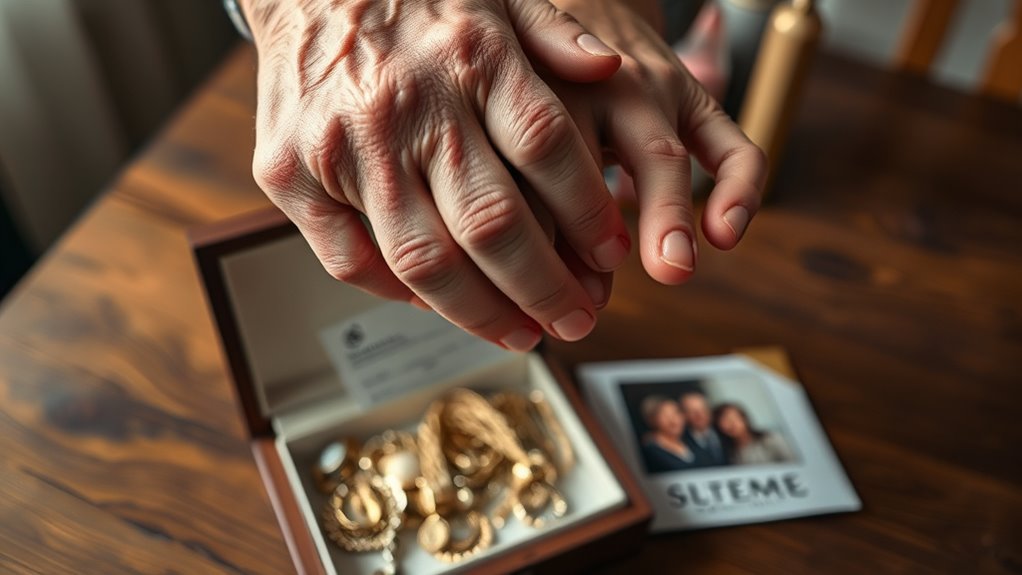

Inheritances and gifts you receive are generally considered your separate property, but their division during divorce depends on your state’s laws and how you manage them. If you keep inheritance funds in separate accounts and don’t mix them with marital assets, they usually stay yours. However, if you co-mingle or use inheritance for joint expenses, they may be considered part of the marital estate. To understand how your situation might be affected, keep exploring the details.

Get gifts for the two of you delivered free with Prime
- Fast, free delivery on millions of items
- Prime Video, Amazon Music and more included
- Member-only deals all year
Key Takeaways
- Inheritances are generally considered separate property unless commingled with marital assets.
- Using inheritance funds for joint expenses or adding a spouse’s name to property can transmute it into marital property.
- Keeping inheritance in separate accounts and documenting its origin helps preserve its status during divorce.
- State laws and judicial discretion influence whether inheritance is divided in divorce proceedings.
- Legal agreements like prenuptial or postnuptial contracts can clarify inheritance and gift treatment in divorce.

However, inheritances can become part of marital property if you mix them with marital assets. For example, depositing inherited funds into a joint bank account, using inheritance money for shared expenses, or purchasing jointly titled property like a home can blur the lines. If your spouse’s name is added to the title of inherited property, it may be considered transmuted into marital property. Courts look for evidence of intent and how the inheritance was treated, so if you commingle inheritance funds or assets, you risk losing the separate property status. Transmutation—deliberate actions like combining assets or changing titles—can alter inheritance status, especially if it appears to be an effort to convert separate property into marital property. Courts often evaluate whether actions taken with inheritance indicate an intent to treat it as marital property or keep it separate. State laws influence how inheritances are handled during divorce. Most states treat inheritance as separate property, but community property states may have different rules, and courts in some jurisdictions may exercise discretion in including inheritances in property division. To protect your inheritance, it’s wise to keep inheritance funds in separate accounts solely under your name and avoid mixing them with joint or marital assets. Maintaining detailed records showing the origin and use of inheritance funds helps establish their separate nature. Using inheritance to buy property solely in your name reinforces your claim. Additionally, legal agreements like prenuptial or postnuptial contracts can specify how inheritances are treated, reducing ambiguity. Proper financial planning and legal advice can further help preserve inheritance as separate property in divorce proceedings. Commingling inherited funds with marital assets increases the risk of losing their separate status. If inheritance money is used for household expenses, joint investments, or improvements, courts may presume it has become marital property. Even if assets are physically separate, shared financial management can be sufficient for courts to consider them marital. Contributions your spouse makes toward maintaining or improving inherited property can also influence its classification. To safeguard your inheritance, keep it in separate accounts, avoid mixing it with marital funds, and document its origin and use thoroughly. These steps help ensure inheritance remains protected in case of divorce.
inheritance protection legal document
As an affiliate, we earn on qualifying purchases.
As an affiliate, we earn on qualifying purchases.
Frequently Asked Questions
How Do Courts Determine if an Inheritance Is Marital Property?
Courts determine if an inheritance is marital property by examining how you handled it during marriage. They look at whether you kept it separate or mingled it with joint assets, like adding your spouse’s name or using it for shared expenses. If you improved or invested in the inheritance, that may also influence the decision. Your intent and actions, along with any agreements, play a key role in this assessment.
Are Gifts Received Before Marriage Considered in Divorce Division?
Like the steady hand of justice guiding a scale, gifts received before marriage are generally considered separate property in divorce. You must provide clear evidence—such as receipts or gift letters—to prove ownership. If you keep the gift separate, avoid commingling funds or transferring titles, which could turn it into community property. Legally, it remains with you unless you intentionally transmute it through a written agreement.
Can a Prenuptial Agreement Override Inheritance Division Rules?
Yes, a prenuptial agreement can override inheritance division rules if it’s valid and enforceable. You can specify how inheritances are handled, keeping them separate from marital property. Just make sure the agreement is in writing, signed willingly, and includes full financial disclosure. Keep in mind, state laws and court discretion can influence enforceability, so consulting a lawyer ensures your prenup effectively protects your inheritance interests.
What Happens to Inheritances if the Deceased Spouse Remarries?
Even if the deceased spouse remarries, their inheritance typically stays your separate property unless you mix it. You might worry that remarriage impacts inheritance rights, but generally, inherited assets aren’t automatically divided in subsequent marriages. To protect your inheritance, keep it in separate accounts and avoid using it for joint expenses. Clear documentation and legal agreements help ensure your inheritance remains yours, regardless of remarriage or divorce.
Are There States With Special Laws Regarding Inheritance and Divorce?
Some states have special laws about inheritances and divorce. For example, community property states like California generally keep inheritances separate unless they’re commingled with marital assets. In equitable distribution states like New York, inheritances are presumed separate but can become marital if used jointly or commingled. To protect your inheritance, keep it in separate accounts and document your transactions carefully, especially if you’re in a state with specific rules.
Conclusion
Remember, in the game of love and law, inheritances and gifts are like delicate treasures hidden in a vault—sometimes shared, sometimes kept private. When divorce comes knocking, they can become tangled up like a knot in a fine thread. Knowing how these treasures are divided can be your guiding star, helping you navigate the stormy seas. Stay informed, and you’ll steer clear of surprises, keeping your financial ship steady no matter what the future holds.
Fall Picks
fall essentials
As an affiliate, we earn on qualifying purchases.