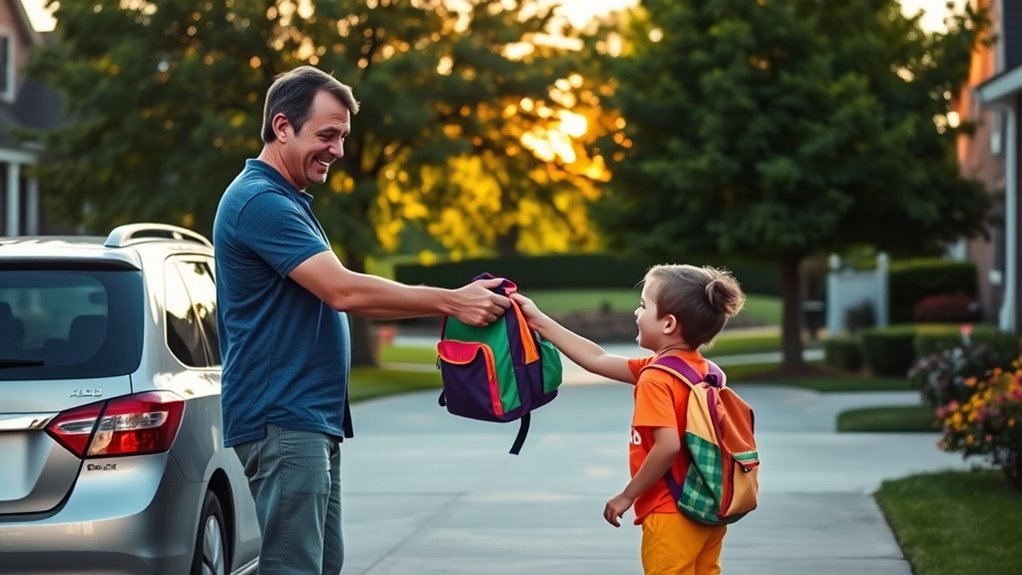

To manage child custody exchanges with less stress, choose neutral, public locations like parks, coffee shops, or friends’ homes that promote safety and reduce conflict. Communicate clearly ahead of time with written plans and confirm details to avoid last-minute surprises. Prepare by packing necessary items and establishing routines to keep things predictable. If you face complex situations, understanding court-ordered protocols and legal options can help. Keep stress low by staying calm—there’s more you can do to make exchanges smoother.
Key Takeaways
- Choose neutral, public locations like parks or community centers for exchanges to reduce conflict and ensure safety.
- Maintain clear, written communication about schedules, locations, and expectations to prevent misunderstandings.
- Prepare all necessary items in advance and establish consistent routines to create predictability and reduce emotional tension.
- Follow court-ordered supervised visitation when needed to ensure safety and minimize disputes during exchanges.
- Keep exchanges calm and brief, focus on the child’s well-being, and avoid unnecessary face-to-face interactions to lower stress.
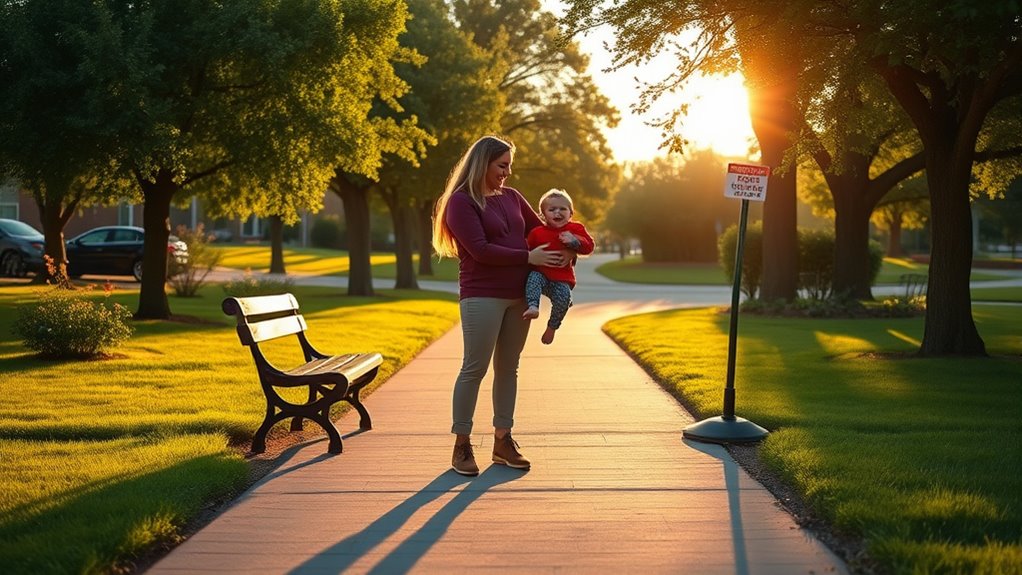
Managing child custody exchanges can be smoother and safer when you choose neutral, public locations that minimize conflict and guarantee safety. Opting for places like babysitters’ homes, schools, or friends’ houses creates a neutral environment where neither parent has an advantage, reducing direct interaction and the potential for disagreements. Public venues such as coffee shops, parks, or community centers offer the added benefit of the presence of bystanders, which naturally discourages disruptive or aggressive behavior. When you select familiar, neutral, and safe locations, you promote a calmer atmosphere that helps make exchanges more predictable and less stressful for everyone involved. In some cases, especially where conflict is high, courts might order supervised visitation, which guarantees that exchanges happen in controlled environments designed to prevent disputes and protect the child’s well-being. Regardless of location, clear communication about the logistics of pickups and drop-offs remains essential. Even when physical interaction is minimized, parents need to coordinate effectively to avoid misunderstandings or last-minute surprises. Effective communication methods such as written messages or digital plans can significantly reduce misunderstandings and prevent conflicts during exchanges. Using straightforward, written, or digital communication tools simplifies this process. Sending quick messages or emails with details about times, locations, and any special instructions reduces the need for face-to-face conversations, which can sometimes escalate tensions. Strong communication helps prevent misunderstandings, which are often a source of conflict during exchanges. Many parents find that mediation or alternative dispute resolution (ADR) techniques notably improve their ability to communicate amicably. Parents who utilize ADR report nearly twice the likelihood of maintaining a positive relationship post-divorce, which ultimately benefits the children. Preparation before the exchange goes a long way in reducing stress. Confirming your child has all the necessary items packed beforehand minimizes last-minute scrambling and confusion. Establishing consistent routines and schedules creates predictability, giving children a sense of stability during transitions. Confirming logistical details in advance—such as pickup times, locations, and any special needs—helps avoid back-and-forth discussions at the last minute. When both parents are prepared, the exchange environment feels more relaxed, which eases emotional tensions and creates a more positive experience for the child. Trends in custody arrangements show that courts favor joint custody more often than sole custody, particularly when both parents are involved and conflicts are manageable. Children tend to fare better in joint custody situations when parents maintain low conflict levels and communicate effectively. Wealth and access to legal resources play a role in custody outcomes; higher-income parents are more likely to have legal representation, use ADR, and achieve smoother exchanges. Conversely, lower-income parents often face more challenges, including less legal support and poorer post-divorce relationships, which can impact the overall success of custody exchanges. By choosing neutral locations, communicating clearly, and preparing in advance, you can considerably reduce the stress associated with custody exchanges, making the process safer and more positive for your child. Additionally, understanding the bank and finance system can help parents better manage expenses related to custody exchanges, such as transportation costs or legal fees.

Safety 1st Safety Essentials Kit , White , 1 Count
- Childproofing solutions: Create a safer environment for your child
- Home safety items: Includes 46 essential safety tools
- Door knob covers: 4 Grip ’n Twist covers
As an affiliate, we earn on qualifying purchases.
As an affiliate, we earn on qualifying purchases.
Frequently Asked Questions
How Can I Ensure Safety During Exchanges?
To guarantee safety during exchanges, choose well-lit, public locations like police parking lots or monitored sites, and avoid isolated areas. Minimize face-to-face contact by using third parties or conducting exchanges in vehicles or during times kids are busy. Communicate clearly through written plans, share real-time updates, and document any issues. Always coordinate with law enforcement if needed, and establish contingency plans for weather or emergencies to keep everyone safe.
What Should I Do if the Other Parent Is Late?
When the other parent is late, stay calm and focused on your child’s well-being. While punctuality shows respect, flexibility demonstrates your commitment to cooperation. Communicate politely, confirm the delay, and adjust plans if needed. Use the opportunity to reinforce positive routines and maintain a neutral tone, avoiding conflict. Remember, your calm response helps minimize stress, preserves the child’s sense of stability, and models respectful co-parenting behaviors.
How Do I Handle Disagreements About Exchange Locations?
When you disagree about exchange locations, start by communicating calmly and clearly with the other parent to understand their concerns. If needed, suggest neutral, safe spots like schools or supervised centers that work for both of you. If disagreements persist, consider involving a mediator or legal professional to help establish a mutually agreeable, legally sound arrangement. Prioritize the child’s safety and stability throughout the process.
Can I Record Exchanges for Safety Reasons?
Yes, you can record exchanges for safety reasons, but you must do so lawfully. In public places where there’s no reasonable expectation of privacy, recording is generally allowed. However, laws vary by jurisdiction, so consult a family law attorney first. Use recordings carefully, as courts may scrutinize them. Consider safer alternatives like secure messaging or professional monitors, and always prioritize maintaining a calm, cooperative approach during exchanges.
How Do I Manage Exchanges During Holidays and Vacations?
Picture a well-lit bridge connecting two shores, each representing a home filled with holiday cheer. To manage exchanges during holidays and vacations, you create a clear, shared calendar that acts as your blueprint. Communicate openly and negotiate plans early, ensuring both sides feel confident. Use tools or apps for coordination, and keep the child’s emotional well-being front and center, making each handoff smooth and joyful like crossing a steady, welcoming bridge.
Conclusion
As you stand at the exchange point, imagine a calm, clear sky overhead, free of stormy clouds. With a little planning and patience, each handoff becomes a peaceful moment rather than a stressful ordeal. Visualize your child’s bright smile as they run into your arms, knowing your efforts create a safe, loving environment. By staying composed and prepared, you turn these exchanges into a smooth, reassuring bridge between two loving homes.