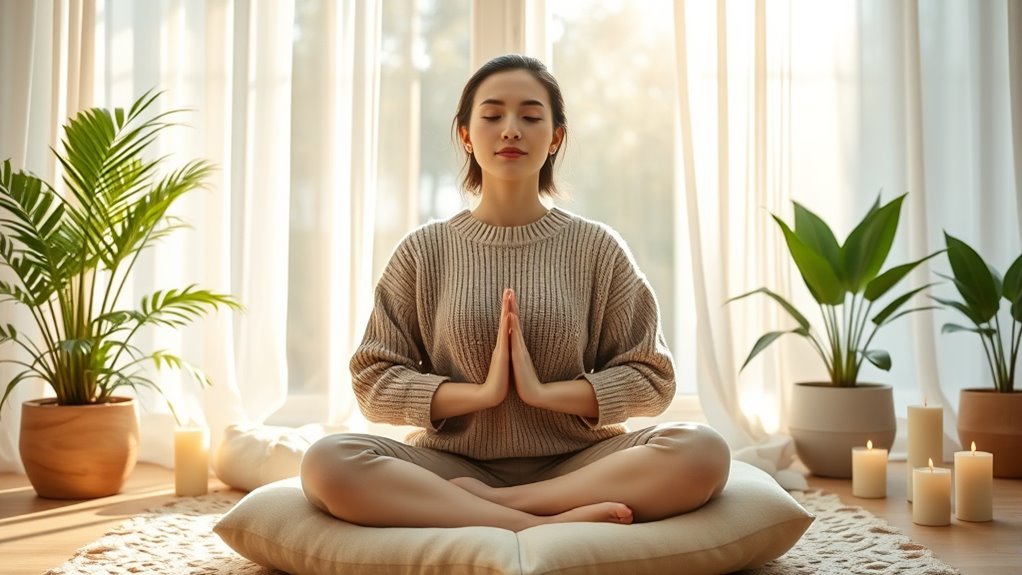

To ease divorce-related anxiety, try incorporating meditation and breathing exercises into your daily routine. Techniques like deep diaphragmatic breathing or mindful meditation help calm your nervous system, reduce stress, and boost emotional resilience. These practices can improve emotional clarity and foster inner stability amid upheaval. Consistent practice opens the door to feeling more grounded and in control. Keep exploring these approaches, and you’ll discover how they can become your powerful tools for emotional balance.
Key Takeaways
- Meditation reduces stress, anxiety, and promotes emotional clarity during divorce.
- Breathing exercises provide immediate calming effects and regulate physiological arousal.
- Both techniques enhance self-awareness and emotional resilience amid ongoing stress.
- Structured practices like yogic breathing can be incorporated into daily routines for stability.
- Developing a personal mindfulness toolkit supports coping with divorce-related emotional upheaval.
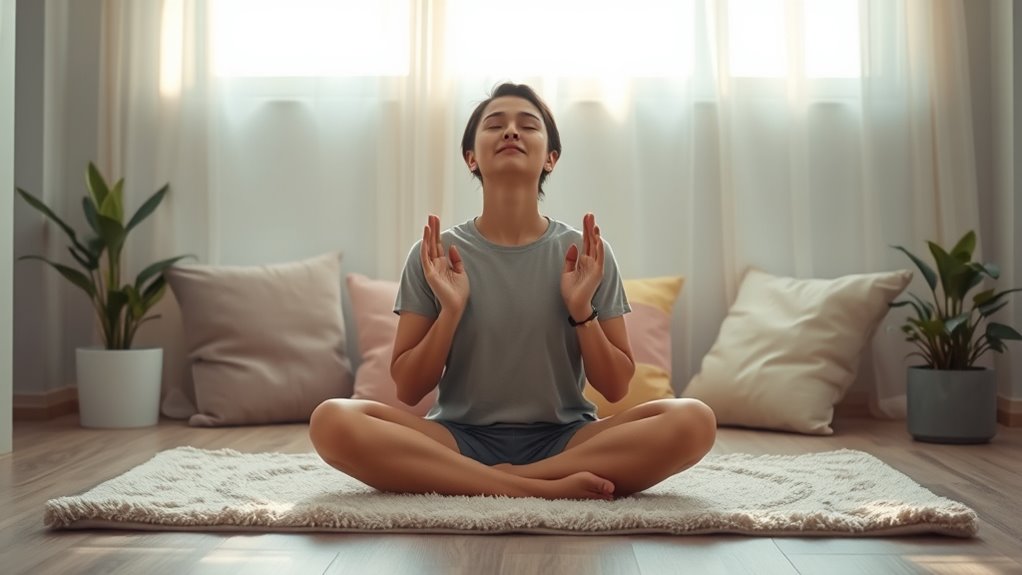
Divorce can trigger intense feelings of stress and anxiety, making it difficult to stay centered. During such turbulent times, finding ways to manage your emotional health becomes essential. Meditation and breathing exercises offer accessible, effective tools to help you navigate these challenging emotions. These practices can markedly reduce stress and anxiety levels, which are common during divorce, by calming your nervous system and promoting a sense of stability. They also improve emotional regulation, empowering you to manage overwhelming feelings with greater ease and clarity. This holistic approach to mental health puts you in control of your well-being, encouraging mindfulness and self-awareness that foster resilience in the face of adversity.
Managing stress and anxiety during divorce with meditation and breathing exercises fosters emotional resilience and stability.
As you incorporate meditation into your routine, you’ll notice a reduction in symptoms of anxiety and depression. Numerous studies have demonstrated that mindfulness-based stress reduction methods are just as effective as some medications for anxiety disorders. Regular meditation helps you develop self-acceptance and self-compassion, which are essential when you’re facing feelings of loss and uncertainty. It enhances focus and cognitive clarity, making it easier to process complex emotions and make clearer decisions. Over time, consistent practice can lead to long-lasting mental health benefits, helping you build a more balanced outlook even amid ongoing stress. Additionally, practicing meditation can strengthen your ability to manage physiological responses to stress, such as rapid heartbeat and shallow breathing.
Breathing exercises provide immediate calming effects that can be especially valuable during moments of acute anxiety. By regulating your respiration, these practices help reduce physiological arousal—such as rapid heartbeat and shallow breathing—that often accompanies stress. Engaging in structured breathing activities, like yogic breathing, offers a safe, guided activity that can be easily incorporated into your daily routine. Regular practice not only calms your mind but also improves psychological functions, making it easier to face stressful situations with a composed mindset. When practiced under the guidance of a trained instructor, breathing exercises become a safe and effective way to counteract anxiety’s physiological effects.
These practices specifically impact your emotional resilience during divorce by reducing the fight-or-flight response triggered by emotional upheaval. They help you build coping mechanisms, allowing you to better handle the inevitable ups and downs. Meditation and breathing exercises support better mental health outcomes, fostering self-care and self-awareness indispensable during stressful life events. They are particularly effective for individuals experiencing high anxiety levels, including veterans and the general population alike. By integrating these techniques into your daily routine, you create a personal toolkit that promotes calmness, resilience, and emotional stability—tools that can guide you through divorce with greater strength and clarity. Incorporating mindfulness techniques can further enhance your ability to remain present and manage emotional turmoil effectively.

Black Velvet Embroidered Meditation Cushion – Buckwheat Filled with Lavender and Removable Foam Pad – Ideal for Yoga, Stress Relief, Mindfulness, and Holistic Living
- Premium Material and Feel: Soft black velvet with embroidery and lavender sachet
- Versatile Yoga Bolster: Suitable for restorative yoga with handle for portability
- Comfortable Floor Support: 5-inch height, 15-inch diameter buckwheat-filled cushion
As an affiliate, we earn on qualifying purchases.
As an affiliate, we earn on qualifying purchases.
Frequently Asked Questions
Can Meditation Replace Therapy for Divorce Anxiety?
No, meditation can’t replace therapy for divorce anxiety. While it helps calm your mind and build emotional resilience, it doesn’t address deep-rooted issues like self-criticism or trauma, which often require professional guidance. Therapy offers personalized strategies, support, and skill-building that meditation alone can’t provide. Combining both approaches can give you the best chance to manage your anxiety effectively, especially during the challenging divorce process.
How Long Should I Practice Daily for Noticeable Relief?
You should aim for 10 to 20 minutes daily to see noticeable relief. Think of it as watering your emotional garden—regular care nurtures growth. Even just 5 minutes can make a difference, but consistency is key. Start with shorter sessions, then gradually increase as you feel comfortable. Embedding these practices into your routine helps build resilience, turning daily stress into manageable waves rather than crushing tides.
Are There Specific Breathing Techniques Effective for Intense Anxiety?
You should try deep, slow diaphragmatic breathing with extended exhalations, ideally for at least five minutes. Focus on full inhalations followed by longer, controlled exhalations to activate your parasympathetic nervous system. Cyclic sighing, which emphasizes full breaths and extended exhalations, is especially effective. Consistently practicing these techniques helps reduce intense anxiety by calming your autonomic nervous system and promoting a sense of peace and control.
Is Meditation Safe During Emotional Distress or Trauma?
Meditation can be beneficial during emotional distress, but it’s essential to approach it cautiously. If you have trauma or PTSD, meditation might trigger adverse reactions. You should consider trauma-sensitive techniques, start slowly, and monitor your reactions. If you feel overwhelmed, stop and seek support from a mental health professional. Always prioritize your safety and be mindful of your emotional state before engaging in meditation during difficult times.
Can Group Meditation Help With Divorce-Related Emotional Support?
Can group meditation be your anchor during emotional upheaval? Absolutely. It fosters a shared sense of calm and connection, helping you manage divorce-related feelings more effectively. By practicing together, you’ll develop emotional awareness, reduce anxiety, and build resilience. Group meditation creates a safe space where you can normalize your experience, feel supported, and strengthen your capacity to cope with the complex emotions that come with divorce.
Conclusion
Taking time to practice meditation and breathing exercises can help ease your divorce anxiety and bring you peace. These simple tools fit easily into your daily routine and offer immediate relief when you’re feeling overwhelmed. Remember, you don’t have to face this alone—your mind and body are powerful allies in healing. So, why not give yourself the gift of calm today and see how much lighter you feel tomorrow?