
A prenuptial agreement should include full disclosure of your assets and liabilities, clear classifications of what’s shared or separate, and provisions for property division and debt management. It’s important to address business interests, inheritance plans for children, and special considerations for blended families. Guarantee both you and your partner have independent legal advice and sign well before the wedding. To customize your agreement and protect your interests fully, learn more about key components and considerations.

Get gifts for the two of you delivered free — and shop member deals
- Fast, free delivery on millions of items
- Access to Prime Big Deal Days deals on October 6–7
- Prime Video, Amazon Music and more included
Key Takeaways
- Fully disclose all assets, liabilities, and income to ensure transparency and fairness.
- Clearly classify assets as individual or shared, including pre-marital and inherited assets.
- Address property division, debt management, and responsibilities during marriage and divorce.
- Incorporate provisions for business interests, asset appreciation, and inheritance plans for children.
- Include clauses for future reviews, amendments, confidentiality, and handling of blended family dynamics.
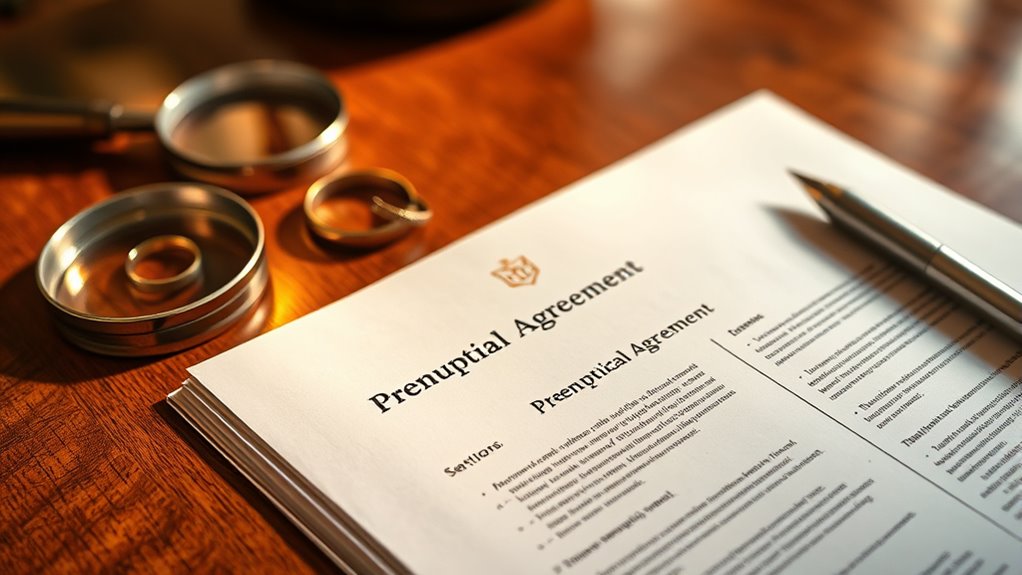
A prenuptial agreement can provide clarity and peace of mind as you prepare for marriage. It helps both of you understand your financial rights and responsibilities, reducing the potential for conflicts later on. When creating a prenuptial agreement, it’s vital to include specific provisions that cover your unique circumstances. First, full disclosure is critical. You both need to list all assets and liabilities honestly to ensure transparency and fairness. This step builds trust and prevents disputes about hidden assets or debts down the line. Special Factors to Consider When Finalizing a Prenuptial Agreement for a Blended Family Additionally, considering the complexities of blended families, you should explicitly address how assets and inheritance plans will be managed for children from previous relationships to prevent future conflicts. Next, it’s advisable for each of you to have independent legal representation. Having separate lawyers ensures the agreement is legally sound and that both parties’ interests are protected. The agreement should also feature clear terms. Specify how property will be divided, how debts are handled, and what responsibilities each of you will assume. Clarity here helps prevent misunderstandings and makes enforcement easier if needed. Fairness is equally important; the agreement must be reasonable and not skewed to unfairly favor one person over the other. Timing matters, too. It’s best to draft and sign the agreement well before the wedding date. Signing at the last minute can lead to disputes or claims of coercion. When drafting your agreement, you should classify your assets carefully. Define which are individual assets and which are shared. Include provisions for pre-marital assets, establishing how they’ll be treated during the marriage and in the event of divorce. Similarly, address marital assets—those acquired during the marriage—and clarify their distribution. If either of you owns a business, specify how business interests are classified and protected, especially concerning business appreciation during the marriage. Inheritances are another key point; outline how any inherited assets are handled within the marriage. Financial obligations and responsibilities should also be detailed. This includes how child support from previous relationships will be managed, how debts are divided, and whether spousal support will be awarded. Outline how living expenses and income will be managed during the marriage to avoid confusion. In the event of divorce, clarify the process for dividing assets, including how joint property and sentimental items will be handled. Addressing appreciation of business assets during marriage is also wise. Finally, consider waivers and promises, such as the effects of premarital cohabitation on ownership, future tax filings, and gifts. Confidentiality clauses can protect sensitive information, while sunset provisions allow parts of the agreement to expire or change over time. Tailoring the agreement to your circumstances is vital. Include provisions for future changes, additional children, or financial shifts, and plan for periodic review and updates. A well-crafted prenup will be a clear, fair, and flexible foundation for your marriage. Incorporating financial planning considerations can further strengthen your agreement and provide long-term stability.
As an affiliate, we earn on qualifying purchases.
Frequently Asked Questions
Can a Prenuptial Agreement Be Changed After Marriage?
Yes, you can change a prenuptial agreement after marriage if both of you agree. You need to create a written amendment signed, witnessed, and notarized, just like the original. It’s important to follow legal procedures to guarantee the modification is valid. Usually, both spouses must consent, and it’s wise to work with a family law attorney to make sure the changes are fair and enforceable.
What Is the Legal Enforceability of a Prenuptial Agreement?
Your prenuptial agreement is legally enforceable if it’s in writing, signed voluntarily by both of you, and fair. You need full disclosure of financial details, and it helps to have independent legal advice. Make certain it complies with your state’s laws and was signed before the wedding, with proper notarization and clarity. Avoid coercion or unfair terms, as these can make it invalid or difficult to enforce later.
How Does a Prenup Affect Inheritance Rights?
Imagine your inheritance as a treasured family heirloom, carefully stored away. A prenup acts like a glass case, clearly defining how that heirloom remains your own, preventing it from being divided or claimed during divorce. It can specify that inherited assets stay separate, protect family treasures, or even waive rights to certain inheritance. By doing so, you guarantee your wishes are honored, and your assets remain protected from potential disputes.
Are Prenuptial Agreements Valid Across Different States?
Prenuptial agreements can be valid across different states, but it depends on how well they comply with each state’s laws. You need to include a choice-of-law clause, guarantee full disclosure, and have both parties consult independent lawyers. Moving to a new state might require updating your prenup to meet local requirements, and courts will enforce it if it’s fair, properly executed, and doesn’t violate local public policy.
Do I Need a Lawyer to Draft a Prenuptial Agreement?
No, you don’t absolutely need a lawyer to draft a prenuptial agreement, but trying to do it yourself is like walking a tightrope without a safety net—it’s risky! Without legal guidance, your agreement might be unclear, unfair, or even unenforceable in court. Hiring a lawyer helps safeguard your assets, ensures fairness, and makes sure the document meets your state’s legal requirements—saving you from costly disputes later.
Conclusion
A prenuptial agreement might seem like just a legal document, but it’s really about protecting your future together. Some say it can even strengthen your relationship by fostering honest conversations about finances. While it’s often viewed skeptically, studies suggest couples who discuss money openly before marriage tend to have healthier relationships. So, don’t see a prenup as a sign of doubt—think of it as a way to build trust and clarity for whatever the future holds.
Fall Picks
fall essentials
As an affiliate, we earn on qualifying purchases.