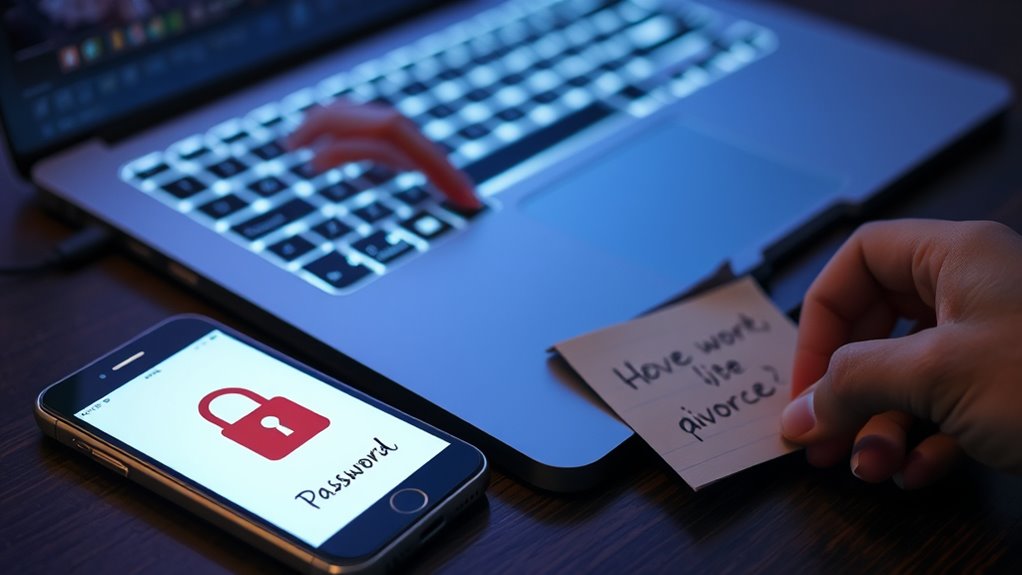

Before a divorce, securing your digital life is essential. Start by updating your passwords with strong, unique ones using a trusted password manager. Be aware that many apps track your private data, especially free ones, so review app permissions carefully. Consider enabling two-factor authentication to add extra layers of security. Staying informed about privacy laws and using privacy-enhancing tools can further protect your information. Continue to explore ways to stay safe and maintain control over your digital footprint.

Get gifts for the two of you delivered free with Prime
- Fast, free delivery on millions of items
- Prime Video, Amazon Music and more included
- Member-only deals all year
Key Takeaways
- Use a password manager to create and store strong, unique passwords for all accounts before divorce proceedings begin.
- Review and update privacy settings on social media and online services to restrict access to personal information.
- Change passwords for shared accounts and consider enabling two-factor authentication for added security.
- Document and secure access to digital assets, including emails, bank accounts, and cloud storage, to retain control.
- Be aware of privacy laws like CCPA or CDPA, and exercise your rights to access or delete personal data during the process.
Have you ever wondered how secure your online passwords really are? In today’s digital world, your personal data is constantly at risk, and understanding how to protect it is more important than ever. The truth is, most people underestimate the vulnerabilities that come with common password practices. With 72.6% of iOS apps tracking private user data and free apps being four times more likely to do so, your personal information is often more exposed than you realize. Despite this, less than a quarter of American smartphone users feel they’re in control of their data, which shows a widespread sense of helplessness when it comes to privacy. It’s no surprise that data breaches are becoming increasingly frequent and costly, with the global average cost projected to hit $4.44 million per incident in 2025. These breaches often happen because of weak or poorly managed passwords, or because third-party vendors with lax security practices become gateways for attackers. Nearly 20% of organizations suffer breaches linked to third-party suppliers, highlighting how interconnected and vulnerable many systems are. Additionally, the use of analytics cookies and other tracking technologies can further compromise your privacy without your knowledge.
Most people underestimate online password vulnerabilities and the risks of data breaches in today’s interconnected digital landscape.
Your ability to safeguard your data starts with strong passwords, but the landscape is changing rapidly. Privacy legislation like California’s CCPA and Virginia’s CDPA have created a more complex regulatory environment, pushing companies to adopt adaptive, privacy-by-design frameworks. These laws empower you with rights like Data Subject Requests (DSRs), which are increasing as consumers become more aware of their privacy rights. Still, compliance isn’t enough. You need to take personal responsibility, especially since 85% of adults globally want to do more to protect their online privacy. This awareness has spurred new technologies, including password management tools that utilize AI to generate and maintain complex, unique passwords for every account. As AI and data privacy intersect, these tools are becoming more sophisticated, incorporating consent protocols and bias mitigation measures that align with privacy-by-design principles.
Transparency plays a fundamental role in building trust — 44% of consumers say openness about data use influences their brand loyalty. Strong privacy laws make people more comfortable sharing data, especially in AI applications, but your active participation remains essential. Many users support collecting only necessary data, recognizing that minimalism in data collection is a legal and ethical necessity. Despite the rising awareness, many still feel they lack control over their data. Generation Z, for example, is more willing to share information in exchange for services, perceiving fewer alternatives. This shift suggests attitudes toward privacy will continue evolving as digital natives mature.
Ultimately, your digital security depends on proactive measures, including robust passwords and understanding your rights. As privacy concerns grow and technology advances, staying informed and adopting best practices becomes your best defense against breaches and misuse. Protecting your digital life isn’t just about avoiding hackers — it’s about asserting control in an increasingly complex privacy landscape.
best password manager for privacy
As an affiliate, we earn on qualifying purchases.
As an affiliate, we earn on qualifying purchases.
Frequently Asked Questions
Should I Change All My Passwords Before or After Announcing My Divorce?
You should change your passwords before announcing your divorce to protect your privacy and prevent unauthorized access. Doing this early helps secure sensitive information and reduces the risk of digital harassment or data breaches. Once you’ve made the changes, consider updating passwords again after the announcement or during the divorce process, especially for joint accounts. Always consult a legal professional to ensure you’re following proper procedures.
How Can I Securely Share Passwords With a Trusted Third Party?
You can securely share passwords with a trusted third party by using a dedicated password manager like 1Password or Bitwarden. These tools let you create encrypted vaults and share access via one-time links or time-limited sharing. Always enable multi-factor authentication, avoid insecure methods like email or messages, and monitor activity logs. Using these features guarantees your passwords stay protected while giving trusted people access when needed.
What Legal Considerations Exist When Accessing a Partner’s Digital Accounts?
When you’re steering the nuances of digital access, remember legality limits unauthorized logging in, locking out, or altering accounts. You must respect privacy laws, avoid unauthorized access, and always seek legal guidance before attempting to access or alter a partner’s digital accounts. Disregarding these laws risks legal repercussions, including penalties, fines, or even imprisonment. Ensuring proper permissions and legal protocols protects both your rights and your reputation during divorce proceedings.
Is It Advisable to Delete or Deactivate Social Media Accounts During Divorce Proceedings?
It’s generally not advisable to delete or deactivate your social media accounts during divorce proceedings. Doing so can be seen as destroying evidence, which might lead to legal consequences. Even deactivating temporarily doesn’t erase data, as digital forensics can recover deleted posts. Instead, consult your attorney before making any changes, and consider refraining from posting altogether to avoid inadvertently harming your case or revealing sensitive information.
How Can I Protect My Online Identity if My Ex Has Access to Shared Accounts?
To safeguard your online identity when your ex has access to shared accounts, change all passwords immediately and enable two-factor authentication. Log out of all devices and remove any unrecognized ones. Review recovery options to verify only you can reset passwords. Create separate accounts for social media and email, adjust privacy settings, and disable location tracking. Regularly monitor your accounts for suspicious activity and consider deleting or deactivating shared accounts if possible.
Conclusion
Protecting your privacy and passwords before a divorce isn’t just smart—it’s like building a fortress around your digital life! Think of your accounts as treasure chests, and you’re the fearless guardian, securing every lock and key. Fail to do so, and you risk losing everything—messages, photos, secrets—gone in a flash! So, take charge now, because in the digital world, a single forgotten password or overlooked detail could spell disaster. Stay vigilant, stay safe!
Fall Picks
fall essentials
As an affiliate, we earn on qualifying purchases.