When it comes to wedding rings and heirlooms, ownership often depends on whether they’re considered conditional gifts, family treasures, or marital property. Generally, engagement rings are conditional gifts that you might return if the marriage doesn’t happen, but wedding rings usually become marital property shared between spouses. Heirlooms or family rings may stay within the family if properly documented. To understand how these rules apply to your situation and keep what’s yours, explore the details further.
Key Takeaways
- Wedding rings are generally considered marital property and are usually divided between spouses during divorce, depending on state laws.
- Heirloom rings are often regarded as separate property if kept within the family and documented as family heirlooms.
- Alterations or purchasing heirlooms with marital funds can reclassify them as marital property subject to division.
- Proper documentation (receipts, family records) supports ownership claims of heirlooms in disputes.
- State laws and specific circumstances determine whether wedding rings and heirlooms are retained by one spouse or divided.
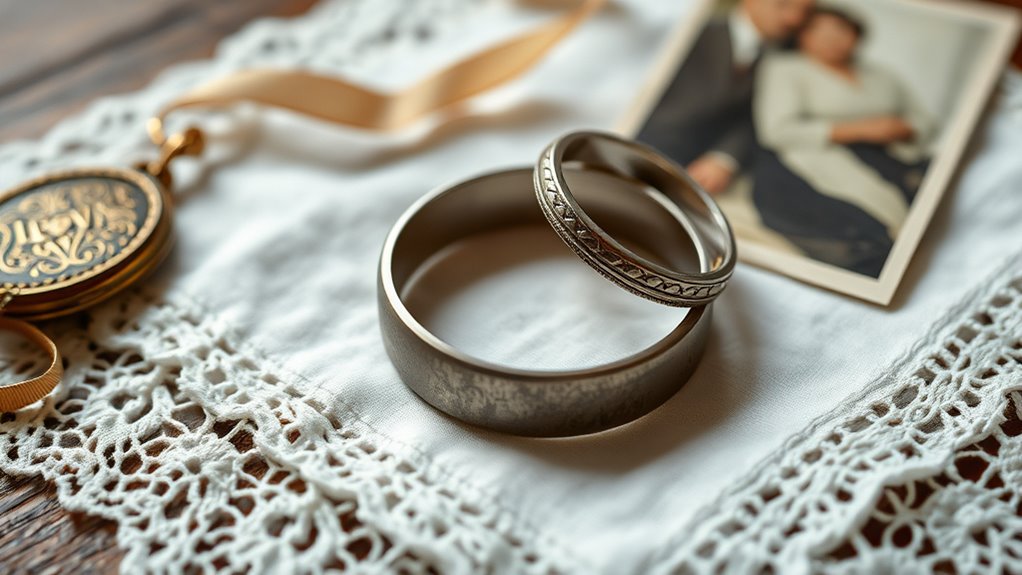
When it comes to wedding rings and heirlooms, understanding who owns what can become complicated, especially during divorce or inheritance disputes. Legal ownership depends on the type of ring, state laws, and specific circumstances. In most U.S. states, engagement rings are considered conditional gifts, meaning they belong fully to the recipient only if the marriage occurs. If the couple breaks up before tying the knot, the giver usually has a right to ask for the ring back, though this varies by state. Once the marriage is official, the engagement ring generally remains the separate property of the recipient, especially if it’s an heirloom or was given as a gift. However, the situation gets more complex if the ring was bought with community funds or has family significance. Texas, for instance, treats engagement rings as irrevocable gifts, so the recipient keeps the ring regardless of whether the marriage happens or not. Disputes can also arise if the ring was purchased with marital savings or has been altered or re-set, which might change its classification. Additionally, the intent behind giving the ring can influence its classification in legal disputes.
Wedding rings, on the other hand, are typically considered gifts exchanged between spouses during the marriage. In community property states like California or Texas, these rings are usually viewed as marital property and subject to division if the marriage ends. In equitable distribution states such as New York or Pennsylvania, courts generally award each spouse their own wedding ring, but the specifics can depend on circumstances. Disputes over wedding rings are less common unless the rings are especially valuable or heirlooms. The location of the divorce filing plays a significant role, as laws vary by state and influence how these assets are divided. Heirloom rings, especially those with documented family history, are usually treated differently from standard jewelry. Courts might consider heirlooms to be separate property if they’ve been kept within the family for generations. But if the heirloom was altered, re-set, or purchased with marital funds, it could be deemed marital property. Family tradition and intent, like “this stays in the family,” might influence a court’s decision, but they aren’t always decisive. Proper documentation such as receipts, appraisals, and family records can support a claim to ownership.
The financial value of rings also impacts disputes. Research indicates that couples who spend between $2,000 and $4,000 on engagement rings face a slightly higher divorce risk than those who spend less. Spending over $20,000 on a wedding increases that risk even further. High-value rings are more likely to become contentious assets in divorce proceedings, especially if not addressed beforehand through prenuptial agreements. The value of jewelry and the amount spent often correlate with the potential for disputes, making it essential to understand local laws and document ownership clearly.
Frequently Asked Questions
Can Wedding Rings Be Legally Inherited by Children?
Yes, wedding rings can be legally inherited by your children, but only if you specify it in your estate plan or will. Without clear instructions, the rings become part of your estate and are subject to probate. You can pass them down voluntarily, or they may be inherited through laws of succession. To guarantee your children receive the rings, it’s best to include explicit bequests in your estate documents.
Are There Tax Implications for Heirloom Jewelry?
Heirloom jewelry’s tax implications might seem overwhelming, but they’re manageable. You generally won’t owe federal income tax when inheriting it, thanks to the stepped-up basis—meaning you pay capital gains only if you sell for more than its value at death. Just remember, state inheritance taxes can hit hard, depending on where you live. Keep detailed records and consult a tax professional to navigate the complexities smoothly.
How Should Sentimental Value Influence Inheritance Decisions?
Sentimental value should strongly influence your inheritance decisions because these items carry emotional significance and family legacy. You need to take into account how heirs will cherish and preserve these heirlooms, balancing emotional importance with practical aspects. Open communication helps ensure everyone understands your intentions, reducing conflicts. Prioritize transparency, share stories behind sentimental items, and involve loved ones in planning to honor your family’s history and maintain meaningful connections across generations.
Is It Necessary to Have a Will for Jewelry Inheritance?
Yes, having a will is essential for jewelry inheritance. It guarantees your specific pieces go to the right heirs, prevents disputes, and speeds up estate settlement. Without one, state laws dictate distribution, which might not match your wishes, risking conflicts or loss of valuable heirlooms. A will also helps with accurate appraisals, tax planning, and preserving sentimental stories, making sure your jewelry legacy is clear and respected.
What Are the Common Disputes Over Wedding Rings and Heirlooms?
You might face disputes over wedding rings and heirlooms, especially since couples who spent over $2,000 on engagement rings are 1.3 times more likely to divorce. Common conflicts include who keeps sentimental items, especially heirlooms, and disagreements over ownership when no clear agreement exists. Emotional value often outweighs monetary worth, leading to legal battles. Clear documentation, pre-nuptial agreements, and open communication can help prevent these disputes.
Conclusion
Think of your wedding ring and heirlooms as treasured ships sailing through life’s ocean. You’re the captain, steering them through calm and stormy waters alike. Deciding who keeps what is like charting a course — it’s your choice to guarantee these precious symbols remain safe and meaningful. Trust your compass, communicate clearly, and let your choices serve as guiding stars, anchoring your memories securely as you navigate the future together.