

During a temporary spousal support hearing, you should be prepared to present accurate financial documents like pay stubs, tax returns, and bank statements. Understand that the judge will consider factors such as your marriage length, earning capacity, and current expenses. It’s essential to have legal representation and stay transparent to guarantee your financial needs are properly addressed. Knowing what to expect can make the process smoother—continue to learn how to navigate this important step.
Key Takeaways
- Prepare and organize all necessary financial documents, such as pay stubs and tax returns, for the hearing.
- Understand that the hearing is a temporary, not final, decision focused on financial stability.
- Have legal representation to effectively present your case and navigate court procedures.
- The judge considers factors like marriage length, earning capacity, and standard of living.
- Be transparent and truthful about your financial situation to ensure a fair support arrangement.
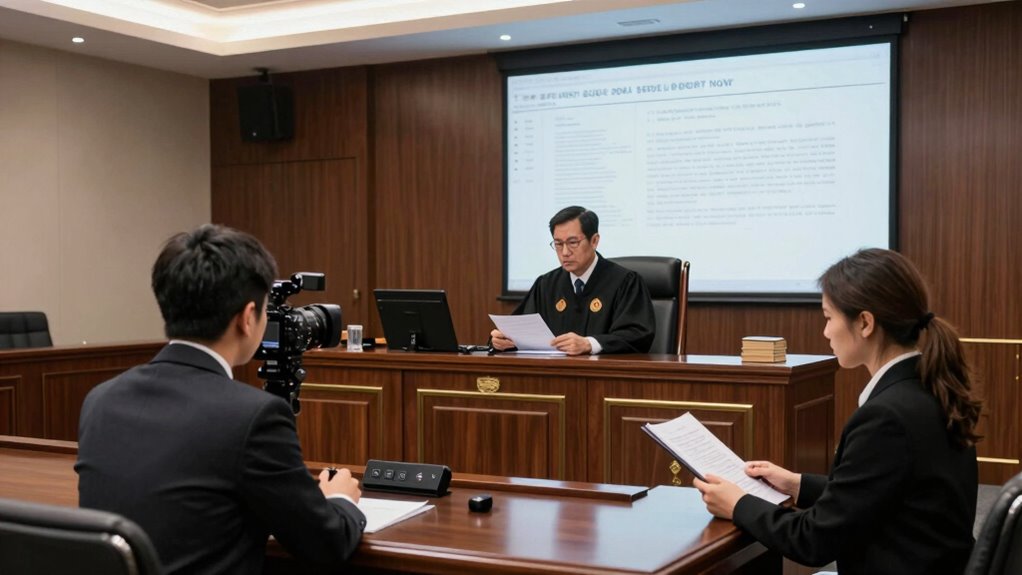
Have you ever wondered what happens during a temporary spousal support hearing? This type of hearing is an essential step in the divorce process, where the court determines whether one spouse should receive financial support from the other while the case is ongoing. It’s a preliminary decision, not the final settlement, but it plays a vital role in making certain that both parties can maintain a reasonable standard of living during this challenging time. During the hearing, you’ll need to present clear financial documentation to support your case, showing your income, expenses, assets, and debts. This documentation helps the judge understand your financial situation and make an informed decision about support. It’s important to gather pay stubs, tax returns, bank statements, and any other relevant financial records ahead of time. Properly organized financial documentation not only clarifies your financial picture but also demonstrates your credibility and seriousness in the proceedings.
Having legal representation can greatly influence the outcome of your temporary spousal support hearing. An experienced attorney understands the legal standards and knows how to present your financial information effectively. They can advise you on what documentation is most relevant, help you prepare your case, and guarantee your rights are protected throughout the process. Your lawyer can also negotiate with the opposing party’s legal team to reach an agreement that’s fair and in your best interest. When you’re well-represented, you’re more likely to avoid common pitfalls and make certain that the court considers all pertinent factors, including the needs of both spouses and the ability to pay. Additionally, understanding the wave and wind of legal procedures involved can help you better navigate the complexities of the support hearings. Recognizing the importance of holistic SEO strategies in legal content can also help ensure your case information is clear and accessible to all parties involved.
During the hearing, the judge will listen to both sides, review the financial documentation, and ask questions to clarify details. The court considers various factors, such as the length of the marriage, each spouse’s earning capacity, and the standard of living established during the marriage. The judge might also look at the other spouse’s financial obligations and assets to determine an appropriate support amount and duration. Remember, this hearing is not about finalizing the divorce but establishing a temporary support arrangement to maintain stability. Being prepared with accurate financial documentation and having legal representation by your side can make a notable difference. It helps you present your case confidently and guarantees that the court’s decision aligns with your financial reality, setting the stage for a fair resolution as the divorce process continues.

DocSafe Fireproof File Organizer with Lock, Hard-Shell Case Fireproof Document Box with 13 Pocket Accordion File Folder, Portable Home Office Travel Safe Storage for Important Documents Laptop Black
- Fireproof and Water-Resistant: Protects documents from fire and water damage
- Hard-Shell Durable Design: Offers robust protection with sleek appearance
- Large Capacity Storage: 13 pockets plus additional compartments for organization
As an affiliate, we earn on qualifying purchases.
As an affiliate, we earn on qualifying purchases.
Frequently Asked Questions
How Long Does a Temporary Spousal Support Hearing Typically Last?
A temporary spousal support hearing usually lasts about 30 minutes to an hour, depending on the case complexity. During this time, you’ll discuss financial details, which can impact your financial planning, and the emotional impact might be significant. Be prepared with all necessary documents and stay focused on your priorities. Remember, the length can vary, so stay patient and organized to make the most of the hearing.
Can I Request a Modification After the Hearing?
Imagine your support arrangement as a flexible bridge, able to adapt as circumstances change. After the hearing, you can request a modification if your financial situation or needs shift. Legal representation helps you navigate post-hearing adjustments smoothly, ensuring your case is well-presented. You’ll need to file a formal request with the court, providing evidence of your changed circumstances to support your case for a modification.
What Evidence Is Most Persuasive in These Hearings?
You should present strong financial documentation, like pay stubs, tax returns, and expenses, to persuade the court. Also, share the emotional impact of the support arrangement on you, emphasizing how it affects your well-being. Clear, organized evidence that demonstrates your financial needs and emotional state makes your case more compelling. Being honest and thorough in presenting both financial documentation and emotional impact helps the judge understand your situation better.
Are Hearings Held in Person or Can They Be Virtual?
You might wonder if hearings are held in person or virtually. Many courts now offer remote participation options, especially for temporary spousal support hearings, to simplify hearing procedures and increase accessibility. You should verify your specific court’s rules, as some still prefer in-person appearances, while others provide virtual hearings via video conferencing. Confirming ahead of time guarantees you’re prepared and comfortable, regardless of the format.
What Happens if One Party Fails to Appear?
If one party fails to appear at a temporary spousal support hearing, the court might proceed without them, potentially granting support based on the available evidence. You should have legal representation to navigate court procedures effectively, ensuring your rights are protected. Missing the hearing can lead to unfavorable decisions or delays, so it’s essential to attend or inform the court if you cannot, to avoid adverse outcomes.
Conclusion
Managing temporary spousal support hearings can feel overwhelming, like trying to find clarity in chaos. But remember, this hearing is your chance to establish a foundation for your financial future. Just as a sturdy bridge connects two points, your preparation and understanding connect you to fair support. Stay informed and confident—because in this courtroom, knowledge is your most powerful tool to secure stability and peace of mind.