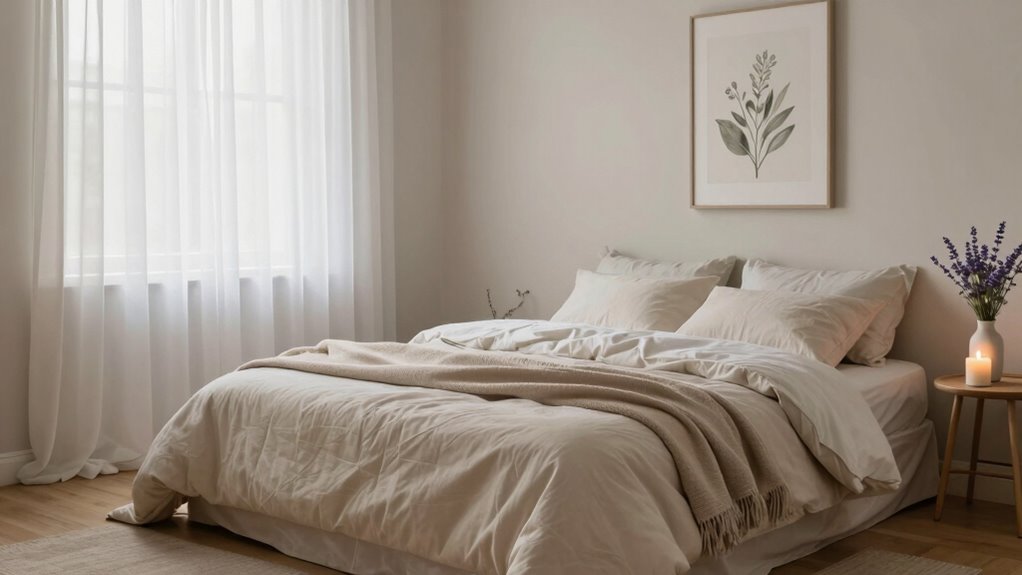
To create a more peaceful bedroom after separation, set clear boundaries by removing shared belongings and creating designated spaces. Focus on designing a calming environment with soft lighting, soothing colors, and minimal clutter. Support your emotional healing by adding comforting elements like plants or cozy blankets. Maintain routines and let go of items that evoke pain. Keep space flexible for growth, adjusting as your needs change. Exploring these steps further can help you craft a sanctuary for healing and peace.
Key Takeaways
- Establish clear personal boundaries and remove shared or mementos to create a sense of ownership and safety.
- Incorporate calming colors, soft lighting, and minimal clutter to foster a tranquil environment.
- Remove items that evoke painful memories and replace them with soothing artwork or natural elements.
- Develop relaxing routines, like journaling or gentle music, to promote emotional healing and stability.
- Regularly reassess and adjust your space to reflect your evolving emotional needs and promote ongoing peace.
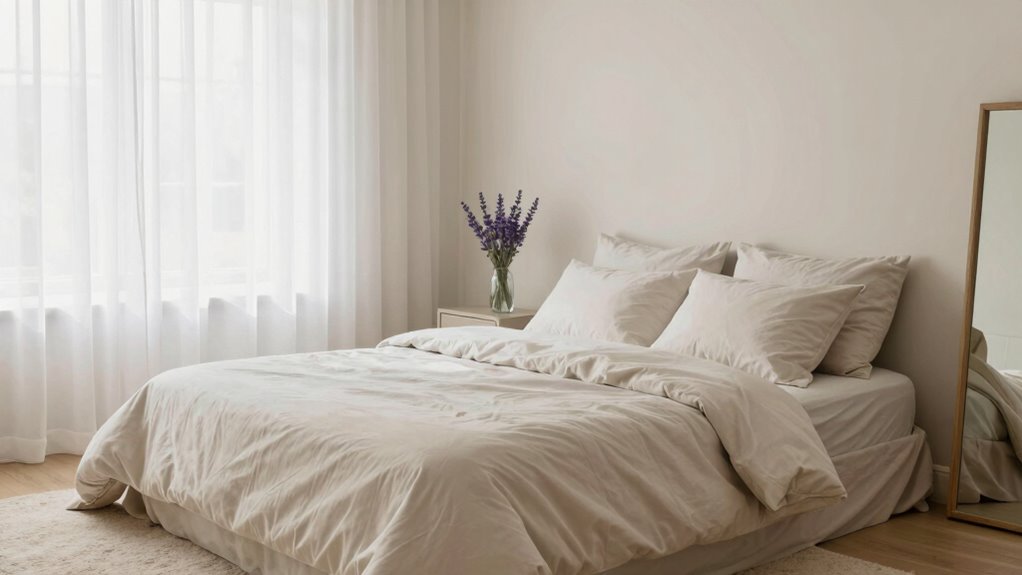
Ever wondered how to transform your bedroom into a peaceful sanctuary after a separation? It’s a crucial step in reclaiming your space and focusing on your emotional well-being. The first thing you need to do is establish clear personal boundaries. This means setting physical and emotional limits that help you feel safe and in control. If you’re sharing your space temporarily, consider creating designated areas for each person, or if you’re living alone, define what items or decorations are off-limits to remind yourself of your new boundaries. Removing shared belongings or mementos that remind you of your past relationship can also help reinforce these boundaries, giving you a sense of ownership and control over your environment.
Creating a peaceful bedroom isn’t just about physical changes—it’s deeply connected to your emotional healing. Your space should support your journey toward recovery, so think about what makes you feel calm and comforted. Soft lighting, calming colors, and minimal clutter can make a big difference. Consider adding elements that promote relaxation, like soothing artwork, plants, or a cozy throw blanket. Your bedroom should be a retreat where you can unwind and process your feelings without distraction or stress. Remember that emotional healing often involves letting go of things that no longer serve you; this might mean donating or discarding items that evoke painful memories. Incorporating natural elements such as plants or natural textures can further enhance a sense of tranquility in your space. Additionally, paying attention to leisure routines can help establish a sense of stability and comfort in your daily life. Creating a calm environment can also reduce stress and promote better sleep, which is essential during emotional recovery. Developing a consistent bedtime routine can significantly improve your overall well-being, providing a comforting structure during uncertain times.
Create a calming retreat with soft lighting, soothing colors, and minimal clutter to support emotional healing and serenity.
As you redesign your space, pay attention to your routines. Incorporate calming rituals, such as journaling or listening to gentle music before bed, to help settle your mind. Creating a consistent sleep environment helps your body and mind heal. Also, be intentional about what you keep in your bedroom. Keep only those items that bring you joy or comfort, and let go of anything that triggers sadness or anxiety. Your room should reflect your new chapter—an environment that nurtures your growth and self-discovery.
Finally, give yourself permission to make mistakes and take your time. Healing isn’t linear, and your space will evolve as you do. Regularly reassess what feels right for you, and don’t hesitate to make changes. Personal boundaries and emotional healing go hand in hand in transforming your bedroom into a peaceful sanctuary. Over time, this space will become a source of strength and serenity, helping you move forward with confidence and clarity.
As an affiliate, we earn on qualifying purchases.
Frequently Asked Questions
How Long Should I Wait Before Redecorating My Bedroom?
You should wait at least a few weeks to a month before redecorating your bedroom, allowing time to process your emotions. During this period, explore color psychology and Feng shui principles to create a calming environment. When you’re ready, choose soothing colors and arrange your space to promote peace. Rushing the process might hinder your healing, so take your time to design a space that truly feels like your sanctuary.
Can I Keep Mementos From My Previous Relationship?
Yes, you can keep mementos from your previous relationship. These sentimental items serve as memory preservation, helping you process your emotions and cherish meaningful moments. Decide what genuinely brings you comfort or joy, and store those items safely. If some mementos hinder your healing, consider keeping only a few or creating a special box for sentimental items. Prioritize what feels right for your emotional well-being and peace of mind.
What if I Feel Lonely in My New Space?
Feeling lonely is natural, like a quiet shadow in a new space. To brighten it, focus on self-care routines and explore new hobbies—these act as your emotional anchors. Engage in activities that bring you joy, whether it’s reading, gardening, or learning something new. Connecting with friends or joining groups can also help. Over time, your space will transform from lonely to lively, reflecting your growth and resilience.
Should I Involve a Therapist in Redesigning My Bedroom?
Yes, involving a therapist can be helpful in redesigning your bedroom. Therapeutic guidance can assist you in creating a space that promotes emotional healing and comfort, especially after a separation. A therapist can help you identify what elements foster peace and support your healing process. This collaborative approach makes sure your new space reflects your emotional needs, making it a sanctuary where you can feel safe, relaxed, and empowered to move forward.
How Can I Detach Emotional Ties to the Old Bedroom?
Like a phoenix rising from ashes, you can detach emotional ties by focusing on emotional healing and clearing sentimental clutter. Start by acknowledging that memories are part of your story, but they don’t define your space. Replace old items with new, meaningful ones, and create fresh routines in your bedroom. This intentional shift helps you reclaim your space and fosters healing, gradually transforming your emotional landscape.
Conclusion
Creating a peaceful bedroom after separation helps you heal and regain your sense of calm. Focus on decluttering, adding soothing elements, and establishing new routines. Remember, nearly 60% of people report feeling more relaxed in a personalized space after a breakup. By prioritizing your well-being and making intentional changes, you turn your bedroom into a sanctuary where you can find comfort and renewal. Embrace this fresh start—you deserve a peaceful, supportive environment.