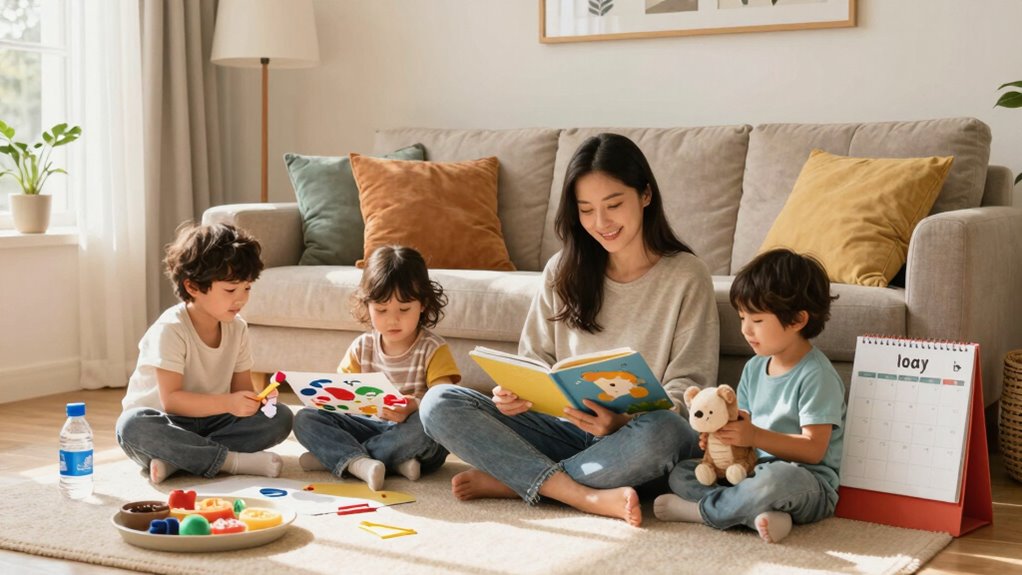
To prepare a stable weekend routine after divorce, communicate clearly with your co-parent to coordinate plans and set consistent schedules. Involve your child in choosing activities and balance structured fun with downtime for relaxation. Offer emotional support by validating feelings and creating rituals that strengthen your bond. Stay flexible to adapt to changing circumstances, and regularly review the routine to guarantee it remains predictable and comforting. Keep building on these strategies to create a nurturing environment that promotes security and happiness.
Key Takeaways
- Establish consistent weekend routines and clear communication with the co-parent to ensure plans are predictable and aligned.
- Provide emotional support by listening, reassuring, and incorporating special rituals to strengthen your child’s sense of security.
- Involve your child in planning activities to foster a sense of control, while balancing structured events with downtime.
- Maintain open, respectful communication with the co-parent to prevent misunderstandings and promote a stable environment.
- Create a nurturing environment by addressing emotional needs, recognizing family dynamics, and offering reassurance and stability.

Divorce can considerably disrupt a child’s sense of stability, especially during weekends when routines often provide comfort and predictability. As a parent, you might notice your child feeling more anxious or uncertain about their schedule. To help them regain a sense of normalcy, establishing a consistent weekend routine is essential. Clear co-parenting communication is the foundation for creating this stability; it ensures both you and your ex-partner are on the same page about plans, activities, and expectations. When everyone’s aligned, your child feels more secure, knowing that their schedule won’t change unexpectedly. This also reduces confusion and potential conflicts, making weekends more predictable and calmer.
Providing emotional support plays a crucial role in helping your child adjust to the new routine. Listening to their concerns, validating their feelings, and reassuring them that they are loved and supported can ease their worries. Incorporate small rituals, like a favorite breakfast or a special handshake, to foster emotional connection and comfort. Showing understanding and patience during transitions reminds your child that, despite the changes in family structure, they are still a priority. This emotional foundation allows them to approach weekends with more confidence and less fear of the unknown. Watching for signs of silly tantrums or unexpected behaviors can also help you address their needs more effectively. Additionally, being attentive to family dynamics can help you better understand their emotional responses and adjust your support accordingly. Recognizing the influence of astrological signs on their traits can sometimes offer insights into their behavior and emotional needs, although it should be considered alongside more tangible factors. Developing awareness of behavioral patterns can further enhance your ability to respond empathetically and supportively.
Providing emotional support and small rituals helps children feel loved, secure, and confident during family transitions.
Planning ahead is key to creating a stable weekend routine. Sit down with your child beforehand, and discuss what activities they enjoy and look forward to. Incorporate a mix of structured activities, like sports or hobbies, and downtime, such as reading or watching movies. Flexibility is still important, so be prepared to adapt if plans need to shift, but keep the core routine consistent. Regularly reviewing and adjusting the schedule together makes your child feel involved and respected, reinforcing that their needs and preferences matter. It also helps prevent surprises that can cause stress or disappointment.
Lastly, maintain open lines of communication with your co-parent throughout the weekend. Sharing updates about your child’s activities, moods, and any concerns helps prevent misunderstandings and ensures both households are contributing to a stable environment. When your child sees that both parents are communicating effectively and working together, it provides an additional layer of security. Fostering a collaborative family environment can make a significant difference in your child’s emotional well-being. Ultimately, a well-structured weekend routine, rooted in clear communication and emotional support, helps your child feel safe and loved, making weekends a time of connection and joy despite the family changes.
children's weekend activity planner
As an affiliate, we earn on qualifying purchases.
As an affiliate, we earn on qualifying purchases.
Frequently Asked Questions
How Can Parents Communicate Effectively About Weekend Plans?
You can communicate effectively about weekend plans by prioritizing clear co-parenting communication and scheduling consistency. Talk openly with your ex about plans early, using a shared calendar or messaging app to keep everyone on the same page. Be respectful and flexible when discussing changes, and confirm details regularly. This approach minimizes misunderstandings, helps your kids feel secure, and guarantees smooth, predictable weekends for everyone involved.
What Activities Are Best for Children to Ease Transition Stress?
You should choose fun outdoor activities like bike rides or nature walks, which help kids burn off energy and feel relaxed. Creative arts projects, such as painting or crafting, allow children to express their feelings and distract them from stress. Incorporating these activities into your weekend routine creates positive experiences, eases adjustment stress, and helps children feel secure and engaged during a challenging time.
How Do I Handle Conflicts Between Parents During Weekends?
Think of conflicts as storms on a calm lake. You stay steady by respecting co-parenting boundaries and providing emotional support to your child. When disagreements arise, communicate calmly and focus on your child’s needs, avoiding blame. Use clear boundaries to prevent escalation, and reassure your kid with consistent emotional support, helping them feel safe amidst the turbulence. This approach keeps the environment stable and nurturing for your child.
What Age-Appropriate Routines Should Be Established?
You should establish age-appropriate routines that include consistent bedtimes and meal scheduling, tailored to your child’s developmental stage. For younger kids, keep bedtime consistent and include calming activities; for older children, involve them in planning their meals. These routines provide stability and predictability, helping your kids feel secure despite changes. Stick to these schedules even on weekends, and communicate openly to reinforce a sense of normalcy and comfort.
How Can I Involve Children in Planning Their Weekends?
You can cultivate cooperation by involving your children in planning their weekends, encouraging their child autonomy and voice. Let them choose activities or suggest ideas, fostering a sense of ownership. Maintain routine flexibility by balancing their preferences with practical limits, making planning fun and fair. This approach helps children feel valued, promotes positive participation, and creates a peaceful, personalized weekend routine that adapts to their evolving needs and interests.
Conclusion
So, there you have it—ditch the chaos, embrace the routine, and watch your kids become little superheroes of stability. Who knew that a sprinkle of consistency could turn weekends from battlegrounds into blissful retreats? Remember, the goal isn’t to be perfect but to create a safe harbor where your kids can relax and thrive. Now, go forth and conquer those weekends—your kids will thank you (probably with hugs, or at least a smile).