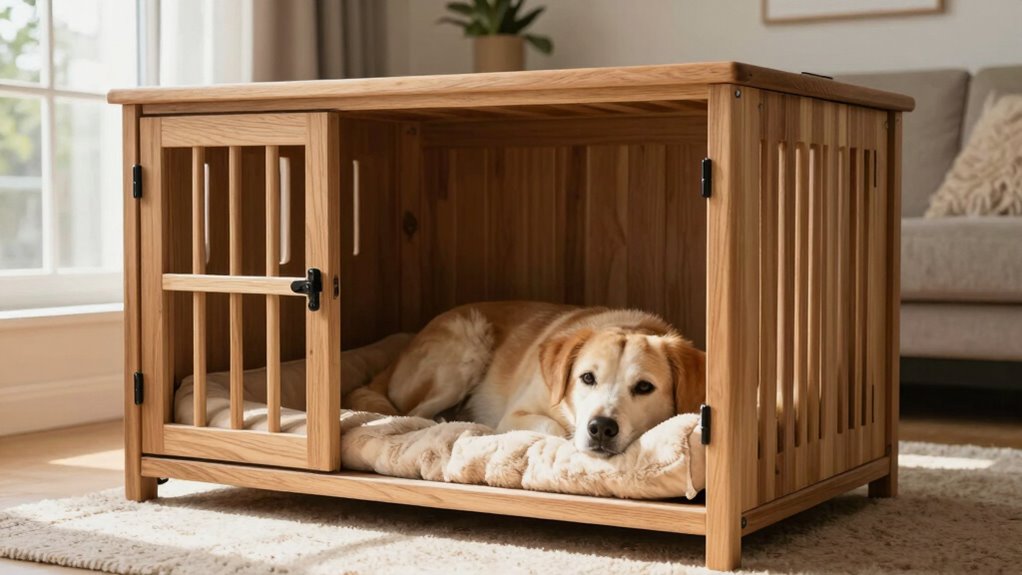
Choosing the right pet crate for shared custody is key to helping your pet feel secure and comfortable during shifts. Look for a sturdy, appropriately sized crate with good ventilation and safety features. Make sure it’s easy to clean and contains familiar items like toys or blankets. Consistent use across households supports your pet’s adjustment and reduces stress. Keep comfort and safety in mind—learn more about selecting the best crate for your pet’s needs below.
Key Takeaways
- Choose a sturdy, appropriately sized crate to ensure safety and comfort for pets during custody changes.
- Opt for crates with proper ventilation and easy-to-clean features to promote a healthy environment.
- Incorporate familiar items like toys and blankets to help pets feel secure and reduce stress.
- Establish consistent crate routines and positive reinforcement to help pets adapt smoothly.
- Regularly maintain and inspect the crate for damage to ensure ongoing safety and comfort.
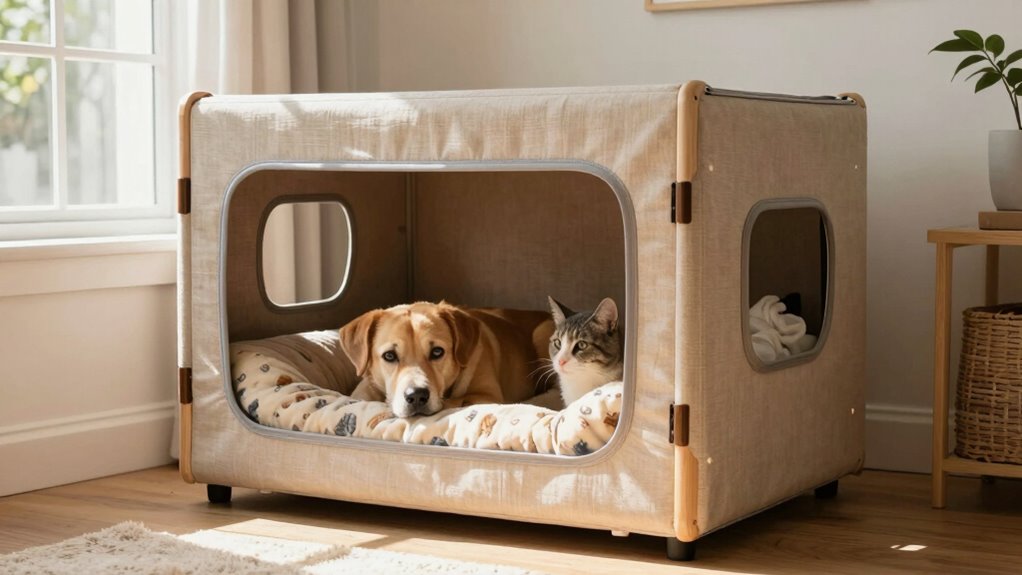
Divorce can complicate how you share custody of your beloved pet, making it imperative to find a solution that keeps your furry friend comfortable and secure. A well-chosen pet crate can serve as a central point for your pet’s routines, easing changeovers and reducing stress. When selecting a crate, think about how it will fit into both your and your ex-partner’s homes, guaranteeing it’s sturdy, safe, and appropriately sized. An ideal crate isn’t just a physical container—it’s also a tool for pet training and crate maintenance, which are indispensable for helping your pet adapt to the new shared arrangement. Proper crate safety** ensures your pet remains protected and comfortable during their time in the crate. Pet training plays a fundamental role in helping your pet see the crate as a safe space rather than a punishment. Consistent, positive reinforcement teaches your pet to associate the crate with comfort and security. Whether your pet is new to crates or has used one before, establishing a routine will make changeovers smoother. Using treats, praise, and gentle encouragement during crate training sessions helps your pet develop a positive attitude toward their designated space. When both you and your ex-partner are involved in these training efforts, your pet begins to understand that the crate is a part of their everyday life, regardless of which home they’re in. Crate maintenance is just as important as choosing the right crate and training your pet. Regular cleaning prevents odors and keeps the space inviting. Check for any damage or wear, like broken latches or sharp edges, to guarantee your pet’s safety. Maintaining a clean, comfortable environment helps your pet feel secure and reduces the likelihood of them developing anxiety around crate time. Additionally, proper crate ventilation is essential for ensuring your pet’s comfort during extended periods in the crate. Incorporating knowledge of crate materials can also help you select a crate that best suits your pet’s needs and safety. Understanding crate safety features can further enhance your pet’s protection and well-being. Recognizing the importance of biodiversity and sustainable practices in pet care can contribute to more eco-friendly choices, such as selecting environmentally responsible crate materials. Keeping familiar items inside the crate, like a favorite blanket or toy, can provide comfort during changeovers. When both households practice consistent crate maintenance, your pet’s experience remains positive, and they’re less likely to develop behavioral issues** stemming from discomfort or neglect.

Midwest Homes for Pets 42-Inch New World Crate for Large Breeds, 71-90 lbs, Double Door Folding Dog Crate, Leak-Proof Tray & Secure Latches, Portable, Durable & Easy to Assemble
- Ideal for Large Dogs: Fits 71-90 lb breeds like Retrievers
- Secure and Safe Design: Rounded corners, slide-bolt latches, Paw Block
- Durable Metal Construction: Rust-resistant black e-coat finish
As an affiliate, we earn on qualifying purchases.
As an affiliate, we earn on qualifying purchases.
Frequently Asked Questions
How Do I Introduce the Crate to My Pet?
To introduce the crate to your pet, start with positive training techniques. Place the crate in a quiet, comfortable spot, ensuring it’s easily accessible. Encourage your pet to explore it by placing treats and toys inside, and praise them when they do. Keep the door open initially, gradually closing it for short periods. Over time, increase crate time, always using positive reinforcement and maintaining consistent crate placement to build your pet’s comfort.
What Size Crate Is Best for Multiple Pets?
For multiple pets, choose a spacious crate that allows comfortable pet segregation and promotes effective crate training. Generally, opt for a large enough size where each pet can stand, turn around, and lie down without discomfort. This helps reduce territorial disputes and eases their adjustment. Make certain the crate’s size is suitable for the largest pet, and introduce it gradually to foster positive associations and prevent stress during shared custody arrangements.
How Can I Ensure the Crate Is Comfortable?
To guarantee the crate is comfortable, choose one with good crate ventilation to keep fresh air flowing and prevent overheating. Opt for a crate made from durable, non-toxic materials that can withstand your pets’ activity. Add soft bedding for comfort and consider placing familiar toys inside. Regularly clean the crate to maintain hygiene, and make sure it’s the right size so your pets have enough space to move comfortably.
Should I Label the Crate for Each Owner?
Think of the crate as a tiny home with a story to tell. Labeling options like pet personalization add a warm touch, making each owner’s space clear and comforting for your pet. You should label the crate for each owner, using tags or stickers, so everyone knows which space is theirs. This simple step helps your pet feel secure and reduces confusion during shared custody, turning the crate into a cozy, personalized haven.
How Often Should the Pet Be in the Crate?
You should limit crate time to prevent pet anxiety and support effective crate training. Generally, avoid keeping your pet in the crate for more than a few hours at a stretch, especially during the day. Use the crate for short periods to help your pet feel secure, gradually increasing time as they become comfortable. Regular breaks, playtime, and positive reinforcement are key to successful crate training and reducing stress.
Conclusion
Choosing the right pet crate is like giving your pet a cozy home within a busy neighborhood—a safe haven during times of change. It helps your furry friend adjust and feel secure, even when life feels uncertain. By selecting a thoughtful crate, you’re not just providing comfort; you’re building a bridge of trust between you, your ex, and your pet. With patience and care, this new routine can become a path toward harmony for everyone involved.