
Co-parenting journals for divorced parents fall into two camps: documentation-first logs built for custody records and possible court use, and communication-first journals designed to reduce conflict between households. My top pick, the Co-Parenting Log: Court-Ready Documentation and Planner, handles both jobs better than anything else in this lineup, with structured entry pages that hold up as formal records. For parents who mainly want smoother handoffs, Back and Forth: Kids First Back and Forth Journal takes a lighter, shared-logbook approach, while The Complete Child Custody Journal suits high-conflict situations where every expense and message needs a paper trail. The main tradeoff you’ll face is between usability and legal thoroughness — the most detailed journals can feel like paperwork, and the friendliest ones may not hold up in a dispute. Read on for the full breakdown of all 13.

Get gifts for the two of you delivered free — and shop member deals
- Fast, free delivery on millions of items
- Access to Prime Big Deal Days deals on October 6–7
- Prime Video, Amazon Music and more included
Key Takeaways
- Only three journals in this lineup (the Co-Parenting Log: Court-Ready Documentation, The Complete Child Custody Journal, and the Co-Parenting Journal: Child Custody Documentation & Calendar) were structured deliberately for court use; most others are organizational tools first.
- Expense-tracking pages proved to be the biggest differentiator — journals that combine visitation logs with reimbursement tracking eliminate the need for a second app or spreadsheet.
- Child-inclusive journals like Two Parents, One Voice and Home Sweet Homes trade documentation rigor for emotional support, making them the wrong choice for high-conflict custody situations but strong picks for cooperative co-parents.
- Physical format mattered more than expected: 8″ x 10″ landscape-style layouts made weekly grids easier to fill in, while smaller formats fit better in a backpack that travels between homes.
- The biggest pattern across the category is the assumption of a single-child household — parents with multiple kids should verify per-child page capacity before buying, since several journals barely cover two children.
| Child Custody Journal – 8″ x 10″ Co-Parenting Record Log, 143 Pages |  | Best for Court Preparation | Product Type: Child custody journal and record log | Size: 8″ x 10″ | Page Count: 143 pages | VIEW LATEST PRICE | See Our Full Breakdown |
| Navigate Co-Parenting: Child Custody Log |  | Best Budget Starter Pick | Product Type: Child custody log | Primary Use: Visitation and exchange tracking | Documentation Areas: Schedules, communications, and agreements | VIEW LATEST PRICE | See Our Full Breakdown |
| Child Custody Visitation Planner and Co-Parenting Log Book |  | Best for Forward Planning | Product Type: Child custody journal with planner calendar | Intended Use: Visitation planning and co-parenting record keeping | Primary Audience: Divorced single parents and guardians | VIEW LATEST PRICE | See Our Full Breakdown |
| Back and Forth: Kids First Back and Forth Journal – A Logbook for Better Co-Parenting Communication |  | Best for Cooperative Co-Parents | Product Type: Co-parenting communication journal | Format: Logbook | Intended Use: Communication between parents | VIEW LATEST PRICE | See Our Full Breakdown |
| Co-Parenting Journal & Log Book: Track Visitation, Communication, Expenses, and Vital Child Information |  | Best All-in-One Organizer | Format: Journal and log book | Primary Use: Co-parenting organization, documentation, and planning | Documentation Areas: Visitation, communication, expenses, and support payments | VIEW LATEST PRICE | See Our Full Breakdown |
| Two Parents, One Voice: A Collaborative Co-Parenting Journal for Parents and Girls |  | Best for Parent-Child Collaboration | Product Type: Co-Parenting Journal | Intended Use: Collaborative co-parenting | Target Audience: Parents and girls | VIEW LATEST PRICE | See Our Full Breakdown |
| Two Homes, One Team: A Co-Parenting Journal for Communication, Schedules, School, Health & Everything Kids Need Between Homes |  | Best for Whole-Child Coordination | Product Type: Co-Parenting Journal | Intended Use: Co-parenting communication and organization | Topics Covered: Communication, schedules, school updates, health information | VIEW LATEST PRICE | See Our Full Breakdown |
| Child Custody and Co-Parenting Journal | 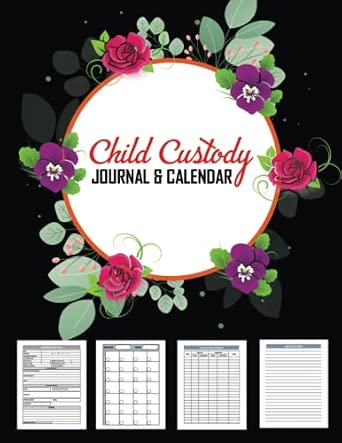 | Best for Flexible Record-Keeping | Product Type: Journal | Intended Use: Child custody and co-parenting documentation | Tracking Features: Expense tracking, communication log, visitation log, witness notes | VIEW LATEST PRICE | See Our Full Breakdown |
| Co-Parenting Log: Court-Ready Documentation and Planner |  | Best for Court-Focused Documentation | Product Type: Co-Parenting Log and Planner | Intended Use: Court-ready co-parenting documentation | Records Tracked: Visitation, communication, expenses, medical visits | VIEW LATEST PRICE | See Our Full Breakdown |
| The Complete Child Custody Journal: Comprehensive Tool for Documenting Visitation, Communication, Spending, and Child Support |  | Best for Detailed Financial Records | Product Type: Child Custody Journal | Dimensions: 8.5 x 11 inches | Use: Documenting visitation, communication, spending, and child support | VIEW LATEST PRICE | See Our Full Breakdown |
| Home Sweet Homes: A Journal & Planner for Co-Parents & Children |  | Best for Family-Friendly Collaboration | Product Type: Journal & Planner | Intended Use: Co-parenting organization | Audience: Co-parents and children | VIEW LATEST PRICE | See Our Full Breakdown |
| Co-Parenting Journal: Child Custody Documentation & Calendar |  | Best for Divorced Parents Building a Case File | Product Type: Co-parenting journal | Intended Users: Divorced men and women | Use Case: Child custody documentation and visitation tracking | VIEW LATEST PRICE | See Our Full Breakdown |
| Co-Parenting Communication and Parenting Time Log |  | Best Court-Ready Contingency Pick | Product Type: Custody documentation journal | Format: Log/journal | Intended Use: Co-parenting record keeping | VIEW LATEST PRICE | See Our Full Breakdown |
| co-parenting journals for divorced parent | Product Type | Intended Use | Format |
|---|---|---|---|
| Child Custody Journal | Child custody journal and record log | Visitation and communication tracking | — |
| Navigate Co-Parenting: Child C | Child custody log | — | Printed logbook |
| Child Custody Visitation Plann | Child custody journal with planner calendar | Visitation planning and co-parenting record keeping | — |
| Back and Forth: Kids First Bac | Co-parenting communication journal | Communication between parents | Logbook |
| Co-Parenting Journal & Log Boo | — | — | Journal and log book |
| Two Parents | Co-Parenting Journal | Collaborative co-parenting | Shared journal with space for notes, plans, and reflections |
| Two Homes | Co-Parenting Journal | Co-parenting communication and organization | — |
| Child Custody and Co-Parenting | Journal | Child custody and co-parenting documentation | — |
| Co-Parenting Log: Court-Ready | Co-Parenting Log and Planner | Court-ready co-parenting documentation | Structured log for consistent entries |
| The Complete Child Custody Jou | Child Custody Journal | — | Large-format paperback journal |
| Home Sweet Homes: A Journal & | Journal & Planner | Co-parenting organization | Combined journal and planner |
| Co-Parenting Journal: Child Cu | Co-parenting journal | — | — |
| Co-Parenting Communication and | Custody documentation journal | Co-parenting record keeping | Log/journal |
More Details on Our Top Picks
Child Custody Journal – 8″ x 10″ Co-Parenting Record Log, 143 Pages
Among the custody-focused journals in this lineup, this option stands out for its documentable, court-oriented structure. The generous 8″ x 10″ page size gives you real room to write detailed accounts of exchanges and communications — something the slimmer Back and Forth logbook doesn’t offer, since it’s built for brevity between cooperative parents rather than formal record-keeping. With 143 dedicated pages, this journal makes sense for parents who anticipate mediation or family court proceedings and need entries a lawyer can actually read and cite. Compared with the Co-Parenting Journal & Log Book, it trades expense-tracking breadth for a tighter focus on visitation and communication records. The tradeoff is longevity: 143 pages can fill quickly in high-conflict situations with frequent exchanges, and there’s no digital backup if the book is lost or damaged.
Pros:- Large 8″ x 10″ format leaves ample space for detailed, dated entries
- Purpose-built for family court and mediation documentation
- Combines visitation and communication tracking in one volume
- Structured layout that a lawyer or mediator can easily reference
Cons:- 143-page count limits usefulness for long-term or high-volume documentation
- Manual record keeping with no digital storage or backup option
Best for: Parents actively preparing for mediation or family court who need legible, detailed written records
Not ideal for: High-conflict co-parents with near-daily exchanges — 143 pages will fill fast and there’s no way to archive finished volumes digitally
- Product Type:Child custody journal and record log
- Size:8″ x 10″
- Page Count:143 pages
- Intended Use:Visitation and communication tracking
- Primary Audience:Parents and custodians
- Key Use Case:Family court preparation and mediation
- Documentation Areas:Visitation schedules and co-parenting communication
Our verdict“Buy this if a court date or mediation session is on the horizon and you need a clean, detailed paper trail.”
Navigate Co-Parenting: Child Custody Log
This log earns its spot as the low-commitment entry point for co-parents who are newly separated and just want one place to record exchanges and agreements before deciding on a heavier system. Where the Child Custody Journal – 8″ x 10″ is built for formal legal documentation, this one is better suited to everyday schedule-keeping — logging pickups, drop-offs, and verbal agreements so nothing gets disputed later from memory alone. It’s a lighter tool than the Co-Parenting Journal & Log Book, which layers in expenses and child information sections. The real tradeoff is transparency: published details are sparse, so buyers can’t verify page count or layout before ordering, and parents with complex custody arrangements will likely need supplemental notes or a second journal for specifics.
Pros:- Centralizes visitation schedules, exchanges, and agreements in one place
- Simple format that doesn’t overwhelm first-time journal keepers
- Supports clearer documentation than scattered texts and notes
- Low-commitment way to test whether journaling works for your family
Cons:- Very limited product details available to confirm layout or page count
- May not capture complex custody arrangements without supplemental record keeping
Best for: Newly separated parents wanting an inexpensive, simple log to start documenting exchanges from day one
Not ideal for: Parents with complex or rotating custody schedules who need a detailed, structured layout to capture nuances
- Product Type:Child custody log
- Primary Use:Visitation and exchange tracking
- Documentation Areas:Schedules, communications, and agreements
- Format:Printed logbook
- Approach:Centralized co-parenting record
- Difficulty Level:Beginner-friendly
Our verdict“A reasonable first journal for parents starting fresh, as long as you’re comfortable ordering without detailed layout information.”
Child Custody Visitation Planner and Co-Parenting Log Book
What separates this pick from the Navigate Co-Parenting log is the built-in planner calendar — it’s designed for parents who need to map out upcoming visitation schedules, not just record what already happened. That forward-looking structure makes this model better suited to co-parents actively coordinating schedules week to week, whereas the Child Custody Journal – 8″ x 10″ leans backward into documentation for legal purposes. The combination of planning plus logging in one volume means divorced or single parents can see the schedule and the record side by side, which reduces the “wait, whose weekend is it?” friction. The honest tradeoff: the publisher provides little descriptive detail, and no journal of this kind replaces formal legal documentation — parents heading to court will still want a court-oriented format.
Pros:- Planner calendar lets you schedule visitation ahead of time, not just log it after
- Dedicated log for co-parenting communications alongside the calendar
- Combines two functions most journals offer separately
- Accessible format for guardians and single parents managing custody alone
Cons:- No detailed product description to verify page count or structure
- Not a substitute for formal legal documentation when court is imminent
Best for: Divorced or single parents coordinating rotating visitation schedules who want planning and record-keeping in one book
Not ideal for: Parents whose main goal is building a court-ready evidence file — the planner emphasis dilutes the documentation focus
- Product Type:Child custody journal with planner calendar
- Intended Use:Visitation planning and co-parenting record keeping
- Primary Audience:Divorced single parents and guardians
- Key Components:Planner calendar and co-parenting log
- Documentation Areas:Visitation schedules and communication records
- Orientation:Forward planning plus retrospective logging
Our verdict“Pick this if coordinating future schedules matters as much as recording past ones.”
Back and Forth: Kids First Back and Forth Journal – A Logbook for Better Co-Parenting Communication
This is the most relationship-oriented journal in the batch. Instead of framing every entry as potential evidence — the approach of the Child Custody Journal – 8″ x 10″ — the Kids First logbook is designed to travel between households and keep both parents informed about the child’s days, moods, and needs. That makes it a genuinely different product: a shared communication tool rather than a one-sided record. Compared with the Child Custody Visitation Planner, it sacrifices scheduling structure in favor of child-focused daily updates that reduce misunderstandings at handoffs. The catch is that this only works with buy-in from both parents; a journal that only one person writes in creates exactly the imbalance it’s meant to prevent. It’s also thin on published specs, so the layout and page count are unverifiable before purchase.
Pros:- Structured logbook format tailored to handoff-to-handoff communication
- Keeps the child’s wellbeing at the center of every exchange
- Written record helps defuse disputes over what was said or agreed
- Shared design encourages both parents to stay informed
Cons:- Depends entirely on consistent participation from both parents
- Not sufficient for legally complex custody situations
- Limited product details make layout and page count hard to verify
Best for: Cooperative co-parents in amicable arrangements who want a shared, child-centered notebook that travels between homes
Not ideal for: High-conflict situations — if one parent won’t participate or you need legally defensible records, this shared format falls short
- Product Type:Co-parenting communication journal
- Format:Logbook
- Intended Use:Communication between parents
- Design Philosophy:Child-focused, shared documentation
- Documentation Areas:Exchanges, updates, and inter-parent communication
- Best Arrangement Type:Cooperative two-household setups
Our verdict“Choose this only if both parents are on board and the goal is smoother communication, not courtroom documentation.”
Co-Parenting Journal & Log Book: Track Visitation, Communication, Expenses, and Vital Child Information
This is the broadest tracker in the batch, covering visitation, communication, expenses, support payments, and core child information in a single volume. Where the Child Custody Journal – 8″ x 10″ goes deep on visitation and communication, and Back and Forth handles only communication, this one tries to be the whole filing cabinet — which is exactly its appeal for parents juggling reimbursements, school forms, and schedules across two households. That breadth is also the tradeoff: a multi-section journal gives each category fewer pages than a specialized book, so parents with heavy documentation needs in one area may outgrow sections quickly. Buyers should also note that published details are thin, so the quality of the expense-tracking layout can’t be confirmed in advance. Still, for organization-minded co-parents, one book beats three.
Pros:- Covers more tracking categories than any comparable journal in this lineup
- Expense and support payment sections reduce disputes over money
- Doubles as both an organizer and a planner
- Consolidated format means one book instead of several
Cons:- Multi-section format spreads pages thin across categories
- Minimal published information to verify layout or build quality before buying
Best for: Detail-oriented co-parents who want visitation, expenses, support payments, and child info consolidated in one binder-style volume
Not ideal for: Parents who need deep capacity in a single category — split sections mean fewer pages per topic than specialized journals
- Format:Journal and log book
- Primary Use:Co-parenting organization, documentation, and planning
- Documentation Areas:Visitation, communication, expenses, and support payments
- Child Information Sections:Included for vital details
- Function:Combined organizer and planner
- Legal Utility:Suitable for general record-keeping and documentation
- Approach:All-in-one multi-category tracking
Our verdict“The right pick if you’d rather maintain one comprehensive journal than several specialized ones.”
Two Parents, One Voice: A Collaborative Co-Parenting Journal for Parents and Girls
Most journals in this category are built for logistics — schedules, expenses, custody records. Two Parents, One Voice takes a different approach entirely: it is designed as a shared communication space for parents and their daughter, not just between the two adults. Where Two Homes, One Team centralizes household logistics, this one emphasizes emotional consistency and cooperative planning, making it a rare pick for families who want the child involved rather than managed around.
The tradeoff is real, though. If your priority is court-ready documentation or expense tracking, this journal will not fill that role, and the sparse product details make it harder to evaluate structure before buying. This pick makes the most sense for low-conflict co-parents in therapy or mediation who want a unified parenting voice.
Pros:- Encourages cooperative, child-inclusive communication between homes
- Designed specifically for parents and girls rather than generic audiences
- Provides a shared space for notes, plans, and reflections
- Supports consistency in parenting approach across households
Cons:- Limited published details make structure hard to evaluate before purchase
- Too niche for general co-parenting or custody documentation needs
- Not a substitute for professional mediation or legal guidance
Best for: Low-conflict co-parenting families with a daughter who want a shared, child-inclusive journal rather than a pure record-keeping tool
Not ideal for: Parents building a legal documentation file — it lacks the visitation and expense logs found in the Child Custody and Co-Parenting Journal
- Product Type:Co-Parenting Journal
- Intended Use:Collaborative co-parenting
- Target Audience:Parents and girls
- Format:Shared journal with space for notes, plans, and reflections
- Primary Focus:Communication and consistency between parents
- ASIN:B0DLH14W2L
Our verdict“Choose this only if your co-parenting relationship is cooperative and your goal is unified communication with your daughter rather than formal records.”
Two Homes, One Team: A Co-Parenting Journal for Communication, Schedules, School, Health & Everything Kids Need Between Homes
This option stands out for breadth of coverage. Rather than specializing in custody records like the Child Custody and Co-Parenting Journal, Two Homes, One Team aims to be the single binder that follows the child between homes — schedules, school updates, health information, and day-to-day communication all in one place.
That scope is both its strength and its weakness. Compared with Two Parents, One Voice, which is narrower but more emotionally focused, this journal is the practical workhorse for coordinating soccer carpools and medication schedules across households. The catch: it only works when both parents actively participate. In high-conflict situations where one parent won’t fill it in, you’re better served by a court-oriented log.
Pros:- Centralizes schedules, school details, and health information in one place
- Covers the full range of child-related logistics between homes
- Supports organized, routine communication between co-parents
- Reduces missed details during handoffs between households
Cons:- Requires consistent buy-in and participation from both parents
- Less effective in high-conflict situations without additional support such as mediation or apps
Best for: Cooperative divorced parents in two households who want one centralized hub for schedules, school, and health details
Not ideal for: High-conflict co-parents — the collaborative design collapses if one parent refuses to participate
- Product Type:Co-Parenting Journal
- Intended Use:Co-parenting communication and organization
- Topics Covered:Communication, schedules, school updates, health information
- Structure:Centralized tracking for children moving between two homes
- Audience:Separated or divorced parents
- ASIN:B0HJXYRT8X
Our verdict“The strongest pick for cooperative two-home families who need a shared operational hub rather than a legal record.”
Child Custody and Co-Parenting Journal
Where The Complete Child Custody Journal locks you into fixed sections at a large 8.5 x 11 format, the Child Custody and Co-Parenting Journal bets on flexibility. The undated calendar means you can start mid-custody-battle without wasting pages, and the inclusion of witness notes is unusual in this lineup — a genuine advantage if your situation may involve third parties.
Compared with the Co-Parenting Log: Court-Ready Documentation and Planner, this one trades some formality for adaptability: blank pages let you record what matters to your case rather than what a template dictates. The downside is discipline. Manual written tracking demands consistent upkeep, and a spotty paper log is weaker than a well-maintained digital record. Confirm with your attorney what your court actually requires before relying on it.
Pros:- Organizes custody expenses, communication, and visitation records together
- Undated calendar allows starting anytime without wasted pages
- Includes dedicated space for witness details and general notes
- Neutral design suitable for both women and men
Cons:- Manual written tracking is less convenient than digital co-parenting apps
- May not meet specific legal documentation requirements without attorney guidance
Best for: Parents preparing for custody proceedings who want a flexible, undated log with room for witness notes and freeform entries
Not ideal for: Parents who want structure and prompts — the blank pages demand self-discipline that not everyone will sustain
- Product Type:Journal
- Intended Use:Child custody and co-parenting documentation
- Tracking Features:Expense tracking, communication log, visitation log, witness notes
- Calendar:Undated for flexible use
- Extra Pages:Blank pages for additional notes
- Audience:Women and men
- ASIN:B08LJ9TL7M
Our verdict“A solid middle-ground choice for custody documentation when flexibility and witness records matter more than rigid structure.”
Co-Parenting Log: Court-Ready Documentation and Planner
Of all the picks in this roundup, this is the one that leans hardest into legal readiness. The Child Custody and Co-Parenting Journal keeps records flexible; the Co-Parenting Log: Court-Ready Documentation and Planner is structured specifically so entries hold up when a judge or evaluator reads them. It tracks visitation, communication, expenses, and medical visits in a consistent format — exactly the pattern of documentation family courts tend to expect.
The tradeoff is tone. Unlike Two Homes, One Team, which assumes cooperation, this journal assumes adversarial possibility, and using it can shape the co-parenting relationship that way. Sparse published specifications also mean you’re trusting the format sight-unseen more than with the Complete Child Custody Journal.
Pros:- Designed specifically for court-ready documentation format
- Covers visitation, communication, expenses, and medical records
- Supports consistent, structured recordkeeping over time
- Combines log and planner functions in one volume
Cons:- No detailed product specifications published, making structure hard to verify beforehand
- Manual log format requires disciplined, ongoing upkeep to be useful
Best for: Parents actively involved in or anticipating custody disputes who need consistent, court-oriented records
Not ideal for: Amicable co-parents — the litigation-ready framing is overkill and can add friction to a working relationship
- Product Type:Co-Parenting Log and Planner
- Intended Use:Court-ready co-parenting documentation
- Records Tracked:Visitation, communication, expenses, medical visits
- Format:Structured log for consistent entries
- Primary Audience:Co-parents in or preparing for legal proceedings
- ASIN:B0GQQ9QGHH
Our verdict“The pick for parents whose priority is a defensible written record, provided they can commit to maintaining it consistently.”
The Complete Child Custody Journal: Comprehensive Tool for Documenting Visitation, Communication, Spending, and Child Support
What separates The Complete Child Custody Journal from the slimmer Child Custody and Co-Parenting Journal is capacity. The 8.5 x 11-inch format gives generous room for detailed entries — valuable when you’re documenting child support payments and spending alongside visitation, since financial records benefit from specificity that smaller formats compress.
Compared with the Co-Parenting Log: Court-Ready Documentation and Planner, this journal casts a wider net — child support tracking is its distinguishing section — though it makes fewer claims about court formatting. The larger page size also means a bulkier book to carry between homes or to attorney meetings, and like every manual option here, it lives or dies by your consistency in filling it out.
Pros:- Dedicated sections for visitation, communication, spending, and child support
- Large 8.5 x 11-inch format provides ample space for detailed notes
- Consolidates multiple custody record types in one volume
- Well suited to financial documentation that requires specificity
Cons:- Requires manual entry and sustained recordkeeping discipline
- May not replace formal legal documentation required by courts
- Bulkier than smaller journals for carrying between households
Best for: Parents who need thorough documentation of child support and spending alongside visitation and communication, with room to write in detail
Not ideal for: Parents who want something portable — the full-letter-size format is heavier and bulkier than standard journals
- Product Type:Child Custody Journal
- Dimensions:8.5 x 11 inches
- Use:Documenting visitation, communication, spending, and child support
- Layout:Dedicated sections for each custody record type
- Format:Large-format paperback journal
- Primary Audience:Parents managing custody and child support documentation
- ASIN:B0D46SL5Q5
Our verdict“The best fit when child support and expense detail matter most and you have the discipline to maintain a full-size manual ledger.”
Home Sweet Homes: A Journal & Planner for Co-Parents & Children
Most journals in this category are built for one parent’s records, but Home Sweet Homes takes a different approach by making the child a participant rather than just a subject. It blends a planner with journaling space, so schedules, notes, and key details live in one shared format that both households can follow. Compared with the Co-Parenting Journal: Child Custody Documentation & Calendar, which is clearly aimed at record-keeping for legal purposes, this one leans toward consistency and connection between homes. That said, the collaborative design is also its limitation: it works only when both parents buy in, and there’s little published detail about page count or layout, so buyers are trusting the concept more than the specs. It’s a relationship tool first and a documentation tool second.
Pros:- Includes children in the process, which builds consistency across households
- Combines planning and journaling functions in a single volume
- Encourages communication rather than one-sided record-keeping
- Practical format for tracking schedules and child-related details
Cons:- Requires cooperation from both parents to deliver its full value
- Very limited product details available about layout, length, and durability
- Not structured for legal documentation or custody disputes
Best for: Co-parents with an amicable dynamic who want a shared planner that keeps both households and the kids on the same page
Not ideal for: High-conflict co-parenting situations where a shared journal could be altered or where court-ready documentation is the priority
- Product Type:Journal & Planner
- Intended Use:Co-parenting organization
- Audience:Co-parents and children
- Format:Combined journal and planner
- Tracks:Schedules, notes, child-related information
- Approach:Collaborative, child-inclusive
Our verdict“This pick makes the most sense for cooperative co-parents who want a shared, child-inclusive planner rather than a legal record.”
Co-Parenting Journal: Child Custody Documentation & Calendar
This journal sits firmly on the documentation side of the category. Where Home Sweet Homes invites the child into the process, this one is a private record-keeper for a divorced parent — covering visitation, communications, witness details, and expenses under one cover. The witness information section is the detail that separates it from lighter logs like the Co-Parenting Log: Court-Ready Documentation and Planner, giving entries extra weight if a custody matter escalates. The tradeoff is density: because it tracks so many categories, it demands disciplined, near-daily manual entry, and a lapsed week leaves visible gaps. Sparse product details about page count and binding quality also mean buyers can’t verify durability before ordering. For parents who want everything documented in one place, though, the breadth is hard to beat.
Pros:- Covers a wide range of records: visitation, communication, expenses, and witnesses
- Structured calendar built specifically for custody tracking
- Designed for divorced men and women rather than general planners
- Witness detail section adds credibility to entries
Cons:- Requires consistent manual entry or the record loses its value
- Little published information about layout, length, or physical durability
- Dense multi-category format can feel overwhelming for casual users
Best for: Divorced or separated parents who want a single volume covering visitation, expenses, communications, and witness records for potential legal use
Not ideal for: Parents seeking a collaborative shared journal or those unlikely to keep up with daily manual entries
- Product Type:Co-parenting journal
- Intended Users:Divorced men and women
- Use Case:Child custody documentation and visitation tracking
- Tracks:Visitation, communication, witness details, expenses
- Includes:Structured calendar
- Approach:Single-parent record-keeping
Our verdict“Choose this if you’re a divorced parent assembling a thorough personal case file and can commit to regular entries.”
Co-Parenting Communication and Parenting Time Log
This option stands out for one reason: it is explicitly framed as court-ready documentation. While the Co-Parenting Journal: Child Custody Documentation & Calendar covers similar ground, this log goes further with dedicated sections for missed parenting time and incident records — the two categories that matter most when a custody arrangement breaks down. Exchanges and communications get their own structured entries, which makes the record easy to reconstruct months later. The honest tradeoff is scope and support: it doesn’t replace legal advice or a court-approved tracking app, and like every paper journal here, it lives or dies on consistent manual entry. Compared with collaborative options like Two Homes, One Team, it’s also a colder, more defensive tool by design. That’s exactly the point — this is a journal for parents who hope they never need it but want proof if they do.
Pros:- Explicitly designed for court-ready documentation
- Dedicated tracking of missed parenting time and incidents
- Structured log format for visitation, exchanges, and communications
- Organizes details so records hold up under later review
Cons:- Requires diligent manual entry to stay useful
- Does not replace legal advice or official custody tracking apps
- Defensive tone and format offer little for relationship-building
Best for: Co-parents in tense or deteriorating arrangements who want structured, court-presentable records of exchanges, missed time, and incidents
Not ideal for: Parents who want a communication-building or shared journal, or who expect a paper log to substitute for legal counsel or official tracking apps
- Product Type:Custody documentation journal
- Format:Log/journal
- Intended Use:Co-parenting record keeping
- Tracks:Visitation, exchanges, missed parenting time, incidents, communication
- Legal Feature:Court-ready documentation
- Approach:Single-parent legal contingency record
Our verdict“This model is better suited to parents preparing for possible legal scrutiny than anyone seeking a cooperative shared journal.”

How We Picked
I evaluated these 13 journals against four buyer-relevant criteria. Documentation strength came first: does the journal create dated, specific, tamper-resistant records that a lawyer or judge would actually take seriously, or does it just help a parent stay organized? Usability was second — a court-ready log that takes ten minutes to fill out after every exchange will get abandoned within a month, so I weighed page layout, prompt clarity, and how realistically a tired parent would keep up with it. Third, I scored breadth of coverage: visitation tracking alone is table stakes; the better journals fold in communication logs, expenses, medical notes, and school events.
Fourth, I considered fit for different co-parenting relationships, because a cooperative split and a high-conflict one demand entirely different tools. Journals meant to be shared between homes were judged on tone and durability, while single-parent logs were judged on evidentiary detail. The ranking reflects a simple hierarchy: journals that combine legal-grade structure with daily practicality placed highest, specialized tools earned mid-tier spots for doing one job exceptionally well, and narrower or single-purpose journals filled specific niche roles at the bottom of the list.
Factors to Consider When Choosing Co-parenting Journals For Divorced Parents
Before choosing a co-parenting journal, it helps to understand what separates a genuinely useful tool from a notebook with a custody-themed cover. These are the factors that shaped my rankings — and the mistakes I saw repeated across the category.Court-Ready Structure vs. Casual Organization
The single biggest mistake buyers make is assuming any co-parenting journal will serve as legal documentation. A court-ready journal includes spaces for dates, times, witnesses, and objective descriptions — not feelings. If your custody arrangement is settled and amicable, a structured communication log is probably overkill and can even signal distrust to your co-parent. But if you anticipate a modification hearing, reimbursement dispute, or allegations down the road, look for journals with numbered or dated entry pages and minimal open-ended writing space. The gap between the two styles is wide: casual journals invite narrative reflections that carry little evidentiary weight, while strict logs can feel clinical in a low-conflict home. Match the tool to the actual temperature of your co-parenting relationship, not the worst-case scenario you fear.
Shared Journal or Single-Parent Log
This decision shapes everything else. A shared journal that travels between homes works only when both parents buy in — otherwise it becomes a one-sided diary your ex never opens, which breeds resentment rather than communication. A single-parent log keeps your records independent and private, which is safer in contentious situations but does nothing to improve collaboration. Some parents mistakenly buy a shared journal hoping it will fix a broken communication pattern; a notebook cannot do that work. A practical middle path many co-parents take: each parent keeps their own documentation log, and a slim shared notebook handles just handoff logistics like medication schedules and homework notes. Before buying, be honest about whether your co-parent would actually write in a shared book — if the answer is no, buy accordingly.
Expense and Reimbursement Tracking
Money disputes outrank almost every other source of post-divorce conflict, and many buyers underestimate how much they need expense-tracking pages. A journal that logs visitation but not spending forces you to run a separate spreadsheet, which fragments your records exactly when you need them consolidated. Look for pages that capture the date, amount, category, who paid, and whether reimbursement was requested — that last field is what makes a record persuasive in a dispute. The common mistake here is relying on receipts alone; receipts show purchases but not the agreement context around them. If your divorce decree splits expenses by percentage, prioritize journals with fields for calculating each parent’s share. Parents with minimal shared expenses can deprioritize this and choose based on other features instead.
Capacity, Format, and Durability
Page count tells you how long the journal lasts, but how pages are allocated matters more than the raw total. A 143-page book devoted to daily entries can outlast a 300-page book padded with reference material. Check whether the journal supports multiple children — a surprising number assume one child per page, which doubles your writing workload with two kids. Physical format matters too: an 8″ x 10″ layout gives weekly calendar grids room to breathe, while a smaller book fits in the backpack that shuttles between homes. Durability is genuinely a factor for shared journals, since a spiral binding that survives a school bag for a year is doing real work. Finally, consider whether you want a dated journal (forces consistency, expires) or an undated one (flexible, but easier to neglect).
Emotional Support and Child Involvement
An often-overlooked category factor is whether the journal serves the child’s emotional needs in addition to the parents’ logistics. Journals designed for a parent and child to fill in together — particularly those aimed at daughters or younger kids — help children process the divorce and feel heard across two households. The tradeoff is real: these journals are not documentation tools, and treating them as such wastes their purpose. They also require a child old enough to engage, roughly seven or eight and up, and a cooperative co-parent who won’t weaponize what the child writes. The mistake I see is parents buying an emotional-support journal when what they actually need is a custody record, or the reverse. If documentation is your priority, buy the log first and add a feelings journal later — trying to get one book to do both jobs usually means it does neither well.
Frequently Asked Questions
Can a handwritten co-parenting journal actually be used as evidence in court?
In many jurisdictions, a contemporaneous written record can be admitted or at least referenced in custody disputes, but its usefulness depends heavily on how it was kept. A journal with dated, specific, factual entries — what happened, when, who was present — carries far more weight than one filled with opinions and emotional narrative. Judges tend to discount records that look curated after the fact, which is why pre-printed entry pages with fixed fields help demonstrate consistency. That said, laws vary by state and country, and some courts prefer records from dedicated co-parenting communication apps with timestamps. If courtroom use is a realistic possibility, show the journal format to your attorney before relying on it, and keep entries neutral in tone even when you’re frustrated.
Is a paper journal better than a co-parenting communication app?
Each has distinct advantages, and many parents end up using both. Apps provide timestamps, read receipts, and uneditable messages, which makes them stronger as pure evidence. A paper journal wins on other fronts: it can’t be deleted, it works during exchanges where phones are impractical, it can travel in a child’s backpack, and it invites a calmer, less performative style of communication than an app your lawyer might be monitoring. Paper also costs a fraction of subscription-based apps over a multi-year co-parenting arrangement. If your relationship is high-conflict and litigation is likely, an app is probably your primary tool and the journal a backup. In cooperative situations, a shared paper journal often feels less adversarial — nobody wants to co-parent through software that treats every message like a deposition.
What should I do if my co-parent refuses to use a shared journal?
This is common, and it shouldn’t derail your documentation efforts. If your co-parent won’t participate, switch your purpose from shared communication to single-parent record-keeping, and choose a journal designed for one writer rather than a back-and-forth logbook. Keep your entries factual and dated regardless, because a one-sided record still has value — it shows consistency and gives your attorney a timeline if disputes arise. Don’t use the journal to send messages your ex will never read; that’s just venting with extra steps. For the actual exchange of information, use whatever channel your co-parent will engage with, even if it’s imperfect, and log the fact that information was shared in your journal. The mistake to avoid is abandoning documentation entirely because the collaborative version failed.
How long should a co-parenting journal last, and when can I stop keeping one?
Most parents who keep these journals do so for two to five years, usually aligned with the period when custody arrangements are newest or most contested. If your custody order is final and exchanges have settled into a predictable rhythm with no disputes, you can taper to logging only exceptions — missed exchanges, unpaid reimbursements, significant incidents — rather than every visit. Parents renegotiating custody as children enter middle school or high school often restart detailed logging a year before any planned modification request. For expense tracking, you’ll want to continue as long as shared costs exist, since reimbursement disputes don’t expire with the custody schedule. A reasonable rule: keep detailed records until you’ve gone a full year without a disagreement, then downshift to exception-based logging rather than stopping cold.
Should my child write in the journal too?
It depends entirely on the child’s age and the tone of your co-parenting relationship. Journals built for parent-child collaboration — like those designed for daughters or younger kids — can genuinely help a child process the split and feel that both homes are connected. The risks are real, though: anything a child writes can be read by the other parent, and a child may censor themselves or feel pressured to perform happiness. Never use a child’s entries as evidence or bring them into adult disputes; that converts a support tool into a burden. A good approach for children under ten is a shared feelings journal kept at one home, while logistics journals stay parent-only. If your co-parent is hostile, skip child involvement in any written record entirely and let the child talk to a counselor instead.
Conclusion
After comparing all 13 journals, the right choice depends less on quality — most are competent — and more on what your co-parenting relationship actually needs. Best overall goes to the Co-Parenting Log: Court-Ready Documentation and Planner, which balances legal-grade structure with pages a tired parent will realistically fill out. For best value, the Co-Parenting Journal & Log Book covers visitation, communication, expenses, and child information in one affordable package, trading some courtroom polish for everyday practicality. Best for high-conflict situations is The Complete Child Custody Journal, whose exhaustive documentation of spending and support leaves nothing undocumented. Best for beginners — parents newly separated who want structure without feeling like litigants — is Back and Forth: Kids First Back and Forth Journal, thanks to its gentle, logbook-style prompts. For specific needs: Two Homes, One Team is the pick for two-home logistics across schedules, school, and health; Two Parents, One Voice and Home Sweet Homes serve cooperative parents who want to involve their child emotionally; and the Navigate Co-Parenting log suits parents who want a compact, travel-friendly record. Whatever you choose, commit to it — the journal only works if the entries keep coming.
Fall Picks
fall essentials
As an affiliate, we earn on qualifying purchases.