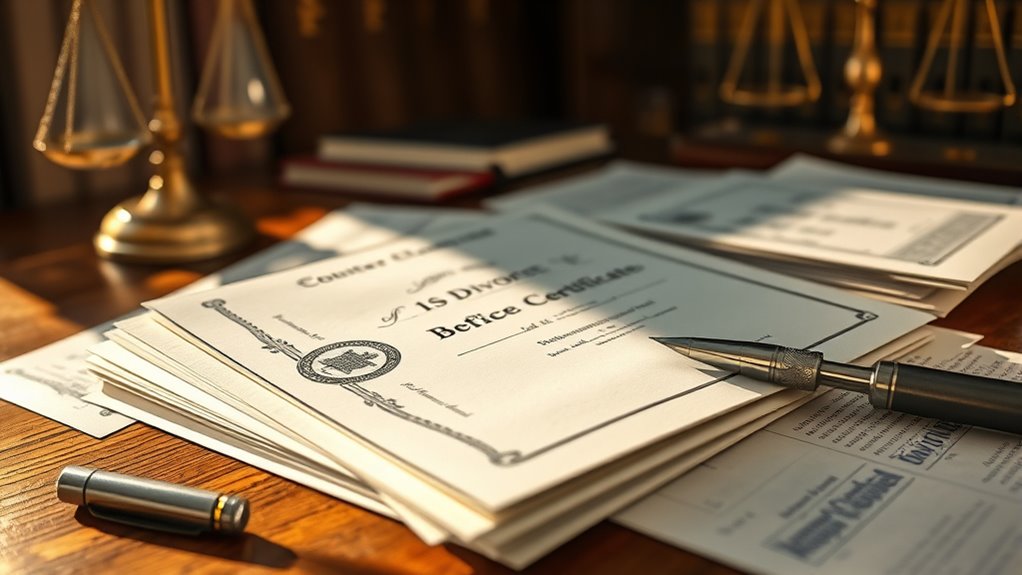

To obtain divorce certificates or records, you should contact the essential records office or court where the divorce was finalized. You’ll need to provide details like names, date, or case number, and verify your identity. Payments may be required, and processing times vary. Many jurisdictions now offer online access for quicker retrieval. If you want to learn more about specific procedures or restrictions, keep exploring for detailed guidance.
Key Takeaways
- Contact the vital records office or court where the divorce was finalized to request official copies.
- Provide necessary details like full names, date of divorce, and case number, along with proof of identity.
- Determine if the record is public or restricted, and follow jurisdiction-specific access requirements.
- Use online portals, mail, or in-person visits to submit your request and pay applicable fees.
- Allow processing time based on the method chosen; digital access may offer quicker retrieval options.
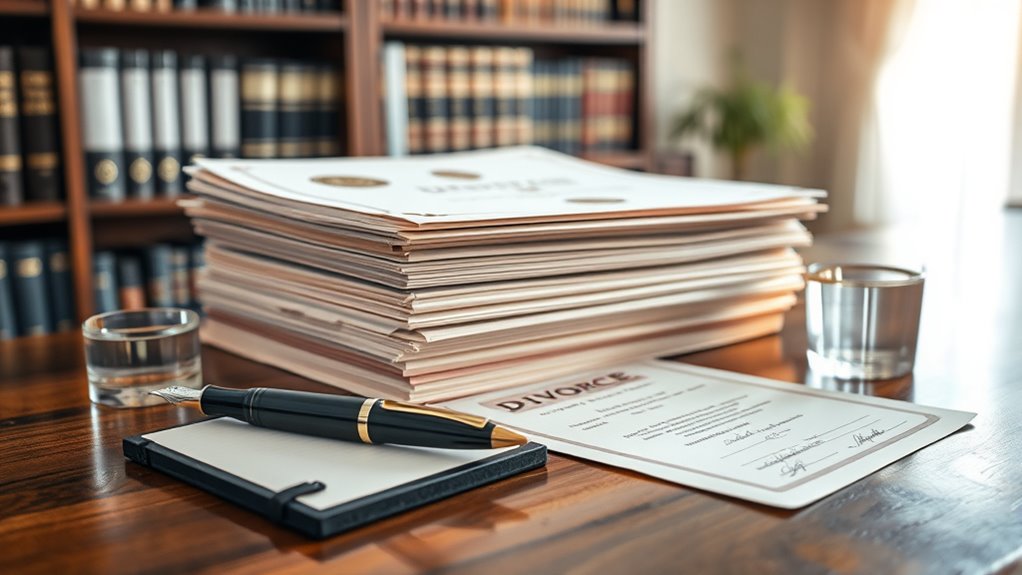
Are you wondering how to obtain a divorce certificate or access divorce records? If so, you’re not alone. Divorce certificates serve as official legal documentation that confirms the end of a marriage and provides proof of your current marital status. These records are essential for various legal, personal, or administrative purposes, such as remarrying, changing name, or updating official documents. Knowing where to find them and how to request them can save you time and hassle.
Learn how to find and request your divorce records and certificates easily and legally.
Typically, divorce records are maintained by the vital records office or the court where the divorce was finalized. The process begins by identifying the appropriate agency responsible for record-keeping in your jurisdiction. Each state or country has its own procedures, but most require you to submit a formal request either online, by mail, or in person. When requesting a divorce certificate, you’ll need to provide specific information to verify your identity and the record’s details. This usually includes your full name, date of divorce, case number if available, and your relationship to the parties involved.
Since divorce records are considered public records in many areas, you might be able to access them without showing a direct interest, but some jurisdictions restrict access to the individuals involved or their legal representatives. If you’re not the petitioner or a close family member, you’ll likely need to demonstrate a valid reason for your request or obtain written consent from the parties involved. Be prepared to pay a fee, which varies depending on the location and the type of record requested.
It’s important to note that divorce certificates are often used to update your marital status on legal documentation, such as driver’s licenses, passports, or social security records. They also serve as important proof if you need to remarry or resolve legal disputes related to inheritance or property rights. Because these records are official legal documentation, ensure your request is accurate and complete to avoid delays.
In some cases, especially if you’re searching for older or out-of-state records, you may need to contact multiple agencies or visit local courthouses. Many jurisdictions now offer online portals that streamline the process, allowing you to request and pay for records from the comfort of your home. Additionally, digital record-keeping has made accessing these documents more efficient and convenient. Keep in mind that processing times vary, so plan accordingly if you need the documents urgently.
Ultimately, accessing divorce records and obtaining a divorce certificate is straightforward when you know where to look and what information you’ll need to provide. These legal documents are crucial for establishing your current marital status and ensuring all your legal and personal affairs are correctly updated.

10 Packs Certificate Holders, Black Certificate Covers, Diploma Holders, Certificate Folders with Gold Foil Border for Letter Size 8.5" x 11" Certificates, Diploma, Documents, Award Cover
PACKAGE CONTAINS: Set of 10 classic black certificate holders to keep your certificate paper free of creases. Ideal…
As an affiliate, we earn on qualifying purchases.
As an affiliate, we earn on qualifying purchases.
Frequently Asked Questions
How Long Does It Take to Process a Divorce Record Request?
It usually takes about 2 to 4 weeks to process a divorce record request, but this can vary depending on the state’s divorce timeline. Processing delays may occur during busy periods or if additional verification is needed. To avoid setbacks, make certain your application is complete and accurate. If you need the record urgently, check if expedited processing options are available, which can speed up the timeline considerably.
Are Divorce Records Accessible to the Public?
Imagine you want to see a divorce record for a public history project. Divorce records are generally accessible to the public, but privacy concerns limit what details are available. You can typically access these records through government offices or online databases, depending on jurisdiction. Be aware that some sensitive information may be redacted to protect privacy, so your access might be limited if privacy concerns are involved.
Can I Get a Certified Copy of My Divorce Certificate?
Yes, you can get a certified copy of your divorce certificate. You need to meet legal requirements, such as providing valid identification and paying the required fee. Contact the vital records office or courthouse where your divorce was finalized. Confirm the record’s validity by requesting a certified copy, which has official signatures and seals. This document is crucial for legal or administrative purposes, so follow the proper process to obtain it.
What Identification Is Needed to Request Divorce Records?
You’ll need a valid photo ID, like a driver’s license or passport, to request divorce records. It’s interesting how a marriage license, often overlooked, can sometimes serve as proof if it’s recent. When you visit the records office or request online, having your photo ID ready makes the process smooth. Remember, your identification confirms your right to access these sensitive documents quickly and securely.
Is There an Online Portal to Access Divorce Records?
Yes, you can access divorce records through online search portals. Many jurisdictions offer digital archives or online search tools on their government or courthouse websites. You just need to visit the official site, enter the required details like names and dates, and you can view or request copies of divorce records. This online access makes it easier to obtain records quickly without visiting the courthouse in person.

Bankers Box 12 Pack Standard Duty File Storage Boxes, Standard Assembly, Removable Lid, Letter/Legal (0071301)
Reliable Storage for Everyday Use: These cardboard file boxes with lids are perfect for everyday storage – ideal…
As an affiliate, we earn on qualifying purchases.
As an affiliate, we earn on qualifying purchases.
Conclusion
Getting your divorce records is straightforward once you know where to look. For example, Sarah needed her divorce certificate for a new job application. She contacted the county clerk’s office, provided her details, and received her copy quickly. Whether you’re updating legal documents or personal records, obtaining these records is simple. Just follow the steps outlined, and you’ll have your divorce certificates in no time—so you can move forward confidently with your next chapter.

Epson WorkForce ES-50 Portable Sheet-Fed Document Scanner for PC and Mac
Fastest and lightest mobile single sheet fed document scanner in its class(1) small, portable scanner ideal for easy,…
As an affiliate, we earn on qualifying purchases.
As an affiliate, we earn on qualifying purchases.
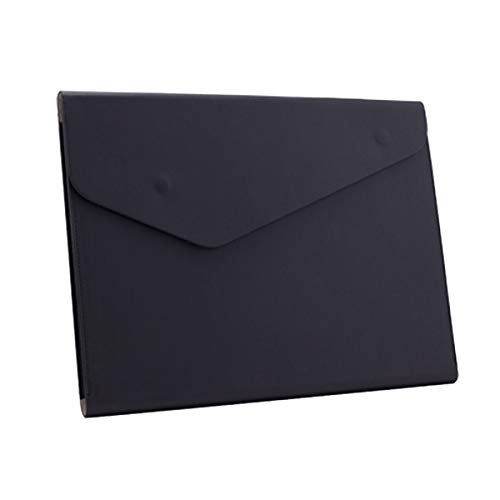
Enyuwlcm PU Leather A4 File Folder Document Holder Waterproof Portfolio Envelope Folder Case with Invisible Magnetic Closure Black
STYLISH AND ATTRACTIVE: This leather envelope folder surface made by PU leather which waterproof and easy to take…
As an affiliate, we earn on qualifying purchases.
As an affiliate, we earn on qualifying purchases.