
To get a divorce in California, you need to meet residency requirements by living in the state for at least six months and in the county where you file for three months. Start by filing a Petition for Dissolution and complete financial disclosures. Serve the papers using a third party and wait at least six months for the divorce to finalize. If you want more details, you’ll find helpful steps and tips ahead.
Key Takeaways
- Meet residency requirements: at least one spouse must have lived in California for 6 months and in the filing county for 3 months.
- File a Petition for Dissolution and serve divorce papers through a third party, then provide proof of service.
- Complete and exchange financial disclosures to promote transparency before finalizing the divorce.
- California is a no-fault state; irreconcilable differences are sufficient, with a mandatory six-month waiting period before divorce finalization.
- Address property division, support, and custody issues through temporary or final orders, considering community property laws.

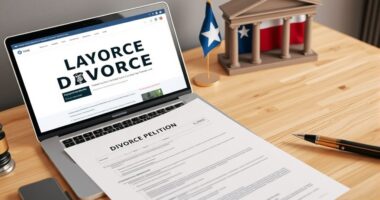
Getting a divorce in California involves a straightforward legal process, but it’s important to understand the specific requirements and steps involved. First, you need to meet residency criteria. At least one spouse must have lived in California for a minimum of six months before filing, and in the county where you plan to file, you must have resided for at least three months prior to submitting your paperwork. This ensures your case qualifies under California law. The divorce process begins with submitting a Petition for Dissolution of Marriage along with financial disclosure forms. These forms detail your income, assets, debts, and expenses, ensuring transparency and fairness during property division and support determinations.
You can’t serve the divorce papers to your spouse yourself; instead, a third party, such as a process server or sheriff, must handle the service. Once served, you’ll need to file proof of service with the court. This step confirms that your spouse received the legal documents and is aware of the divorce proceeding. If you’re seeking a legal separation instead of a divorce, the process is similar but doesn’t require the six-month waiting period before the separation becomes official. Legal separation allows you to live apart and settle financial and custody issues without ending the marriage entirely.
California is a no-fault state, meaning you don’t need to prove fault or wrongdoing to get divorced. The primary grounds are “irreconcilable differences” that have caused a permanent breakdown of the marriage. In cases where one spouse has a permanent legal incapacity to make decisions, a different ground exists, requiring medical testimony. Divorce can proceed even if your spouse doesn’t agree or participate—default judgments are possible after the necessary steps are completed. This process helps ensure fairness for both parties and allows for a smoother resolution. Additionally, understanding residency requirements is crucial for ensuring your case is valid from the start.
California’s no-fault system means no proof of wrongdoing is needed for divorce.
A key aspect of the process involves waiting periods. You can’t finalize the divorce in less than six months from the date your spouse is served or responds, whichever happens first. During this time, you can request temporary orders for custody, support, or property if needed. The final step involves a judge signing the judgment, officially ending your marriage. This waiting period gives both parties a chance to reconsider or settle remaining issues.
California’s community property laws mean that assets and debts acquired during the marriage are divided equally. You’ll need to exchange complete financial disclosures twice—initially and finally—to ensure fair division. Courts consider earning capacity, contributions, and lifestyle when awarding spousal support, which can last for a period proportional to the marriage’s length. If you have children, custody and support issues will also be addressed, often through temporary orders during the divorce process. Overall, understanding these requirements helps you navigate California’s divorce process smoothly and efficiently.
Top picks for "divorce california state"
Open Amazon search results for this keyword.
As an affiliate, we earn on qualifying purchases.
Frequently Asked Questions
How Long Does the Divorce Process Typically Take in California?
You can expect the divorce process in California to take around six to eight months if it’s uncontested, with spouses agreeing on all terms. This timeline includes filing, mandatory waiting periods, and court review. If your case is contested or complex, it could last a year or more, especially if there are disputes over custody, property, or support. Your cooperation and case specifics substantially influence how long it takes to finalize your divorce.
Are There Residency Requirements to File for Divorce in California?
You need to meet residency requirements before you can file for divorce in California. Specifically, at least one spouse must have lived in California for six months with the intent to stay. Plus, one spouse must have lived in the county where you’re filing for at least three months. These rules are your ticket to guarantee your case gets the court’s stamp of approval and keeps things moving smoothly.
Can I Get a Divorce Without Hiring a Lawyer?
Yes, you can get a divorce without hiring a lawyer in California if your divorce is uncontested. You need to agree on all issues like property, custody, and support. You’ll file the necessary paperwork, serve your spouse, exchange financial disclosures, and draft a Marital Settlement Agreement. While it saves money, be aware of complex forms and deadlines. Mediation and online resources can help, but mistakes may require legal help later.
How Are Property and Assets Divided in California Divorce?
Think of your assets as pieces of a shared puzzle, each representing your life together. In California, you and your spouse divide community property equally—homes, income, debts—like fitting puzzle pieces back into a new picture. Separate assets, like gifts or inheritances, stay with the original owner unless mixed. With honesty and negotiation, you can guarantee this puzzle is reshaped fairly, reflecting your new chapter.
What Are the Grounds for Divorce in California?
You can file for divorce in California based on no-fault grounds, mainly irreconcilable differences, meaning your marriage has broken down beyond repair. Incurable insanity is another rare ground, requiring medical proof. You don’t need to prove wrongdoing like adultery or abuse. One spouse can file independently, and a six-month waiting period applies after serving divorce papers. Residency requirements also must be met, with at least six months in California.
Conclusion
Getting a divorce in California might seem overwhelming, but knowing the steps makes it manageable. Remember, California has one of the highest divorce rates in the U.S., with about 8.9% of marriages ending in divorce annually. Staying informed and organized can ease the process. Keep in mind that seeking legal advice can help you navigate complex issues. With patience and proper guidance, you can move forward toward a fresh start and a brighter future.