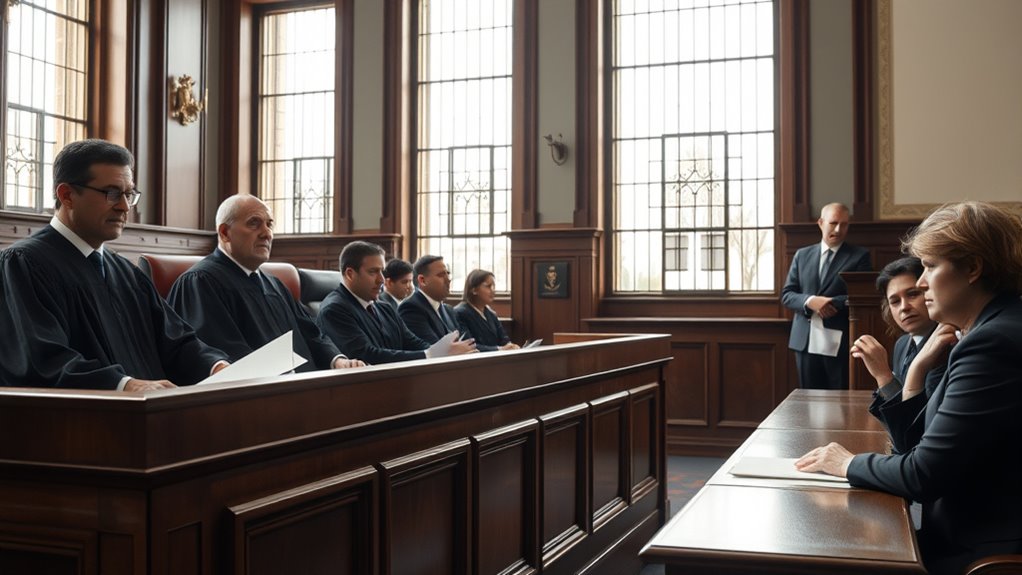

At your first divorce court hearing, you’ll meet the judge and possibly your spouse and attorneys. The focus is on establishing temporary orders for custody, support, and financial responsibilities. Expect to answer basic questions about your residency, income, and children. The judge may ask for proof of documents like income and assets and will often set future dates for more issues. If you want to understand what happens next, keep exploring what you can expect during this process.
Key Takeaways
- The hearing is a preliminary session to establish temporary orders for custody, support, and finances.
- The judge may ask basic questions about residency, marriage duration, and children involved.
- Both parties and attorneys present evidence or testimony, but parties typically speak only when asked.
- Be prepared to provide proof of income, assets, and residency; bring relevant documents early.
- Temporary orders are legally binding and set the stage until a final resolution is reached.

The first divorce court hearing is a critical step in the legal process, setting the stage for temporary arrangements and outlining how the case will proceed. When you walk into the courtroom, either in person or via videoconference, you’ll likely see your spouse, attorneys, and the judge preparing to address key issues. This hearing isn’t a final trial but a preliminary session focused on establishing temporary orders that will guide your life until a final resolution is reached. Expect the judge to ask basic questions about your residency, the length of your marriage, and details about your children. If you’re uncontested, your attorney or you may testify to confirm settlement terms or provide factual information. Most of the proceedings are handled by attorneys, who present evidence, answer questions, and negotiate temporary orders related to custody, support, and finances. You typically won’t speak directly unless the judge asks you to do so. The judge may request proof of residency, income, or assets, and examine details about your children’s needs and living arrangements. If there are concerns about family safety or violence, the judge can issue temporary restraining orders to protect you or your children. These orders are legally binding and remain in effect until a final decision is made. During the hearing, several key topics are addressed. These include temporary child custody and visitation schedules, determining who will care for your children and when. Child support and spousal support are also discussed, with the court setting payment amounts and deadlines. You’ll also review responsibilities for shared property, like the family home or vehicles, and discuss temporary financial responsibilities such as mortgage payments, rent, or bills. If needed, the judge may issue orders to keep the peace or restrict contact between parties. Preparation is essential. Gather all relevant documents in advance, including your marriage certificate, children’s birth certificates, recent financial records, and any signed settlement agreements. Share these with your attorney early on to prevent delays. Review the court’s scheduling orders and be ready to attend all hearings and mediation sessions. Confirm that you meet residency requirements, which often include a 90-day period in your state, to verify the court has jurisdiction over your case. Be prepared to discuss your income, expenses, and property details clearly and honestly. Additionally, understanding the purpose of this hearing can help you approach it with confidence, knowing that temporary orders are designed to protect your interests during the divorce process. The temporary orders issued at this hearing are legally binding and stay in effect until a final order is entered. The judge may decide immediately or take the matter under advisement, with a written decision following later. Additional hearings might be scheduled to resolve remaining issues or finalize agreements. Your attorneys will handle filing all necessary court orders properly, ensuring your case progresses smoothly through each step. Being familiar with the legal procedure can also help reduce anxiety and improve your overall preparedness for the hearing.
Top picks for "expect first divorce"
Open Amazon search results for this keyword.
As an affiliate, we earn on qualifying purchases.
Frequently Asked Questions
Can I Bring Witnesses to My Divorce Court Hearing?
Yes, you can bring witnesses to your divorce court hearing. However, you need to disclose their names and contact information ahead of time, following your court’s rules. Make sure your witnesses are relevant and prepared to testify about issues like custody, finances, or misconduct. Keep in mind that the judge might limit or exclude witnesses if their testimony isn’t relevant or if procedural rules aren’t followed properly.
What Should I Wear to the Divorce Court?
Imagine stepping into a courtroom as if you’re entering a temple of justice. You should wear a professional, conservative outfit that shows respect for the process. For women, opt for a tailored dress or suit in dark, neutral colors, and for men, a well-fitted suit or dress slacks with a button-up shirt. Keep accessories minimal, grooming neat, and clothing clean to convey seriousness and respect.
How Long Does a Typical Divorce Court Hearing Last?
A typical divorce court hearing lasts about 20 to 40 minutes, but this can vary based on case complexity. Simple, uncontested cases might be shorter, while more complex or contested cases could take longer or be scheduled as special sets. Keep in mind that court schedules and judge availability can influence the timing, so be prepared for some variability and stay patient during the process.
Is It Necessary to Have a Lawyer Present?
Having a lawyer present isn’t always necessary, but it can be highly beneficial. You might attend without one if the case is uncontested and straightforward. However, if there are complex issues, contested matters, or children involved, having an attorney can clarify procedures, protect your rights, and negotiate effectively. Without a lawyer, you risk misunderstandings, mistakes, or unfavorable outcomes, especially if the case becomes complicated or contentious.
Can I Settle My Divorce During the Court Hearing?
Yes, you can settle your divorce during the court hearing. The judge encourages settlement by exploring common ground and reviewing offers from both sides. If you reach an agreement, it must be by mutual consent and will be incorporated into a legally binding order. Be honest about your financial information, and guarantee both parties agree to the terms. Once finalized, your settlement becomes part of your divorce decree.
Conclusion
Your first divorce court hearing is like stepping into a new chapter of your life’s story. It might feel overwhelming, but remember, it’s just the opening scene—an opportunity to set the tone for what’s to come. Stay calm, be prepared, and speak honestly. Think of the court as a compass guiding you through the process; with patience and clarity, you’ll navigate this chapter and move toward a brighter future.