

To create an after-school plan in two homes, focus on clear, consistent communication with the other parent about routines, expectations, and schedules. Use shared calendars or messaging apps to coordinate activities, homework, and snack times, ensuring both homes are aligned. Discuss routines like bedtime and homework habits to foster stability, but stay flexible for unexpected events. Maintaining teamwork and ongoing dialogue will help your child feel secure and supported. Keep exploring for more tips to make this shift seamless.

Get gifts for the two of you delivered free with Prime
- Fast, free delivery on millions of items
- Prime Video, Amazon Music and more included
- Member-only deals all year
Key Takeaways
- Coordinate with both parents to set consistent after-school routines and expectations.
- Use shared calendars or messaging apps to track activities, homework, and schedules.
- Plan for flexibility to accommodate unexpected changes or special needs.
- Establish clear communication channels for updates and emergency situations.
- Prioritize the child’s well-being by maintaining stability and normalcy across both homes.
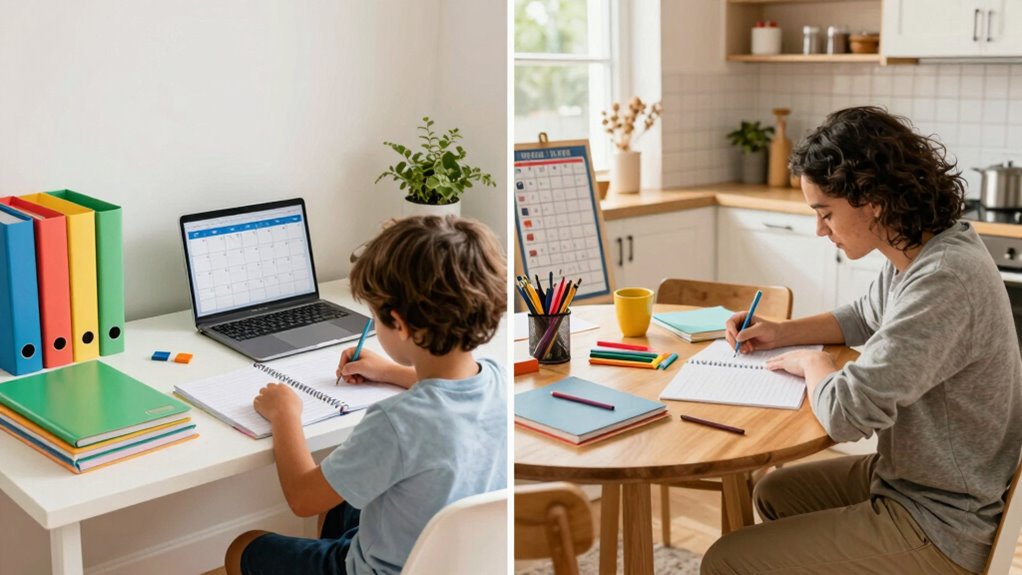
Balancing your child’s after-school routines across two homes can be challenging, but with a clear plan, it becomes manageable. One of the most important steps is establishing open and consistent parent communication. When both parents stay in sync, your child benefits from a stable environment, reducing stress and confusion. Make it a priority to share updates about homework, extracurricular activities, and any changes to routines. Use shared calendars, messaging apps, or regular check-ins to keep everyone on the same page. This way, you can avoid misunderstandings and guarantee your child’s needs are always the focus.
Routine consistency across homes helps your child feel secure and supported. To achieve this, discuss and agree on key routines, such as bedtimes, meal times, and homework habits. When your child moves between homes, they should find familiar patterns that help them settle quickly. It’s helpful to create a list of routines and routines’ expectations, then share it with the other parent. This doesn’t mean every detail has to be identical, but the core structure should be similar enough to foster stability. For example, if your child has a specific bedtime, both parents should aim to stick to it, even if the approach differs slightly.
Clear communication about routines also involves discussing any special needs or preferences your child might have. Be transparent about what works and what doesn’t, and be willing to adapt as needed. Consistency in routines helps your child develop a sense of security and predictability. When routines are disrupted, your child may feel anxious or confused. By openly discussing routines and maintaining them as much as possible, you help your child feel more secure in both homes. Incorporating consistent routines and clear expectations can help reduce anxiety and promote a sense of normalcy. Additionally, understanding the importance of routine flexibility can help parents adapt to unexpected circumstances without compromising stability. Recognizing potential disruptions ahead of time allows for better preparation and minimizes stress for your child.
Furthermore, incorporating hydrating ingredients into your child’s routines, such as encouraging regular water intake, can support their overall well-being and comfort across both households. It’s also important to plan how you’ll handle changes or unexpected situations. Sometimes, schedules change unexpectedly, so having a backup plan and agreeing on how to communicate these changes helps prevent frustration. Regularly review your routines together, especially if your child’s needs evolve or if new activities are added. This ongoing dialogue reinforces your commitment to your child’s well-being and demonstrates teamwork.
Ultimately, your goal is to foster a cooperative approach that prioritizes your child’s stability and happiness. Through consistent routines and clear parent communication, you create a supportive environment where your child can thrive, regardless of which home they’re in. By working together proactively, you ensure that your child’s after-school experience remains positive, predictable, and enriching across both households.
Popular right now

Dyson V8 Cyclone Cordless Vacuum

De'Longhi Dinamica Plus Fully Automatic Espresso Machine

Dyson Big Ball Multi Floor Canister Vacuum, Yellow
As an affiliate, we earn on qualifying purchases.
Frequently Asked Questions
How Do I Handle Conflicting Schedules Between Two Homes?
You handle conflicting schedules by using a shared calendar to coordinate activities and deadlines clearly. Communicate openly with the other parent to guarantee everyone stays updated and flexible. Prioritize routine consistency to give your child stability, even with differences between homes. When conflicts arise, work together to adjust plans smoothly, keeping your child’s needs at the forefront. This teamwork minimizes stress and helps maintain a balanced, predictable after-school routine.
What Should I Do if the Child Forgets Homework or Belongings?
Did you know that 80% of students forget items at home? When your child forgets homework or belongings, stay calm and use home organization strategies. Implement reminder systems like checklists or designated spots for backpacks and supplies. Encourage your child to double-check their belongings before leaving. Reinforcing these routines helps them become more responsible and reduces forgetfulness, making shifts between homes smoother and less stressful for everyone involved.
How Can I Ensure Consistency in Rules Across Both Homes?
To guarantee consistency across both homes, you should establish clear rules for bedtime routines and screen time limits that both parents agree on. Communicate openly about these rules and put them in writing if possible. Consistently enforce the same routines, like designated bedtimes and screen-free periods, so your child knows what to expect. This unified approach helps create stability and reduces confusion, making changes easier for your child.
What Communication Methods Work Best Between Co-Parents?
Communication between co-parents is like building a sturdy bridge—clear, steady, and dependable. You find that shared calendars keep everyone on the same page, preventing misunderstandings. Regular check-ins and respecting clear boundaries foster mutual respect, making cooperation smoother. Using these methods, you create a supportive environment for your child, ensuring both homes work together seamlessly. Consistent, honest communication ultimately strengthens your co-parenting partnership.
How Do I Manage Special Events or Extracurricular Activities?
To manage special events or extracurricular activities, coordinate with the other parent early on, discussing weekend celebrations and holiday planning. Keep a shared calendar to avoid conflicts, and communicate openly about each child’s commitments. You can also divide responsibilities, such as attending events or organizing supplies. This way, both parents stay involved, and your child feels supported during special occasions, making celebrations and holiday planning smoother for everyone.
Conclusion
By crafting a flexible after-school plan, you’re building a bridge between two worlds, ensuring your child feels supported and secure no matter which home they’re in. Remember, consistency and open communication are your compass, guiding you through any storm. With a little patience and a lot of love, you’ll create a routine that’s as steady as a lighthouse, helping your child navigate their busy afternoons with confidence and joy.