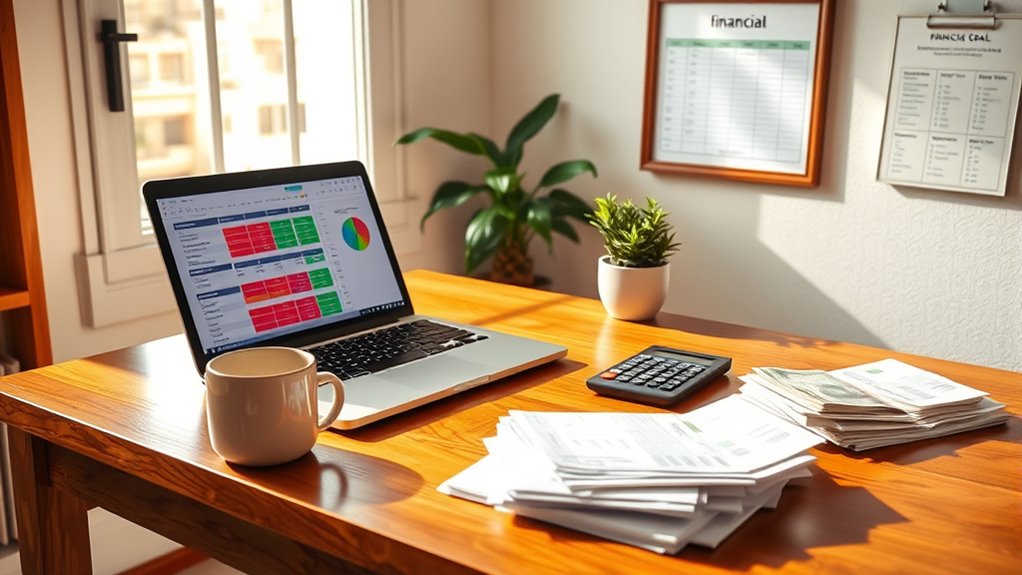

To manage your finances as a single household, start by listing all your income and tracking your expenses carefully. Set realistic budget limits and use apps to stay on track, making intentional choices rather than restricting yourself. Prioritize paying off high-interest debt and build an emergency fund of 3-6 months’ expenses. Regularly review your plan and adjust as needed to keep your financial goals within reach—you’ll find simple strategies to help you succeed.
Key Takeaways
- List all income sources and track expenses to understand your financial situation clearly.
- Set realistic budget limits aligned with your income and financial goals.
- Prioritize paying off high-interest debts to free up funds for savings.
- Build an emergency fund covering 3–6 months of living expenses for financial security.
- Regularly review and adjust your budget to accommodate life changes and evolving goals.

Managing your finances as a single household can be both empowering and challenging. When you’re responsible for every dollar, it’s essential to create a solid financial plan that keeps you on track toward your goals. Good financial planning involves understanding your income, expenses, and future needs. Start by listing all your sources of income, including wages, side gigs, or benefits. Then, track your monthly expenses—rent, utilities, groceries, transportation, and entertainment. This will give you a clear picture of where your money goes and help you identify areas where you can cut back. Additionally, incorporating tools that help analyze your spending patterns can improve your overall financial awareness.
Track your income and expenses to create a solid financial plan that keeps you on track toward your goals.
Debt management is a pivotal part of maintaining financial stability as a single person. If you have existing debt, develop a strategy to pay it down systematically. Prioritize high-interest debts first, like credit card balances, while maintaining minimum payments on others. Creating a debt repayment plan keeps you focused and prevents debt from spiraling out of control. As you pay off debts, you’ll free up more money for savings and investments, which are indispensable for long-term financial security.
To manage your budget effectively, set realistic limits for each expense category based on your income and financial goals. Use budgeting tools or apps to automate and track your spending, ensuring you stay within your set limits. Remember, budgeting isn’t about deprivation; it’s about making intentional choices. For example, if you want to save for a vacation or a new car, allocate a specific amount each month toward those goals. This disciplined approach helps you avoid impulsive purchases that could derail your financial plans.
Building an emergency fund should be a priority. Aim to save at least three to six months’ worth of living expenses. This safety net provides peace of mind in case of unexpected events like job loss, medical emergencies, or urgent home repairs. Automate your savings so that a portion of your income goes directly into your emergency fund each month. Doing so makes saving automatic and less tempting to skip.
Finally, keep reviewing and adjusting your budget regularly. Life changes, expenses fluctuate, and your goals evolve. Periodic check-ins help you remain on course and adapt to new circumstances. Staying disciplined with your financial planning and debt management not only helps you stay afloat but also positions you for future growth. By taking control now, you build a secure financial foundation that supports your independence and long-term success. Recognizing the importance of budgeting techniques, you can better tailor your financial strategies to meet your individual needs.
Frequently Asked Questions
How Can I Build an Emergency Fund Alone?
To build an emergency fund alone, start by setting a clear savings goal for your emergency savings. Track your expenses carefully and cut unnecessary costs to free up money. Consistently contribute to your fund, even if it’s a small amount. Prioritize financial resilience by making regular deposits, and keep your emergency savings separate from other funds to guarantee you’re prepared for unexpected expenses.
What Are the Best Tools for Single Household Budgeting?
You should explore banking apps and budget spreadsheets to manage your finances effectively. Banking apps offer real-time tracking and easy transfers, while budget spreadsheets give you control and customization. Juxtapose convenience with precision—use apps for quick updates and spreadsheets for detailed planning. These tools empower you to stay on top of spending, saving, and planning, making single household budgeting less stressful and more manageable.
How Do I Manage Debt Effectively on a Single Income?
To manage debt effectively on a single income, focus on credit management by paying bills on time and reducing unnecessary expenses. Consider debt consolidation to combine multiple debts into a single, lower-interest payment, making it easier to stay on track. Create a realistic repayment plan, prioritize high-interest debts, and stick to your budget. Regularly review your progress to stay motivated and adjust your strategies as needed.
Should I Invest Differently as a Single Homeowner?
Should you switch your investment strategies as a single homeowner? Absolutely! You’ll want to focus on future-proofing by diversifying your investments and considering property management opportunities that maximize your home’s value. With a single income, prioritize prudent planning, protect your property, and pursue personalized portfolios. This targeted approach helps you grow wealth wisely while safeguarding your single household’s financial stability, making every dollar work harder for your unique situation.
How Can I Plan for Long-Term Financial Goals Solo?
To plan for long-term goals solo, start with retirement planning by setting clear, achievable targets and regularly contributing to your retirement accounts. Guarantee you have adequate insurance coverage to protect your assets and income. Review your financial progress annually, adjusting your savings and investments as needed. Keep debt manageable and create an emergency fund. Staying disciplined and informed helps you stay on track toward your future financial security.
Conclusion
So, there you have it—mastering your finances as a single household might not turn you into a millionaire overnight, but hey, at least you won’t be living paycheck to paycheck while dreaming of that exotic vacation you can’t afford. Stick to your budget, dodge impulse buys like a pro, and remember: financial freedom is just one smart decision away—probably. Now go on, conquer those bills, and keep that bank account happy!