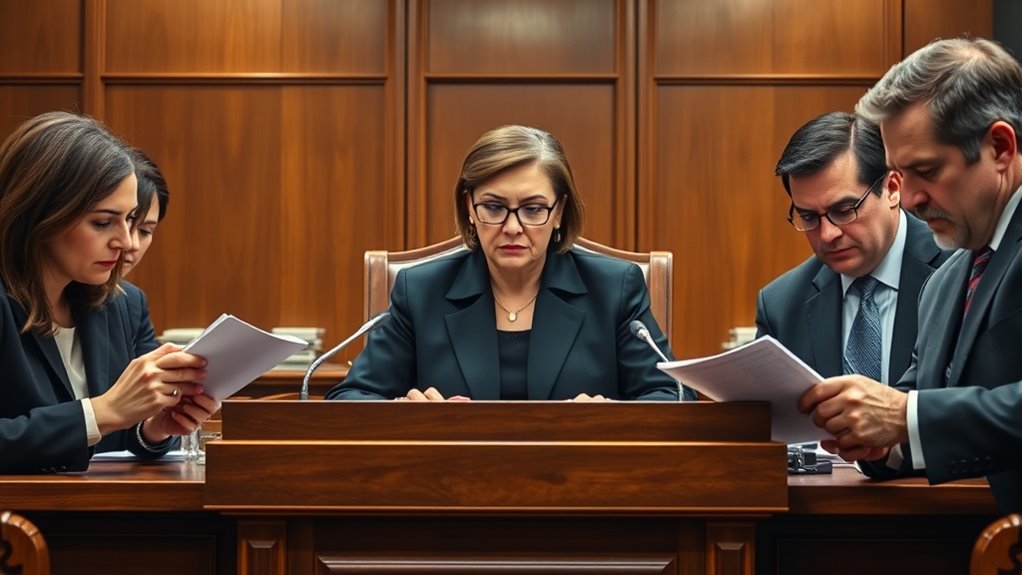

During a divorce trial, you’ll present your case with opening statements, evidence, and witness testimonies, while the other side does the same. The judge listens carefully, reviews evidence, and asks questions to clarify details. Each party may cross-examine witnesses, and the judge considers factors like property, debts, and children’s best interests. Ultimately, the judge makes final decisions on property division, custody, and support—if you want to understand each step better, keep going.
Key Takeaways
- The trial begins after failed negotiations, with both parties presenting their cases before a judge.
- Each side makes opening statements, presents evidence, and calls witnesses to support their positions.
- The judge reviews testimonies and evidence, questioning witnesses and considering factors like finances and children’s best interests.
- Both parties deliver closing arguments, and the judge deliberates to decide on property division and custody arrangements.
- The trial concludes with the judge issuing final, legally binding orders on asset division, custody, visitation, and support.

Ever wondered what happens during a divorce trial? When you step into the courtroom, you’re entering a legal arena where the fate of your marriage’s unresolved issues will be decided. The trial process begins after negotiations or mediation have failed to produce an agreement. At this point, both sides present their cases before a judge, who will make final decisions on key matters like property division and child custody.
A divorce trial begins after failed negotiations, with both sides presenting cases to a judge on key issues.
The first part of the trial usually involves opening statements. Each of you gets a chance to outline your position, emphasizing what you believe is fair regarding property division and child custody. This is your opportunity to set the tone and highlight the main issues you want the judge to focus on. After opening statements, the court moves into the presentation of evidence. You and your spouse will call witnesses, including experts like appraisers or counselors, and submit documents such as financial records or custody evaluations. The goal is to persuade the judge why your position on property division—who gets what—and child custody arrangements—who the children will live with and visitation rights—best serve the children’s interests and fairness.
Throughout the trial, both sides can cross-examine witnesses, challenging their credibility or seeking clarifications. The judge listens carefully to all testimonies and reviews evidence, aiming to make balanced, informed decisions. When it comes to property division, the judge considers factors like the length of the marriage, each spouse’s financial contributions, and needs. For child custody, the focus is on the best interests of the children, including their emotional ties, stability, and safety. The judge might also hear testimony from therapists or social workers involved in the case. Additionally, the judge may consider legal considerations such as fault or separation periods, depending on jurisdiction.
After all evidence is presented, both sides make closing arguments, summarizing their positions and emphasizing why the judge should side with them. Once everything is said and done, the judge deliberates and issues a ruling. This decision includes detailed orders on property division—who gets what assets and debts—and the custody arrangement, outlining physical and legal custody, visitation schedules, and sometimes child support payments. The entire process can be intense and emotional, but it’s designed to guarantee a fair resolution when you and your spouse can’t reach an agreement on your own. Knowing what to expect can help you prepare mentally and legally for this critical phase of your divorce.
Frequently Asked Questions
How Long Does a Divorce Trial Typically Last?
A divorce trial usually lasts from a few hours to several days, depending on the complexity of your case. The trial duration is influenced by courtroom procedures, the number of issues to resolve, and the evidence presented. You should prepare for a potentially lengthy process if your case involves property, custody, or financial disputes. Staying organized and understanding courtroom procedures can help you navigate the trial more smoothly.
Can I Change Lawyers During the Trial?
Yes, you can change lawyers during a divorce trial, but it’s not always simple. You’ll need to follow courtroom procedural rules, such as requesting the court’s permission and ensuring your new lawyer understands lawyer-client confidentiality. Be aware that switching lawyers mid-trial could cause delays or complications, so weigh the benefits carefully. Your new lawyer will need to familiarize themselves with your case and adhere to confidentiality agreements.
What Happens if One Party Doesn’T Show Up?
If you don’t show up, it’s like leaving your case to the winds; the court might issue a default judgment against you. Absence consequences can be serious, often resulting in losing key issues like custody or property. The opposing party’s testimony might stand uncontested, so attending is essential. To avoid this, communicate with your lawyer and court beforehand, ensuring your presence or proper arrangements are made to prevent an unfavorable default judgment.
Are Children Involved in the Trial Process?
Yes, children are involved in the trial process. The court considers custody arrangements and visitation rights, prioritizing the child’s best interests. You may need to provide evidence or testimony about your ability to care for the child and maintain stability. The judge evaluates these custody considerations carefully, aiming for an outcome that supports the child’s well-being. Be prepared for discussions about custody and visitation, which will influence the final decision.
How Are Emotional Testimonies Handled in Court?
In court, emotional testimonies are handled with care and court sensitivity, allowing you to share your feelings while respecting the process. The judge and attorneys listen attentively, ensuring your voice is heard without judgment. They may ask gentle questions to clarify your story. Remember, the court’s goal is to understand your perspective, so expressing your emotions honestly helps the judge make the best decision, all within a compassionate environment.
Conclusion
As the courtroom quiets and the gavel finally strikes, you can feel the weight lifting from your shoulders. The pages of the case settle like leaves on a still pond, each word and decision shimmering in the soft light. Though the journey was stormy, now you see a clear horizon ahead—peaceful, open, and awaiting your next chapter. You step out into the sunlight, ready to embrace the new beginning that awaits beyond the courtroom doors.