If you’re going through a divorce and face threats, harassment, or violence, protective orders are vital to stay safe legally. They temporarily or permanently restrict your abuser from contact, approaching your home or workplace, and may include custody or residence rules. These orders are criminally enforced, offering you immediate protection and peace of mind. Understanding how they work and how to obtain one can help you maintain your safety; more details can guide you through the process.
Key Takeaways
- Protective orders prevent abusers from contact or approaching during divorce, ensuring safety for involved parties.
- Filing for a protective order can grant exclusive residence, custody, and restricted contact arrangements.
- Temporary protective orders provide immediate safety and are often issued without the abuser present (ex parte).
- Protective orders are criminally enforced and can be extended or modified to maintain ongoing safety.
- Understanding the difference between protective and restraining orders helps ensure proper legal protection during divorce.
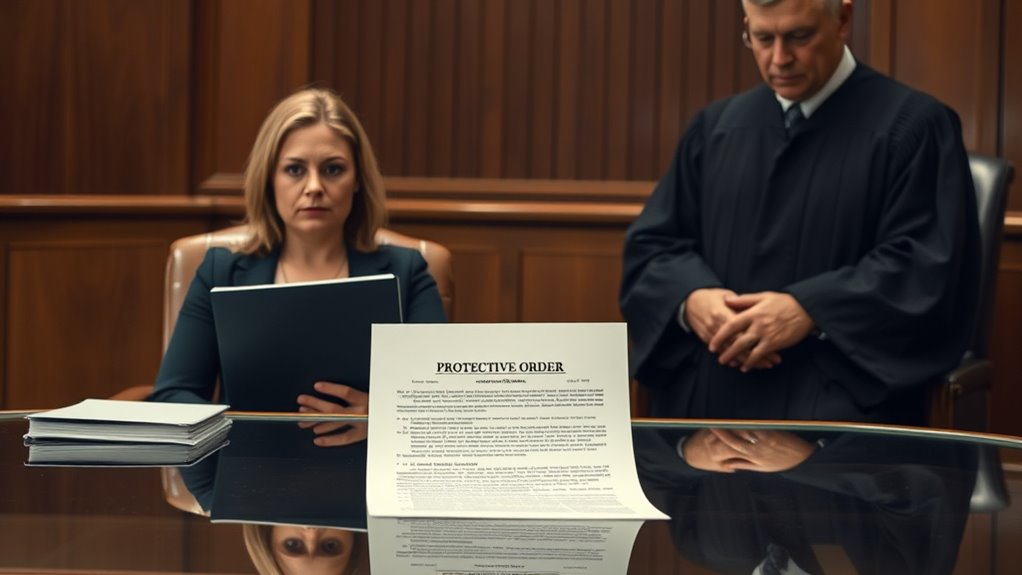
Protective orders serve as essential legal tools to guarantee your safety and well-being during divorce proceedings involving domestic conflict. These court-issued documents are designed to prevent abuse, harassment, or unwanted contact during and after divorce processes. They typically prohibit the restrained party from contacting or approaching your home, workplace, children’s schools, or directly reaching out to you. The primary goal of protective orders is to ensure your physical safety and emotional health, especially when facing threats, physical violence, or controlling behavior from a partner. If someone violates the order, they can face criminal penalties like fines or jail time, emphasizing the seriousness of these protections. Violations of protective orders may lead to criminal charges, emphasizing their importance in safeguarding individuals. You can seek a protective order when there’s a clear danger of violence, such as physical abuse, threats, stalking, harassment, or other criminal acts committed by your current or former partner or family member. Even if the abuser isn’t a family member, you may still qualify for a protective order in cases like stalking. Courts will issue these orders to demand the alleged abuser stop all contact, maintain a safe distance, and avoid actions that could harm you or your children. Sometimes, additional restrictions are added, such as banning firearm possession or requiring counseling or financial support to aid your safety and recovery. Protective orders come in different forms, with Temporary Protective Orders (TPO) or Preliminary Protective Orders (PPO) providing immediate, short-term protection. These are often issued ex parte, meaning without the abuser present, to offer quick relief. After a formal hearing where both parties can present evidence, a court may issue a more permanent or longer-term protective order. These orders can specify custody arrangements, residence restrictions, and even digital contact limitations. It’s important to understand that protective orders are generally enforced criminally for family violence, while restraining orders are civil in nature, which affects how they’re enforced and how long they last. Having a protective order in place can influence your divorce proceedings considerably. The court may grant you exclusive residence or temporary sole custody based on the protective order’s provisions, prioritizing your safety. Filing for a protective order during divorce doesn’t delay the legal process; instead, it provides immediate legal protection. Once the divorce is finalized, protective orders can sometimes be dismissed if both parties agree or if the court determines there’s no longer a reasonable threat. However, courts can extend or modify these orders if circumstances change, ensuring your ongoing safety throughout the divorce process and beyond. Additionally, understanding the legal distinctions between different types of protective orders can help you better navigate the process and ensure your rights are protected.
Frequently Asked Questions
How Long Do Protective Orders Typically Last?
Protective orders typically last from 6 months to a year, though durations vary by jurisdiction and order type. Temporary orders usually last around 7 to 14 days, providing quick protection before a full hearing. Final or permanent orders can extend for several years, often up to 2 or more, especially if ongoing risk exists. You can request extensions or modifications if circumstances change, ensuring your safety remains protected.
Can Protective Orders Be Extended or Modified?
Yes, you can extend or modify a protective order, but only through the court. Think of it as a delicate thread that holds your safety—if circumstances change or danger persists, you need to file a motion before the current order expires. The court will schedule a hearing, and you’ll need to show good cause. Only the judge can decide to extend or modify, so keep up with deadlines and legal steps.
Do Protective Orders Affect Child Custody Arrangements?
Protective orders can profoundly impact your child custody arrangements. If you’re named in a protective order, the court might limit your visitation rights, possibly requiring supervised visits or even denying access altogether. Courts prioritize the child’s safety and may award sole custody to the other parent if abuse is confirmed. Your ability to influence custody depends on the evidence supporting the protective order and the child’s best interests.
Can I Get a Protective Order Without Filing for Divorce?
Yes, you can get a protective order without filing for divorce. You don’t need to be divorced or even filing for divorce to request one. If you’re experiencing family violence, stalking, or sexual assault, you can apply for a protective order to stay safe. The process involves submitting a court application, and a temporary order may be granted quickly if there’s immediate danger, providing you with protection regardless of your divorce status.
Are Protective Orders Enforceable Across State Lines?
Yes, protective orders are enforceable across state lines. When you obtain an order in one state, it can be upheld in others through the Uniform Interstate Enforcement of Domestic Violence Protection Orders Act. Law enforcement will treat a valid foreign order as if it were their own, provided it meets jurisdiction and procedural requirements. To guarantee quick enforcement, register or present certified copies of the order in the new state.
Conclusion
Managing protective orders and divorce can feel like walking a tightrope, but with the right legal support, you’ll find your balance. Remember, these orders are your safety net, catching you when you stumble. By understanding your rights and taking action, you’re building a strong foundation for a safer future. Stay vigilant, stay empowered—think of your legal protections as your anchor in stormy seas, guiding you toward calmer waters ahead.