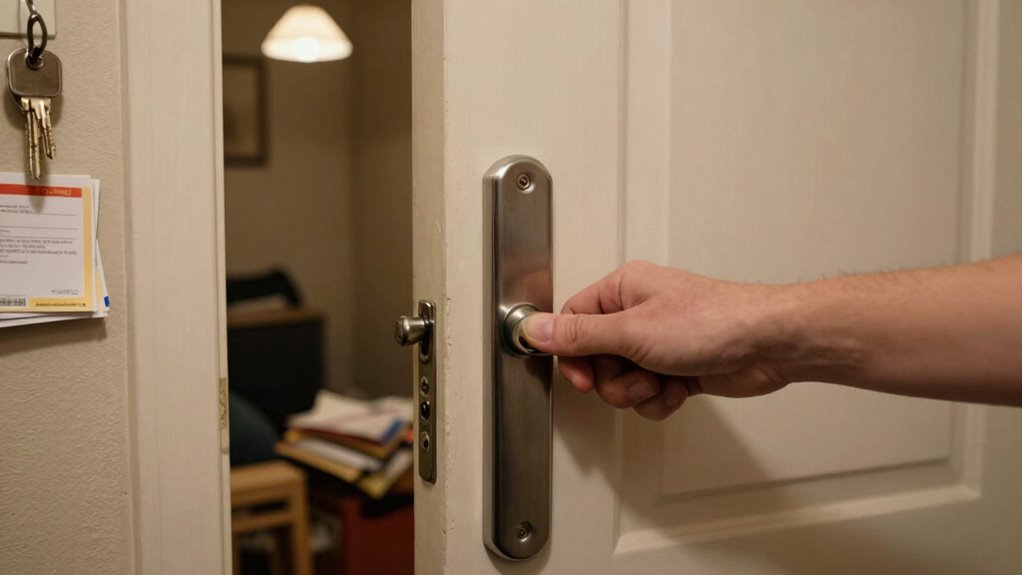

If your spouse changes the locks without your permission, stay calm and assess your legal options. Contact a lawyer to understand your rights and avoid breaking any laws, like changing locks yourself. If you’re feeling unsafe, call the police for assistance. Document everything and consider legal steps like filing for a court order. Prioritize your safety and seek support from trusted friends or professionals—more helpful advice awaits if you keep going.

Get gifts for the two of you delivered free with Prime
- Fast, free delivery on millions of items
- Prime Video, Amazon Music and more included
- Member-only deals all year
Key Takeaways
- Consult a lawyer to understand your legal rights and options before taking any action.
- Avoid breaking in; consider requesting police assistance if you feel unsafe or have legal access rights.
- Document all communication and incidents related to the lock change for legal use.
- Explore legal remedies like restraining orders or court orders to address the situation.
- Prioritize your safety and seek emotional support from trusted friends, family, or mental health professionals.
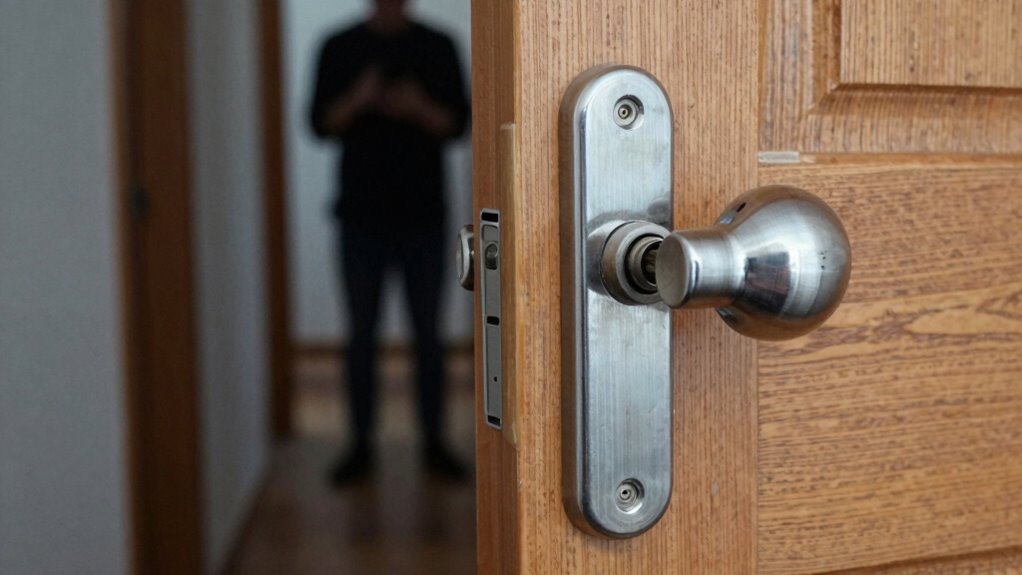
Have your spouse changed the locks unexpectedly? It’s a jarring experience that can leave you feeling trapped and confused. First, take a deep breath and assess the situation calmly. You need to understand your legal options before taking any further action. If you share a residence or have joint ownership, changing the locks without your consent might be illegal, depending on your jurisdiction. It’s important to know your rights and consider consulting a lawyer to understand how the law applies to your specific case. A legal expert can guide you on whether you can regain access or seek emergency relief through the courts.
If your spouse changes the locks unexpectedly, understand your legal rights and consult a lawyer before taking action.
While sorting out the legal details, don’t neglect your emotional well-being. Being shut out of your home can provoke feelings of fear, anger, and helplessness. It’s essential to seek emotional support from trusted friends, family members, or a mental health professional. Talking about your feelings can help you process the situation and clarify your next steps. Remember, you’re not alone, and reaching out can provide comfort and guidance during this difficult time.
If you’re unable to get inside and feel unsafe, consider contacting local authorities. If you have a legal right to be in your home, police or a legal professional can sometimes intervene to help you regain access. However, avoid taking matters into your own hands or breaking in, as that could complicate your situation or lead to legal trouble. Instead, document everything—such as attempts to contact your spouse or any incidents of harassment or coercion—since this information can be useful if you seek legal remedies.
Exploring your legal options is crucial. Depending on your circumstances, you might be able to file for a temporary restraining order, an injunction, or other court orders to secure your right to access your residence. A lawyer can help you navigate the process efficiently, ensuring that your rights are protected. Additionally, understanding your residential rights and how they relate to property ownership can empower you to make informed decisions during this challenging time. Being aware of property ownership laws can also influence your legal strategy and the steps you take moving forward. Knowing how property rights are established and enforced can make a significant difference in your case.
Remember to prioritize your safety and well-being. While legal routes are necessary, taking care of your mental health is equally important. Reach out to support networks, stay connected with loved ones, and consider professional counseling if needed. Dealing with a spouse changing the locks is tough, but knowing your legal rights and leaning on your support system can help you regain stability and move forward. Additionally, understanding the psychological impact of animal companionship and its role in emotional resilience can be beneficial during this challenging period. It’s also helpful to familiarize yourself with home security measures to prevent similar situations in the future.
As an affiliate, we earn on qualifying purchases.
Frequently Asked Questions
Can I Legally Change the Locks Myself?
Yes, you can legally change the locks yourself if you have property rights or a lease agreement that grants you access. However, if you’re not listed on the lease or don’t hold ownership rights, changing the locks might be considered illegal, especially if it’s without your spouse’s consent. Always review your lease agreement and local laws before proceeding, or seek legal advice to ensure you’re acting within your rights.
How Long Does It Take to Legally Regain Access?
Regaining access can feel like a race against time, but it typically takes just a few days to a week legally, depending on your situation. Your property rights and lease agreements are essential here; they determine how quickly you can reclaim your rights. If your spouse changed the locks unlawfully, filing a legal action or court order can expedite access. Always consult an attorney to navigate this process swiftly and correctly.
What Should I Do if I Suspect Theft?
If you suspect theft, you should prioritize protecting your property rights and prevent unauthorized entry. Contact the police immediately to report your concerns and verify they investigate the situation. Avoid attempting to force entry yourself, as that could complicate legal matters. Document any evidence of theft, such as missing items or suspicious activity, and consult a legal professional to understand your rights and next steps.
Are There Any Legal Penalties for Changing Locks Unlawfully?
Changing locks unlawfully is like slamming a door in someone’s face—you could face legal penalties. You might violate property rights and trespassing laws, risking charges or fines. Laws are designed to protect your rights, but if you change locks without proper legal authority, courts can hold you accountable. Always consult legal advice before making such moves, as unlawfully changing locks may lead to serious consequences.
Can I Change the Locks if I Have a Court Order?
Yes, if you have a court order granting you access or possession, you can change the locks legally. Doing so may help address privacy concerns and reduce the emotional impact caused by the previous lock change. However, make certain you follow court instructions precisely to avoid legal repercussions. Always consult with an attorney beforehand, so you understand your rights and responsibilities, especially when emotions run high during such situations.
Conclusion
If your spouse changes the locks unexpectedly, stay calm and consider seeking legal advice to understand your rights. For instance, Sarah found herself locked out after a disagreement but learned she could request a court order to regain access. Remember, staying informed and taking the right steps can help protect your interests and resolve the situation efficiently. Don’t hesitate to contact a legal professional to guide you through this difficult time.
Columbus Day / Indigenous Peoples' Day Picks
long weekend sales
As an affiliate, we earn on qualifying purchases.