Deciding whether to relocate involves balancing practical concerns with your emotional well-being. Contemplate if moving aligns with your goals, offers affordability, and improves your quality of life. Think about how close you are to family, job prospects, and the climate you’re seeking. Moving can be stressful, so planning and understanding regional trends can help you feel more confident. If you want to explore how to handle these factors effectively, there’s more to consider.
Key Takeaways
- Assess whether relocation aligns with your financial goals, especially given the trend toward moving to more affordable regions.
- Consider emotional factors like proximity to family and friends that impact your overall well-being and support network.
- Evaluate if a shorter, local move suits your lifestyle preferences and reduces stress compared to long-distance relocation.
- Reflect on how regional migration trends, such as moving to the Sun Belt or Midwest, could benefit your career or quality of life.
- Plan thoroughly to ensure a smooth transition, as early organization correlates with greater move satisfaction and coping success.

Are you considering relocating in 2025? If so, you’re not alone. Recent data shows that many Americans are making moves, especially toward the South and Sun Belt states, which dominate migration flows. South Carolina, in particular, leads in move-in demand, with a move ratio of 1.97 in-to-out. North Carolina also sees high move volumes, despite fewer overall moves compared to South Carolina. Most relocations are driven by practical reasons—cost of living and housing affordability top the list—since nearly 54% of movers prioritize expenses over location. If saving money matters to you, relocating might seem like a logical step. Many people move to be closer to family or friends, accounting for about 30% of moves, and this emotional factor often weighs just as heavily as financial considerations.
Many Americans plan to move in 2025, driven by affordability and proximity to family or friends.
You might be weighing whether to move long-distance or stay local. Data indicates that around 76% of recent moves are local, with only 24% involving a move over 100 miles. Most relocations happen within the same state or city, which can make the process less stressful and more manageable. Still, if you’re contemplating a longer move, understanding the primary motivators can help you prepare. Job opportunities, access to nature, and housing costs are significant secondary reasons behind many relocations. Interestingly, political reasons are rarely cited—only about 3% of movers consider politics a primary factor—so your decision likely hinges more on lifestyle and economic factors. Migration patterns show that states with high costs and limited housing options are losing residents, while more affordable regions are gaining them. Demographics reveal that young adults in their 20s move most frequently, especially those who are single or without families. Higher-income, college-educated individuals tend to move more for work opportunities, often seeking better career prospects or quality of life. Most movers are native-born Americans, although foreign-born individuals tend to move more often for job reasons. Women move slightly more than men, but gender differences are minor. If you’re part of these groups, your motivation might align with the trends showing a desire for affordability, stability, and access to amenities.
States like California, New York, and Illinois are experiencing significant outmigration, driven by high costs, congestion, and natural disaster risks. Conversely, regions like the South and Midwest are gaining residents, with states like Wisconsin and Minnesota rising in popularity due to their balance of affordability and climate. The regional shifts suggest that if you’re considering a move, targeting the Sun Belt or Midwest could offer you economic and lifestyle benefits. Additionally, understanding migration trends can help you identify the most advantageous regions to consider relocating to. Remember, early planning and organization are essential; most people who plan their move well report higher satisfaction. Whether you’re seeking lower costs, better job prospects, or a different climate, understanding these regional trends can help you make a confident decision about relocating in 2025.

Scotch Heavy Duty Shipping Packing Tape, Clear, Packing Tape for Moving Boxes and Packaging Supplies, 1.88 in. x 22.2 yd., 6 Roll Dispensers, Moving Supplies
PACKING TAPE: 6 rolls of Scotch Heavy Duty Shipping Packing Tape come in dispensers for convenient application and…
As an affiliate, we earn on qualifying purchases.
As an affiliate, we earn on qualifying purchases.
Frequently Asked Questions
How Does Relocation Impact Long-Term Mental Health?
Relocation can negatively impact your long-term mental health, especially if it involves multiple moves during childhood. Moving disrupts social connections and stability, increasing stress and the risk of depression later in life. Frequent changes between environments, particularly during crucial developmental stages, can alter stress responses and brain development. However, supportive relationships and stable neighborhoods may help mitigate some adverse effects, emphasizing the importance of social support during changes.
What Financial Costs Are Involved in Relocating?
Relocating costs can vary widely, from around $1,500 for local moves to over $3,000 for long-distance ones. If you’re an employee, relocation packages might cover $5,000 to $100,000+ depending on your role and destination. Additional expenses include temporary housing, vehicle rentals, pet transport, and other services. Be prepared for costs to rise due to inflation, demand, and logistical challenges, often adding thousands to your overall move.
How Can I Manage Relationship Strains During Moving?
You can manage relationship strains during moving by communicating openly about expectations and responsibilities. Prioritize sharing tasks fairly to prevent resentment and create dedicated personal space to ease tensions. Keep emotions in check, and support each other through cultural or logistical challenges. Planning ahead, decluttering, and maintaining social connections also help reduce stress. Remember, teamwork and understanding are key to steering the emotional and practical aspects of relocation smoothly.
What Are Effective Ways to Adapt to a New Environment?
Imagine your new environment as a blank canvas—your actions are the brushstrokes that shape it. To adapt effectively, embrace curiosity and stay flexible, learning from each experience. Build connections with locals, explore your surroundings, and set small goals to foster confidence. Adjust your routines gradually, and remember, like a river carving its path, persistence transforms unfamiliar terrain into a place you call home.
How Do Children Typically Cope With Relocation?
Children cope with relocation in various ways, depending on their age and personality. You might see them actively seeking social support, making new friends, or problem-solving to adapt. Others may withdraw or deny the change, which is common especially among younger kids. Encouraging routines, social activities, and open communication can help ease their progression, making them feel more secure and supported during this stressful change.
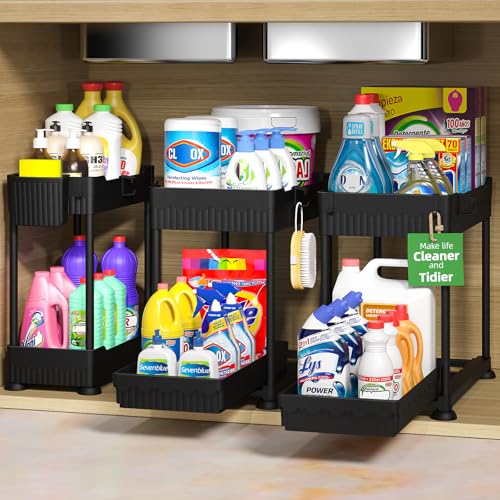
Sevenblue 3 Pack Under Sink Organizers, 2-Tier Multi-Use Kitchen and Bathroom Organizers and Storage with Sliding Drawers,Bathroom Cabinet Organizer (Black, 12.8 Inch)
[Extra Accessories, Endless Uses]: Say goodbye to messy cabinets and cluttered counters. Sevenblue under-sink organizers are a fan…
As an affiliate, we earn on qualifying purchases.
As an affiliate, we earn on qualifying purchases.
Conclusion
Ultimately, whether you should relocate depends on weighing your emotional resilience and adaptability. Some theories suggest that change fosters growth, but others warn it can heighten stress. Trust your instincts and consider how you cope with uncertainty. Remember, research shows that embracing change can boost mental strength if you approach it with a positive mindset. So, ask yourself: will this move challenge you to grow or overwhelm you? The choice is yours—trust your coping skills.
relocation checklist planner
As an affiliate, we earn on qualifying purchases.
As an affiliate, we earn on qualifying purchases.

Upgraded 3 in 1 Folding Hand Truck, 500lbs Capacity Heavy Duty Convertible Dolly cart with Rubber Wheels, Collapsible Hand Truck Foldable with Telescopic Handle, Trolley for Moving, Office, Warehouse
3-in-1 Convertible Hand Truck Dolly : Easily transforms in seconds without the need for pins or tools switch…
As an affiliate, we earn on qualifying purchases.
As an affiliate, we earn on qualifying purchases.