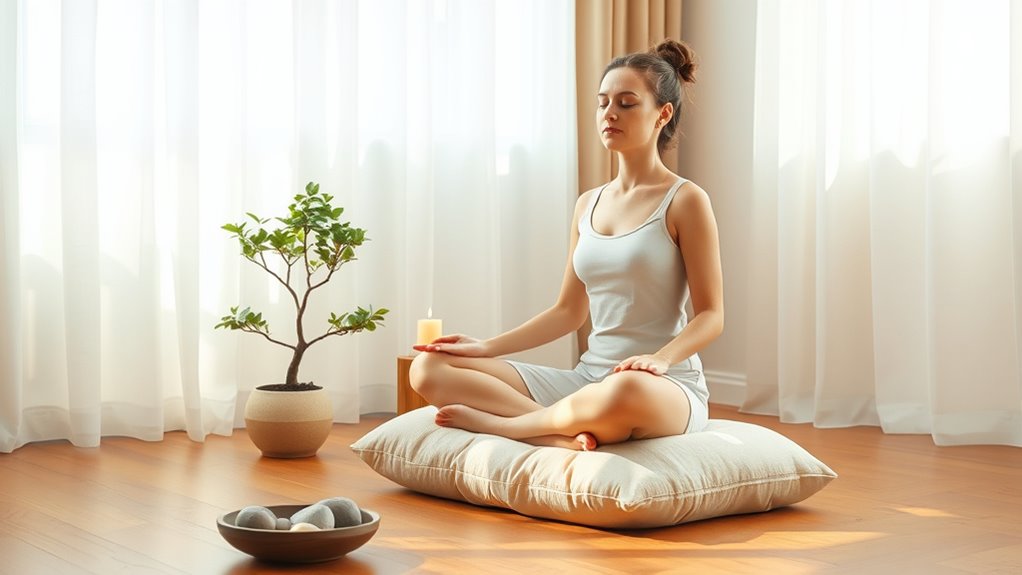

To calm anxiety and fear, try meditation techniques like mindfulness exercises that help you stay present by focusing on your breath, sensations, or sounds. Guided visualizations can take your mind to peaceful scenes such as beaches or forests, triggering relaxation. Incorporating these practices into your daily routine builds resilience and provides quick relief during stressful moments. Keep exploring these methods, and you’ll discover even more ways to develop calm and confidence in challenging times.
Key Takeaways
- Practice mindfulness exercises focusing on breath, sensations, or sounds to stay present and reduce anxious thoughts.
- Use guided visualizations to imagine calming scenes, creating a mental refuge during moments of fear.
- Incorporate daily meditation routines to build resilience and diminish the frequency of anxiety episodes.
- Recognize early signs of anxiety through mindfulness, allowing for early intervention and calmer responses.
- Employ quick-relief guided visualizations or recordings during intense stress to quickly soothe heightened anxiety.

Have you ever wondered how meditation can help you find calm amid chaos? It’s a powerful tool that transforms your ability to manage anxiety and fear. One of the most effective approaches involves mindfulness exercises, which teach you to stay present and observe your thoughts without judgment. These exercises encourage you to focus on your breath, bodily sensations, or the sounds around you, anchoring your mind in the here and now. When your thoughts spiral into worry or panic, mindfulness helps you recognize these patterns without letting them take over, creating a pause that allows you to respond more tranquilly.
Mindfulness exercises help you stay present and manage anxiety with calm awareness.
Guided visualizations are another valuable technique to calm anxiety. With guided visualizations, you listen to a recorded or live narration that takes you on a mental journey—often to peaceful and safe places like a beach, forest, or mountain retreat. As you imagine these scenes, your body responds as if you’re actually there, producing a relaxation response that counters stress. These visualizations can be particularly effective when anxiety feels overwhelming because they draw your attention away from distressing thoughts and redirect it toward calming imagery. Over time, they become a mental refuge you can access anytime you need a break from fear or worry.
Incorporating mindfulness exercises into your daily routine can markedly reduce the intensity and frequency of anxious episodes. You might start with just a few minutes each morning, focusing on your breath or sensations in your body, gradually increasing the duration as you become more comfortable. The key is consistency—regular practice helps solidify these skills so that they become second nature when anxiety strikes. Guided visualizations, on the other hand, are especially helpful during moments of acute stress. When you feel anxiety escalating, taking a few minutes to listen to a visualization recording can quickly shift your focus and soothe your mind.
Both mindfulness exercises and guided visualizations empower you to take control of your mental state. They don’t eliminate stress entirely, but they provide effective tools to manage it more skillfully. As you practice regularly, you’ll find it easier to recognize early signs of anxiety and employ these techniques to calm your mind before fear takes hold. With patience and persistence, these meditation strategies become a natural part of your toolkit, helping you navigate life’s chaos with greater resilience and peace.
Frequently Asked Questions
Can Meditation Replace Professional Therapy for Anxiety?
Meditation can substantially complement your anxiety management, but it shouldn’t replace professional therapy. Mindfulness practices and breathing exercises help you calm your mind and reduce stress, yet they might not address underlying issues or severe anxiety. If your anxiety is persistent or overwhelming, seek professional support to develop an all-encompassing treatment plan. Combining meditation with therapy often provides the best results for managing anxiety effectively.
How Long Does It Take to See Results From Meditation?
You won’t see overnight results, but with consistent practice, you’ll notice positive changes. Usually, within a few weeks of daily mindfulness duration, you start feeling calmer and more centered. Meditation consistency is key—stick with it, and your stress levels will gradually decrease. Think of it as planting seeds; the more you nurture your practice, the sooner you’ll reap the calming benefits. Patience and perseverance pay off.
Is Meditation Effective for Severe Anxiety or Panic Attacks?
Yes, meditation can be effective for severe anxiety or panic attacks. You should incorporate mindfulness practice and breathing exercises into your routine, as they help ground you during intense moments. Regular meditation trains your mind to stay present, reducing the frequency and intensity of panic attacks over time. While it may take some patience, consistent effort can markedly improve your overall mental health and help manage severe anxiety more effectively.
Are There Specific Meditation Techniques for Children With Anxiety?
You can absolutely help your child with meditation techniques designed just for them! Imagine using child-friendly breathing exercises that turn into fun, giggly moments, or playful visualization that sparks their imagination while calming nerves. These techniques make meditation feel like a game, instantly easing anxiety and fear. By making it engaging and simple, your child will enthusiastically embrace these calming practices, transforming their worries into peaceful, happy moments.
Can Meditation Interfere With Medication Prescribed for Anxiety?
Meditation generally doesn’t interfere with anxiety medications, but it can have side effects like dizziness or emotional discomfort for some. You should also be aware of meditation contraindications, especially if you have underlying mental health conditions. Always consult your healthcare provider before starting any new practice, as they can advise whether meditation complements your medication plan and help you avoid potential interactions or side effects.
Conclusion
You might find it surprising how just a few minutes of meditation can quietly transform your anxiety and fear. Sometimes, the simplest techniques—like focusing on your breath or grounding yourself in the present—can unexpectedly bring peace when you least expect it. It’s almost as if your mind is waiting for you to give it that gentle nudge. So, don’t hesitate—try these methods today and discover how calm and centered you can truly feel.