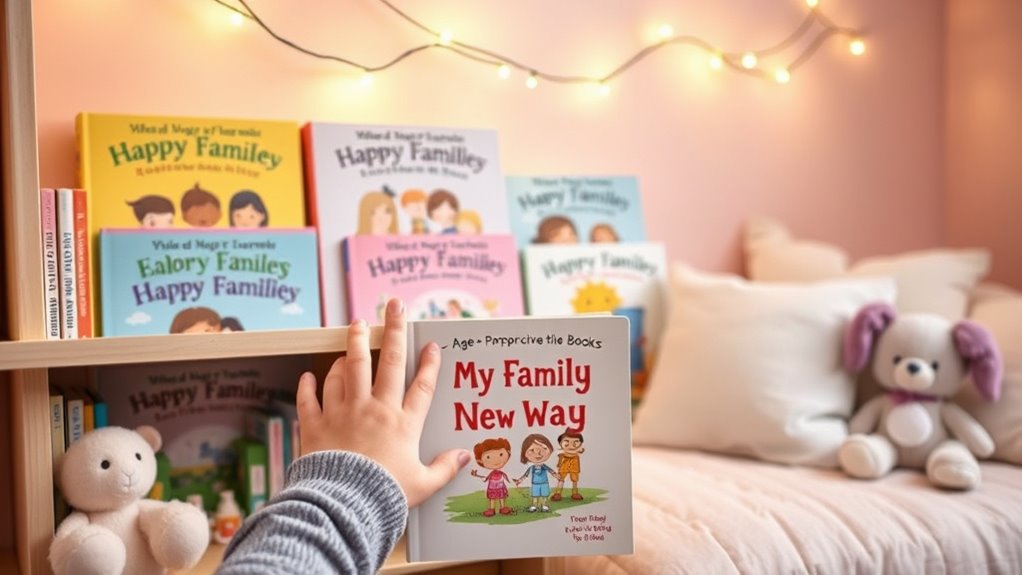

When looking for age-appropriate books and resources about divorce, choose materials that match your child’s developmental level. For younger kids, simple stories with engaging illustrations like *“Two Homes”* can help them understand family changes and express their feelings. For older children and teens, books like *“The Truth About Divorced Parents”* provide space to explore emotions and manage reactions. Exploring these tools can boost your child’s understanding and resilience — learn more to support your family through this process.
Key Takeaways
- Use simple language and engaging illustrations in books like *“Two Homes”* for younger children.
- Offer deeper emotional exploration and practical coping strategies in resources for older kids and teens.
- Utilize online tools, videos, and activities tailored to different developmental stages.
- Encourage open communication and support groups to normalize feelings about divorce.
- Select age-appropriate books and resources that foster understanding, resilience, and emotional well-being.
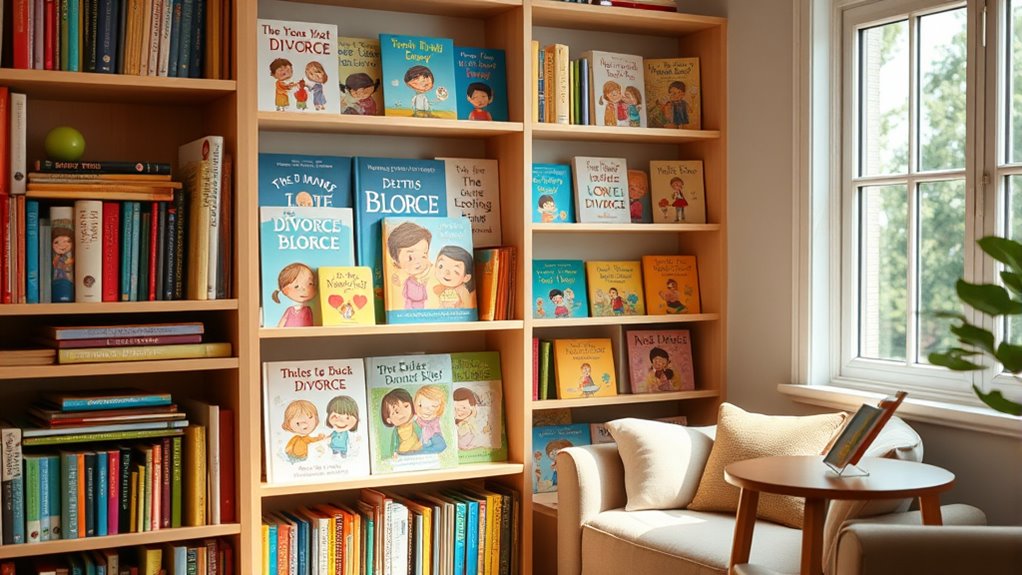
When children experience their parents’ divorce, finding the right words can feel overwhelming. It’s natural to want to help them process their feelings, but sometimes it’s hard to know where to start. That’s where age-appropriate books and resources come in—they can be invaluable tools for providing coping strategies and emotional support. These materials are designed to speak directly to kids at different developmental stages, helping them understand their feelings and giving them ways to navigate this challenging time.
Age-appropriate books and resources help children understand and cope with their parents’ divorce.
For younger children, picture books are especially effective. They use simple language and engaging illustrations to explain what divorce means and address common concerns, like missing one parent or feeling confused. Books such as *“Two Homes”* or *“Mom’s House, Dad’s House”* help children see that even though their family structure is changing, they are still loved and supported. These stories foster understanding and reassure kids that their feelings are normal, helping them develop healthy coping strategies early on. They also open the door for parents and caregivers to talk openly about the changes, reinforcing emotional support. Additionally, understanding emotional development can guide caregivers in choosing appropriate resources for their child’s age and maturity level.
As children grow older, they need resources that acknowledge their increasing emotional complexity. Chapter books and guides for preteens and teens often explore more deeply feelings of loss, anger, and confusion. They offer practical advice on managing emotions, communicating with parents, and handling peer reactions. For example, books like *“The Truth About Divorced Parents”* or *“Helping Children Cope with Divorce”* provide insights that validate their experiences and encourage them to express their feelings constructively. These resources become essential tools for fostering resilience and understanding, giving older children and teens strategies to handle their emotions and seek additional support if needed.
In addition to books, online resources, support groups, and counseling can complement these materials. Many websites offer age-specific articles, videos, and activities that help children learn about divorce in a way that’s suitable for their developmental level. Support groups provide a safe space for kids to share their feelings with peers who understand what they’re going through, reinforcing emotional support and normalizing their experiences.
Ultimately, using age-appropriate books and resources shows children that they’re not alone. It demonstrates your commitment to their emotional well-being and provides them with practical tools to cope with their changing family situation. Whether through a picture book or a teen guide, these resources help children feel understood, supported, and equipped to move forward with confidence.
Frequently Asked Questions
How Can I Tell if My Child Is Ready to Discuss Divorce?
You can tell if your child is ready to discuss divorce by observing their emotional readiness and communication cues. If they show curiosity, ask questions, or bring up the topic, it’s a good sign they’re ready to talk. Pay attention to their mood and comfort level—if they seem open and engaged, you can gently start the conversation. Trust your instincts and make sure they feel safe expressing their feelings.
What Signs Indicate My Child Is Struggling Emotionally After Divorce?
You might notice emotional signals like withdrawal, sadness, or anxiety, juxtaposed with behavioral changes such as increased irritability, difficulty concentrating, or acting out. These signs suggest your child is struggling emotionally after divorce. If you observe these shifts, it’s essential to offer support, listen actively, and consider seeking help from a counselor. Addressing these issues early can help your child process their feelings and adapt more healthily.
Are There Specific Resources for Children With Special Needs Experiencing Divorce?
You can find tailored resources and special needs books designed specifically for children experiencing divorce. Look for books that address your child’s unique challenges, like social or emotional difficulties, in an accessible way. Many organizations offer specialized support materials, including counselors and online tools. These resources help your child process their feelings, making the divorce experience more manageable and less stressful for them.
How Can I Support My Child During Ongoing Custody Arrangements?
You can support your child during ongoing custody arrangements by practicing effective co-parenting strategies and maintaining a consistent routine. Communicate openly with your co-parent to ensure your child’s needs are prioritized, and keep daily routines stable to provide a sense of security. Regularly check in with your child about their feelings, and reassure them that both parents love and support them, helping them navigate the changes confidently.
When Should I Consider Professional Counseling for My Child?
Imagine your child’s emotional resilience as a fragile sapling needing support during storms. If you notice persistent sadness, withdrawal, or anxiety, it’s time to contemplate professional counseling. These experts can help your child develop coping strategies, strengthen their emotional well-being, and navigate feelings. Don’t wait for the storm to overwhelm them—seeking help early ensures your child builds resilience and feels supported through challenging times.
Conclusion
Think of these books and resources as guiding stars, shining hope through your child’s journey. Like a sturdy bridge spanning uncertain waters, they help your child navigate feelings and find stability. Remember, every story is a lantern illuminating understanding and compassion. By choosing age-appropriate tools, you’re planting seeds of resilience and love that will grow stronger with time. Together, you and your child can turn challenges into a path toward healing and hope.