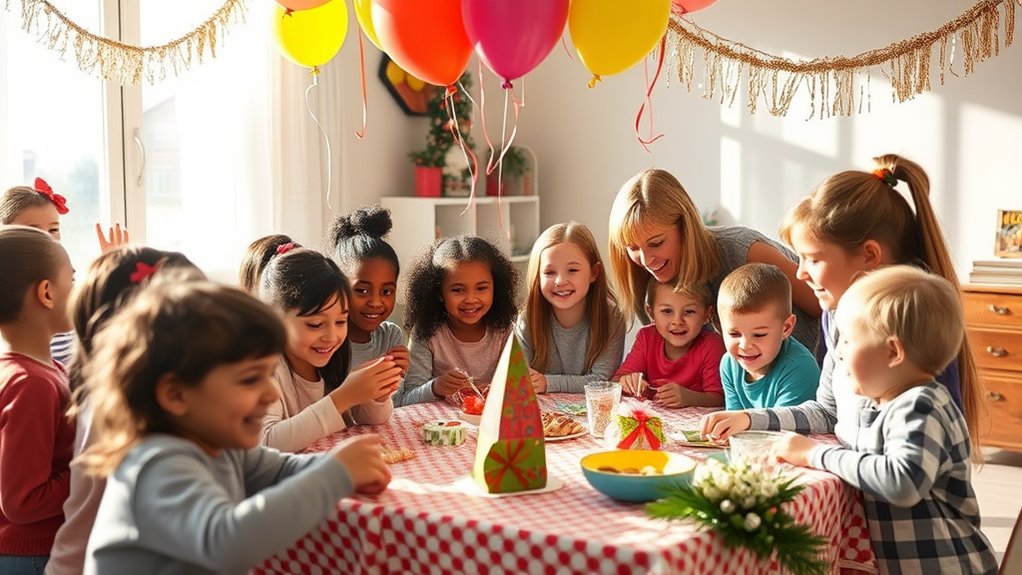

To help children cope with holidays and special occasions, stay attentive to their emotions and validate how they feel. Keep routines consistent and prepare them in advance, using visual aids or familiar comforts like home theatre projectors. Create a calm environment with quiet spaces and calming activities, and involve children in planning to give them a sense of control. Balancing support and routine adjustments can turn challenges into positive memories—exploring more strategies can make these moments easier for everyone.

Get gifts for the two of you delivered free with Prime
- Fast, free delivery on millions of items
- Prime Video, Amazon Music and more included
- Member-only deals all year
Key Takeaways
- Validate children’s feelings and provide reassurance to help them feel safe and understood during holiday stresses.
- Maintain familiar routines and routines to foster stability amidst changing holiday environments.
- Prepare children in advance with visual schedules and clear explanations to reduce anxiety about upcoming events.
- Create calming spaces and offer coping tools like deep breathing or comfort items to manage overwhelming emotions.
- Involve children in planning and focus on joyful, memorable moments to turn challenges into positive experiences.

Holidays and special occasions can be exciting, but they also bring unique challenges for children. As a parent or caregiver, you might notice that your child becomes overwhelmed, anxious, or even upset as their usual routines shift and new environments emerge. Providing emotional support is essential during these times to help them feel safe and understood. Let your child know it’s okay to feel a mix of emotions, and reassure them that you’re there to support them through the changes. Sometimes, simply listening and validating their feelings can make a big difference. Encourage open communication, and be patient if they seem overwhelmed, giving them space to express themselves without judgment. Remember, your calm presence and understanding play a critical role in helping them navigate these moments.
Another key aspect is helping your child adjust to changes in routine. The familiar patterns they rely on—like specific meal times, bedtimes, or daily activities—may be disrupted during holidays. To ease this transition, try to maintain as much consistency as possible. For example, keep their bedtime and morning routines similar to what they’re used to, even if the day’s schedule is different. If you know there will be a lot of socializing or travel, prepare your child ahead of time by discussing what to expect. Visual schedules or simple explanations can help them feel more in control amid the excitement. When routines are disrupted, children can feel insecure or anxious, so providing a sense of continuity wherever possible reassures them that some things remain steady, even during special occasions. Incorporating home theatre projectors into your holiday setup can also create a cozy, familiar environment that comforts your child.
It’s also helpful to create a plan for handling unexpected emotions or meltdowns. Children might become overwhelmed by the noise, crowds, or unfamiliar settings. Having a quiet space or a calming activity they can retreat to can be invaluable. Encourage them to use coping strategies, like deep breathing or holding a favorite comfort item. In addition, involve your child in planning some aspects of the celebration, giving them a sense of agency and familiarity. This involvement fosters confidence and helps your child feel more in control of their environment. Ultimately, your proactive approach—balancing emotional support with routine adjustments—can transform what might be stressful into a positive, memorable experience for everyone involved.
As an affiliate, we earn on qualifying purchases.
Frequently Asked Questions
How Can I Address My Child’s Feelings of Sadness During Holidays?
You can address your child’s feelings of sadness by acknowledging their sadness openly and validating their feelings. Let them know it’s okay to feel upset and encourage them to share what’s bothering them. Offer reassurance and comfort, and spend quality time together to create a sense of security. By listening attentively and showing understanding, you help your child feel supported, making it easier for them to process their emotions during the holidays.
What Are Creative Ways to Include Children in Holiday Preparations?
Think of holiday preparations as a magical adventure where you craft family traditions together. You can involve children in decorating by letting them choose ornaments or help hang lights, making it fun and special. Encourage their creativity with DIY crafts or baking treats, turning the process into a cherished memory. By including them actively, you help build joyful moments, making the season brighter and more meaningful for everyone.
How Do I Handle Family Conflicts That Affect Children’s Holiday Experiences?
When family conflicts threaten your children’s holiday experience, prioritize conflict resolution through calm conversations and active listening. Consider family mediation to facilitate understanding among relatives and reduce tension. Set clear boundaries about acceptable behavior and focus on positive interactions. By addressing issues early and promoting peaceful communication, you help create a more joyful holiday environment, allowing children to enjoy the season without the burden of unresolved conflicts.
What Strategies Help Children Manage Holiday Anxiety or Overwhelm?
Imagine a fragile bird balancing on a thin branch during a storm—that’s how holiday anxiety can feel for a child. To help, introduce mindfulness techniques like deep breathing or gentle grounding exercises, and maintain routine stability to create a sense of security. You can also talk openly about feelings, helping children recognize and express their emotions, making holiday moments more manageable and less overwhelming.
How Can I Support Children Grieving the Loss of a Loved One During Holidays?
You can support children grieving a loved one during holidays by creating space for their grief expression, encouraging them to share memories or feelings. Incorporate bereavement rituals, like lighting a candle or sharing stories, to honor their loved one. Be patient and listen actively, validating their emotions. Your presence and understanding help them feel safe and supported, making the holiday season more manageable as they navigate their grief.
Conclusion
Remember, holidays and special occasions can be tough for kids, but your support makes a huge difference. By listening, planning ahead, and offering reassurance, you help them feel safe and loved. Did you know that 65% of children feel more anxious during celebrations? Your understanding can ease their worries and create joyful memories. Keep being patient and present—your efforts truly help children enjoy these special moments with confidence and happiness.
Columbus Day / Indigenous Peoples' Day Picks
long weekend sales
As an affiliate, we earn on qualifying purchases.