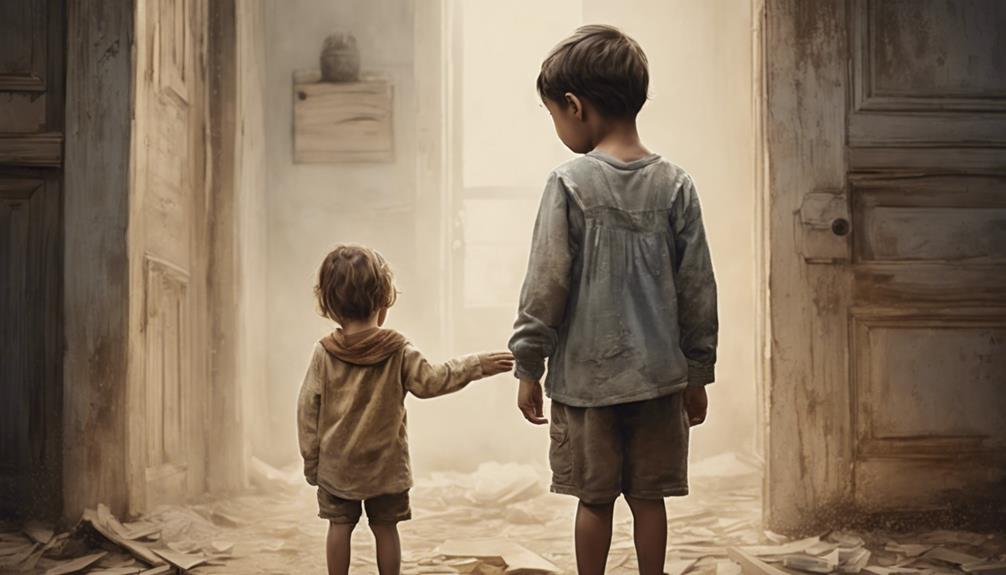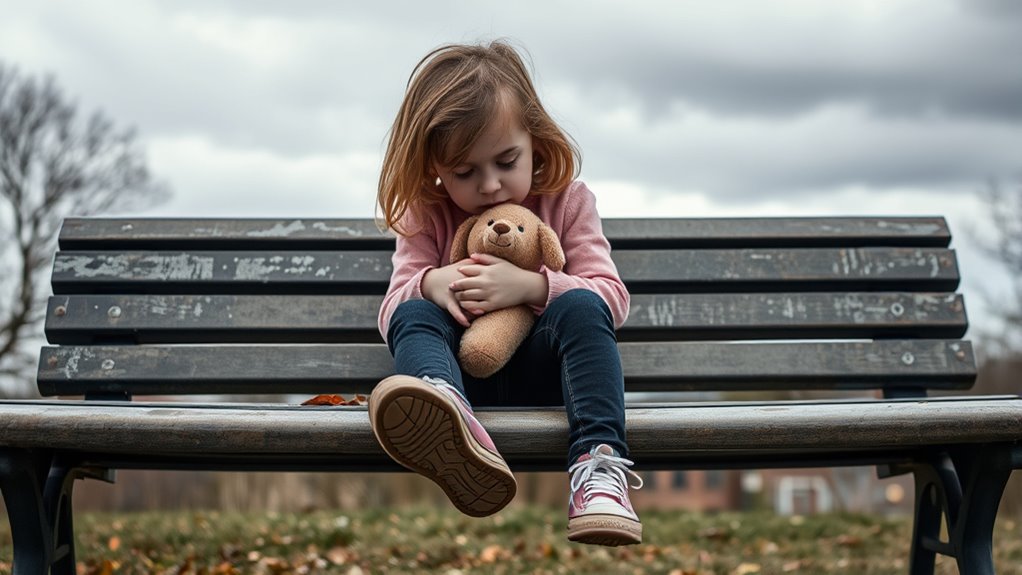

After a divorce, you should watch for signs of depression in your child, like withdrawing from activities, isolating from loved ones, or showing persistent sadness or irritability. Changes in sleep patterns, decline in school performance, or loss of interest in hobbies also signal distress. If mood shifts don’t improve over time or they seem hopeless, it’s important to create a safe space to talk and consider seeking professional support. Learning more can help you better support your child’s emotional well-being.
Key Takeaways
- Watch for withdrawal from activities, social isolation, and persistent sadness beyond typical reactions.
- Notice decline in academic performance, motivation, and changes in sleep patterns.
- Observe mood swings, feelings of hopelessness, or lack of interest in daily routines.
- Engage in open conversations, validate feelings, and avoid dismissive responses.
- Seek professional help if emotional distress persists or if there are signs of self-harm or ongoing sadness.

Divorce can be a challenging experience for children, and it’s important to recognize when their emotional responses go beyond typical adjustment. Children often show signs of distress during and after divorce, but some may develop deeper emotional issues like depression. As a parent or caregiver, paying close attention to changes in behavior and mood can help you identify these warning signs early. Understanding effective coping strategies is essential, and open parental communication plays a critical role in supporting your child’s emotional health. When children feel heard and understood, they’re more likely to express their feelings and seek help if needed.
Children experiencing depression after divorce might withdraw from activities they once enjoyed or isolate themselves from friends and family. They may display persistent sadness or irritability that doesn’t seem to improve over time. Changes in sleep patterns—either sleeping too much or too little—are common indicators of emotional distress. You might notice a decline in school performance or a lack of motivation, which can be signs that your child is struggling internally. It’s essential to observe these shifts without dismissing them as normal reactions to divorce; instead, consider them potential signs of depression that warrant further attention.
Parental communication is key in helping your child navigate their feelings. Maintain an open, honest dialogue about their emotions and reassure them that it’s okay to feel upset or confused. Encourage your child to express their thoughts and feelings without fear of judgment. Demonstrating empathy and validating their experiences can foster trust and help them develop healthy coping strategies. Avoid dismissing their feelings or pressuring them to “move on,” as this can lead to feelings of isolation or misunderstanding. Instead, create a safe space where they feel comfortable sharing their worries and concerns.
Supporting your child through this difficult period involves consistent reassurance and patience. Let them know they’re not alone and that you’re there to help them process their emotions. Seek professional help if you notice persistent signs of depression, such as ongoing sadness, hopelessness, or thoughts of self-harm. Engaging in family therapy or individual counseling can equip your child with healthy coping strategies and improve communication within the family. Additionally, awareness of regional resources and tools available can make accessing professional support more manageable. Remember, your proactive involvement and empathetic approach can make a meaningful difference in helping your child adjust and heal from the emotional impact of divorce.

When Harley Has Anxiety: A Fun CBT Skills Activity Book to Help Manage Worries and Fears (For Kids 5-9)
As an affiliate, we earn on qualifying purchases.
As an affiliate, we earn on qualifying purchases.
Frequently Asked Questions
How Can Parents Differentiate Between Normal Grief and Depression in Children?
You can tell if your child’s grief has turned into depression by observing their emotional resilience and behavioral changes. If they seem persistently sad, lose interest in activities, or withdraw from friends, these are signs of depression. Normal grief usually allows for emotional recovery, but depression causes ongoing sadness and difficulty coping. Stay attentive, offer support, and seek professional help if their emotional resilience diminishes over time or behavioral changes worsen.
What Are Effective Ways to Support a Child Showing Depression Signs Post-Divorce?
To support a child showing depression signs after divorce, focus on providing consistent emotional support and implementing effective coping strategies. Listen actively, validate their feelings, and reassure them they’re not alone. Encourage healthy routines, creative outlets, and open communication. Seek professional help if needed, and stay patient and understanding. Your consistent presence and support can help them navigate their emotions and foster resilience during this challenging time.
When Should Professional Help Be Sought for a Child’s Depressive Symptoms?
You should seek professional help as soon as you notice persistent depressive symptoms in your child, especially if they affect daily activities or emotional resilience. Early intervention is vital to prevent long-term issues and to support their mental health effectively. Trust your instincts—if your child’s mood doesn’t improve or worsens, consulting a mental health expert can provide necessary guidance and tailored treatment, ensuring they get the support they need.
Are Boys and Girls Affected Differently by Divorce-Related Depression?
Divorce affects boys and girls in ways that can feel like a hurricane hitting their emotional world. You’ll notice gender differences in their emotional responses, with boys sometimes showing more outward frustration and girls often internalizing feelings. These differences mean you need to pay close attention to each child’s unique reactions. Understanding these distinctions helps you better support them through their emotional struggles, ensuring they get the help they need to heal.
How Can Teachers or Caregivers Identify Depression Signs in Children?
You can spot depression signs in children by observing behavioral cues like withdrawal, irritability, or changes in activity levels. Pay attention to emotional expressions such as persistent sadness, tearfulness, or lack of interest in usual activities. If you notice these signs consistently, it’s important to delicately talk to the child and seek professional guidance. Your awareness helps make certain the child gets the support they need to heal and cope effectively.

DBT, CBT, and Play Therapy Toolbox for Children and Adolescents: Over 200 Worksheets and Activities to Address Anxiety, Depression, Trauma, … Motivation, Family Dynamics, and More
As an affiliate, we earn on qualifying purchases.
As an affiliate, we earn on qualifying purchases.
Conclusion
Recognizing depression in children after divorce can be challenging, but staying attentive to their emotional cues makes a difference. Remember, nearly 20% of children experience emotional issues following parental separation, highlighting the importance of early intervention. By keeping an eye out for signs like withdrawal, mood swings, or academic struggles, you can help your child get the support they need. Your awareness and prompt action can make a meaningful difference in their healing process.

Boiron SleepCalm Kids Liquid Doses Sleep Aid for Deep, Relaxing, Restful Nighttime Sleep – Melatonin-Free and Non Habit-Forming – 15 Count
GENTLE, MELATONIN-FREE KIDS’ SLEEP RELIEF: SleepCalm Kids Liquid Doses by Boiron provide a gentle, melatonin-free option to relieve…
As an affiliate, we earn on qualifying purchases.
As an affiliate, we earn on qualifying purchases.

Children in Therapy: Using the Family as a Resource
As an affiliate, we earn on qualifying purchases.
As an affiliate, we earn on qualifying purchases.