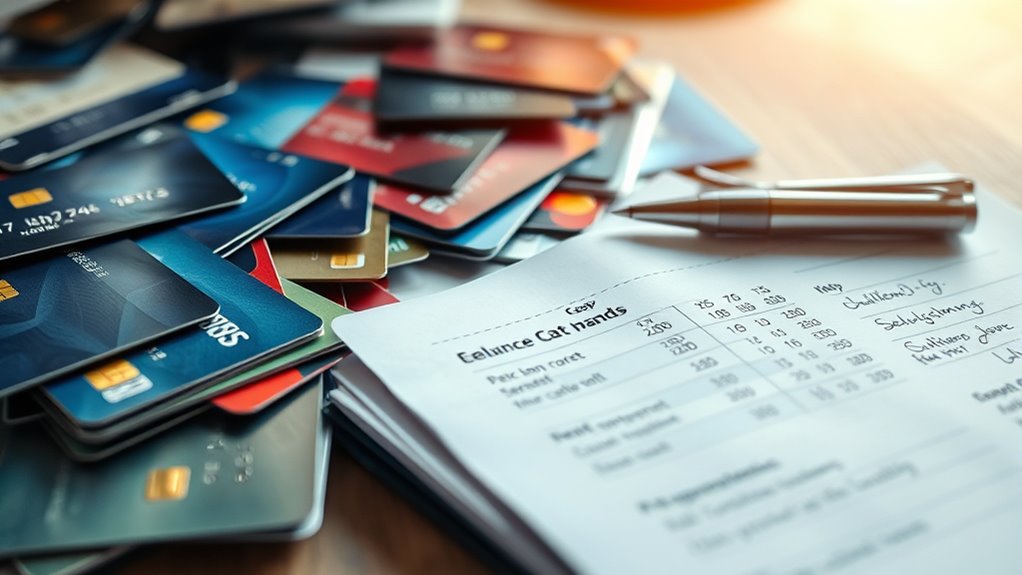

To divide your credit card debt effectively, start by listing all your cards and balances. Focus on paying off high-interest cards first while making minimum payments on others. Consider consolidating your debt with a lower-interest loan or transfer to a card with a balance transfer offer. Managing multiple cards helps reduce overwhelming debt and keeps your payments organized. Keep in mind, understanding how to split your balances can ease your financial burden—if you continue exploring, you’ll find helpful strategies to regain control.
Key Takeaways
- Consumers often hold multiple credit cards, each with different balances and interest rates, complicating debt management.
- Dividing balances across cards can help prioritize high-interest debt repayment.
- Consolidating or transferring balances might reduce interest costs and simplify payments.
- Tracking balances per card assists in budgeting and avoiding additional debt accrual.
- Managing multiple cards requires clear strategies to prevent overspending and worsening debt.

In 2025, credit card debt continues to grow, affecting millions of Americans. The average balance among those with unpaid credit card debt has risen to $7,321, a 5.8% increase from last year. This means more people are carrying larger balances, making it harder to pay off their debt. You might notice that younger generations, like Generation Z, carry smaller balances—around $3,493—compared to millennials, who average nearly $7,000, and Generation X, with balances close to $9,600. Still, even these numbers reflect rising debt levels across all age groups. While the overall growth in balances has slowed to less than 1%, high interest rates are driving costs higher. With APRs hovering around 22%, many consumers see their debt grow faster than they can pay it down. This creates a cycle where larger balances accrue more interest, making repayment seem even more formidable. Credit balances are increasing more slowly in 2025, with less than 1% growth overall. You may also face challenges when it comes to paying off your debt. Nearly a quarter of credit cardholders believe they’ll never fully clear their balances. That sense of hopelessness is rooted in the reality that high interest rates and economic pressures make debt management difficult. Despite some stabilization in delinquency rates—holding steady at around 3.05%—the specter of missed payments still looms, especially in lower-income areas where delinquency rates are as high as 22.8%. This disparity highlights how economic stress impacts different communities unevenly. It’s also worth noting that delinquency rates, while near historic lows compared to the peaks during the Great Recession, have been trending upward since late 2021, signaling ongoing financial strain among consumers. Understanding market fluctuations is crucial for assessing the true impact of debt on the economy. Not everyone carries a balance, but fewer than half of adult credit cardholders do so—about 46%. Still, those who do tend to carry larger debts, especially younger consumers like millennials and Gen Z. Many of these individuals feel burdened by their debt, with over a quarter feeling less confident about paying it off than they did last year. Money stress is common, affecting mental health for about 43% of consumers, and the feeling of being overwhelmed by debt weighs heavily on many. Without a clear plan to pay off balances, the cycle continues, and debt can feel insurmountable. Rising inflation and economic uncertainty only add to the anxiety, as higher costs and economic instability push more people toward borrowing. Despite some recent slowdown in overall credit growth, revolving credit—mainly credit card debt—has decreased by about 5.5% annually, but debt levels remain significant for many Americans.
Top picks for "card credit debt"
Open Amazon search results for this keyword.
As an affiliate, we earn on qualifying purchases.
Frequently Asked Questions
How Can I Negotiate Lower Interest Rates With Credit Card Companies?
To negotiate lower interest rates, you should call your credit card company and politely request a reduction. Highlight your good payment history, long-term relationship, and mention any competing offers with lower rates. If denied, ask to speak with a supervisor. Stay respectful, provide supporting documentation, and emphasize your loyalty. Regularly review your account and be prepared to leverage your credit score to strengthen your case.
What Are the Best Strategies for Paying off Multiple Credit Cards?
Imagine you’re stuck in a traffic jam—paying off multiple credit cards can feel just as overwhelming. To tackle this, pick a strategy: use the debt snowball to pay smallest balances first for quick wins, or choose the avalanche to target high-interest cards and save money. Set up autopay, cut discretionary spending, and regularly review your progress to stay motivated and on track.
How Does Credit Card Debt Affect My Credit Score Long-Term?
Your credit score benefits long-term from paying off credit card debt, as it improves your payment history and reduces utilization ratios. However, initially, closing paid-off accounts or paying down balances can cause temporary dips due to changes in credit mix or account age. Over time, consistently managing your debt and keeping balances low helps your score recover and grow, signaling responsible credit use to lenders.
Are There Benefits to Consolidating Credit Card Debt?
Consolidating your credit card debt can be a game-changer. You’ll enjoy simplified finances, lower interest rates, and reduced monthly payments, making managing your money way easier. Plus, it can help you pay off debt faster and boost your credit score over time. Just remember, staying disciplined with payments is key. Overall, consolidation can save you money and reduce financial stress, turning a mountain of debt into a manageable hill.
What Should I Do if I Can’T Make Minimum Payments?
If you can’t make minimum payments, contact your credit card issuer immediately to explain your situation. Ask about hardship programs, lower minimum payments, or payment plans to prevent penalties and credit damage. Create a realistic budget that prioritizes at least the minimum. Avoid adding new charges, and consider debt relief options like consolidation or credit counseling if missed payments become frequent. Staying proactive helps protect your credit and manage your debt more effectively.
Conclusion
By dividing your credit card balances and tackling them one at a time, you can make the debt feel more manageable. Imagine Sarah, who focused on paying off her highest-interest card first; within months, she saw her debt shrink and gained confidence. Remember, small steps lead to big progress. Stay disciplined, keep track of your payments, and you’ll be surprised how quickly you can turn things around. Your financial future is within reach—start dividing and conquering today.