

Dividing international assets and offshore accounts involves understanding complex legal, tax, and compliance requirements across various jurisdictions. You’ll need to navigate reporting obligations, potential inheritance taxes, and legal frameworks that differ from one country to another. Ensuring compliance with anti-money laundering laws and banking regulations is vital to avoid legal issues. Proper planning and expert advice can make the process smoother. Keep exploring to learn how to efficiently and legally divide your global assets.
Key Takeaways
- Understand and comply with each jurisdiction’s reporting, tax, and legal requirements to avoid penalties and ensure asset validity.
- Consult international tax professionals to navigate estate, inheritance, and transfer taxes on offshore assets.
- Familiarize yourself with local laws governing property rights, inheritance, and cross-border enforcement to prevent disputes.
- Ensure offshore accounts adhere to banking laws and transparency standards to facilitate smooth asset division.
- Work with experienced legal and financial advisors to align strategies with AML, KYC regulations, and jurisdiction-specific compliance rules.
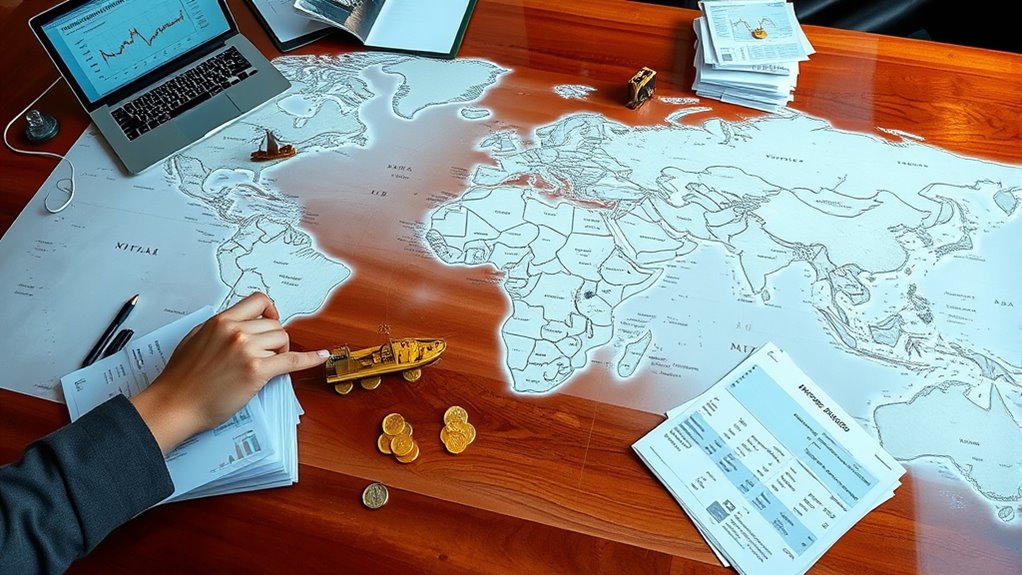
Dividing international assets and offshore accounts can be a complex process, especially when multiple jurisdictions and legal systems are involved. You need to navigate a web of regulations, tax implications, and legal considerations that vary from country to country. First, it’s essential to understand that offshore accounts often come with specific reporting requirements and tax obligations. Ignoring these can lead to severe penalties, including fines or criminal charges. As you plan to divide or transfer assets, you’ll need to consider the tax implications in each relevant jurisdiction. Some countries tax worldwide income, meaning you could be liable for taxes on assets held offshore even if they aren’t physically transferred. Others may impose estate or inheritance taxes that can substantially reduce the value of your assets if not properly managed. Consulting with tax professionals familiar with international law becomes critical to avoid unexpected liabilities and ensure compliance.
Legal considerations also play a key role in dividing your assets. Different countries have varying laws regarding asset division, property rights, and inheritance. You must be aware of the legal frameworks governing each jurisdiction involved to prevent disputes or invalid transfers. This includes understanding how courts enforce judgments across borders and whether certain assets can be transferred without violating local laws or international treaties. It’s also wise to consider the legal status of offshore accounts—are they held in a jurisdiction with strict banking secrecy laws or high levels of transparency? These factors influence how easily you can access, transfer, or divide those assets without legal complications. You might need to obtain specific permissions or follow particular procedures to guarantee that your asset division is legally valid.
Furthermore, you should be mindful of anti-money laundering (AML) regulations and know-your-customer (KYC) requirements that could affect your ability to move funds or assets across borders. Non-compliance can result in frozen accounts or legal action, so working with experienced legal and financial advisors is highly recommended. They can help you develop a strategy that respects each jurisdiction’s rules while minimizing legal risks. Additionally, understanding the vetted nature of financial institutions and their compliance standards can significantly streamline the process of asset division. Ultimately, dividing international assets and offshore accounts demands meticulous planning, expert advice, and thorough understanding of the legal and tax landscape. By proactively addressing these considerations, you can facilitate a smoother transfer process, protect your assets, and avoid costly legal or tax pitfalls. Remember, successful division of assets in the international arena hinges on your ability to stay informed and compliant across all relevant legal systems.
offshore asset management software
As an affiliate, we earn on qualifying purchases.
As an affiliate, we earn on qualifying purchases.
Frequently Asked Questions
How Are International Asset Valuations Determined During Division?
You determine international asset valuations during division by using valuation methods that include detailed asset appraisal processes. You consider factors like market value, income potential, and appraisals from qualified experts. These methods help establish a fair and accurate value for each asset. By relying on professional appraisals and comparable market data, you guarantee the division process is transparent, equitable, and based on solid valuation principles.
What Legal Jurisdiction Applies to Offshore Account Disputes?
Think of jurisdictional disputes like charting a course through a maze, where offshore regulations act as the guiding signs. When it comes to offshore account disputes, the applicable legal jurisdiction depends on where the account is held, the location of the parties involved, and the specific offshore regulations governing that account. Courts will determine jurisdiction based on these factors, ensuring that international laws and offshore rules are respected to resolve disputes effectively.
How Can Parties Ensure Compliance With Tax Regulations?
To guarantee compliance with tax regulations, you should stay aware of the tax implications and reporting requirements related to offshore accounts. Keep detailed records of all transactions and income, and report foreign assets accurately on your tax returns. Consulting with a tax professional experienced in international finance helps you navigate complex rules, avoid penalties, and ensure full compliance with the law. Staying proactive safeguards your financial interests and maintains your legal standing.
What Are the Risks of Offshore Account Secrecy?
Offshore privacy offers benefits, but secrecy risks can lead to legal trouble and financial penalties. If you rely on offshore account secrecy, you might face increased suspicion from tax authorities or regulators. Hidden assets could be scrutinized, resulting in audits or accusations of tax evasion. It’s essential to weigh the privacy advantages against these risks and make certain you adhere to all relevant laws to avoid costly consequences.
How Do Currency Fluctuations Impact Asset Division?
Ironically, currency fluctuations can be your hidden enemy in asset division. When you face currency impact, your asset valuation can shift unexpectedly, making what seemed fair now feel unfair. These swings can complicate negotiations and lead to disputes, especially with international assets. You might think you’ve calculated everything, but volatile exchange rates can alter your asset share, leaving you surprised—sometimes even shortchanged—by the unpredictable nature of global currencies.

International Law Guide – Legal Quick Reference Guide by Permacharts
Quick reference guide
As an affiliate, we earn on qualifying purchases.
As an affiliate, we earn on qualifying purchases.
Conclusion
Dividing international assets and offshore accounts can feel like steering through a complex maze, but with careful planning, you’ll find your way. Remember to stay organized, communicate clearly, and seek expert advice when needed. Think of it as untangling a knot—you’ll need patience and precision. Once you understand the process, you’ll move forward confidently, ensuring your assets are divided fairly and smoothly, just like a well-choreographed dance.
offshore bank account compliance tools
As an affiliate, we earn on qualifying purchases.
As an affiliate, we earn on qualifying purchases.

Peace of Mind Planner: Important Information about My Belongings, Business Affairs, and Wishes
Durable hardcover with concealed wire-o binding
As an affiliate, we earn on qualifying purchases.
As an affiliate, we earn on qualifying purchases.