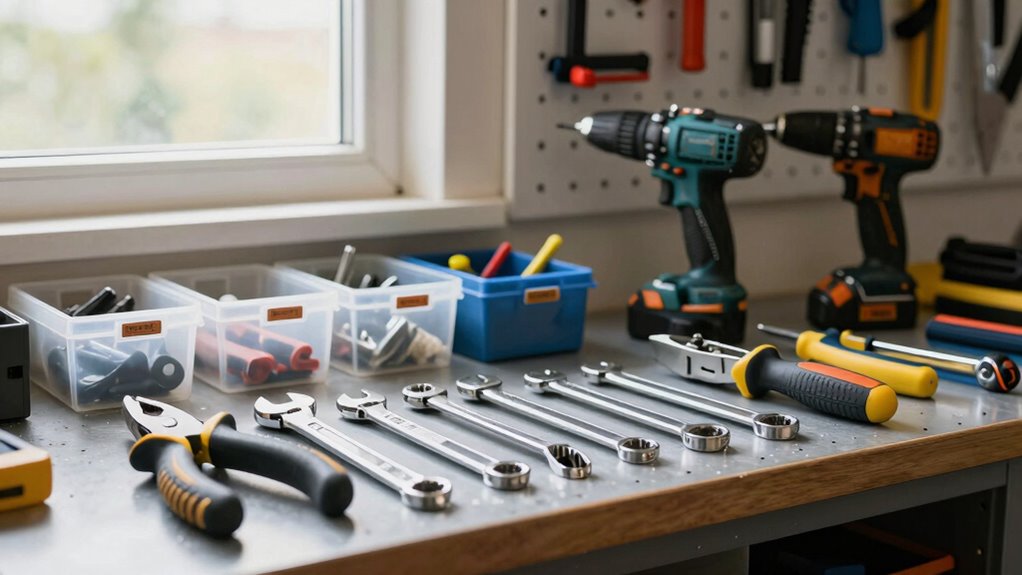

To divide your garage items effectively, sort tools into broad categories like hand tools, power tools, gardening gear, automotive supplies, and miscellaneous items. Use designated storage solutions such as wall racks, pegboards, and labeled bins to keep everything accessible and safe. Store frequently used items within arm’s reach, while seldom-used equipment can go higher or further back. Organizing this way makes your space safer and more efficient—if you want to learn more, keep exploring these tips.

Get gifts for the two of you delivered free with Prime
- Fast, free delivery on millions of items
- Prime Video, Amazon Music and more included
- Member-only deals all year
Key Takeaways
- Categorize tools into groups like hand tools, power tools, gardening, automotive, and miscellaneous for easier organization.
- Store hazardous items securely in labeled, child-proof containers away from heat sources and in ventilated areas.
- Use wall-mounted racks, pegboards, and clear bins to maximize accessibility and visibility of stored items.
- Place frequently used tools within easy reach, and regularly reassess storage for safety and efficiency.
- Proper organization reduces clutter, enhances safety, prolongs tool life, and improves overall workspace productivity.
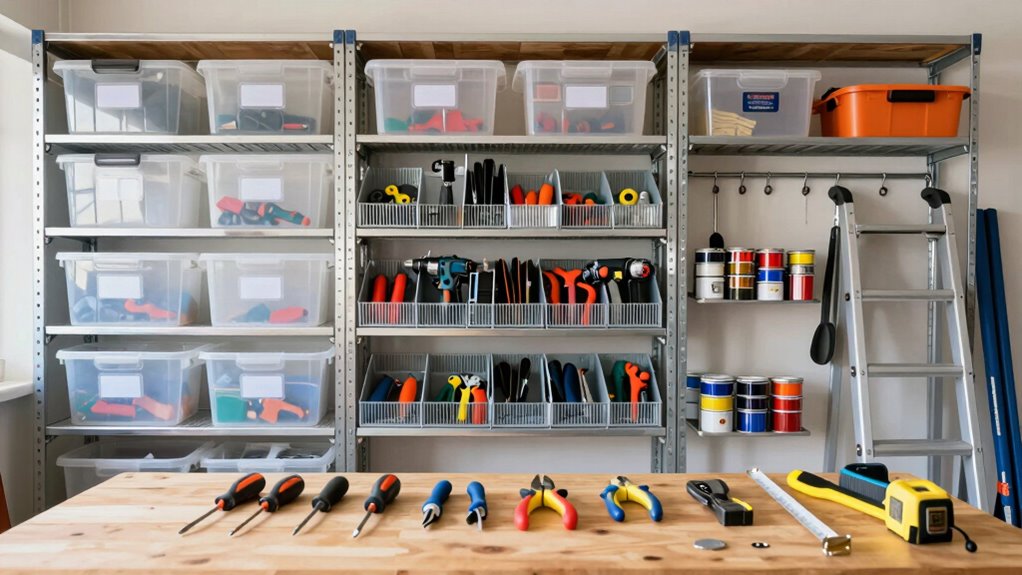
Organizing your tools and garage items can feel overwhelming, but dividing them into specific categories makes the task much more manageable. When you approach the process with a clear plan, it’s easier to stay focused and avoid clutter. Start by sorting everything into broad groups—hand tools, power tools, gardening equipment, automotive supplies, and miscellaneous items. Once sorted, you can develop targeted storage solutions for each category, which not only keeps things tidy but also improves safety in your workspace.
Safety precautions should be at the forefront of your organizing efforts. Sharp tools, chemicals, and heavy equipment pose risks if not stored properly. Use sturdy, labeled containers for small items like nails, screws, and drill bits, and ensure sharp tools like knives, saw blades, or chisels are stored in designated, secure cases or racks. Heavy tools should be stored at waist level or below to prevent accidents when retrieving them. Additionally, keep hazardous materials like paints, solvents, or pesticides in well-ventilated areas, away from heat sources, and in labeled, child-proof containers. Taking these precautions minimizes the risk of injury and keeps your garage safe for everyone. You can also implement storage safety guidelines to further enhance safety measures.
Prioritize safety by storing sharp tools, chemicals, and heavy equipment securely and in well-ventilated, child-proof containers.
When choosing storage solutions, think about accessibility and durability. Wall-mounted racks, pegboards, and shelves make it easy to see and reach frequently used items without creating a mess on the floor. For power tools, consider dedicated cabinets or tool chests that keep everything organized and protected from dust or damage. Clear plastic bins are great for seasonal or seldom-used items, allowing you to see contents at a glance. Label everything clearly to streamline your workflow and prevent wasting time searching for tools or supplies. Proper storage not only declutters your space but also prolongs the life of your tools by keeping them in good condition.
As you divide your items, think about future needs and how often you use certain tools. Place frequently used items in easily accessible spots, and store rarely used equipment in higher or less accessible areas. Regularly reassess your storage system to ensure it remains effective and safe. Keeping your garage organized with the right storage solutions and safety precautions in mind makes your workspace more efficient and reduces risks. With a bit of planning and effort, you’ll transform your cluttered space into a safe, functional area that makes every project more manageable.
As an affiliate, we earn on qualifying purchases.
Frequently Asked Questions
How Do I Determine the Value of Garage Items Before Dividing?
To determine the value of garage items before dividing, start with pricing strategies like researching similar items online or checking recent sales. Use appraisal methods such as evaluating the item’s condition, age, and rarity. You can also get professional appraisals for valuable or unique items. Be honest about wear and tear, and document each item’s details to guarantee a fair division, helping everyone agree on a reasonable value.
What Legal Considerations Are Involved in Dividing Shared Tools?
Think of dividing shared tools like splitting a treasure chest—you need clear maps of ownership. Legally, you should verify ownership documentation and establish legal ownership, especially if disputes arise. Make certain to record any agreements in writing to avoid misunderstandings. If ownership isn’t clear, consider consulting a legal professional. By doing so, you guarantee the division respects legal boundaries and keeps the process smooth, like a well-oiled machine.
How Can I Ensure Fair Division Among Multiple Parties?
To guarantee fair division among multiple parties, you should use sharing techniques like equal splits or rotating usage schedules. Communicate openly about each person’s needs and expectations, and consider creating a written agreement to formalize the division fairness. You can also explore app-based tools designed for dividing shared items. By being transparent and organized, you help prevent conflicts and make sure everyone feels they’ve received their fair share.
What Are Common Disputes During Garage Item Division?
Common disputes during garage item division often stem from disagreements over value, ownership, or sentimental attachment. To prevent conflicts, you should establish clear communication and fair dispute resolution methods early on. This helps everyone feel heard and respected. By setting transparent rules and mediating disagreements promptly, you can minimize misunderstandings, promote conflict prevention, and guarantee a smoother, more amicable division process for all parties involved.
How Should Sentimental Items Be Handled in Division?
Handling sentimental items requires gentle consideration. You should acknowledge their sentimental value and emotional attachment, recognizing how much these items mean. To guarantee fairness, consider sharing or alternating these keepsakes, or establishing a special keepsake box for both parties. Open communication helps prevent conflicts, allowing you to honor each other’s feelings while maintaining harmony. Remember, sometimes, preserving the memories matters more than the items themselves.
Conclusion
As you divide your tools and garage items, remember it’s not just about organization—it’s about reclaiming space and clarity. Like a well-cut puzzle piece, each item finds its perfect place, turning chaos into order. The clutter you once dreaded now becomes a harmonious collection, ready for your next project. Embrace the balance between division and unity, knowing that in this act, you’re crafting a more functional, peaceful space—where everything has its place and purpose.
Halloween Picks
halloween
As an affiliate, we earn on qualifying purchases.