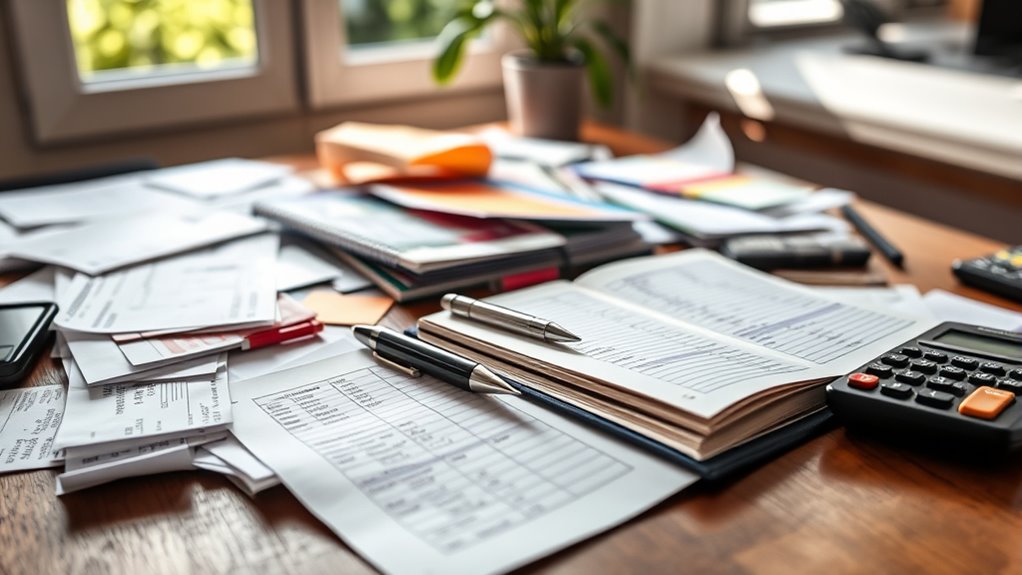

To document child expenses for support calculations, keep detailed records of all costs related to your child, such as receipts for groceries, clothing, medical bills, childcare, and education. Collect supporting documents like tax returns and pay stubs to verify income. Organized records guarantee your expenses and income are reflected accurately in court. Continuing with this process will help you understand how to strengthen your case and ensure fair support arrangements.
Key Takeaways
- Collect and organize receipts, invoices, and proof of payment for all child-related expenses like groceries, medical bills, and education costs.
- Maintain detailed documentation of income sources, including tax returns, pay stubs, and other earnings, to support support calculations.
- Keep sworn financial affidavits and supporting documents that list assets, liabilities, income, and expenses for transparency.
- Serve copies of expense and income documentation to the other parent before court hearings to ensure transparency.
- Ensure all documents are clear, organized, and complete to substantiate expenses and support fair child support determinations.
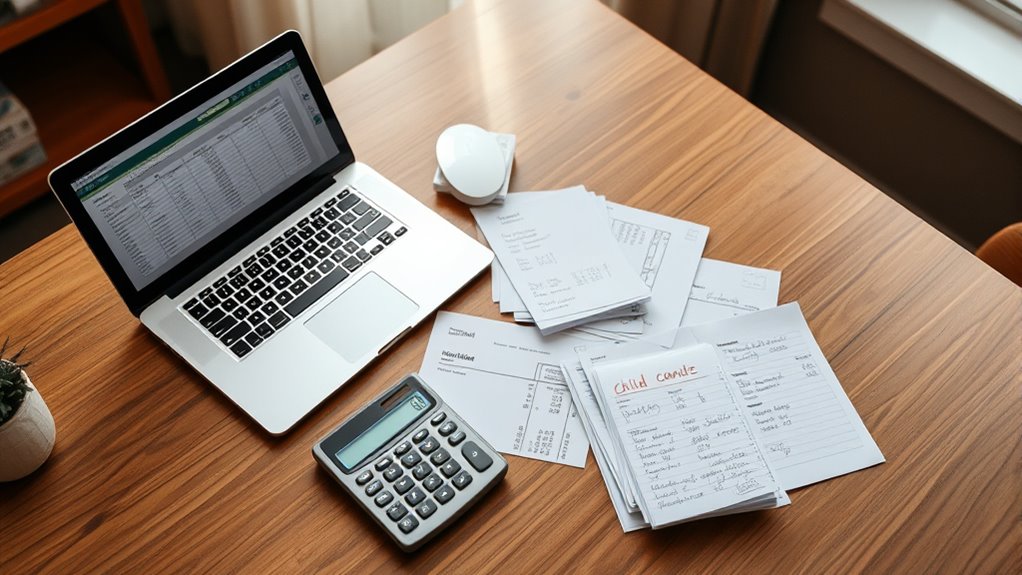
When calculating child support, accurate documentation of expenses and income is essential. You need to gather detailed records to ensure the court has a clear picture of your financial situation and your child’s needs. Supporting documents like receipts, bills, and invoices are crucial for substantiating the costs you claim. This helps prevent disputes and ensures that the support amount reflects the actual expenses necessary for your child’s well-being.
Begin by collecting proof of child-related expenses such as food, clothing, rent, medical costs, childcare, and education. Receipts or invoices for groceries, clothing purchases, medical bills, and school supplies demonstrate the actual costs incurred. For medical expenses, include proof of payment along with documentation explaining the medical necessity, especially if these costs are to be added to child support. Childcare expenses require receipts that reflect costs paid for daycare or babysitting, particularly when these expenses are tied to employment or job searches. Education-related expenses, like tuition bills, textbooks, or transportation costs, should be documented with official bills or receipts, especially if court-ordered support includes educational costs.
Gather receipts and invoices for food, clothing, medical, childcare, and educational expenses to document actual costs effectively.
In addition to expenses, your income documentation plays a vital role. You must provide recent tax returns for both parents to verify income levels, along with pay stubs and W-2 forms that support the reported income figures. Any sources of income beyond employment, such as investment income, Social Security benefits, or unemployment compensation, should be documented and included. Be aware that certain deductions, like unreimbursed employee expenses or child support payments for other children, may be permitted and should be supported with appropriate documentation. Both employment and self-employment income are considered, and thorough records help clarify your actual earnings, avoiding disputes over income figures.
Courts require comprehensive financial disclosures, including sworn statements or Financial Affidavits detailing assets, liabilities, income, and monthly expenses. These documents, submitted under oath, form a foundation for determining support obligations. When filing a petition for child support, you must attach supporting documentation, including proof of income and expenses. Serving these documents to the other parent before the court hearing ensures transparency and fairness. During the hearing, the court reviews submitted evidence and may request further testimony or documentation if necessary. Additionally, maintaining organized records can facilitate quick reference and reduce errors during the legal process.
Ultimately, precise and organized documentation of all child-related expenses and income ensures that the child support calculation is fair and accurate. It helps establish a clear record that reflects your financial situation and your child’s needs. Proper documentation streamlines the court process, reduces potential conflicts, and ensures that support obligations are based on verified, reasonable expenses and true income levels. Additionally, accurate record-keeping can be essential if support disputes go to court, as it provides concrete evidence to support your claims. Being diligent in gathering and maintaining these records benefits everyone involved and promotes a fair resolution in child support cases.
Frequently Asked Questions
How Often Should I Update Expense Documentation?
You should update your expense documentation at least once a year, or sooner if there’s a substantial change in your financial situation. This includes changes in income, childcare costs, or health insurance expenses. Keep track of these changes and notify the court if necessary. Regular updates help guarantee child support calculations stay accurate and fair, avoiding issues with retroactive adjustments or disputes.
Can I Include Non-Reimbursed Expenses?
Yes, you can include non-reimbursed expenses. Make certain to keep detailed records like receipts, invoices, and EOBs to prove the costs you’ve paid. Submit these documents to the other parent within the required timeframe, and follow court procedures for claiming reimbursement. Be aware that expenses must be reasonable and necessary, and courts typically require proof to ensure fair sharing of out-of-pocket costs for your child’s needs.
What if Expenses Vary Month to Month?
When expenses vary month to month, you should keep detailed records like receipts and bank statements to track fluctuations. Use averages over several months to present a realistic picture of typical costs. Separate fixed, variable, and controlled expenses for clarity. Consider providing the court with a history of your expenses and income to demonstrate patterns, and suggest periodic adjustments or reconciliations to account for these fluctuations accurately.
Do I Need Receipts for All Expenses?
You should keep receipts for all expenses related to your child’s care, but it’s especially important for significant or reimbursable costs like medical bills or daycare. For smaller or routine expenses, receipts may not be necessary, but maintaining records is wise in case you need to verify costs later. Always gather proof of payment and documentation to support your claims, especially if expenses are later questioned or need to be adjusted in support calculations.
How Should I Handle Shared Expenses With the Other Parent?
You should handle shared expenses by communicating openly, documenting everything, and agreeing in advance. Keep receipts, invoices, or proof of payments for all costs like medical bills or activities. Use co-parenting apps or shared spreadsheets to track expenses transparently. Clarify who pays what and when, and put agreements in writing through a parenting plan or court order. Regularly review and adjust your arrangements as circumstances change to guarantee fairness and avoid disputes.
Conclusion
By accurately documenting your child’s expenses, you build a clear picture of their needs, much like a painter adding precise strokes to a canvas. This record becomes your guiding light through support calculations, ensuring fairness and clarity. Remember, every receipt and detail you gather helps illuminate the path forward, turning uncertainty into certainty. With diligent effort, you craft a foundation as solid as a lighthouse, guiding your child’s future with confidence and care.