To enforce child support, you can use options like income withholding, intercepting tax refunds or unemployment benefits, and filing liens against property. License suspensions or restrictions on driver’s, professional, or recreational licenses are common, as well as passport restrictions for unpaid support. Technology also plays a key role in improving enforcement, while employment programs help parents stay compliant. If you want to discover how these tools work together, keep exploring the ways enforcement can be effective.
Key Takeaways
- Income withholding accounts for over 70% of child support collections nationwide.
- Enforcement options include license suspensions, revocations, and travel restrictions like passport denial.
- Tax refunds, unemployment benefits, and financial assets can be intercepted to recover owed support.
- Data-sharing and technology streamline enforcement, reducing errors and speeding up collection efforts.
- Employment support programs and case management improve compliance and reduce legal actions.
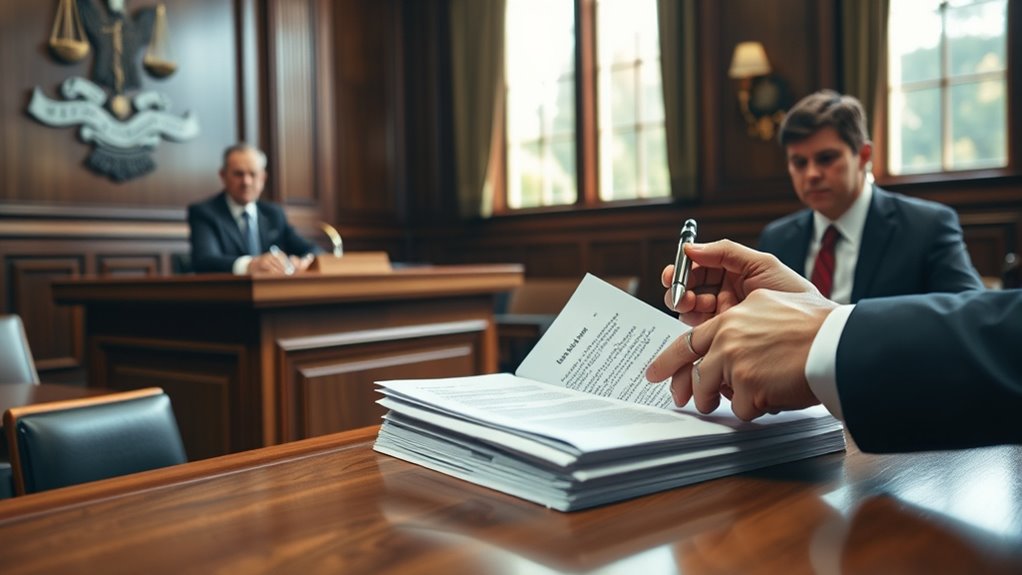
Enforcing child support involves a range of strategies designed to guarantee noncustodial parents meet their financial obligations. One of the most common and effective methods is income withholding, which accounts for over 70% of child support collections nationally. This process automatically deducts payments directly from the noncustodial parent’s paycheck, ensuring steady and timely support. Federal and state agencies also use tax refund intercepts to collect overdue amounts, intercepting federal and state tax refunds to satisfy unpaid child support. In addition, unemployment compensation can be intercepted if there are unpaid support obligations, providing another avenue to recover owed payments. Liens can be filed against property owned by noncustodial parents, giving authorities a legal claim to secure payments when necessary. Other financial assets are also targeted; insurance settlements, lottery winnings, retirement funds, and bank accounts can all be subject to withholding to cover child support arrears.
Beyond financial garnishments, enforcement includes license suspension and restrictions. Many states suspend or restrict driver’s licenses when noncustodial parents fall behind on payments, making it harder for them to maintain employment or personal mobility. Professional and occupational licenses, such as nursing or teaching credentials, can also be withheld, suspended, or revoked until support obligations are met. Recreational or sporting licenses might be restricted as well, adding pressure to comply. Passports can be denied, revoked, or restricted if delinquent payments accumulate, limiting travel options for noncustodial parents. Sometimes, temporary license suspension removals are granted through intervention programs that support parents in regaining compliance. Enforcement efforts are also increasingly relying on technology and data-sharing systems to improve accuracy and timeliness. These technological advancements help streamline enforcement and reduce errors, making the process more efficient for all parties involved.
Employment and case management interventions play a crucial role in enforcement. Specialized programs offer integrated services, including employment assistance and parenting education, to help noncustodial parents improve their ability to pay. These programs personalize service plans, monitor progress, and provide ongoing support, which often results in increased payment consistency. By helping parents find and retain employment, these interventions reduce the need for court hearings, warrants, and license suspensions, fostering a more sustainable compliance environment. Studies show that when employment support is combined with enforcement efforts, child support payment rates tend to improve markedly. Ongoing case management ensures that enforcement strategies adapt to each parent’s circumstances, promoting better compliance over time.

Creating Digital Faces for Law Enforcement
As an affiliate, we earn on qualifying purchases.
As an affiliate, we earn on qualifying purchases.
Frequently Asked Questions
Can I Modify the Child Support Order After Enforcement Begins?
Yes, you can modify a child support order after enforcement begins. To do so, you need to show a substantial change in circumstances, like income fluctuations or changed needs. File a petition with the Family Court, serve the other parent, and work with the Office of Child Support Enforcement for calculations and mediation. Keep in mind, enforcement continues until the court approves the modification, so act promptly.
What Happens if the Non-Custodial Parent Moves Out of State?
If the non-custodial parent moves out of state, don’t worry—you’re protected by federal laws under UIFSA. The child support order remains enforceable across state lines, and agencies in both states collaborate to ensure payments continue. Your state’s enforcement actions, like wage garnishment or tax intercepts, can still be utilized, making sure your child’s needs are met no matter where the non-custodial parent relocates.
Are There Penalties for Intentionally Non-Paying Child Support?
If you intentionally don’t pay child support, you face serious penalties. Courts can hold you in contempt, which may lead to jail time, hefty fines, or community service. You could also face criminal charges, like misdemeanors or felonies, especially if the amount owed is large or overdue long-term. Your credit score might suffer, and your driver’s license or professional licenses could be suspended. Intentional non-payment shows a disregard for court orders and brings harsh consequences.
How Long Does It Take to Enforce a Child Support Order?
It can take anywhere from weeks to months to enforce a child support order, depending on your case. If there’s a straightforward situation, payments might begin within the first month after enforcement starts. But if your case involves disputes, custody issues, or cross-state enforcement, it can take longer, sometimes up to nine months or more. Your case’s complexity, jurisdiction, and resource availability all influence how quickly enforcement occurs.
Can I Enforce Child Support Through Criminal Court?
Yes, you can enforce child support through criminal court if the non-paying parent has repeatedly failed to meet their obligations. Criminal non-support charges can be filed, leading to fines or jail time. The court may hold them in contempt, especially after repeated violations. Enforcement involves legal procedures that compel payment, and the court’s authority can be used to guarantee the obligor complies with their child support responsibilities.

Income Tax Workbook 2026: Complete Practice Workbook with Hands-On Exercises, Real-World Scenarios, and 2026 Tax Law Updates for Tax Preparers and Student
As an affiliate, we earn on qualifying purchases.
As an affiliate, we earn on qualifying purchases.
Conclusion
When it comes to enforcing child support, you have options—legal actions, wage garnishments, or even seeking help from authorities. You can take steps to ensure your child’s needs are met, enforce your rights, and secure your peace of mind. You can explore your options, act with confidence, and advocate for your child’s well-being. Remember, you can enforce, you can protect, and you can guarantee the support your child deserves.
child support lien filing kit
As an affiliate, we earn on qualifying purchases.
As an affiliate, we earn on qualifying purchases.
passport restriction enforcement tools
As an affiliate, we earn on qualifying purchases.
As an affiliate, we earn on qualifying purchases.