

Temporary support orders during your divorce, known as pendente lite orders, are court-issued arrangements that give you immediate financial help and stability while your case is ongoing. These orders often cover child support, spousal support, and custody issues, ensuring your essential needs are met. They can be modified if your circumstances change, and they last until your final divorce is approved. Continue exploring to understand how these orders can impact your situation.
Key Takeaways
- Pendente lite orders are temporary court-issued support arrangements during unresolved divorce proceedings.
- They typically include provisions for child support, spousal support, custody, and asset management.
- Initiated by filing a motion, these orders aim to ensure financial stability and protect dependents.
- These orders last until the divorce is finalized and can be modified if circumstances change.
- Violating temporary support orders can lead to legal penalties and impact final divorce outcomes.
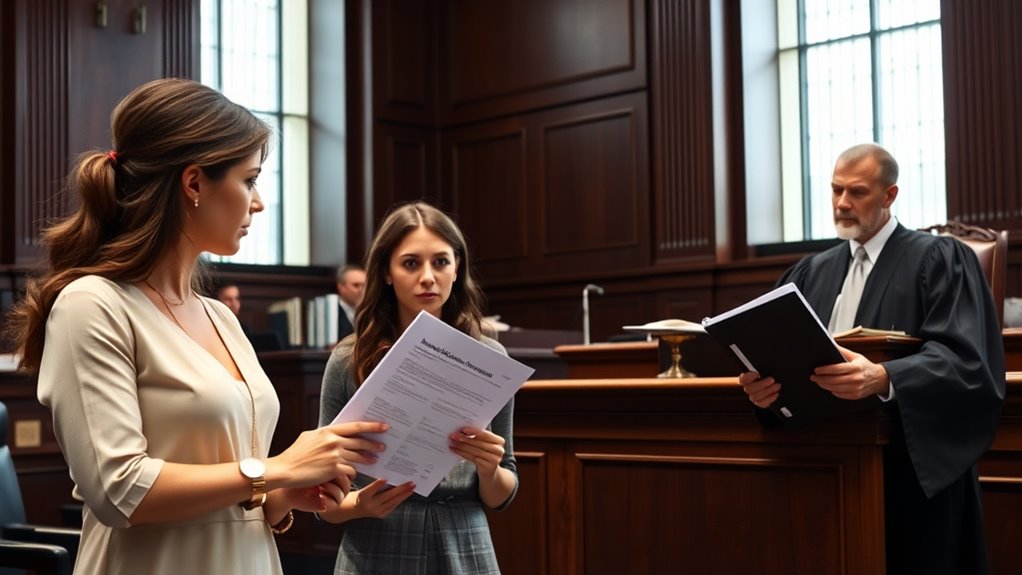
Are you wondering what happens to your finances and children during a divorce? When you’re in the middle of a divorce, the court can issue temporary support orders, often called pendente lite orders, to help manage your finances and protect your children’s well-being. These orders are designed to provide interim financial assistance and maintain stability during the often lengthy legal process. The Latin term “pendente lite” means “pending the litigation,” emphasizing that these orders apply while your divorce case is unresolved. Their primary purpose is to safeguard the welfare of your children through temporary custody, visitation, and support arrangements, while also offering financial relief to the spouse or parent with a lower income. By doing so, these orders prevent disputes over money or custody from causing chaos or instability in your household during the legal proceedings.
Temporary support orders typically include provisions for child support, spousal support, custody, and management of shared assets and debts until the court reaches a final decision. In terms of child support, the goal is to ensure that the child’s basic needs are met while the case progresses. Courts usually base these temporary payments on state guidelines, considering factors like income, parenting time, medical expenses, and other costs associated with raising your child. Because these amounts are temporary, they’re often easier to modify than final support orders, especially if your financial circumstances change. Once the court issues a permanent support order, the pendente lite support ceases. Courts also consider the best interests of the child when determining support and custody arrangements during this period. For spouses with lower income or financial needs, courts may also grant temporary alimony or spousal support during the divorce process. The goal is to help maintain financial stability until a final resolution is reached. Courts typically act quickly to issue these orders, recognizing the importance of providing dependents with resources during the litigation period. To initiate a pendente lite order, one of you must file a motion with the family or divorce court. Sometimes, the parties agree on temporary arrangements, but if not, the judge can impose them. In some jurisdictions, “Automatic Orders” take effect immediately upon filing for divorce, preventing either side from altering certain financial or custodial arrangements without court approval. Understanding the legal process involved in these orders can help you navigate the case more effectively. Violating these temporary orders can lead to contempt motions and legal penalties, as courts treat child support as a right of the child, not just a parent’s obligation. These orders are meant to be temporary, lasting only until the divorce is finalized and a final judgment or decree is issued. They’re generally easier to modify if your financial situation changes considerably during the case. After the divorce is final, pendente lite orders automatically lapse, replaced by permanent support arrangements that reflect the full scope of the case’s findings. Courts retain the discretion to modify these temporary orders if new evidence or circumstances justify adjustments, ensuring that the support remains fair and appropriate until a final resolution is achieved.
Top picks for "temporary support order"
Open Amazon search results for this keyword.
As an affiliate, we earn on qualifying purchases.
Frequently Asked Questions
How Long Do Temporary Support Orders Typically Last?
Temporary support orders usually last until your divorce case is resolved, whether through a final hearing, trial, or settlement. They remain in effect until the court modifies or terminates them, which can happen if circumstances change or the case concludes. The duration depends on how long your divorce takes, often lasting months or even years if your case is prolonged. Courts aim to maintain stability until a final decision is made.
Can Temporary Support Be Modified After Issuance?
Yes, your temporary support can be modified after issuance, even if it feels like the court’s decision is final. You just need to show a significant change in circumstances, like losing your job or facing health issues. File a motion, present evidence, and attend a hearing. The court will then decide whether a modification is justified, reminding you that temporary orders aren’t set in stone—they’re flexible, surprisingly.
What Factors Influence the Amount of Temporary Support Granted?
The court considers your and your spouse’s incomes, expenses, and financial needs to determine temporary support. It looks at each person’s ability to pay, including income, debts, and living costs, while balancing their standard of living. The court also factors in your marriage length, the needs of the spouse requesting support, and any child-related expenses. Discretion is key, and they may adjust support based on changes in your financial situations.
Is Proof of Financial Hardship Required for Support Modifications?
You don’t necessarily need to prove financial hardship to modify support orders. Instead, courts focus on whether there’s been a substantial change in circumstances, like income, employment, or health. If you can demonstrate a significant change, such as losing a job or a serious health issue, the court may consider modifying the support. Hardship is relevant but isn’t always a required proof for modifications.
Can Temporary Support Orders Be Appealed?
Did you know that only about 10% of temporary support orders are successfully appealed? You can generally not appeal a pendente lite support order until the final divorce judgment is entered. However, in some jurisdictions, you may request immediate appeal through court certification, which is a strict process. Without this certification, your appeal might be dismissed, so acting quickly and following procedural rules is vital for challenging these orders effectively.
Conclusion
Understanding temporary support orders during divorce helps you navigate the process more confidently. Did you know that over 60% of divorcing couples rely on pendente lite orders to ensure financial stability? By securing these orders, you can protect your interests and reduce stress during this challenging time. Remember, acting promptly and understanding your rights makes all the difference. Stay informed, and don’t hesitate to seek legal guidance to support your future.