

Choose Attached if you want to examine your dating patterns and needs around closeness, reassurance, and independence. Choose The Seven Principles for Making Marriage Work if you and your partner want guided exercises for communication, conflict, and connection. The first is a focused individual read; the second asks more of both partners and is aimed at established couples. Your decision comes down to whether you want personal insight or a shared program of practice.

Get gifts for the two of you delivered free with Prime
- Fast, free delivery on millions of items
- Prime Video, Amazon Music and more included
- Member-only deals all year

Attached: The New Science of Adult Attachment and How It Can Help You Find and Keep Love
- ✔ Format: Book
- ✔ Subject: Adult attachment
- ✔ Relationship focus: Romantic relationships
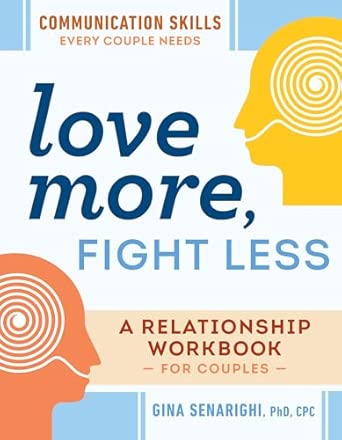
Love More, Fight Less: Communication Skills Every Couple Needs: A Relationship Workbook for Couples
- ✔ Format: Relationship workbook
- ✔ Intended readers: Couples
- ✔ Main subject: Communication skills

Communicate Your Feelings Without Starting a Fight: What to Say and What Not to Say to Your Partner
- ✔ Format: Book
- ✔ Main subject: Communicating feelings with a partner
- ✔ Stated focus: What to say and what not to say
At a Glance
| Criteria | Attached by Amir Levine and Rachel Heller | The Seven Principles for Making Marriage Work by John Gottman and Nan Silver | Winner |
|---|---|---|---|
| Primary focus | Attachment styles and dating patterns | Relationship habits, friendship, conflict, and shared meaning | Depends |
| Best relationship stage | Dating, new relationships, and personal reflection | Established couples, including married partners | A |
| Practical exercises | Accessible ideas and prompts, with less of a workbook structure | Structured principles and exercises for couples | B |
| Use as an individual | Strong fit for solo reading | Readable alone, but many practices work best with a partner | A |
| Use as a couple | Can prompt discussion, but is not a full couples program | Strong fit for shared reading and practice | B |
| Reading commitment | Shorter and more focused | Longer and more involved | A |
| Value | Good value for readers seeking a clear framework | Worth the greater time commitment when both partners participate | Depends |
Attached: The New Science of Adult Attachment and How It Can Help You Find and Keep Love
Attached takes the widest-angle approach in this group: it looks at how adult attachment styles can shape romantic relationships and how that knowledge may help readers find and maintain love. That makes it a useful starting point when we want to examine recurring patterns, rather than focus only on the words used in one argument. Compared with Love More, Fight Less, its stated emphasis is understanding attachment, not practicing communication together; compared with the feelings guide, it offers a broader relationship lens.That breadth also creates a tradeoff. The supplied description does not say how the book translates attachment concepts into day-to-day exercises, or how much it focuses on current couples versus finding a partner. Readers seeking a ready-made conversation workbook may find Love More, Fight Less more directly practical, while someone facing one specific communication snag may prefer the narrower feelings guide. We see Attached as the best overall choice for readers who want a framework to reflect on relationship dynamics, provided they are comfortable with a concept-led approach.
Pros:
- Explores adult attachment in romantic relationships
- Connects the topic to finding and maintaining love
- Offers a broader lens than the two communication-focused titles
Cons:
- Description does not establish how much practical practice or exercises it includes
- Attachment-focused framing may not address an immediate conflict on its own
Best for: Readers who want to understand how attachment styles may influence romantic patterns and lasting relationships.
Not ideal for: Couples primarily seeking a structured, hands-on communication workbook or scripts for a specific difficult conversation.
Bottom line: Choose Attached when understanding relationship patterns matters more to us than guided conversation practice.
“Choose Attached when understanding relationship patterns matters more to us than guided conversation practice.”
Love More, Fight Less: Communication Skills Every Couple Needs: A Relationship Workbook for Couples
Where Attached is framed around understanding relationship patterns, Love More, Fight Less is explicitly presented as a couples’ relationship workbook focused on communication skills. That makes it the clearest choice for partners who want to work on the subject together and prefer an activity-oriented format to a book centered mainly on concepts. Its title also signals a practical goal: improving communication while reducing conflict.The limitation is that the provided description adds no detail about the actual workbook content. We cannot tell what exercises it uses, whether partners complete activities jointly, or how it handles disagreements that do not resolve through communication techniques alone. Readers who want to understand attachment first may get a more relevant starting point from Attached; those who want targeted advice about expressing their own feelings may find the first book’s focus more direct. This pick makes the most sense when both partners are willing to participate and the goal is shared practice.
Pros:
- Identified as a relationship workbook for couples
- Centers on communication skills
- Its couple-focused format distinguishes it from the other two books
Cons:
- Supplied description gives no detail about specific activities or structure
- May be a poor fit if only one partner wants to participate
Best for: Couples who want to build communication skills together through a workbook format.
Not ideal for: Solo readers looking for an attachment-style explanation or someone wanting specific guidance on phrasing their feelings.
Bottom line: Pick Love More, Fight Less when we want a couples-focused workbook and shared communication practice.
“Pick Love More, Fight Less when we want a couples-focused workbook and shared communication practice.”
Communicate Your Feelings Without Starting a Fight: What to Say and What Not to Say to Your Partner
This title narrows the problem to a familiar moment: trying to communicate feelings to a partner without triggering a fight. Its stated focus on what to say and what to avoid gives it a distinct role beside the other two picks. We would look here when communication breaks down around expression and phrasing, rather than when we want a general account of attachment or a couples’ workbook for broader skill-building.The narrow scope can be an advantage for readers with a specific need, but it may not explain why the same conflicts keep happening. Attached offers a broader framework for thinking about romantic patterns, and Love More, Fight Less is the clearer choice for partners seeking workbook-style practice. There is little supplied information beyond the title and brief description, so we cannot confirm whether the advice includes scripts, exercises, or a particular method. Treat this as a focused option whose fit depends on the communication challenge it names.
Pros:
- Directly addresses communicating feelings with a partner
- Focuses on both what to say and what to avoid
- More narrowly targeted to difficult conversations than the other titles
Cons:
- No further description or review details were supplied
- The stated focus may not explain broader relationship patterns
- Specific scripts or exercises are not established by the available information
Best for: Readers who want focused guidance on expressing feelings and avoiding language that may escalate a partner conversation.
Not ideal for: Couples seeking a detailed shared workbook or readers whose main goal is to understand attachment patterns.
Bottom line: Choose this guide when wording during tense conversations is our clearest relationship self-help need.
“Choose this guide when wording during tense conversations is our clearest relationship self-help need.”
As an Amazon Associate we earn from qualifying purchases.
Key Differences
Attached helps readers interpret patterns of closeness, reassurance, and independence, especially in dating. Its focused framework can help you reflect on what you need from a partner. It is less suited to resolving every relationship problem: attachment categories can oversimplify people, so use them as prompts rather than fixed labels or diagnoses.
The Seven Principles for Making Marriage Work guides couples through habits and exercises involving communication, disagreements, and connection. It is the stronger choice when both partners are ready to discuss and practice together. That work takes more time, and one partner cannot do the couple-focused exercises on the other’s behalf. If you want individual dating insight, choose Attached; if you want a shared process for improving an established relationship, choose The Seven Principles.
Detailed Comparison
Primary focus (major difference)
Attached focuses on how attachment patterns may shape the way people approach intimacy and dating. The Seven Principles focuses on relationship behaviors couples can discuss and practice. The winner depends on the question: A is the clearer choice for understanding personal patterns; B is better for working on shared habits. This is a major difference because the books aim at different problems.
Relationship stage (Attached by Amir Levine and Rachel Heller wins — major)
A speaks most directly to dating and choosing or understanding partners. B is aimed at couples who already share a relationship and want to strengthen it. A wins for single readers and people in newer relationships; B wins for established couples. The difference is major: choosing the wrong stage can make a book feel irrelevant even when its ideas are sound.
Practical exercises (The Seven Principles for Making Marriage Work by John Gottman and Nan Silver wins — moderate)
B wins because its principles are paired with activities and discussions couples can try together. A offers an accessible way to think about behavior and compatibility, but it is less structured as a step-by-step couples workbook. The gap is moderate: readers who want concepts may be satisfied with A, while couples looking for guided practice will get more from B.
Value as an individual read (Attached by Amir Levine and Rachel Heller wins — moderate)
A is easier to use independently: one reader can reflect on dating experiences and personal needs without a partner’s participation. B can still offer an individual reader useful ideas, but many of its exercises are designed for couples. A wins by a moderate margin for solo readers because more of its central purpose remains usable on one’s own.
B is the stronger shared read because its exercises invite both partners to work on communication and connection. A can start a useful conversation, but it is not designed to guide a couple through the same breadth of shared practice. B wins by a major margin for couples who are both willing to take part.
Time and effort (Attached by Amir Levine and Rachel Heller wins — moderate)
A is more focused and generally takes less effort to use. B covers more ground and asks couples to read, discuss, and apply what they learn. A wins by a moderate margin for readers with limited time; B’s greater workload has a purpose when both partners want sustained practice.
Value for the money (moderate difference)
The better value depends on whether the reader will use what the book offers. A is a sensible buy for someone seeking a focused account of attachment patterns. B can justify a higher price, if applicable, when two partners will use its exercises and the broader guidance. Neither automatically delivers more value: B’s additional material is worth paying more for only when a couple will work through it together.
Attached by Amir Levine and Rachel Heller: Pros and Cons
Pros:
- Clear, approachable framework for thinking about attachment and dating behavior.
- Works well as an individual read.
- Focused scope makes it easier to finish and discuss.
Cons:
- Attachment categories may oversimplify people if treated as permanent labels.
- Less structured guidance for couples seeking exercises.
- Dating emphasis may be a weaker fit for partners focused on long-term shared habits.
The Seven Principles for Making Marriage Work by John Gottman and Nan Silver: Pros and Cons
Pros:
- Offers couples structured ways to discuss and practice relationship habits.
- Addresses several parts of relationship life, including friendship and conflict.
- More useful when both partners want to participate.
Cons:
- Requires more time and effort than a focused personal read.
- Many exercises are less useful when only one partner engages.
- Its marriage-oriented framing may not feel tailored to every dating situation.
Who Should Choose What
Choose Attached by Amir Levine and Rachel Heller if:
- You are dating, single, or trying to understand recurring patterns in your relationships.
- You want a relatively short book to read and reflect on by yourself.
- You want language for discussing needs around closeness, independence, and reassurance.
Choose The Seven Principles for Making Marriage Work by John Gottman and Nan Silver if:
- You and your partner both want to work on communication and connection.
- You prefer exercises and shared discussion over a framework centered on personal patterns.
- You are willing to spend more time applying ideas to an established relationship.
Skip both if: Neither book is a substitute for individualized professional support when relationship distress, safety concerns, or persistent conflict calls for help beyond self-guided reading.
Value for Money
Choose by how you will use the book. Attached is the better value for an individual seeking a focused way to reflect on dating and attachment patterns. The Seven Principles takes more time and may cost more, but its exercises can make that commitment worthwhile when both partners read and practice together. If only one partner plans to engage, Attached is the more practical purchase.
Final Verdict
Choose Attached for personal insight into dating patterns, especially if you will read on your own. Choose The Seven Principles for Making Marriage Work when both partners want structured practice for an established relationship. The deciding factor is whether you want an individual framework or a shared process; the latter offers more guidance, but requires both people to participate.
Frequently Asked Questions
Which book is better for someone who is single?
Attached is the more natural fit for a single reader because it focuses on attachment patterns and dating. The Seven Principles is designed around work couples can do together, so much of its value may be harder to use alone.
Can a couple read Attached together?
Yes. Its ideas can give partners a shared vocabulary for discussing closeness and reassurance. Use the categories as a starting point for conversation rather than assigning each other fixed labels; it is not as exercise-driven as The Seven Principles.
Is The Seven Principles for Making Marriage Work only for married couples?
Its framing centers marriage, but established couples who are not married may still find its relationship habits and exercises relevant. Readers should judge whether the examples and language fit their relationship.
Which book should we buy if only one partner wants to read?
For personal reflection, Attached is easier to use alone. A reader can also learn ideas from The Seven Principles, but its couple-focused exercises work best when both partners choose to participate.
Evergreen bestsellers Picks
bestsellers
As an affiliate, we earn on qualifying purchases.