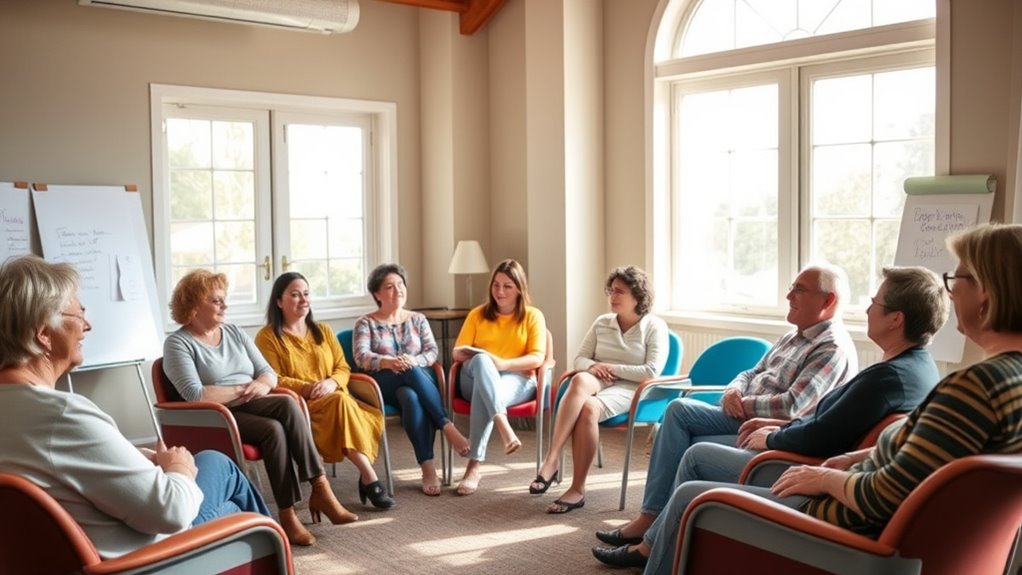

To find local divorce support groups near you, start by searching online with terms like “divorce support groups” plus your city or area. Websites like DivorceCare, Meetup.com, and Psychology Today can connect you with nearby groups or facilitators. Local churches and community centers often host these meetings as well. Joining a group can provide emotional help and practical advice. Keep exploring because you’ll discover more ways to access support tailored to your needs.
Key Takeaways
- Use online directories like DivorceCare, Psychology Today, or Meetup.com to locate local support groups in your area.
- Contact local churches, community centers, or religious organizations that often host or facilitate divorce support groups.
- Search for support groups through local mental health clinics or therapists collaborating with community programs.
- Attend local community events or forums focused on family and divorce recovery for networking opportunities.
- Explore online forums and virtual support groups that can connect you with nearby in-person meetings or resources.
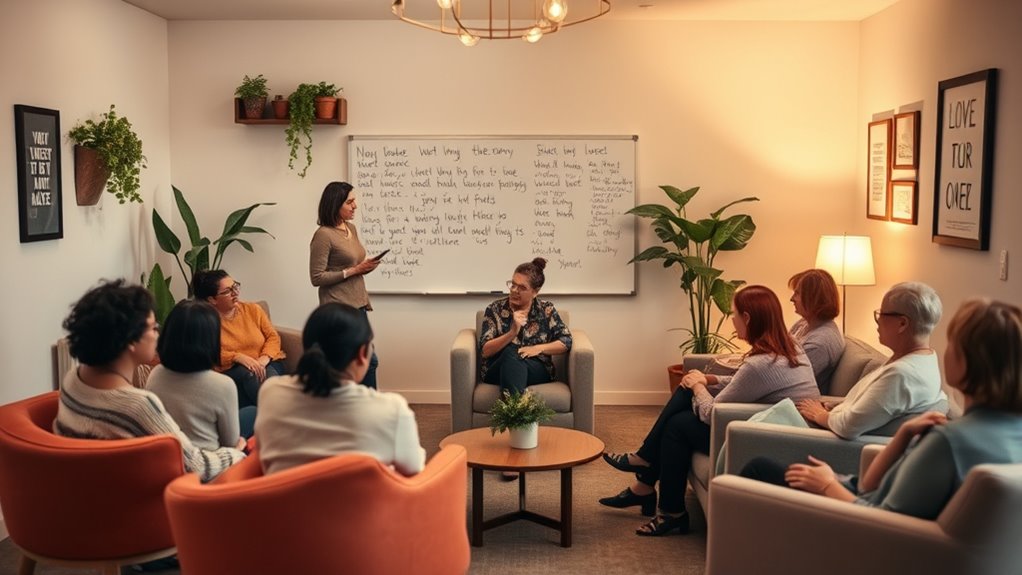
Are you steering through the challenges of divorce and seeking support nearby? Finding the right support group can make a significant difference in your healing process. Local divorce support groups come in various types, including programs like DivorceCare, peer-led groups, and therapy sessions. These groups typically meet weekly over a set number of weeks—often 8 or 13—to provide ongoing support. You’ll find them in familiar places like churches, community centers, and increasingly, on online platforms, making access more convenient than ever. Some groups charge a registration fee, but many are free, so you can choose what fits your budget. Support structures vary but generally focus on emotional support and practical advice, helping you navigate feelings of loss, stress, and uncertainty.
Support groups like DivorceCare meet weekly, offering emotional help and practical advice in familiar community settings or online.
To find a support group near you, start with online resources. The DivorceCare website offers a helpful search tool that locates local groups worldwide, including Louisiana. Meetup.com is another excellent platform where you can join existing groups or even start your own, connecting you directly with others who understand what you’re going through. Psychology Today maintains a detailed list of support groups, some specifically designed for divorce recovery. Many local churches also host their own groups, which often serve as welcoming and familiar venues for support. Additionally, online forums provide a sense of community and resource sharing, allowing you to connect with others at any time.
Joining a divorce support group offers numerous benefits. Most importantly, it provides emotional support in a safe environment where you can openly share your experiences without judgment. You’ll gain practical advice on managing daily stressors, co-parenting, and making important decisions. Building a community with others who understand your situation can foster feelings of belonging and reduce isolation. These groups tend to be more cost-effective than individual therapy, making ongoing support accessible for many. Plus, many groups allow you to join anytime, offering continued support as you heal and move forward. Knowing that support is available locally can also alleviate feelings of loneliness and help you feel more connected to your community.
Key components of these groups include structured meetings featuring videos, discussions, or both, often guided by trained facilitators or experienced volunteers. Participants typically receive personal workbooks to guide their recovery, and confidentiality is emphasized to build trust among members. Peer-to-peer learning is central, with shared stories and mutual support helping everyone feel less alone in their journey. This structured format helps individuals process their emotions in a supportive environment, leading to healthier coping strategies.
In Louisiana, resources are abundant. The City Church of New Orleans, Covington, Lafayette’s Catholic Divorce Ministry, Mandeville’s Hosanna Lutheran Church, and St. Tammany Parish all offer various support options, including DivorceCare and counseling services. Churches often serve as support hubs, providing not only venues but also spiritual guidance, pastoral counseling, and community outreach. Many collaborate with therapists to offer group sessions, and volunteers frequently facilitate or participate in these groups, ensuring ongoing community support. These local resources help make healing accessible and tailored to the needs of the community.
While the effectiveness of a group depends on its dynamics and your engagement, joining one can be a crucial step toward healing. It’s a cost-effective, accessible way to find emotional relief, practical guidance, and connection during a challenging time. Support groups are a vital part of the recovery process, offering hope and a pathway forward.
Top picks for "local divorce support"
Open Amazon search results for this keyword.
As an affiliate, we earn on qualifying purchases.
Frequently Asked Questions
How Soon After Divorce Can I Join a Support Group?
You can join a support group immediately after your divorce, as there’s no universal waiting period. Many groups welcome participants right away to help with emotional healing, loneliness, and stress. Whether you’re newly separated or further along, support groups are designed to provide timely assistance. Just choose a group that fits your needs, and don’t hesitate to attend when you feel ready—early involvement can really aid your recovery.
Are Online Support Groups as Effective as In-Person Ones?
Online support groups can be effective, but they often don’t match the benefits of in-person ones. You get convenience and accessibility online, but you might miss the deep connection, ongoing friendships, and community feeling that in-person groups foster. If you seek immediate support, online groups work well. But if you want lasting bonds and real emotional closeness, in-person groups tend to offer more meaningful, sustained support.
Can I Attend a Support Group Anonymously?
Yes, you can often attend a support group anonymously, especially online. Many groups allow you to use pseudonyms, first names, or limited personal details to protect your privacy. In-person groups might have more restrictions, but you can still participate with partial anonymity. Always check the group’s confidentiality policies first, and choose the format that makes you feel safest. Remember, maintaining your privacy helps you share more comfortably.
Do Support Groups Charge Membership Fees?
Support groups may or may not charge membership fees. Some groups, like peer-led or community-based ones, are free or have low costs. Others, especially therapist-led groups, often charge per session or a series of meetings, with fees ranging from $20 to $90. Always check the specific group’s fee policy beforehand to avoid surprises, and consider if the cost aligns with the support and benefits you’ll receive.
How Do I Find a Support Group Tailored to My Age and Situation?
You can find a support group tailored to your age and situation by using online directories like Psychology Today and Mental Health America, filtering options by age, topic, and location. Check organizations like Rainbows for age-specific groups for children or teens, or FamilyKind for adult children. Many groups now offer virtual options, making it easier to find one that fits your needs, schedule, and comfort level.
Conclusion
Finding a local divorce support group is like discovering a sturdy lighthouse in a stormy sea. It guides you through the rough waters of change, offering hope and understanding. Remember, you’re not alone on this journey—there’s a community waiting to help you navigate new beginnings. Reach out, find your lighthouse, and let it illuminate your path to healing and growth. You’re stronger than you think, and support is just around the corner.