

If you’re looking for low-cost legal clinics for family law, start by checking local legal aid organizations, which often offer free or sliding-scale services for custody, divorce, and other family issues. Many courts also partner with community clinics that provide affordable legal advice. Nonprofit organizations and state bar associations frequently host workshops and clinics to help families navigate legal processes. Continuing further can connect you to specific resources near you that make legal help more accessible.
Key Takeaways
- Many clinics offer free or sliding-scale family law services focused on custody, divorce, and mediation support.
- Local legal aid organizations often provide accessible family law clinics for low-income individuals.
- Community centers and nonprofit groups frequently host workshops and clinics on family legal issues.
- State and county bar associations may list volunteer-led clinics for family law assistance.
- Online directories and government websites can help locate nearby low-cost family law clinics and resources.
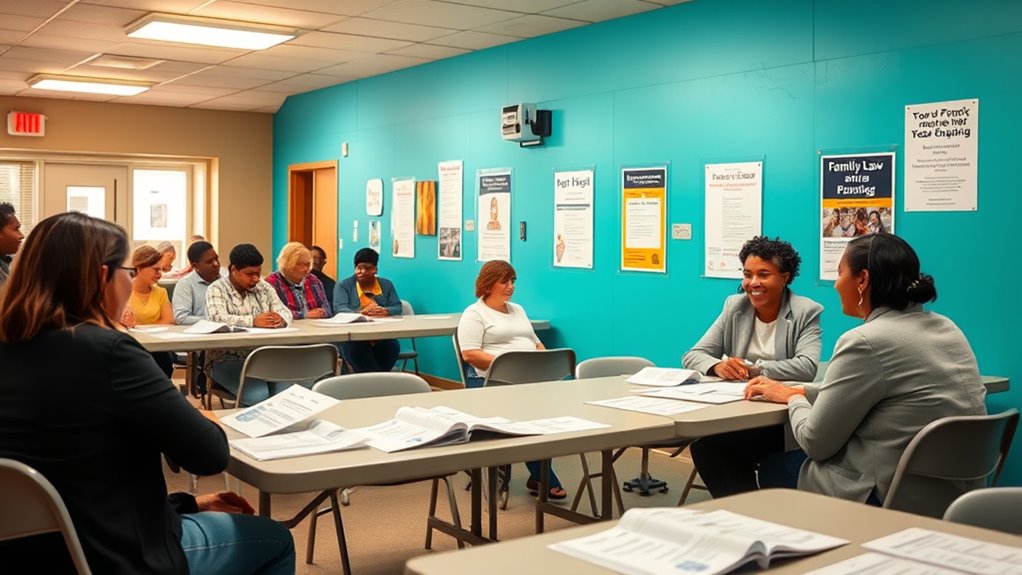
Accessing legal help can be expensive, but low-cost legal clinics make it more affordable for those in need. If you’re steering family law issues like custody disputes or divorce mediation, these clinics can be a vital resource. They offer accessible legal advice and guidance without the hefty price tag, helping you understand your rights and options during difficult times.
Many low-cost clinics focus specifically on family law, recognizing how emotionally taxing and complex custody disputes can be. These clinics often provide free or sliding-scale services, allowing you to receive legal counsel tailored to your situation. Whether you’re fighting for custody or seeking to modify an existing agreement, the support from these clinics can be invaluable. They can help you prepare for court, draft legal documents, and understand the legal procedures involved in custody disputes. This guidance guarantees you’re better equipped to advocate for your children and steer through the often confusing legal landscape.
Many clinics offer free or sliding-scale family law services to support custody disputes and legal needs.
Divorce mediation is another area where low-cost clinics can make a significant difference. Mediation offers a less adversarial and more collaborative way to resolve divorce issues, saving you time and money. Clinics often provide mediation services or connect you with trained mediators who can facilitate productive negotiations. They help you and your spouse reach mutually agreeable solutions, which is especially helpful when children are involved. Mediation can address custody arrangements, visitation rights, and support issues, all while maintaining a focus on your family’s best interests.
Access to affordable legal advice through these clinics means you won’t have to face custody disputes or divorce processes alone. They can clarify legal terms, explain your rights, and help you understand the potential outcomes of your case. Many clinics also offer workshops or informational sessions, so you can learn more about the legal process and prepare yourself for upcoming hearings or negotiations. Additionally, understanding family law and related procedures can empower you to make informed decisions and improve your chances of a favorable outcome.
While these clinics can’t replace full legal representation, they serve as a critical first step. They bridge the gap between no legal help and costly private attorneys, ensuring you have some professional guidance during challenging times. If you’re worried about affording legal support for custody disputes or divorce mediation, seeking out a low-cost legal clinic might be your best move. They’re designed to make family law assistance accessible, so you can move forward with confidence and clarity, knowing you’re making informed decisions for yourself and your family.

Family Law Guide – USA – Legal Quick Reference Guide by Permacharts
Quick reference US Family Law learning and paralegal reference guide
As an affiliate, we earn on qualifying purchases.
As an affiliate, we earn on qualifying purchases.
Frequently Asked Questions
How Do I Qualify for Free Legal Services at These Clinics?
You qualify for free legal services at these clinics if your income meets their requirements, usually based on federal poverty guidelines. You’ll need to provide documentation like proof of income, such as pay stubs or benefit letters, and identification. Make sure to gather all necessary paperwork beforehand, as this helps determine your eligibility quickly. If you’re unsure, contact the clinic directly to confirm their specific income requirements and documentation needed.
Are Appointments Necessary, or Do Walk-Ins Get Served?
Wondering whether you need to schedule or simply show up? Typically, appointment policies vary by clinic, with many requiring appointments to provide personalized assistance. However, some clinics do offer walk-in availability, allowing you to seek help without prior notice. It’s best to check ahead, call in advance, or visit their website to confirm whether you should book an appointment or if walk-ins are welcome, ensuring you get the support you need efficiently.
What Specific Family Law Issues Do Clinics Typically Handle?
At these clinics, you’ll typically find help with issues like child custody, divorce mediation, and child support. They often assist with legal advice for separation agreements, visitation rights, and paternity questions. You might need to schedule an appointment beforehand, but some clinics accept walk-ins. Be prepared to explain your situation clearly so you get the most effective guidance on your family law concerns.
Can I Get Ongoing Legal Representation From These Clinics?
Think of these clinics as a guiding lighthouse in a stormy sea—you can often get ongoing legal representation or legal continuity through them. While some clinics may offer limited or short-term help, many provide ongoing support for family law issues like custody or divorce. You should ask directly about their ability to offer continuous representation, so you can navigate your legal journey with confidence and clarity.
Do Clinics Offer Multilingual Services for Non-English Speakers?
Many clinics do offer multilingual assistance to help non-English speakers access legal services more readily. They understand the importance of language accessibility and often have interpreters or bilingual staff members. You should check with each clinic directly to confirm their language options, but rest assured, many prioritize providing support in multiple languages to ensure everyone can understand their legal rights and options.

A Guide to Divorce Mediation: How to Reach a Fair, Legal Settlement at a Fraction of the Cost : Part One : An Introduction to Mediation
Used Book in Good Condition
As an affiliate, we earn on qualifying purchases.
As an affiliate, we earn on qualifying purchases.
Conclusion
Finding a low-cost legal clinic for family law can feel like searching for a needle in a haystack, but rest assured, these resources are your lifeline. They’re more than just affordable—they can be game-changers in maneuvering complex legal issues. Don’t let cost hold you back from justice; with these clinics, you’re closer than ever to securing the help you need. Take action today and turn the tide in your favor—you deserve it.

ZHUKEYONG Legal Documents Kit, Durable Power of Attorney, Healthcare Directive and Last Will & Testament Forms, Self-Help Estate Planning Set
COMPREHENSIVE KIT: Complete legal document set including Living Will, Durable Power of Attorney, and Healthcare Directive forms for…
As an affiliate, we earn on qualifying purchases.
As an affiliate, we earn on qualifying purchases.

Microsoft Word For Legal Practitioners
As an affiliate, we earn on qualifying purchases.
As an affiliate, we earn on qualifying purchases.