
When facing military divorce, it’s crucial to access the right resources and support services. Military OneSource offers confidential coaching, counseling, and legal assistance tailored for military families. MilLife guides cover legal, financial, and relationship issues to help you navigate the complex process. Understanding your benefits, such as TRICARE and pension rights, is essential, and getting proper documentation like LES and W-2 forms is necessary. Continue exploring to find the tools that can make your progression smoother.
Key Takeaways
- Military OneSource provides confidential coaching, counseling, and legal consultations for divorce-related concerns 24/7.
- MilLife guides offer targeted advice on legal, financial, relationship, and parenting issues during divorce.
- Access to military pay information may require court orders, subpoenas, or written requests to finance or Pay and Personnel Center.
- Understanding military-specific benefits and eligibility criteria helps divorced spouses navigate health, retirement, and support benefits.
- Legal procedures such as documentation and benefit division are supported by resources that clarify military divorce processes.
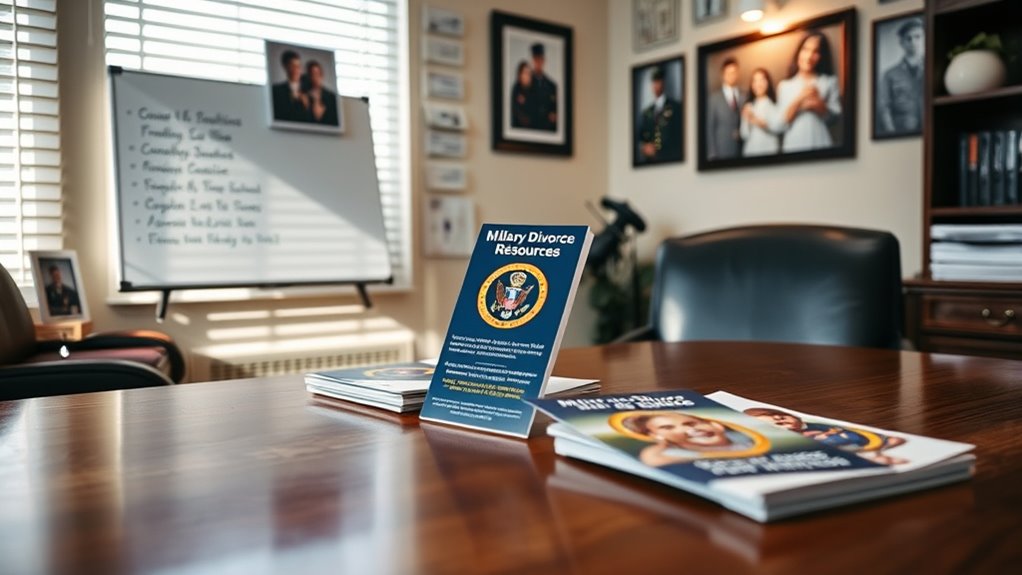
Navigating divorce in the military can be complex, but understanding available resources and legal procedures makes the process smoother. Military divorce involves unique challenges, from steering federal laws to managing military-specific benefits and benefits division. Fortunately, several organizations and services exist to support you through this difficult time. Military OneSource, for instance, offers 24/7 confidential coaching, counseling, and consultations tailored specifically for military members and their families. These services address issues like legal concerns, finances, deployment stresses, and family dynamics, helping you manage the emotional and logistical impacts of divorce. Their resources include MilLife guides organized by topics such as legal and financial matters, relationships, and parenting, giving you targeted advice and tools to better understand your options and rights.
Military divorce can be complex, but resources like Military OneSource offer vital support and guidance throughout the process.
Legal complexities are a significant part of military divorce, especially regarding the division of benefits like the military pension. The “Frozen Benefit Rule” determines the pension’s value based on the pay at the time of divorce, not retirement, making accurate documentation essential. You’ll need to gather detailed financial records, including Leave and Earnings Statements (LES) covering your highest 36 months of pay, and W-2 tax forms from relevant years. Accessing your military pay information may require a court order, subpoena, or a written request to the military finance or Pay and Personnel Center. To resolve any disputes over documentation, courts often utilize release and consent forms or discovery methods like interrogatories, ensuring a fair division process. Understanding self watering plant pots and their mechanisms can be helpful if you’re managing plants during stressful times, as they reduce maintenance and ensure proper plant care without constant oversight.
Understanding your rights and benefits as a divorced military spouse is equally important. If your marriage lasted at least 20 years overlapping with 20 years of military service, you might retain benefits like TRICARE health insurance. Court-ordered division of retired pay is also possible in some cases, but eligibility criteria vary from civilian rules. Being well-informed about these differences can help reduce emotional and financial stress during the divorce process. Military OneSource and similar programs provide resources designed specifically to help you steer these complex legal and financial issues, so you’re not left to figure it out alone.
Contributing factors such as frequent deployments, prolonged separations, and relocations put additional strain on military marriages, increasing divorce risks. These stressors often disrupt social support networks and create unique pressures that civilian couples might not face. By knowing what resources are available—whether legal, emotional, or financial—you can make informed decisions and access the support necessary to move forward. The goal of these services is to ease your transition, protect your rights, and help you manage the challenges that come with military divorce, making the process as manageable as possible during an otherwise turbulent time.
military divorce legal aid books
As an affiliate, we earn on qualifying purchases.
As an affiliate, we earn on qualifying purchases.
Frequently Asked Questions
How Does Military Divorce Affect Veteran Benefits?
Military divorce doesn’t directly affect your VA benefits, as they remain your property. However, your ex-spouse’s eligibility for certain benefits, like TRICARE or Survivor Benefit Plan, can change based on the divorce and specific rules. Your disability compensation stays unaffected, but your child support calculations might consider your VA income. Always consult a legal professional to understand how local laws and your specific situation impact your benefits.
Are There Special Legal Protections for Military Spouses?
Think of legal protections for military spouses as an invisible shield forged in the heat of service. You’re protected by laws like the Servicemembers Civil Relief Act, which halts proceedings when military duty calls and ensures fair treatment. Additionally, the Uniformed Services Former Spouses’ Protection Act helps you claim a share of military benefits. These protections are intended to safeguard your rights amid the turbulence of military life.
Can Service Members Access Free Divorce Counseling?
Yes, service members can access free divorce counseling through programs like Military OneSource Counseling, which offers short-term, solution-focused support 24/7 via phone, video, or chat. Additionally, the Military and Family Life Counseling program provides confidential sessions on and off base. These services are available to you and your family, helping you navigate the emotional challenges of divorce without additional cost.
How Does Deployment Impact Divorce Proceedings?
Deployment acts like a storm that tests the strength of your marriage, often making divorce proceedings more complex. Longer, hostile deployments increase stress, delay communication, and strain emotional bonds. When one partner returns, the emotional aftershocks can complicate legal processes, with separations and disagreements lingering like storm clouds. Being prepared and understanding these challenges can help you navigate the turbulent waters of divorce more effectively.
What Financial Assistance Is Available During Military Divorce?
During your military divorce, you can access emergency financial assistance through programs like Army Emergency Relief and VFW grants, which provide rapid aid for urgent needs. Legal assistance offices and Military OneSource offer free legal advice and financial counseling to help manage divorce costs. Additionally, if you meet specific court criteria, you might receive direct payments of retired pay from DFAS, and qualify for benefits like health coverage and ID access to support your financial stability.
military divorce counseling services
As an affiliate, we earn on qualifying purchases.
As an affiliate, we earn on qualifying purchases.
Conclusion
Remember, even in the stormiest seas, your support system is your anchor. Military divorce can feel like a turbulent voyage, but with the right resources and guidance, you’ll find your lighthouse guiding you toward calmer waters. Don’t hesitate to reach out—your strength lies in knowing you’re not alone. Embrace the help available, and let hope be the steady compass that leads you to brighter days ahead.
military benefits guidebook
As an affiliate, we earn on qualifying purchases.
As an affiliate, we earn on qualifying purchases.
military pay statement organizer
As an affiliate, we earn on qualifying purchases.
As an affiliate, we earn on qualifying purchases.