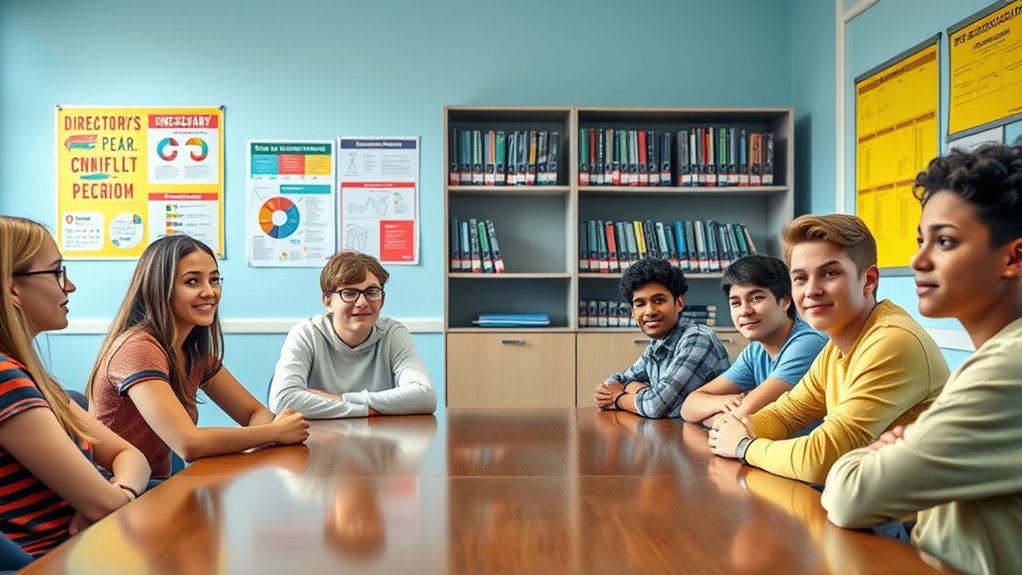

A directory of peer mediation programs for teens connects you with resources to build conflict resolution skills and promote respectful relationships at school and in your community. These programs often offer training, hands-on practice, and support for resolving disagreements peacefully. Getting involved can boost your communication skills and confidence while helping create a calmer, more cooperative environment. Keep exploring to discover how you can become part of a program that makes a real difference.
Key Takeaways
- Many schools and community organizations offer peer mediation programs specifically designed for teens.
- National directories and online platforms list certified peer mediation programs for youth.
- Local school districts often have dedicated mediation initiatives accessible to students.
- Nonprofit organizations like the Youth Conflict Resolution Center provide resources and program listings.
- State education departments may publish directories of peer mediation programs available for teens.
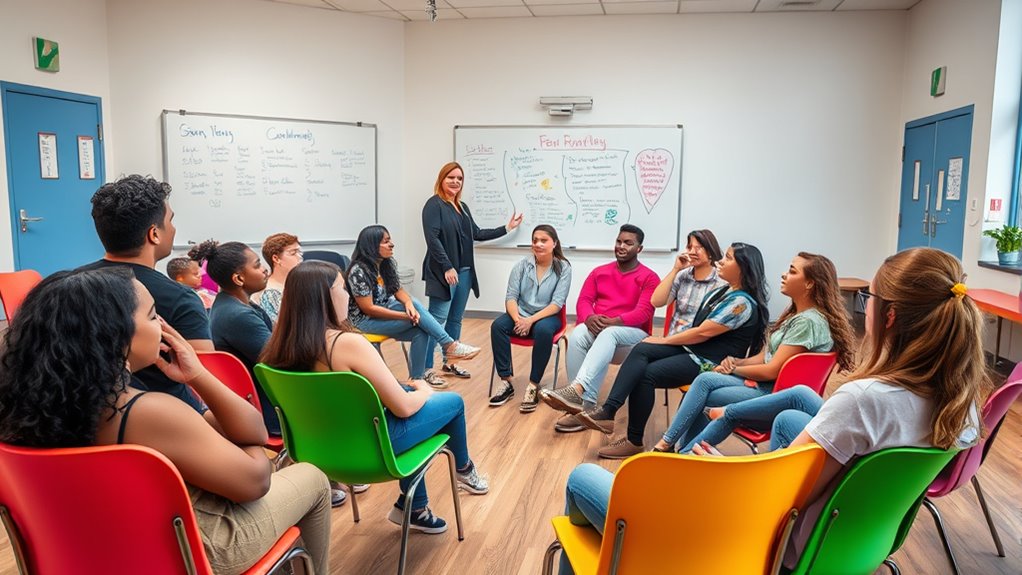
Have you ever wondered how teens can resolve conflicts without adult intervention? One of the most effective ways is through peer mediation programs. These initiatives empower students to handle disagreements constructively, promoting a peaceful school environment. At the core of peer mediation is the development of strong communication skills, which allow teens to express their feelings clearly and listen actively to others. When students learn to communicate effectively, they can better understand differing perspectives and find common ground without escalating tensions. Conflict resolution isn’t just about settling disputes; it’s about fostering mutual respect and understanding, skills that peer mediation programs prioritize through guided training and practice.
Participating in a peer mediation program gives you practical tools to manage conflicts calmly and respectfully. You learn how to stay neutral, avoid blame, and focus on the issues instead of personal attacks. This process helps you see conflicts as opportunities for growth rather than battles to win. As you develop your communication skills, you become more confident in expressing your needs assertively while respecting others’ viewpoints. These skills are essential not only in resolving current disagreements but also in preventing future conflicts. When you’re equipped with conflict resolution strategies, you can approach disputes with a problem-solving mindset, which makes resolution more likely and less stressful. Understanding analytics can help you identify patterns in conflicts and improve your mediation techniques over time.
Many schools and community organizations offer peer mediation programs, providing a supportive environment for teens to learn and practice these skills. These programs often involve training sessions where you learn about active listening, empathy, negotiation, and how to facilitate fair discussions. By participating, you gain hands-on experience in mediating real conflicts, which boosts your confidence and interpersonal abilities. Schools recognize that when students are involved in resolving their own disputes, they develop a sense of ownership and responsibility for maintaining a positive atmosphere. Plus, peer mediation can reduce the need for adult intervention, fostering a more autonomous and respectful school climate.
Engaging in peer mediation also helps you build empathy, which is vital for effective conflict resolution. When you understand what someone else is feeling or experiencing, it becomes easier to find solutions that satisfy everyone involved. This empathetic approach strengthens your communication skills, making your interactions more constructive and less confrontational. Over time, participating in these programs makes you a better communicator and a more compassionate peer. Ultimately, peer mediation programs serve as valuable platforms for teens to develop essential life skills, empowering you to handle conflicts confidently and peacefully without always having to rely on adults.
peer mediation training kit for teens
As an affiliate, we earn on qualifying purchases.
As an affiliate, we earn on qualifying purchases.
Frequently Asked Questions
How Are Peer Mediators Selected and Trained?
You are selected through a careful selection process that evaluates your communication skills, maturity, and fairness. Once chosen, you undergo a thorough training curriculum that covers conflict resolution techniques, active listening, and neutrality. This training helps you build confidence and develop essential mediation skills. By completing both the selection process and training curriculum, you’re prepared to facilitate fair and effective peer mediations for your peers.
What Ages Are Eligible to Participate in These Programs?
Imagine a high school where students aged 13 to 18 participate in peer mediation programs to resolve conflicts. Typically, the age range for eligibility criteria is 12 to 19 years old. This broad age range guarantees that most teens can get involved, develop communication skills, and help their peers. Eligibility criteria often include being a student, having good conduct, and a genuine interest in resolving disputes constructively.
Are There Costs Associated With Joining a Peer Mediation Program?
You might encounter some program fees when joining a peer mediation program, but many organizations offer cost coverage or sliding scale options to make participation affordable. It’s a good idea to check with the specific program to understand any costs involved and see if they provide financial assistance. Typically, these programs aim to be accessible for all teens interested in developing conflict resolution skills without financial barriers.
How Effective Are Peer Mediation Programs in Reducing Conflicts?
Peer mediation programs are quite effective in reducing conflicts, as they enhance conflict resolution effectiveness by encouraging open communication and understanding. You’ll see a positive peer mediator impact, often leading to fewer disputes and better relationships among students. By actively participating, you help create a more peaceful environment. These programs empower teens to resolve issues independently, making conflict resolution more accessible and sustainable over time.
Can Peer Mediation Be Used for Serious or Legal Issues?
Think of peer mediation as a gentle bridge, but it’s not always sturdy enough for serious or legal issues. While it can help resolve conflicts, legal implications and confidentiality concerns mean it’s often not appropriate for severe disputes. You should know that in such cases, professional or legal intervention is necessary to ensure proper handling. Peer mediators aren’t equipped to address complex legal matters, so always seek expert guidance when needed.
conflict resolution books for teenagers
As an affiliate, we earn on qualifying purchases.
As an affiliate, we earn on qualifying purchases.
Conclusion
Imagine walking through a school hallway where conflicts dissolve like shadows in the morning sun. By joining or supporting peer mediation programs, you help create a space where understanding blooms and friendships mend. Picture yourself as a guiding light, leading others toward peaceful solutions. Together, you can transform tense moments into opportunities for growth and harmony. Embrace these programs, and watch your community blossom into a place where everyone feels heard, valued, and connected.
active listening and communication skills for teens
As an affiliate, we earn on qualifying purchases.
As an affiliate, we earn on qualifying purchases.
teen peer mediation program resources
As an affiliate, we earn on qualifying purchases.
As an affiliate, we earn on qualifying purchases.