

A retirement assets division worksheet helps you organize and assess your retirement accounts like 401(k)s and IRAs, making it easier to divide them fairly during a divorce. It lists account details, current values, and proposed splits, ensuring transparency and reducing disputes. Using this worksheet keeps everything clear and well-documented, so you can negotiate confidently. If you’d like to learn how to create and effectively use one, there’s more to discover below.
Key Takeaways
- The worksheet categorizes and values various retirement accounts for equitable division during divorce.
- It includes current account balances, growth projections, and liabilities to ensure accurate valuations.
- Supporting documentation like statements and legal agreements validate the account values and claims.
- The worksheet considers legal guidelines, state laws, and separate property claims for fair distribution.
- Using the worksheet promotes transparency, reduces disputes, and aids negotiation in dividing retirement assets.
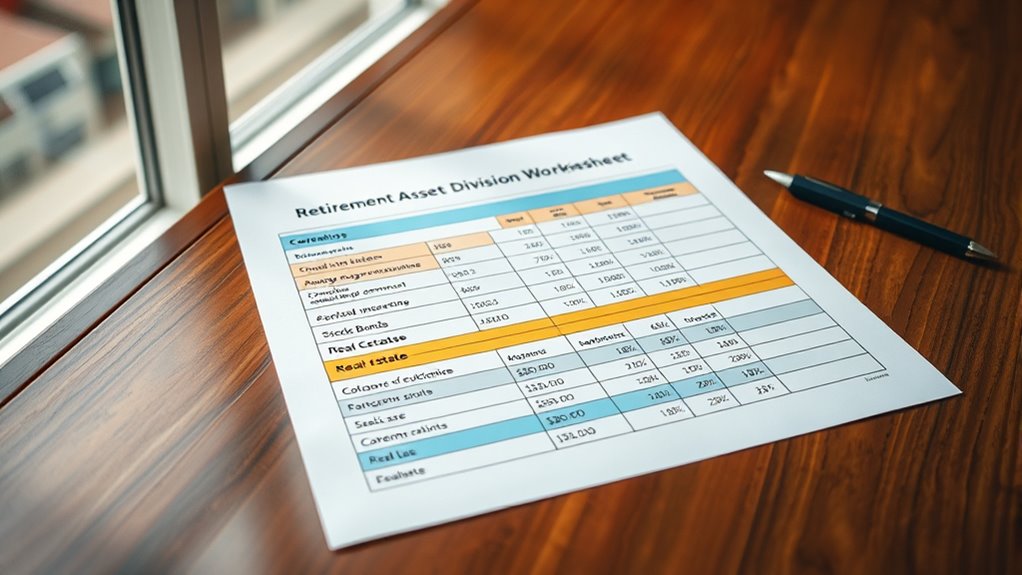
Are you preparing to divide retirement assets during a divorce or separation? If so, a Retirement Assets Division Worksheet can be an invaluable tool to help you navigate this complex process. It enables you to organize and categorize your marital and separate retirement assets clearly, making it easier to see what’s available for equitable distribution. By providing a structured way to value each account transparently, the worksheet helps you and your spouse understand the true worth of your retirement investments. This clarity can be *essential* in proposing fair division terms, reducing misunderstandings, and preventing disputes.
The worksheet typically includes detailed sections for describing each retirement account, such as 401(k)s, IRAs, or pension plans. You’ll list current estimated values, which should be based on recent account statements to *guarantee* accuracy. If applicable, you can also include future value projections, considering growth estimates and inflation adjustments, especially if the division process extends over time or involves planning for retirement. This helps both parties see the long-term implications of the division and plan accordingly. Additionally, the worksheet allows you to account for any debts or liabilities linked to the assets, which impact the net value to be divided. You can propose division percentages or dollar amounts in dedicated columns, facilitating negotiations by illustrating what each party believes to be fair.
Valuation methods are key to this process. Relying on recent statements provides a solid market value, while including growth projections offers insight into future worth. If there are disputes about the value, or if hidden assets are suspected, reports or legal input can be added as appendices. The worksheet often integrates information about contributions made during the marriage versus outside it, helping clarify ownership claims. It’s also helpful to include notes on separate property claims, prior agreements, or reimbursements that may influence the division. Legal considerations such as court rulings or state laws also impact how retirement assets are divided in divorce proceedings. Incorporating valuation guidelines can further ensure fair and consistent asset division.
This worksheet doesn’t work in isolation. It’s often combined with retirement income and expense planning tools to estimate future income needs, identify shortfalls, and determine how divided assets can fund retirement. Factoring in inflation and future expenses ensures the division aligns with your long-term financial stability. Practical tips include saving electronic copies for easy updates, filling out separate copies to compare preferences, and marking gift or separate property items clearly. Attaching relevant legal documents—such as agreements, wills, trust papers, or evidence of separate property—adds legal clarity and supports your claims.
Using a Retirement Assets Division Worksheet empowers you to approach the division process with confidence. It provides a clear, organized way to value, propose, and negotiate your assets, ultimately helping you achieve a fair and transparent settlement that supports your future financial security.
Frequently Asked Questions
How Do I Handle Non-Traditional Retirement Accounts?
You handle non-traditional retirement accounts by properly documenting ownership, value, and tax basis to guarantee fair division. Since these assets are accessible without penalties or age restrictions, their division differs from qualified plans. Valuate accounts based on current market value or actuarial assessments, and consider their tax implications and liquidity needs. Consulting with legal and financial professionals helps you navigate regulations and achieve equitable distribution in divorce or estate planning.
What if I Forgot to Include Certain Assets?
If you forget to include certain assets, you’re risking an incomplete division and potential legal issues. Imagine you overlooked a small IRA from a previous job; this could lead to miscalculations and disputes later. To avoid this, search the National Registry or state unclaimed property funds, and consult professional advisors. Regularly reviewing your accounts and consolidating them helps guarantee all assets are accounted for, preventing costly mistakes.
Can I Update the Worksheet After Initial Completion?
Yes, you can update the worksheet after initial completion. You should gather all relevant documentation and consult with legal and financial professionals to guarantee accuracy. Remember, any updates often require court approval, especially if they affect the division of retirement assets. Communicate clearly with the other party, and file the updated worksheet with the court to formalize the changes. Proper procedures help avoid legal or tax issues later on.
How Are Debts Related to Retirement Assets Divided?
Think of dividing debts related to retirement assets like splitting a shared pie. You’ll need to determine which debts are community or separate, then allocate them fairly. Community debts, including loans against retirement accounts, offset the value of the assets, reducing what each spouse receives. You’ll also need to address any specific loan responsibilities in court orders, ensuring both debts and assets are divided equitably to avoid future liabilities.
What Legal Considerations Affect Asset Division Accuracy?
You need to guarantee all retirement accounts and financial records are fully disclosed and properly documented. Using legal tools like QDROs or DROs is essential to divide qualified plans without penalties. Make sure these documents are approved by courts and plan administrators. Also, update beneficiary designations after division to avoid future complications. Accurate legal documentation prevents delays, penalties, and disputes, ensuring a fair and enforceable asset division.
Conclusion
Now that you’ve navigated your retirement assets division worksheet, you’re equipped to evenly evaluate earnings and establish an equitable estate. By balancing benefits and burdens with clear calculations, you’ll confidently complete your division duties. Remember, diligent document dedication delivers a decisive, fair finish. Take this task with trust, tact, and a touch of tenacity, and you’ll triumph in your timely, transparent transfer of treasures. Your thoughtful, thorough work will truly guarantee a great-gain future for everyone involved.