

To create a notarized child travel consent letter post-divorce, you should include your child’s full details, travel dates, destination, and the specific permission you’re granting. Both custodial parents’ signatures are required if joint custody exists, and the document must be notarized with proper ID verification. Supporting documents like custody orders or birth certificates strengthen your case. If you continue, you’ll find a helpful template to make this process easier.
Key Takeaways
- Include child’s full name, birth details, and passport information, along with travel dates and destinations.
- Sign the letter in front of a notary public, providing valid ID for verification.
- Clearly state permission for the child’s travel, specifying accompanying adults if applicable.
- Attach supporting documents such as custody orders or birth certificates to establish legal authority.
- Ensure the template complies with local legal requirements and is valid for the intended travel period.
When your child needs to travel internationally without both parents present, having a notarized travel consent letter is essential. This document serves as formal authorization, showing authorities that you approve the child’s trip, especially when one parent isn’t accompanying them. It helps prevent legal issues such as custody disputes or suspected abductions, giving peace of mind to border officials, airline staff, and immigration authorities. Many countries and airlines require this notarized letter for international travel, making it a crucial part of your child’s travel documents. It acts as a clear record of consent, especially important when parents are divorced or have joint custody, ensuring there’s no confusion or challenge about who can authorize travel. The presence of a notarized letter can also assist in cases where there are language barriers or differing legal standards between countries. A valid notarized letter must include specific details. You should list your child’s full name, date of birth, and place of birth. The letter must specify the travel dates, destinations, and itinerary to clarify exactly when and where the child will be traveling. Including the child’s passport number, issuing country, and expiration date is essential for international trips. If an adult or another person is traveling with your child, their name and relationship should be clearly stated. The letter should contain a straightforward statement giving permission for the trip and be signed by the custodial parent or guardian with legal authority. If both parents have custody, both signatures are generally required; if one parent has sole custody, the custodial parent’s signature suffices, but proof of custody may be needed. Ensuring compliance with local laws and regulations can prevent delays or legal complications during travel. Notarization is often mandatory or highly recommended for international travel. You must sign the consent letter in front of a notary public or authorized official. The notary verifies your identity through government-issued ID and witnesses your signature, which adds a layer of legal validity. This process prevents forgery and assures foreign officials of the document’s authenticity. Many notarized consent letters are valid for a limited period, such as 90 days, so plan accordingly. Supporting documents like the child’s birth certificate, custody orders, or court decrees strengthen your case and prove your legal authority. Copies of the child’s and accompanying adult’s passports or IDs help confirm identities during crossing borders. Additional medical or travel-specific forms may be necessary depending on the destination.
A notarized travel consent letter is essential for international trips, ensuring legal approval and preventing custody disputes.
Post-divorce, it’s vital to follow court orders or parenting plans that specify travel permissions. Ignoring these requirements can lead to legal consequences or accusations of parental kidnapping. A written, notarized consent letter not only complies with legal standards but also shields you and your child during international travel. If you’re unsure about any procedures or documents needed, consulting a family law professional can ensure you’re fully prepared. Having a properly drafted, notarized travel consent letter protects your child’s travel plans, provides legal clarity, and helps avoid unnecessary delays or disputes at border crossings.
notarized child travel consent letter template
As an affiliate, we earn on qualifying purchases.
As an affiliate, we earn on qualifying purchases.
Frequently Asked Questions
Can a Notarized Letter Be Used Internationally Without Additional Documentation?
A notarized letter can sometimes be used internationally without additional documents, but it hinges on the destination country’s requirements. Many countries require extra authentication, like an apostille or legalization, especially if they’re part of the Hague Convention. To avoid issues, check with the embassy or consulate of the country you’re traveling to. You might also need translations or other certifications to guarantee your notarized letter is accepted.
How Long Is a Notarized Child Travel Consent Letter Valid?
A notarized child travel consent letter is typically valid for the specific trip it’s written for, meaning it may not be reusable for future journeys. Its validity depends on factors like travel dates, destinations, and legal requirements. You should update or renew the letter for each trip, especially for international travel, to make certain it meets all legal and destination-specific criteria. Always check local laws and travel policies before use.
Do Both Parents Need to Be Present to Notarize the Letter?
Did you know that in most U.S. states, over 80% of notarizations only require the signing parent to appear? You don’t need both parents present to notarize a travel consent letter. Just the parent giving permission must personally appear before the notary with valid ID. The non-traveling parent can sign beforehand, but their signature usually needs to be notarized separately, depending on state laws.
Is a Handwritten Notarized Letter Acceptable for International Travel?
A handwritten notarized letter can be acceptable for international travel, but it depends on the country and airline. You need to guarantee all necessary details are clearly written, including child’s info, travel dates, and consent. Legibility is essential, and the notarization must be valid. To avoid issues, consider using a typed, professionally formatted letter, and always verify specific requirements with the destination’s embassy or consulate before traveling.
What Should I Do if One Parent Refuses to Sign the Consent Letter?
If one parent refuses to sign the consent letter, review your court order to understand your rights, and document all communication attempts and refusals. Consider filing a motion with the family court to enforce consent or seek a court order allowing travel without their signature. You can also try mediation to resolve the issue amicably. Consulting a family law attorney helps ensure you follow proper legal procedures and protect your travel plans.
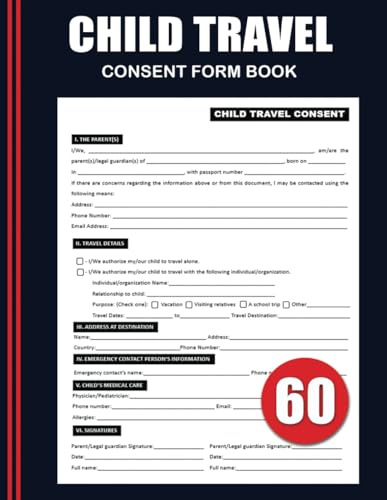
Child Travel Consent Form Book: Minor Trip Authorization Letter with One Parent, Individual or Organization
As an affiliate, we earn on qualifying purchases.
As an affiliate, we earn on qualifying purchases.
Conclusion
So, next time your ex drags out the paperwork circus, just whip out this notarized letter and save everyone some drama. After all, who knew that a simple document could turn travel headaches into a smooth ride? Remember, in the wild world of child custody, a little notarization goes a long way—because nothing says “trust” like a piece of paper stamped and signed. Safe travels, and may your legal adventures be just as painless as this template.
notarized custody travel letter
As an affiliate, we earn on qualifying purchases.
As an affiliate, we earn on qualifying purchases.

Avery Translucent Document Wallet, Clear Travel Document Organizer, Holds up to 50 Pages (72278)
Easily travel with loose sheets of paper as the document wallet features a die-cut closure that can easily…
As an affiliate, we earn on qualifying purchases.
As an affiliate, we earn on qualifying purchases.