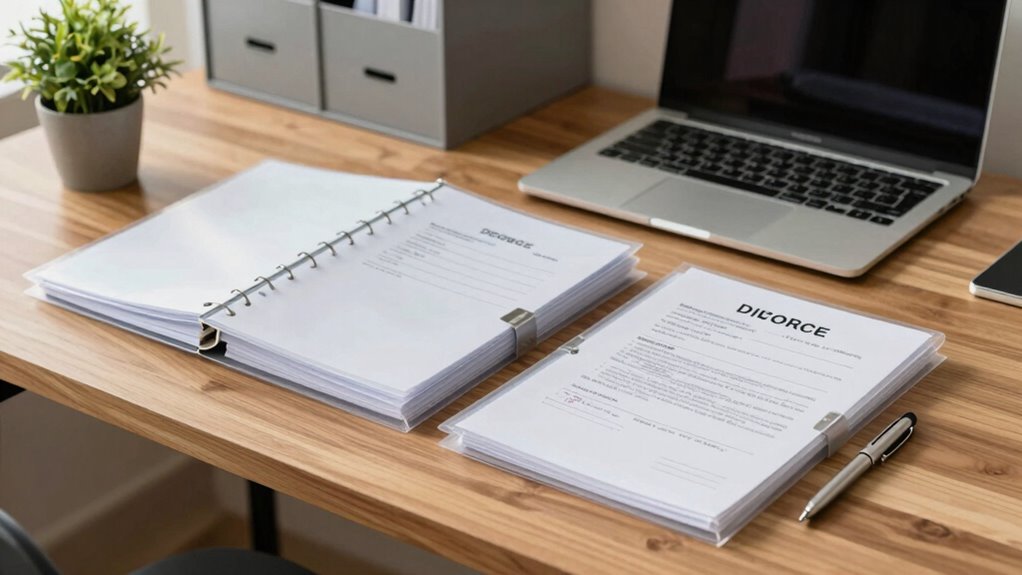
To organize your divorce records in one place, start by gathering all important documents like settlement agreements, property titles, custody orders, and financial statements. Use a sturdy binder or digital folders divided into clear sections for easy access. Label everything clearly and create a master index or table of contents. Regularly update your files and keep digital backups in secure locations. Keep physical copies in a safe spot—if you want tips on setting up this system effectively, stay tuned.
Key Takeaways
- Create a dedicated physical binder or digital folder for all divorce-related documents.
- Categorize files by types such as property, custody, and finances for easy access.
- Label sections clearly and maintain a master index or table of contents.
- Digitize physical documents and store backups securely online or on external drives.
- Regularly update the system with new documents and ensure security measures are in place.
Organizing divorce records can seem overwhelming, but with a clear system in place, you can easily access and manage these important documents. When it comes to property division, having all relevant paperwork together ensures you understand what assets you’re entitled to and what was agreed upon during the divorce process. This includes settlement agreements, property titles, bank statements, appraisals, and any court orders related to the division of assets. Keeping these documents organized prevents confusion if questions about property arise later or if you need to reference details for tax purposes or future disputes. Clear documentation also supports transparency and helps avoid potential legal issues. Incorporating calibration and color accuracy practices into your filing system can further streamline your process and reduce the risk of overlooking important documents.
Child custody arrangements are equally critical and often involve a complex set of documents. You should gather custody orders, visitation schedules, communication records, and any modifications or legal filings related to your child’s care. Organize these materials chronologically or by category so that you can quickly find specific information when needed. This can prove invaluable if questions about custody or visitation come up again or if you need to present evidence to a court. Having all these records in one easily accessible place helps ensure that your rights and your child’s best interests are protected.
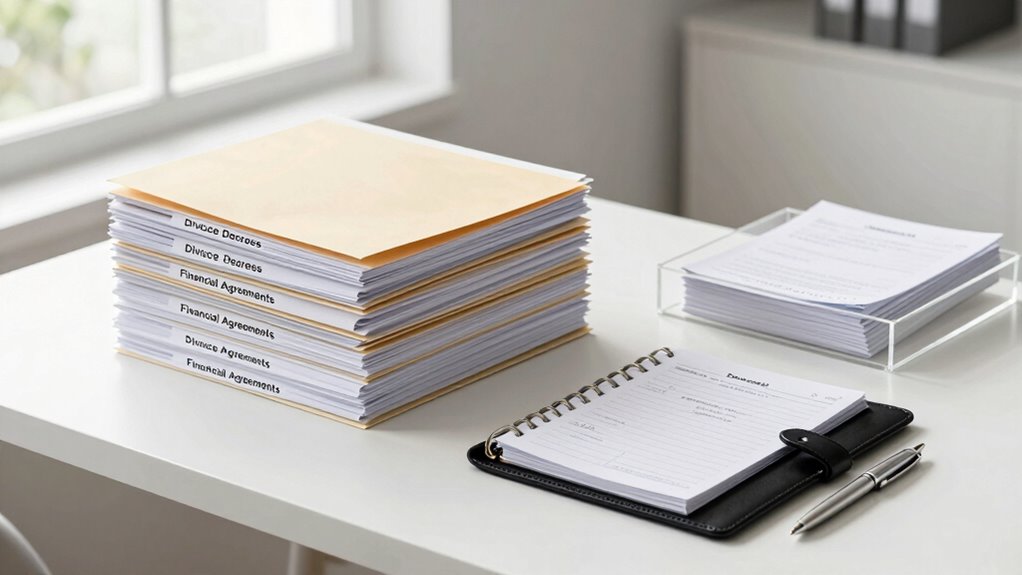
Creating a centralized filing system is the first step. Use a sturdy binder or a digital folder system, dividing sections clearly — one for property division documents, another for child custody papers, and additional sections for financial statements, legal correspondence, and court orders. Label everything clearly and keep a master index or table of contents that outlines what’s stored where. Regularly update your organization system as new documents come in or as circumstances change. When you receive new court orders or settlement agreements, add them promptly to your files. Incorporating proper document organization practices can further streamline your process and reduce the risk of overlooking important documents.
Create a clear, organized filing system with labeled sections and a master index for easy access and updates.
Digital copies are a smart addition; scan physical documents and store them securely online or on a dedicated external drive. This way, if your physical files are lost or damaged, you still have backup copies. Be mindful of privacy and security—use strong passwords for digital files and keep physical documents in a safe, fireproof location. Additionally, understanding the importance of privacy policies can help you protect sensitive information and ensure your records are kept confidential.
Finally, set aside a specific time periodically to review and update your records. Staying organized means you’ll save time and reduce stress when questions about property division or child custody arise. With your documents well-organized, you’ll be better prepared to manage your post-divorce life confidently and efficiently.

Sturdy Document Organizer Set with Folders – Beautiful Linen 3-Ring Binder Safely Stores All Important Documents & Files in One Place – Easy to Use Expanding Storage Incl. Envelopes, Pockets & Labels
Store (Family) Papers Safe & Sound: Keep all your essential papers safely in one spot with ZICOTOs’ important…
As an affiliate, we earn on qualifying purchases.
As an affiliate, we earn on qualifying purchases.
Frequently Asked Questions
How Long Should I Keep Divorce Records?
You should keep divorce records indefinitely, especially for important legal or financial reasons. Proper record storage and document retention are vital, so store these records in a safe, easily accessible location. Keep copies of finalized divorce decrees, settlement agreements, and related documents in case you need them for future legal or financial matters. Regularly review and update your records to make certain they remain complete and secure over time.
Can I Access Divorce Records Online?
Did you know that over 80% of divorce records can now be accessed online? You can often retrieve divorce records through government websites or online databases, making the process more convenient. However, be aware of privacy concerns; make certain you’re using secure sources to protect sensitive information. Always verify the website’s legitimacy before accessing or sharing your details, so you keep your records safe while taking advantage of online access.
Are Divorce Records Public or Private?
Divorce records are generally public, but privacy concerns and legal restrictions can limit access. You might find some details available online, but sensitive information is often sealed or restricted to protect privacy. You should check with the court or relevant agency to understand what’s accessible in your area. Keep in mind, some records may require a formal request or specific reasons for access due to privacy laws.
What Documents Are Typically Included in Divorce Records?
Divorce records typically include documents like the divorce decree, settlement agreement, financial affidavits, and child custody orders. These records hold legal implications, as they officially settle matters like property division and parental rights. To guarantee efficient document retrieval, organize these papers systematically in one secure location. Keeping track of all relevant documents helps you access important information quickly and maintains a clear record for future legal or personal reference.
How Do I Update or Correct My Divorce Records?
You can easily update or correct your divorce records by filing a record correction with the court. Start by contacting the court clerk or reviewing local procedures for filing updates. Provide supporting documentation for the correction, such as legal notices or amended documents. Don’t delay—timely record correction guarantees your records reflect accurate information. Remember, filing updates is a straightforward process that helps maintain the integrity of your divorce records.

ENGPOW Accordion File Organizer, Fireproof Expanding File Folder with 13 Pockets Document Organizer with Handle & Labels, Portable Home Travel Safe Storage for Letter A4 Files and More, Black
High-Quality Materials: Protect your files with ENGPOW fireproof accordion file organizer.It is made of 3-layered non-itchy silicone-coated fiberglass…
As an affiliate, we earn on qualifying purchases.
As an affiliate, we earn on qualifying purchases.
Conclusion
By organizing your divorce records efficiently, you’ll create clarity and confidence in your chaos. Keep everything in one place, stay structured, and simplify your search. Remember, order eases obstacles, and preparation promotes peace. When you tame the tumult of paperwork, you transform stress into strength. So, start systematically sorting today—secure, streamline, and soothe your situation. Your future self will thank you for the tidy, tranquil proof of your tenacity.

The Folio® Important Document Organizer by Savor | Binder with Guided Labels, Acid-Free File Folder Organizer with 10 Pockets, Document Holder for Home Records, Legal and Medical Papers (Slate)
Keep important documents safe: A document organizer designed to protect papers from getting lost. Store birth certificates, social…
As an affiliate, we earn on qualifying purchases.
As an affiliate, we earn on qualifying purchases.
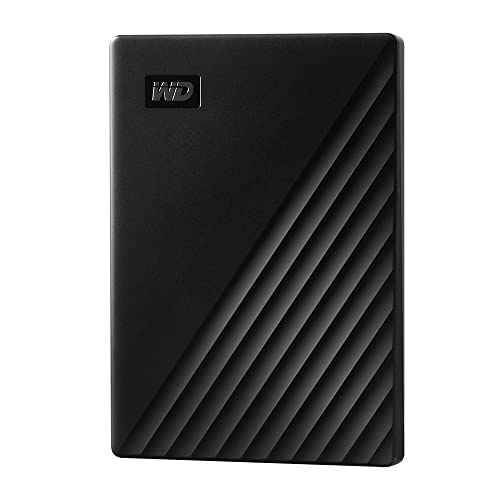
WD 2TB My Passport, Portable External Hard Drive, Black, backup software with defense against ransomware, and password protection, USB 3.1/USB 3.0 compatible – WDBYVG0020BBK-WESN
Slim durable design to help take your important files with you
As an affiliate, we earn on qualifying purchases.
As an affiliate, we earn on qualifying purchases.