

To access divorce forms through your state court website, you can find standardized and fillable forms for petitions, parenting plans, and judgments. Many sites offer guided online tools that ask simple questions to help you complete forms accurately. They also organize forms by case type and provide instructions for easy navigation. You might also be able to submit forms electronically, with support options available if you need help. Keep going to discover more tips on making the process easier.
Key Takeaways
- State court websites offer downloadable and fillable standardized divorce forms to ensure consistency and compliance.
- Guided online tools and instructions help users accurately complete divorce forms and understand legal procedures.
- Forms are organized by court level and case type, making navigation straightforward for self-represented litigants.
- Many courts support electronic filing, providing portals and technical support for submitting forms efficiently.
- Additional resources, including legal aid links and instructions for unsupported cases, enhance user access and assistance.
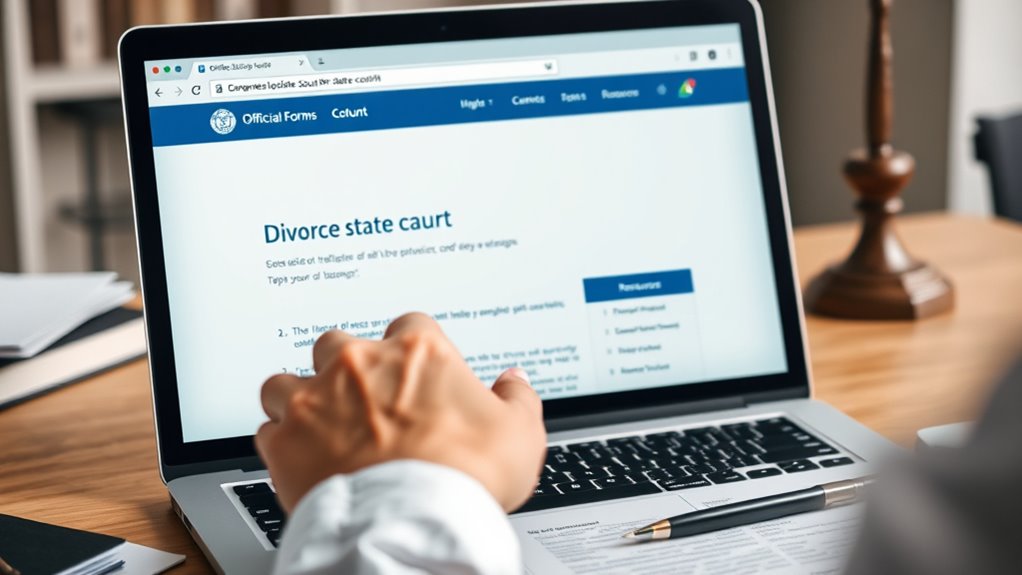
Utilizing state court websites can considerably streamline your legal process by providing access to standardized forms and helpful resources. When you’re navigating divorce proceedings, having easy access to these forms can save you time and reduce errors. Most state court websites offer downloadable and fillable forms for various divorce-related documents, including petitions, parenting plans, judgments, summons, motions, and default orders. This standardization ensures consistency across courts, so you can be confident you’re using the correct paperwork. For example, the Illinois Supreme Court mandates the use of approved standardized forms statewide, which promotes uniformity and simplifies the process for self-represented litigants.
Most forms come with detailed instructions to guide you through each step, making it easier to complete them accurately. You’ll usually need a PDF reader like Adobe Acrobat or a compatible app to fill out these forms electronically. Many state court websites also provide guided online interviews that ask you questions about your case. Based on your responses, these tools automatically fill in the appropriate forms, simplifying the process even further. This feature is especially helpful if you’re unfamiliar with legal terminology or unsure about how to complete complex documents.
Most forms include detailed instructions and guided online interviews to help you complete them accurately.
Navigation on these websites is designed to be user-friendly. Forms are usually organized by court level—such as Circuit or Appellate Court—and by case type, including divorce, child support, or maintenance. Search functions and categorized tabs help you quickly locate the exact forms you need. Many websites also link to related legal information, procedures, and instructions, giving you a comprehensive resource hub. Some county-level courts link directly to their state’s standardized forms, ensuring consistency regardless of which jurisdiction you’re filing in. Accessibility features like fillable PDFs, multi-language options, and ADA compliance improve usability for all users.
Most courts are encouraging or even requiring electronic filing of completed forms. You’ll need to upload your PDFs through the court’s e-filing portal, often attaching supporting documents as specified in each form’s instructions. Many courts provide tips to avoid common technical issues, such as browser compatibility suggestions, making the submission process smoother. Additionally, court websites frequently connect you with free legal aid services or online help centers to assist you with form completion. Guided interviews like Illinois’ Easy Form walk you through questions step-by-step, then generate the forms for you. Incorporating online legal resources can further enhance your understanding of the process and ensure compliance.
While most essential forms are available online, some specific scenarios may lack standardized forms, requiring handwritten submissions or additional local forms. Courts typically require you to use the approved forms when available, but deviations might need court approval. Overall, using state court websites to access divorce forms is an efficient, accessible way to handle your legal paperwork, providing clarity and support throughout the process.
Frequently Asked Questions
How Often Are the Divorce Forms Updated on State Court Websites?
Divorce forms on state court websites are updated irregularly, with no standard schedule. Updates happen when laws change, court rules are amended, or feedback prompts revisions. You’ll need to check each court’s site individually, as not all provide clear update logs or timestamps. To avoid filing issues, always verify you’re using the latest form version before submitting, since outdated forms can cause delays or rejections.
Are There Any Fees for Downloading Divorce Forms Online?
You’ll be pleased to know that most state court websites offer free downloadable divorce forms, with nearly 90% providing them at no cost. You can access and download these forms online without paying a fee. However, keep in mind that while downloading is free, filing your forms in court usually involves fees, which vary by jurisdiction. Some courts also offer fee waivers if you qualify, helping reduce overall expenses.
Can I Get Assistance in Filling Out Divorce Forms Online?
You can’t get direct assistance in filling out divorce forms online through the official Ohio court websites. However, you can watch instructional videos or use third-party online services like OnlineOhioDivorce.com, which offer guided interviews and support. For personalized help, consider contacting local legal aid organizations or seeking advice from an attorney. Remember, completing forms accurately is essential, so don’t hesitate to seek legal guidance if needed.
Do All Counties in a State Have the Same Divorce Forms?
Yes, all counties in your state share the same divorce forms, like pieces of a puzzle fitting perfectly across the map. You won’t find different shapes or colors—just one set of standardized documents accessible online. Think of the forms as a common language, spoken consistently everywhere, ensuring your process is smooth no matter which county you’re in. The state’s unified system keeps everything aligned, so your journey is straightforward and clear.
Are There Mobile Apps for Accessing Divorce Forms From Court Websites?
You won’t find official court apps specifically for accessing divorce forms, but third-party apps like pdfFiller can help. These apps allow you to download, edit, and sign divorce forms on your mobile device. Keep in mind, though, that submitting forms usually requires using the court’s website or e-filing system. Always guarantee your chosen app is secure and compatible with your device to avoid issues during the process.
Conclusion
So, next time you think accessing divorce forms online is a hassle, remember it’s actually designed to make your life easier—unless you enjoy maneuvering confusing paperwork in person. State court websites offer a surprisingly straightforward way to get what you need, saving you time and frustration. Ironically, what seems like a daunting task might just be your easiest step yet. Who knew? Sometimes, technology really does work in your favor.