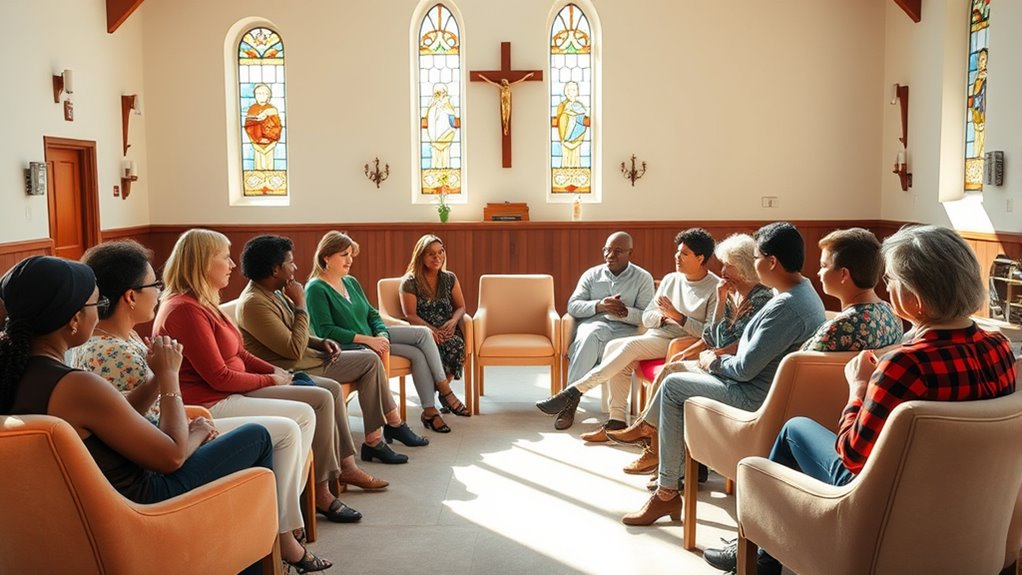

Faith-based divorce support communities offer a compassionate, spiritual space where you can find comfort and guidance during difficult times. You can participate in prayer groups, receive spiritual counseling, and join community activities that address your unique challenges. These communities help reinforce your faith, build resilience, and foster connections with others who share your beliefs. By joining such groups, you’ll discover ongoing support to help you heal and move forward in your spiritual journey.
Key Takeaways
- Provide a compassionate, faith-centered space for emotional healing and spiritual growth during divorce.
- Facilitate prayer groups and collective prayer to seek divine guidance and foster unity.
- Offer spiritual counseling integrating biblical principles to help process emotions and promote forgiveness.
- Organize community activities like Bible studies and workshops addressing divorce-specific challenges.
- Promote ongoing support and connection to build resilience, confidence, and renewed hope through shared faith.
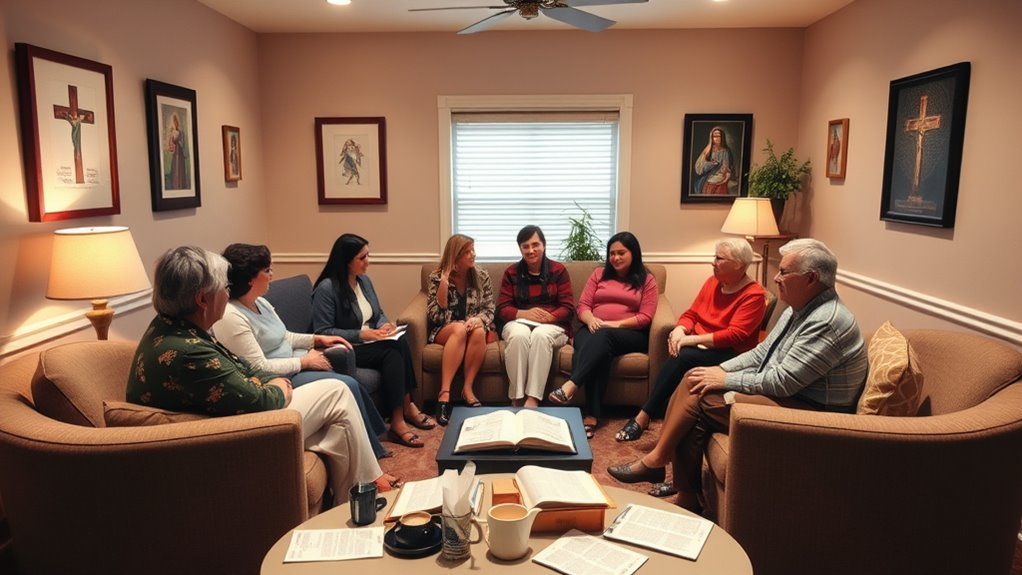
Faith-based divorce support communities offer a compassionate space where you can find comfort, guidance, and strength rooted in your spiritual beliefs. When you’re facing the emotional upheaval of divorce, these communities become a crucial source of solace, helping you navigate your feelings while reinforcing your faith. One of the key ways they provide support is through prayer groups, where you can come together with others who understand your struggles. Participating in prayer groups allows you to share your burdens, lift each other up, and seek divine guidance during a difficult time. The collective prayer fosters a sense of unity and reassurance, reminding you that you’re not alone in your journey. As you engage in these spiritual gatherings, you’ll often find renewed hope and clarity, which can be incredibly healing.
Spiritual counseling is another cornerstone of faith-based divorce support communities. Unlike traditional counseling, spiritual counseling integrates your faith and spiritual practices into the healing process. Trained counselors or pastors within these communities offer personalized guidance that aligns with your beliefs, helping you process emotions like anger, sadness, or guilt. They can help you find meaning in your experience and foster forgiveness—for yourself and your former spouse—using biblical principles or spiritual teachings. This specialized support can be transformative, offering a sense of purpose and direction as you rebuild your life. Spiritual counseling also helps you develop healthy coping strategies rooted in your faith, empowering you to move forward with confidence and resilience. Recognizing the importance of community and shared faith, many of these groups emphasize emotional support to aid in healing. Many of these communities also organize workshops, Bible studies, and discussion groups that address challenges specific to divorce, such as rebuilding trust, establishing new routines, or fostering forgiveness. These activities create a supportive environment where you can share your story, ask questions, and receive encouragement from others who understand what you’re going through. The shared faith perspective helps to validate your feelings and reminds you of the divine presence that remains steadfast through every trial. As you participate regularly, you’ll likely develop deeper connections with others who can walk alongside you, providing ongoing spiritual and emotional support.

Christian Prayer Journal & Gratitude Journal – Guided Daily Devotional with Bible Verses, Prayer Prompts & Reflection – Faith Journal for Women & Men
6 Months of Daily Prayer and Gratitude: Strengthen your faith and deepen your relationship with God through daily…
As an affiliate, we earn on qualifying purchases.
As an affiliate, we earn on qualifying purchases.
Frequently Asked Questions
How Do Faith Communities Handle Confidentiality During Support Groups?
In faith communities, confidentiality protocols and privacy policies are taken seriously during support groups. You’re assured that what you share stays within the group, as leaders often emphasize the importance of trust and discretion. They encourage members to respect each other’s privacy and establish clear guidelines to protect personal stories. This fosters a safe environment where you can openly discuss your feelings without fear of judgment or exposure.
Are These Support Communities Open to People of All Faiths?
Imagine a garden blooming with many different flowers—that’s how these communities work. Yes, many are open to people of all faiths, embracing interfaith inclusion and diverse spiritualities. They welcome individuals regardless of background, creating a safe space for shared healing. You’ll find support that respects your beliefs, helping everyone grow together in understanding and compassion, no matter where they come from or what they believe.
What Specific Religious Teachings Are Incorporated Into the Support Programs?
You’ll find that these support programs incorporate Biblical principles and religious counseling tailored to your faith. They often focus on teachings about forgiveness, reconciliation, and healing, helping you navigate divorce with spiritual guidance. Religious counseling sessions provide personalized support rooted in your faith’s values, encouraging you to find peace and strength through scripture and prayer. This approach aims to nurture your spiritual well-being during this challenging time.
How Can I Find a Local Faith-Based Divorce Support Group?
You can find a local faith-based divorce support group by visiting your church or religious community’s bulletin boards or website. Ask your pastor or spiritual advisor about upcoming faith-based counseling sessions focused on spiritual healing and divorce support. Many communities also list such groups online through religious organizations or social media groups. Attending these gatherings helps you connect with others, find spiritual healing, and receive guidance rooted in your faith.
Do These Communities Offer Legal or Financial Counseling?
Think of these communities as a lighthouse guiding you through turbulent waters. While they primarily offer emotional and spiritual support, some do provide legal guidance and financial planning resources. You’re more likely to find specific legal or financial counseling through affiliated professionals or partner organizations. Reach out to community leaders or coordinators to ask about available services—think of it as turning on a light to illuminate your path forward.

Living Unbroken: A Divorce Recovery Workbook (An Interactive Bible Study)
As an affiliate, we earn on qualifying purchases.
As an affiliate, we earn on qualifying purchases.
Conclusion
Joining faith-based divorce support communities can provide you with spiritual guidance, emotional comfort, and a sense of belonging during tough times. Studies show that 78% of participants report increased emotional resilience after engaging with these groups. By connecting with others who share your beliefs, you find strength and hope to rebuild your life. Remember, you don’t have to navigate divorce alone—faith communities can be a powerful source of support and renewal.

Bible Healing Study Course
As an affiliate, we earn on qualifying purchases.
As an affiliate, we earn on qualifying purchases.

ICOOLYI Funny Encouragement Card for Women and Men|Support Greeting Card for Friend, Coworker, or Loved One – Humor Card for Hard Times, Divorce, Loss of Job, or Stress Relief
Funny Encouragement Card for Women and Men – A humorous yet heartfelt way to lift spirits, perfect for…
As an affiliate, we earn on qualifying purchases.
As an affiliate, we earn on qualifying purchases.