
Multicultural divorce support groups provide a essential space where you can share experiences and understand different cultural perspectives. They help you navigate emotional and cultural challenges, including issues around cultural identity and stigma. These groups often offer multilingual services and culturally sensitive guidance, helping you feel less isolated and more empowered. By participating, you’ll discover strategies to honor your heritage while healing. To learn more about how these groups can support your journey, keep exploring this topic further.
Key Takeaways
- Facilitate open discussions that acknowledge and respect diverse cultural norms surrounding divorce.
- Offer multilingual support and translation to ensure inclusive participation for all members.
- Provide a safe space to explore cultural identity challenges and manage associated stigma.
- Incorporate culturally sensitive coping strategies aligned with members’ backgrounds and values.
- Use facilitators skilled in intercultural communication to navigate complex cultural dynamics effectively.
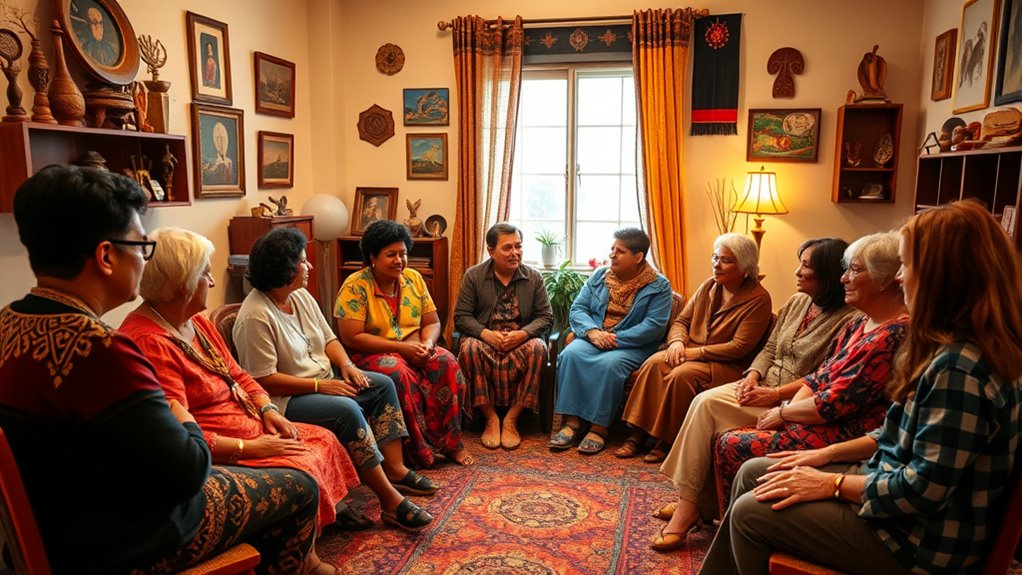
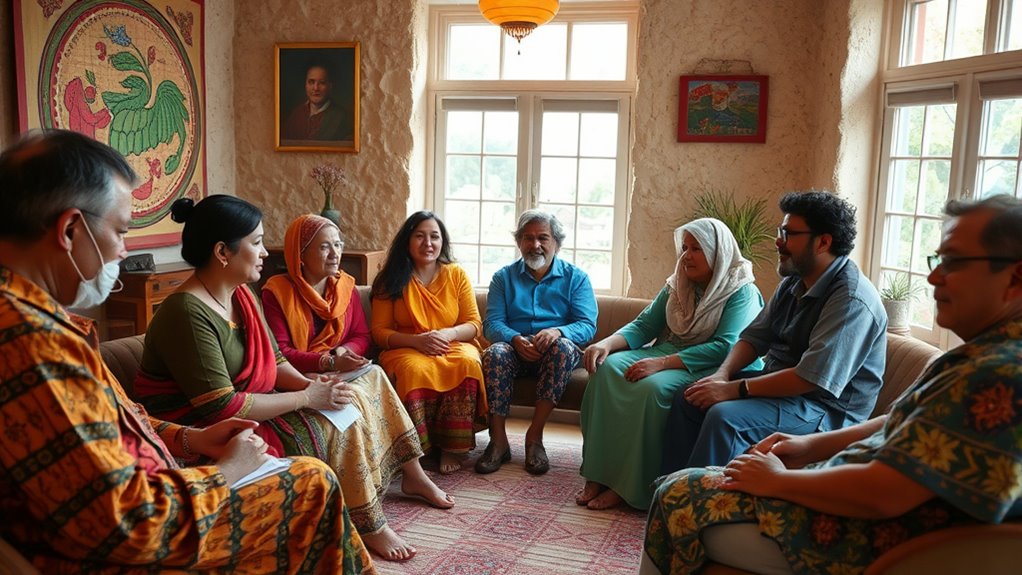
Have you ever wondered how multicultural divorce support groups can help navigate the complex emotions and challenges of ending a marriage across different cultural backgrounds? These groups serve as a crucial resource, offering a space where shared experiences and cultural understanding foster healing. When you’re dealing with divorce in a multicultural context, issues like cultural identity can become more complicated. You might feel torn between honoring traditions and adapting to new realities, which often leaves you questioning where you truly belong. Support groups that recognize and respect these cultural identities can help you explore these feelings without judgment, providing reassurance that your experiences are valid.
Multicultural divorce support groups help navigate cultural identity and foster healing without judgment.
Language barriers are another significant obstacle that these groups help address. If you’re not fluent in the dominant language, expressing your feelings or understanding legal and emotional advice can feel overwhelming. Support groups that operate in multiple languages or offer translation services make it easier for you to participate fully. When you can communicate freely, you’re more likely to share your story, ask questions, and seek guidance, reducing feelings of isolation. This inclusivity also helps you connect with others who face similar language challenges, creating a sense of community and understanding that might be missing elsewhere.
Furthermore, these groups often incorporate cultural norms into their discussions, helping members navigate expectations around divorce that vary widely across cultures. Facilitators often have backgrounds in intercultural communication, enabling them to navigate sensitive topics with tact. They create a safe environment where you can discuss cultural expectations around divorce, which often vary widely. For some cultures, divorce might carry shame or stigma, making it harder to seek help outside your community. These groups help you unpack these feelings, challenge harmful beliefs, and find ways to honor your cultural identity while pursuing your well-being.
Additionally, support groups recognize that cultural norms influence emotional responses and coping mechanisms. What might be considered acceptable ways to grieve or move forward can differ from one culture to another. When you’re in a group where these nuances are understood, you’re less likely to feel misunderstood or judged. Instead, you’ll gain insights into how others from similar backgrounds navigate their path, which can inspire you to develop healthy coping strategies aligned with your cultural values.
Ultimately, multicultural divorce support groups acknowledge that cultural identity and language are integral to your healing process. They empower you to confront the emotional turmoil of divorce with confidence, knowing you’re not alone. By offering a culturally sensitive space, these groups help you reconcile your personal experiences with your cultural heritage, making your journey toward healing more authentic and supportive.
Frequently Asked Questions
How Do Support Groups Address Language Barriers?
Support groups address language barriers by providing language translation and interpreter services, ensuring everyone can fully participate. You’ll find bilingual facilitators or access to professional interpreters during meetings, making communication smoother. This approach helps you feel understood and supported, regardless of your language background. By removing language obstacles, support groups foster a more inclusive environment where you can share your experiences and receive valuable guidance confidently.
Are Online Multicultural Divorce Support Groups Available?
Yes, online multicultural divorce support groups are available. They focus on cultural sensitivities and utilize skilled group facilitation to create safe, inclusive spaces. These groups connect you with others facing similar challenges, helping you navigate cultural differences during divorce. Online platforms make participation easier, allowing you to share experiences and gain support from diverse backgrounds, all while respecting cultural nuances and fostering understanding.
How Do Cultural Norms Influence Group Participation?
Cultural norms act like invisible fences, shaping how you join and engage in support groups. You might hesitate, feeling the weight of cultural expectations that label divorce as taboo, creating participation barriers. These unspoken rules can silence your voice or make you withdraw. Recognizing these influences helps you navigate the group more confidently, breaking down barriers and finding solidarity amid shared experiences and diverse backgrounds.
What Role Does Religion Play in These Groups?
Religion plays a significant role in these groups by shaping members’ perspectives and providing a foundation for understanding their experiences. You might find that religious practices influence how participants share and seek support. Faith-based counseling often complements group discussions, offering spiritual guidance. As you engage, respect for diverse beliefs helps create an inclusive environment where everyone feels understood and supported through their healing process.
How Is Confidentiality Maintained Across Different Cultures?
You maintain confidentiality across cultures by emphasizing cultural sensitivity and establishing clear trust-building guidelines. You guarantee everyone understands that what’s shared stays private, respecting diverse communication styles and beliefs. You encourage open dialogue about confidentiality expectations early, fostering a safe space. By actively listening and being mindful of cultural nuances, you strengthen trust, making participants feel secure in sharing their experiences without fear of judgment or disclosure.
Conclusion
As you navigate the stormy seas of divorce, multicultural support groups become your guiding stars, illuminating your path with empathy and understanding. Embrace the diverse voices, like a symphony of healing, each note offering comfort amidst chaos. Remember, you’re not alone on this journey—together, you weave a tapestry of resilience and hope, transforming turbulent waters into a steady river flowing toward new beginnings. Let these connections be your anchor and your wings.