

Relationship communication tools range from structured workbooks to research-backed guides, and the right one depends on whether you’re trying to repair conflict, rebuild intimacy, or simply talk more openly. My top overall pick is The Couples Therapy Flip Chart, because its visual, session-style format makes abstract patterns of disconnection easy to see and discuss — something most text-only workbooks can’t match. For couples who want a low-commitment entry point, the Couples Communication Workbook (20 minutes a day for 12 days) offers the fastest visible progress, while Nonviolent Communication remains the deepest skill-building book for long-term change. The main tradeoff in this category is depth versus accessibility: clinical tools demand more effort but produce deeper insight, while quick workbooks are easier to stick with but cover less ground. Keep reading for the full breakdown of all 12 options.

Get gifts for the two of you delivered free — and shop member deals
- Fast, free delivery on millions of items
- Access to Prime Big Deal Days deals on October 6–7
- Prime Video, Amazon Music and more included
Key Takeaways
- Visual and session-style tools like The Couples Therapy Flip Chart outperformed plain workbooks for identifying recurring conflict patterns, because couples could literally point at what they were experiencing.
- Time commitment was the biggest differentiator: options ranged from a 12-day, 20-minute-a-day program to open-ended guides meant to be absorbed over months.
- Books grounded in clinical research (The Seven Principles, Nonviolent Communication) offered stronger frameworks but required more self-directed motivation than guided workbooks.
- General-purpose communication books, like Communication & Social Skills: 13-in-1, diluted their relationship focus and ranked lower despite covering more techniques.
- The strongest picks paired explanation with practice — every top-tier option included exercises or prompts, not just theory.
| Love More, Fight Less: Communication Skills Every Couple Needs | 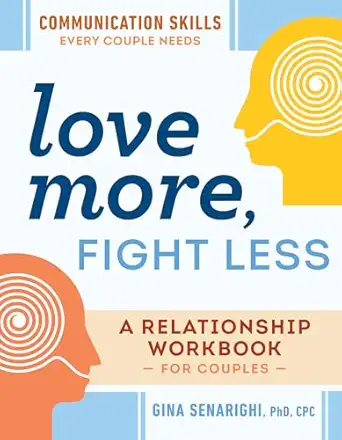 | Best Overall | Format: Paperback workbook | Primary focus: Communication skills and conflict reduction | Structure: Exercises and insights across relationship dynamics | VIEW LATEST PRICE | See Our Full Breakdown |
| The Couples Therapy Flip Chart: A Psychoeducational Tool to Help Couples Identify Patterns of Disconnection, Manage Relationship Conflict, and Create a Thriving Partnership |  | Best for Therapy Settings | Format: Spiral-bound psychoeducational flip chart | Primary focus: Identifying disconnection patterns and managing conflict | Structure: Session-ready psychoeducational pages | VIEW LATEST PRICE | See Our Full Breakdown |
| The Couples Communication Handbook: The Skills You Never Learned for the Marriage You Always Wanted |  | Best for Newlyweds and Early-Stage Couples | Format: Book (print and digital editions) | Primary focus: Foundational marriage communication skills | Structure: Skill-based chapters with practical strategies | VIEW LATEST PRICE | See Our Full Breakdown |
| Nonviolent Communication: A Language of Life |  | Best Foundational Framework | Format: Book (multiple editions available) | Primary focus: Nonviolent communication method (observation, feeling, need, request) | Structure: Framework chapters with practice examples | VIEW LATEST PRICE | See Our Full Breakdown |
| Emotional Intimacy for Couples: Communication Skills, Trust-Building Habits, and Practical Tools to Deepen Connection and Strengthen Your Relationship |  | Best for Rebuilding Trust | Format: Paperback / digital | Primary focus: Emotional intimacy and trust-building | Includes exercises: Yes — practical tools and habits | VIEW LATEST PRICE | See Our Full Breakdown |
| The Mechanism Between Us: Map the 5 Couple Types and Their Hidden Patterns to Improve Communication, Build Trust, and Resolve Conflict. Plus a Relationship Workbook to Reconnect with Your Partner |  | Best Diagnostic Framework | Format: Book with integrated workbook | Core framework: Five couple types with hidden patterns | Primary focus: Pattern diagnosis, communication, conflict | VIEW LATEST PRICE | See Our Full Breakdown |
| Practical At-Home Couples Therapy Workbook: Guided Relationship Toolkit for Honest Communication, Restored Intimacy, and Conflict Repair |  | Best Structured Workbook | Format: Guided workbook | Primary focus: Communication, intimacy, conflict repair | Structure: Structured activities and exercises | VIEW LATEST PRICE | See Our Full Breakdown |
| The Seven Principles for Making Marriage Work: A Practical Guide from the Country’s Foremost Relationship Expert |  | Best Overall — The Research-Backed Standard | Format: Paperback / hardcover / digital / audio | Author: John Gottman, PhD, with Nan Silver | Core framework: Seven principles for lasting marriage | VIEW LATEST PRICE | See Our Full Breakdown |
| Communication Skills for Couples: Guide to Improve Communication, Resolve Conflict, Deepen Intimacy, Strengthen Marriage, and Create a Healthy Relationship |  | Best Budget-Friendly Primer | Format: Paperback / digital | Primary focus: Communication skills, conflict, intimacy | Approach: Advice-led guide with strategies | VIEW LATEST PRICE | See Our Full Breakdown |
| Couples Communication Workbook: 20 Minutes a Day for 12 Days |  | Best Short-Commitment Program | Format: Paperback workbook | Program Length: 12 days | Daily Time Commitment: 20 minutes | VIEW LATEST PRICE | See Our Full Breakdown |
| Communication & Social Skills: 13-in-1 Techniques to Improve Interactions |  | Best for Broad Social Skills Beyond the Couple | Format: Book | Techniques Included: 13 bundled methods | Core Topics: Small talk, body language, public speaking, confidence | VIEW LATEST PRICE | See Our Full Breakdown |
| relationship communication tool | Format | Audience | Primary focus | Structure |
|---|---|---|---|---|
| Love More | Paperback workbook | Couples wanting to reduce conflict and build understanding | Communication skills and conflict reduction | Exercises and insights across relationship dynamics |
| The Couples Therapy Flip Chart | Spiral-bound psychoeducational flip chart | Professionals; motivated couples with guidance | Identifying disconnection patterns and managing conflict | Session-ready psychoeducational pages |
| The Couples Communication Hand | Book (print and digital editions) | Engaged and newly married couples | Foundational marriage communication skills | Skill-based chapters with practical strategies |
| Nonviolent Communication: A La | Book (multiple editions available) | Individuals and couples seeking a universal communication framework | Nonviolent communication method (observation, feeling, need, request) | Framework chapters with practice examples |
| Emotional Intimacy for Couples | Paperback / digital | Committed couples | Emotional intimacy and trust-building | — |
| The Mechanism Between Us: Map | Book with integrated workbook | Self-help–oriented couples | Pattern diagnosis, communication, conflict | — |
| Practical At-Home Couples Ther | Guided workbook | Committed couples | Communication, intimacy, conflict repair | Structured activities and exercises |
| The Seven Principles for Makin | Paperback / hardcover / digital / audio | Married and long-term committed couples | Marriage strengthening and conflict management | — |
| Communication Skills for Coupl | Paperback / digital | New couples and first-time readers | Communication skills, conflict, intimacy | — |
| Couples Communication Workbook | Paperback workbook | Couples at any relationship stage | — | Guided daily exercises for couples |
| Communication & Social Skills: | Book | — | — | — |
More Details on Our Top Picks
Love More, Fight Less: Communication Skills Every Couple Needs
Love More, Fight Less earns the top spot because it strikes the balance the other workbooks in this roundup struggle to hit: actionable exercises paired with enough framing that couples understand why a technique works, not just how to run it. Compared with the 12-Week Relationship Therapy Workbook, which demands a three-month commitment, this book lets couples dip into specific skills as conflicts arise, which matters for partners who won’t stick to a rigid schedule. The tradeoff is depth — it covers a lot of ground, so couples in serious crisis may find it too lightweight compared with something like The Seven Principles for Making Marriage Work, which goes deeper on research. Still, for the typical couple who argues in recurring loops and wants a fix, this is the most accessible entry point in the lineup.
Pros:- Practical, ready-to-use communication exercises rather than abstract theory
- Flexible structure — couples can jump to the skill they need most
- Directly targets recurring conflict patterns
- Accessible tone that works even if only one partner is book-inclined
Cons:- Both partners must actively participate for the exercises to land
- Too shallow for relationships with serious trust damage
- Effectiveness varies depending on how well the exercises fit a couple’s specific dynamic
Best for: Couples in stable-but-friction-heavy relationships who want practical exercises without a therapy-style time commitment
Not ideal for: Couples dealing with betrayal, deep resentment, or active crisis — the exercises assume goodwill on both sides
- Format:Paperback workbook
- Primary focus:Communication skills and conflict reduction
- Structure:Exercises and insights across relationship dynamics
- Time commitment:Self-paced, exercise-driven
- Best use setting:At-home couples work
- Audience:Couples wanting to reduce conflict and build understanding
Our verdict“If you want one book that covers the most common communication failures with exercises you can start tonight, this is the pick.”
The Couples Therapy Flip Chart: A Psychoeducational Tool to Help Couples Identify Patterns of Disconnection, Manage Relationship Conflict, and Create a Thriving Partnership
This is the odd one out in the roundup, and that’s its whole value proposition. Where Love More, Fight Less is a self-guided workbook, this flip chart is built for a professional sitting across from a couple, walking them through patterns of disconnection visually rather than assigning homework. Therapists, coaches, and clergy doing premarital counseling will find it does something no book here does: it turns abstract relational concepts into something both partners can look at together in the room. The flip side is obvious — a DIY couple buying this will likely find it clinical and under-explained without a facilitator. Compared with the Couples Communication Handbook, it sacrifices narrative warmth entirely in exchange for session-ready structure. It’s a niche pick, and it’s honest about being one.
Pros:- Visual format makes disconnection patterns concrete and discussable in-session
- Designed by and for psychoeducation professionals
- Works as a repeatable session structure across many clients
- Covers conflict management and connection-building in one tool
Cons:- Nearly useless without a trained facilitator framing the material
- Clinical presentation can feel cold for casual at-home use
- More expensive than any of the self-help books in this lineup
Best for: Therapists, counselors, and relationship coaches who want a visual psychoeducational aid for sessions
Not ideal for: Couples working through issues on their own — it assumes a facilitator is guiding the conversation
- Format:Spiral-bound psychoeducational flip chart
- Primary focus:Identifying disconnection patterns and managing conflict
- Structure:Session-ready psychoeducational pages
- Intended user:Therapists and counselors working with couples
- Setting:Clinical or coaching sessions
- Audience:Professionals; motivated couples with guidance
Our verdict“Buy this if you run couples sessions for a living; skip it if you’re a couple browsing self-help at home.”
The Couples Communication Handbook: The Skills You Never Learned for the Marriage You Always Wanted
The subtitle tells you who this is for: couples building habits before bad ones form. The Couples Communication Handbook works best as preventive reading, filling in the communication skills nobody teaches in school. It reads faster and lighter than Nonviolent Communication, which asks readers to internalize an entire framework — here, the guidance is simpler and more marriage-specific. Compared with Love More, Fight Less, it leans more toward explanation than exercise, which is a real tradeoff: engaged or newly married couples will appreciate the low-effort onboarding, while couples already stuck in conflict loops will want more drills and fewer concepts. The chapter on listening alone makes it worth the short read for couples who realize they talk at each other. Just don’t expect it to repair anything — it’s a foundation, not a renovation.
Pros:- Framed around foundational skills most couples were never taught
- Easy-to-digest guidance that doesn’t require a communication background
- Marriage-focused rather than generic interpersonal advice
- Low time commitment compared with multi-week workbooks
Cons:- Light on structured exercises compared with workbook-style competitors
- Content overlaps heavily with cheaper, more established titles
- Little depth for couples past the early-relationship stage
Best for: Engaged couples and newlyweds who want to build communication habits early, before conflicts calcify
Not ideal for: Couples with entrenched conflict — it teaches fundamentals, not repair techniques
- Format:Book (print and digital editions)
- Primary focus:Foundational marriage communication skills
- Structure:Skill-based chapters with practical strategies
- Time commitment:Short read, low weekly effort
- Best use setting:Preventive reading for early-stage couples
- Audience:Engaged and newly married couples
Our verdict“A smart gift for an engagement or first year of marriage; redundant for couples who’ve already read a communication book or two.”
Nonviolent Communication: A Language of Life
This is the granddaddy of the genre, and most of the couple-specific books in this roundup — including Love More, Fight Less — are, at some level, repackaged slices of it. Nonviolent Communication teaches the observation-feeling-need-request method that underpins modern communication advice, and its scope extends beyond romance to workplaces, parenting, and friendships. That breadth is both its strength and its weakness here: it isn’t couple-specific, so there’s no guidance on romantic conflict repair or intimacy, and the techniques take real practice to master — this is a framework to internalize, not a weekend read. Compared with the Couples Communication Handbook, it demands far more from the reader but returns a skill set that generalizes across every relationship in your life. Couples wanting targeted romance advice should start elsewhere; readers wanting to change how they communicate everywhere should start here.
Pros:- The foundational method most modern communication advice is built on
- Skills transfer to family, workplace, and parenting contexts, not just romance
- Decades of refinement and a large practitioner community
- Transforms how arguments begin, not just how they end
Cons:- Requires sustained practice before techniques feel natural
- No couple-specific exercises or romantic-conflict guidance
- The four-step method can feel formulaic in heated real-time arguments
Best for: Readers who want a universal communication framework that improves their marriage, friendships, and work relationships alike
Not ideal for: Couples seeking romance-specific scripts and exercises — the couple-focused workbooks in this lineup serve that need better
- Format:Book (multiple editions available)
- Primary focus:Nonviolent communication method (observation, feeling, need, request)
- Structure:Framework chapters with practice examples
- Scope:Personal and professional relationships
- Learning curve:Moderate to high; requires practice
- Audience:Individuals and couples seeking a universal communication framework
Our verdict“The deepest, most durable skill investment on this list — buy it if you want to change your communication everywhere, not just at home.”
Emotional Intimacy for Couples: Communication Skills, Trust-Building Habits, and Practical Tools to Deepen Connection and Strengthen Your Relationship
Where most entries in this roundup lead with conflict resolution, this one puts trust-building habits front and center, which is why it earns a distinct slot. Compared with Communication Skills for Couples, which spreads itself across many topics, this option goes deeper on the emotional-attachment side of communication — how partners signal safety (or the opposite) in everyday interactions. That focus makes it a strong match for couples recovering from a breach of trust or prolonged distance, rather than those who just want better arguments. The tradeoff is real, though: it’s a newer release with little review history, so there’s less community validation than a title like The Seven Principles for Making Marriage Work offers. Buyers get a promising, focused toolkit, but they’re taking it on faith rather than on a long track record.
Pros:- Trust-building is treated as the foundation rather than an afterthought
- Practical habits couples can apply immediately, not just theory
- Narrow focus keeps the material relevant to emotionally distant partners
- Accessible language for couples new to relationship books
Cons:- Little to no review history, so quality is harder to verify before buying
- Content depth and page count are not clearly documented
- Less useful for couples whose main issue is day-to-day conflict, not trust
Best for: Couples specifically working to rebuild trust after distance, betrayal, or a long period of disconnection
Not ideal for: Buyers who want proven, heavily reviewed material — this title lacks an established ratings history
- Format:Paperback / digital
- Primary focus:Emotional intimacy and trust-building
- Includes exercises:Yes — practical tools and habits
- Audience:Committed couples
- Approach:Habit-based, practical
- Review history:Limited — newer release
Our verdict“This pick makes the most sense for couples whose communication problems trace back to broken trust rather than poor arguing skills.”
The Mechanism Between Us: Map the 5 Couple Types and Their Hidden Patterns to Improve Communication, Build Trust, and Resolve Conflict. Plus a Relationship Workbook to Reconnect with Your Partner
Most communication books teach one method and assume it fits everyone. This one takes a different bet: mapping couples into five distinct types and tailoring advice to the underlying pattern. That diagnostic angle is what separates it from Practical At-Home Couples Therapy Workbook, which offers strong exercises but doesn’t help you figure out why your conflicts keep repeating. The included relationship workbook turns the typology into something couples actually act on rather than just read about. The downside is that self-typing can feel reductive — couples who straddle two types may find the framework doesn’t map cleanly onto them. It also leans more conceptual than a straight exercise book like Couples Communication Workbook, so partners who want a simple day-by-day program may find the theory portion slows them down.
Pros:- Unique five-type framework explains why the same fights keep happening
- Workbook included, so insight converts into action
- Covers communication, trust, and conflict resolution together
- Great conversation starter for couples stuck in blame cycles
Cons:- Self-diagnosis can be imprecise or feel like a label
- Heavier conceptual front-load than exercise-driven competitors
- Less suited to casual readers who skim self-help
Best for: Analytical couples who want to understand their recurring conflict patterns before fixing them
Not ideal for: Couples who want a quick, exercise-first program — the typology requires reading and reflection before the workbook pays off
- Format:Book with integrated workbook
- Core framework:Five couple types with hidden patterns
- Primary focus:Pattern diagnosis, communication, conflict
- Includes exercises:Yes — dedicated workbook section
- Audience:Self-help–oriented couples
- Approach:Diagnostic then practical
Our verdict“Choose this if you and your partner keep having the same fight and want a map of why — skip it if you just want exercises.”
Practical At-Home Couples Therapy Workbook: Guided Relationship Toolkit for Honest Communication, Restored Intimacy, and Conflict Repair
This option competes directly with 12-Week Relationship Therapy Workbook for Couples, and the difference comes down to structure versus depth. Where the 12-week program stretches work across a quarter, this toolkit concentrates structured, guided exercises into a tighter at-home format — useful for couples who want momentum without a three-month commitment. Its conflict repair section is the standout, giving partners concrete scripts and activities for the aftermath of arguments, something Emotional Intimacy for Couples covers only indirectly. The honest tradeoff: a workbook only works if both people actually do it. Compared with reading a book like The Seven Principles for Making Marriage Work, this demands real participation, and couples where one partner is checked out will stall quickly. Sparse author and content details also make it harder to vet before buying.
Pros:- Exercise-first design produces faster hands-on engagement than reading alone
- Strong dedicated conflict-repair section
- Works well as a supplement to actual couples therapy
- Honest-communication prompts cut through surface-level talking
Cons:- Requires sustained commitment and consistency from both partners
- Limited author and content background available to vet quality
- Less explanatory context than book-style guides for why exercises work
Best for: Motivated couples who will both commit to doing exercises together between (or instead of) therapy sessions
Not ideal for: Couples where one partner is disengaged — workbooks require buy-in from both sides
- Format:Guided workbook
- Primary focus:Communication, intimacy, conflict repair
- Structure:Structured activities and exercises
- Best use case:At-home practice, with or without therapy
- Time commitment:Ongoing — consistency required
- Audience:Committed couples
Our verdict“This pick makes the most sense for couples ready to do the work together weekly, not just read about better communication.”
The Seven Principles for Making Marriage Work: A Practical Guide from the Country’s Foremost Relationship Expert
If this roundup has an anchor, this is it. John Gottman’s decades of clinical research sit behind every chapter, which no other title here can claim — Emotional Intimacy for Couples and Communication Skills for Couples are practical, but neither carries the longitudinal-study pedigree. The seven-principle structure gives couples a shared vocabulary and a clear order of operations: friendship first, conflict management second. That said, it’s not a workbook. Couples who want daily exercises will get more from Practical At-Home Couples Therapy Workbook, and its marriage-centric framing can feel less relevant to long-term unmarried partners. Some readers also find the middle chapters denser than the punchy titles competing with it. Still, for couples who want evidence over anecdotes, this remains the default recommendation.
Pros:- Grounded in decades of published research, not opinion
- Clear seven-principle structure is easy to follow and discuss
- Explains predictors of relationship failure with unusual specificity
- Widely recommended by therapists and heavily reviewed
Cons:- Fewer hands-on exercises than dedicated workbooks in this roundup
- Marriage-focused framing may not resonate with all couples
- Denser middle chapters demand more reading discipline
Best for: Married or long-term couples who want research-backed principles from the most cited name in relationship science
Not ideal for: Couples wanting an exercise-heavy workbook format, or unmarried partners who find marriage framing a poor fit
- Format:Paperback / hardcover / digital / audio
- Author:John Gottman, PhD, with Nan Silver
- Core framework:Seven principles for lasting marriage
- Primary focus:Marriage strengthening and conflict management
- Evidence base:Longitudinal clinical research
- Includes exercises:Yes — questionnaires and in-chapter activities
- Audience:Married and long-term committed couples
Our verdict“For couples who want the most credible, research-grounded guide available, this is the one to buy first.”
Communication Skills for Couples: Guide to Improve Communication, Resolve Conflict, Deepen Intimacy, Strengthen Marriage, and Create a Healthy Relationship
Compared with The Seven Principles for Making Marriage Work, this is the lighter, cheaper entry point — a broad-surface primer covering communication, conflict, intimacy, and marriage health in one accessible pass. That breadth is both its appeal and its weakness: couples get a fast orientation to every major topic, but none receives the depth that The Mechanism Between Us brings to patterns or that Practical At-Home Couples Therapy Workbook brings to exercises. This pick makes the most sense for newer couples or first-time buyers of relationship books who aren’t sure where their problems sit yet. Results depend heavily on engagement — skimming it won’t change anything, and partners expecting structured weekly work will be disappointed by the advice-heavy format.
Pros:- Covers communication, conflict, and intimacy in one inexpensive volume
- Approachable for readers with no prior relationship-book experience
- Good orientation tool for identifying which issue to tackle first
- Affordable compared with workbook-style alternatives
Cons:- Broad coverage means limited depth on any single topic
- Effectiveness depends heavily on reader follow-through
- Lacks the research grounding of Gottman-style titles
Best for: First-time buyers and newer couples wanting an affordable, broad introduction before committing to a specialized book
Not ideal for: Couples with a specific entrenched problem — the broad coverage won’t go deep enough to help
- Format:Paperback / digital
- Primary focus:Communication skills, conflict, intimacy
- Approach:Advice-led guide with strategies
- Includes exercises:Limited — primarily guidance
- Depth level:Introductory / broad overview
- Audience:New couples and first-time readers
- Price positioning:Budget-friendly
Our verdict“A sensible low-cost starting point for couples beginning the work, not a solution for deep-rooted patterns.”
Couples Communication Workbook: 20 Minutes a Day for 12 Days
Most workbooks in this space ask for a month or more — the 12-Week Relationship Therapy Workbook being the obvious example — which is exactly why this 12-day, 20-minutes-a-day format earns its place. Couples who have stalled on longer programs finally get a structure that survives busy schedules, and the short daily exercises reduce the odds that one skipped week derails everything. Compared with Love More, Fight Less, which covers similar listening and conflict skills without a day-by-day schedule, this option trades depth for momentum. The tradeoff is real, though: twelve short sessions cannot cover the ground that research-backed titles like The Seven Principles for Making Marriage Work address, and couples with deep-rooted conflict will hit the ceiling quickly. Still, as a low-commitment entry point or a rekindling exercise, the format does most of the heavy lifting.
Pros:- Time-boxed format makes it one of the few programs busy couples actually finish
- Daily structure removes the guesswork of ‘where do we start tonight’
- Listening skills get dedicated attention, not just conflict tactics
- Low commitment makes it easy to retry or revisit after a rough patch
Cons:- Twelve short sessions can’t match the depth of longer programs like the 12-Week Relationship Therapy Workbook
- Limited content detail available, so depth and quality may vary by chapter
Best for: Busy couples who abandoned longer workbooks and want a fast, scheduled reset of their listening and conflict habits
Not ideal for: Couples dealing with serious or long-standing conflict — 12 days of brief exercises is too shallow for deep repair work
- Format:Paperback workbook
- Program Length:12 days
- Daily Time Commitment:20 minutes
- Core Focus:Listening skills, conflict resolution, relationship strengthening
- Structure:Guided daily exercises for couples
- Audience:Couples at any relationship stage
- Prerequisite:None — beginner friendly
Our verdict“Pick this if you and your partner want a finishable, two-week communication reset rather than a months-long therapeutic program.”
Communication & Social Skills: 13-in-1 Techniques to Improve Interactions
This is the outlier in the lineup, and that is both its appeal and its weakness. Where Nonviolent Communication drills deeply into one framework, this 13-in-1 compilation spreads across small talk, body language, and public speaking — skills that help a partner at work, at parties, and at home. That breadth suits individuals whose communication struggles aren’t confined to the relationship, unlike the Couples Communication Handbook, which assumes two people doing the work together. The catch: because it’s a solo read rather than a shared workbook, couples looking for exercises to do together will find it thin on paired activities, and the lack of visible author credentials or reviews makes it harder to vet against established titles. Compared with Emotional Intimacy for Couples, it wins on versatility but loses on relationship specificity.
Pros:- Wide technique range covers situations far beyond romantic relationships
- Practical strategies for small talk, body language, and public speaking
- Confidence-building angle helps readers who dread difficult conversations
- Useful for partners whose communication issues extend to work and social life
Cons:- Jack-of-all-trades approach means less depth per technique than focused titles
- Little verifiable information on author credentials, format, or reader feedback
Best for: Individuals who want general communication improvement — work, social, and romantic — rather than a couple-specific program
Not ideal for: Couples wanting a shared workbook with paired exercises — this is a solo read, not a two-person tool
- Format:Book
- Techniques Included:13 bundled methods
- Core Topics:Small talk, body language, public speaking, confidence
- Intended Audience:Individual readers
- Primary Goal:Improve interactions across social and professional settings
- Use Case:Solo skill-building, not a couples workbook
- Relationship Focus:Indirect — general skills applied to relationships
Our verdict“Choose this if you want one book to sharpen communication everywhere in your life; skip it if your only goal is couple-specific repair.”

How We Picked
I evaluated each tool through one lens: does it actually change how two specific people talk to each other? That meant prioritizing products with concrete exercises, dialogue prompts, or visual frameworks over books that only describe good communication in the abstract. I also weighed time commitment and accessibility, since a tool a couple abandons after week one is worthless regardless of its quality — shorter, structured programs scored well for beginners, while deeper clinical texts scored well for motivated couples.
Other criteria included credibility of the underlying method (Gottman research, nonviolent communication theory, and licensed-therapist frameworks carried more weight than generic advice), fit for different relationship stages from new couples to those in serious conflict, and value for money given that most of these books sit in a similar price band. Products that stayed tightly focused on couples ranked higher than ones spreading attention across workplace, friendship, and family communication.
| relationship communication tool | Structure |
|---|---|
| Love More | Exercises and insights across relationship dynamics |
| The Couples Therapy Flip Chart | Session-ready psychoeducational pages |
| The Couples Communication Hand | Skill-based chapters with practical strategies |
| Nonviolent Communication: A La | Framework chapters with practice examples |
| Emotional Intimacy for Couples | — |
| The Mechanism Between Us: Map | — |
| Practical At-Home Couples Ther | Structured activities and exercises |
| The Seven Principles for Makin | — |
| Communication Skills for Coupl | — |
| Couples Communication Workbook | Guided daily exercises for couples |
| Communication & Social Skills: | — |
Factors to Consider When Choosing Relationship Communication Tools
Before picking a specific title, it helps to understand what actually separates an effective relationship communication tool from one that gathers dust on a nightstand. These are the factors that shaped my ranking — and the mistakes I saw buyers make most often.Guided Structure Versus Self-Directed Reading
The single biggest predictor of whether a communication tool works is whether couples finish it. Guided workbooks with daily or weekly prompts create momentum and accountability, which matters enormously when a couple is already avoiding hard conversations. Self-directed books, by contrast, assume both partners will read, absorb, and apply concepts on their own schedule — a reasonable bet for motivated couples, but a common failure point for those in active conflict. A frequent mistake is buying the most acclaimed book when a simpler, more structured workbook would have gotten better results. If one partner is more engaged than the other, a low-commitment format almost always beats a demanding one, because uneven participation in a heavy program tends to breed resentment rather than connection.
Your Goal: Repair, Growth, or Prevention
Communication tools are not interchangeable, and mismatched intent is the most common buying error I encountered. Couples in active conflict benefit from pattern-mapping and repair-focused tools that help them de-escalate before addressing root causes. Stable couples seeking growth get more from intimacy-building and skill-development books that assume goodwill already exists. Preventive buyers — engaged couples or newlyweds — should prioritize research-backed frameworks that establish good habits early. Buying a conflict-repair workbook when your relationship is healthy can accidentally manufacture problems, while buying a gentle growth book during a crisis can feel trivially inadequate. Match the tool’s tone and purpose to where your relationship actually is right now, not where you wish it were.
Evidence Base and Author Credentials
In this category, credibility varies wildly, and it matters more than most buyers realize. Tools built on documented clinical research — Gottman’s decades of observational studies, for example, or the nonviolent communication framework developed for high-stakes mediation — have methods that have been refined against real couples with real problems. Generic advice compilations may sound helpful but often repackage intuition as expertise. Check whether the author is a licensed therapist, researcher, or counselor with couples-specific experience, and be skeptical of books promising fast fixes for long-standing patterns. That said, credentials aren’t everything: a well-designed workbook by a practicing therapist can outperform a famous academic text if the exercises fit your situation better. Think of credentials as a floor for quality, not a guarantee of fit.
Format: Book, Workbook, or Visual Tool
Format shapes how a tool gets used, and it’s underrated in buying decisions. Traditional books work well for readers who like understanding the why before practicing the how. Workbooks convert reading into action, which is where behavior change actually happens, but they require both partners to write and share. Visual tools like flip charts are the rarest format and surprisingly powerful — they turn conversations into shared, physical activities rather than abstract discussions, which lowers defensiveness. One caution: workbooks with lots of blank prompts can feel like homework to a resistant partner, so gauge how your partner responds to structured tasks before committing to a fill-in-heavy format. The best choice is the format both of you will genuinely use twice.
Time Commitment and Realistic Schedules
Honestly assess how much time you and your partner can give before buying. Programs range from brief two-week intensives to open-ended books meant to be revisited across a relationship’s lifetime. The mistake I see most is overestimating available time — couples buy ambitious 12-week programs during a motivated weekend, then abandon them by week three when life intervenes. Shorter, time-boxed programs create completion wins that build confidence for deeper work later. If your schedules are chaotic or you have young children, a flexible format you can dip in and out of will beat a rigid sequential curriculum. There’s no shame in starting small; an unfinished comprehensive program helps no one, while a completed short one often catalyzes bigger conversations.
When a Book Isn’t Enough
One honest limitation of every product in this roundup: self-help tools have a ceiling. If your relationship involves ongoing contempt, betrayal recovery, or recurring destructive fights, a workbook can supplement professional help but rarely replaces it. Books work best for couples with baseline goodwill who want better skills, and as a bridge or adjunct for couples waiting to start therapy. Some buyers also use these tools as a low-stakes way to test whether a partner will engage with the idea of working on the relationship at all — a legitimate and useful strategy. Watch for warning signs like a partner refusing any format, or exercises consistently escalating into fights, as those indicate it’s time to bring in a licensed couples therapist rather than buy another book.
Frequently Asked Questions
Which relationship communication tool is best if my partner is reluctant to participate?
For a hesitant partner, short and low-pressure formats win. The Couples Communication Workbook’s 20-minutes-a-day-for-12-days structure works well here because the commitment is small, time-boxed, and produces visible progress quickly — reluctant partners often engage once they see it won’t become an endless project. Visual tools like The Couples Therapy Flip Chart are another good option, since flipping through prompts feels more like a shared activity than homework. Avoid dense, research-heavy books like The Seven Principles as a starting point, because the reading load alone can trigger resistance. Start small, let early wins build buy-in, and move to deeper tools only once your partner is genuinely on board.
Can a workbook really replace couples therapy?
For many couples, a well-designed workbook covers enough ground to meaningfully improve communication — especially where the problem is missing skills rather than deep wounds. Workbooks teach listening techniques, conflict de-escalation, and expression habits that therapists would teach in early sessions anyway. However, books have real limits: they can’t observe your dynamic, mediate in the moment, or adapt when an exercise backfires. If your relationship involves infidelity, contempt, or fights that keep re-escalating despite your efforts, a workbook becomes a supplement rather than a substitute. A practical middle path is using a tool like the 12-Week Relationship Therapy Workbook while on a therapy waitlist, so you arrive at your first session with shared vocabulary and momentum.
Is Nonviolent Communication too general if I only care about my marriage?
It’s a fair concern — Nonviolent Communication wasn’t written specifically for couples, and its examples span workplaces, parenting, and diplomacy. What it offers in exchange is the most rigorous underlying skill framework in this entire category: separating observation from judgment, owning feelings, and making requests instead of demands. Couples-specific workbooks package similar ideas more conveniently, but few teach the mechanics as thoroughly. My suggestion is a two-track approach: start with a couples-focused workbook for structure and momentum, then read Nonviolent Communication when you want to understand why the exercises work. If you only buy one book and prefer depth over convenience, it’s still a strong choice despite the general framing.
Should I buy a quick 12-day program or a comprehensive guide if we argue frequently?
Frequent arguments usually call for de-escalation skills first and deep theory second, which favors starting with a structured, shorter program that teaches concrete conflict techniques quickly. A 12-day format gives you shared rules for fights — time-outs, speaker-listener turns, repair phrases — within two weeks, which can slow the damage while you build toward deeper work. Comprehensive guides like The Seven Principles or The Mechanism Between Us then help you understand why the fights keep happening and what underlying patterns drive them. Trying to do it in reverse often fails, because couples in frequent conflict struggle to absorb abstract concepts mid-argument. Sequence matters more than most buyers realize: stabilize first, understand second.
Are the cheap communication workbooks worth it, or should I pay more for a premium pick?
Price in this category is a weak signal of quality — most of these books sit within a few dollars of each other, and several of the most effective options are among the cheapest. What you’re really choosing between is format and depth, not price tiers. A premium-style purchase makes sense when you want durable reference material you’ll revisit for years, like The Seven Principles, or a professional-grade tool like the flip chart. Budget picks like the shorter workbooks deliver excellent value precisely because they ask for less: less time, less money, less commitment. The better question is which format fits your relationship, because a $12 workbook you complete beats a $30 classic you abandon. Pay more only when you know you’ll use the extra depth.
Conclusion
After comparing all 12 options, my recommendations break down cleanly by buyer type. For best overall, The Couples Therapy Flip Chart earns the top spot — its visual, session-style format makes communication patterns tangible in a way no plain workbook matches, and it works for couples in conflict or in growth mode. For best value, the Couples Communication Workbook delivers the most behavior change per dollar with its tight 12-day, 20-minute-a-day structure. For best premium pick, The Seven Principles for Making Marriage Work brings decades of Gottman research into a guide worth keeping for the life of your relationship.
For beginners and reluctant partners, start with Communication Skills for Couples or the 12-day workbook — small commitments that build momentum before deeper work. For specific needs: choose The Mechanism Between Us if you want to understand your couple type and hidden patterns, the Practical At-Home Couples Therapy Workbook for conflict repair, Emotional Intimacy for Couples when trust-building is the priority, and Nonviolent Communication if you want the deepest transferable skill set. Whatever you choose, the tool both partners will actually finish is always the right answer.
Halloween Picks
halloween
As an affiliate, we earn on qualifying purchases.