

The Rebuilding Trust Workbook for Couples is my best overall pick for partners seeking practical exercises focused directly on healing and reconnection. For infidelity-specific support, Rebuilding After the Affair offers a clinical-workbook focus, while How to Stay Married After Betrayal stands out for its scripts, checklists, and weekly routines. The main tradeoff is between focused betrayal-recovery guidance and broader relationship tools, as well as between flexible exercises and a more structured program. A workbook can support conversations, but it cannot replace professional help when conflict feels unsafe or too intense to manage together. Read on for the full comparison and guidance on matching a workbook to your needs.

Get gifts for the two of you delivered free with Prime
- Fast, free delivery on millions of items
- Prime Video, Amazon Music and more included
- Member-only deals all year
Key Takeaways
- The most direct match is The Rebuilding Trust Workbook for Couples: its title and practical-exercise format center the exact goal, while broader couples workbooks may spend more space on general communication or relationship health.
- Infidelity-specific titles serve a different need than general trust guides: Rebuilding After the Affair and Rebuilding Trust After Betrayal focus on betrayal recovery, making them more targeted than a general couples therapy workbook.
- Program length is a meaningful tradeoff: the 8-week, 10-week, and 12-week workbooks offer a schedule for couples who want pacing, but a set timeline may feel restrictive when partners progress at different speeds.
- Some titles emphasize what couples do between conversations: How to Stay Married After Betrayal highlights scripts, checklists, and weekly routines, whereas guided therapy and activity-focused books suggest more exercise-led work.
- Not every couple needs a trust-first workbook: Love More, Fight Less and The Two-Pen Relationship Workbook may suit partners who need a more accessible route into communication and shared participation before tackling painful details.





| rebuilding trust workbooks for couple | Format | Additional focus | Primary focus | Audience |
|---|---|---|---|---|
| Couples Therapy Workbook: Stra | Relationship workbook | Intimacy | Strengthening connection | — |
| The Rebuilding Trust Workbook | Workbook | — | Rebuilding trust | Couples |
| Rebuilding Trust: Guided Thera | Book | Restoring love | Rebuilding trust | — |
| 12-Week Relationship Therapy W | Relationship therapy workbook | — | — | Couples |
| Rebuilding After the Affair: A | Clinical couples workbook | Trust rebuilding | Infidelity recovery | — |
| Love More | Relationship workbook | — | — | Couples |
| The Complete Couples Therapy W | Couples therapy workbook | — | — | Couples |
| How to Stay Married After Betr | Guide | — | Maintaining and repairing a marriage | Couples rebuilding trust |
| I Love You but I Don’t Trust Y | Guide | — | — | People restoring trust in a relationship |
| Relationship Workbook for Coup | Workbook | — | — | Couples |
| 12-Step Couples Therapy Workbo | Workbook | Restoring intimacy | Building trust | — |
| Rebuilding Trust After Betraya | Workbook | Healing | Rebuilding trust after betrayal | — |
| The Stronger Relationship Coup | Workbook | — | — | — |
| The Two-Pen Relationship Workb | Side-by-side exercises for couples | Conflict resolution | Trust | — |
More Details on Our Top Picks
Couples Therapy Workbook: Strategies to Connect, Restore Love and Trust, and Improve Communication
This workbook makes the most sense for couples whose trust strain is tied to poor communication, disconnection, or feeling unheard. Its scope links trust repair with connection, intimacy, and validation, so it may suit partners who need to rebuild everyday closeness alongside confidence in one another. Compared with The Rebuilding Trust Workbook for Couples, which centers its promise on practical trust exercises, this title takes a broader relationship-skills approach rather than signaling a tightly trust-specific program. That breadth is useful when several relationship patterns need attention, but it also means the available description does not identify a sequence of exercises or a dedicated recovery timeline. Couples seeking a clear, step-by-step plan after a specific breach may prefer a more explicitly structured option. I’d choose this for partners ready to work on how they talk and connect, not just the rupture itself.
Pros:- Connects communication improvement with trust and relationship connection.
- Addresses intimacy as part of strengthening the relationship.
- Includes validation among its stated areas of focus.
Cons:- The available description does not specify the exercises or how partners work through them.
- Its broad relationship focus may be less targeted for couples dealing with a particular betrayal.
- No program duration or progression is provided.
Best for: Couples whose trust difficulties are linked to communication problems, emotional distance, or a need for more validation and intimacy.
Not ideal for: Couples seeking a clearly outlined, trust-only recovery sequence or a specified schedule of exercises; the available details describe broad goals but not a program structure.
- Format:Relationship workbook
- Primary focus:Strengthening connection
- Trust focus:Rebuilding love and trust
- Communication:Improving communication
- Additional focus:Intimacy
- Additional focus:Validation
Our verdict“Choose this if communication, validation, and closeness need work alongside trust; skip it if you want a clearly mapped trust-repair program.”
The Rebuilding Trust Workbook for Couples: Practical Exercises to Heal, Reconnect, and Restore Trust in Your Relationship
Among these five options, this has the most direct promise: trust rebuilding is the central task, paired with exercises intended to help couples heal and reconnect. That focus makes it a closer match for partners who want to work on trust itself rather than begin with a wider communication or intimacy program. Compared with Couples Therapy Workbook: Strategies to Connect, Restore Love and Trust, and Improve Communication, it appears more narrowly aimed at trust repair, while the latter covers additional relationship skills. The tradeoff is limited detail: the description does not say what the exercises involve, how they are ordered, or whether the workbook addresses a particular cause of damaged trust. I’d put it ahead of broader options for couples seeking a focused title, but not for readers who need a transparent schedule or a clearly described method before choosing.
Pros:- Makes rebuilding trust the primary focus.
- Promises practical exercises rather than relying only on general relationship discussion.
- Connects trust work with healing and reconnection.
Cons:- The available details do not explain the exercises or workbook format.
- No duration, sequence, or level of guidance is specified.
- The description does not identify support for particular trust injuries or circumstances.
Best for: Couples who want a workbook explicitly centered on rebuilding trust and are comfortable choosing without a published exercise outline.
Not ideal for: Partners who need a stated recovery timeline, detailed activity descriptions, or a program tailored to a specific kind of breach.
- Format:Workbook
- Audience:Couples
- Primary focus:Rebuilding trust
- Approach:Practical exercises
- Stated aims:Healing and reconnection
- Program duration:Not specified
Our verdict“Pick this for a focused trust-workbook premise, but choose a more fully described program if you need to know its structure in advance.”
Rebuilding Trust: Guided Therapy Techniques and Activities to Restore Love, Trust, and Intimacy in Your Relationship
This book stands out for pairing guided therapy techniques with relationship activities, giving it a more explicitly guided feel than The Rebuilding Trust Workbook for Couples, whose description promises practical exercises without explaining their method. Its stated focus also joins trust with love and intimacy, which can suit partners who want repair to include renewed closeness rather than treating trust as a standalone issue. The format is listed as a book, so buyers should not assume it has the fill-in workbook structure or pacing of a dedicated program. No duration or activity details are supplied, which makes it harder to judge how much direction couples will receive or whether it matches a specific breach. I’d favor it for readers looking for techniques and activities in a book format; couples wanting a defined schedule may prefer the 12-Week Relationship Therapy Workbook for Couples.
Pros:- Offers guided therapy techniques for relationship repair.
- Includes activities intended for couples.
- Addresses trust and intimacy together.
Cons:- The listed format is a book, not a specifically identified workbook.
- No program duration or progression is provided.
- The available details do not describe the techniques or activities.
Best for: Couples who want guided techniques and activities addressing trust and intimacy, and who are open to a book rather than a clearly specified workbook program.
Not ideal for: Partners who need a stated week-by-week structure, a confirmed fill-in workbook format, or detailed information about the activities before buying.
- Format:Book
- Approach:Guided therapy techniques
- Activities:Relationship activities
- Primary focus:Rebuilding trust
- Additional focus:Restoring love
- Additional focus:Intimacy
Our verdict“Choose this for guided relationship techniques that connect trust with intimacy, not for a clearly scheduled workbook plan.”
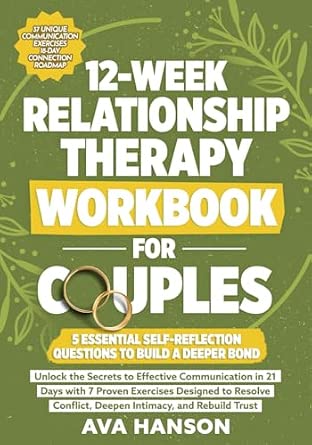
12-Week Relationship Therapy Workbook for Couples
The clearest advantage here is its 12-week program structure, supplemented by a 21-day communication plan and seven exercises. That gives couples more visible pacing than Rebuilding Trust: Guided Therapy Techniques and Activities, which lists techniques and activities but no duration. Its remit is also broader: communication, conflict, intimacy, and trust all appear in the program description. This can help partners whose trust problems sit inside recurring arguments or emotional distance, though it may feel less focused than The Rebuilding Trust Workbook for Couples for couples seeking trust repair as the main task. The description does not explain the seven exercises or how the 21-day plan fits within the full program, so buyers cannot judge the level of detail from the supplied information. I’d choose it for structure and breadth, not for a clearly described trust-specific method.
Pros:- Provides a defined 12-week program duration.
- Includes a 21-day communication plan that gives couples a shorter-term communication focus.
- Covers trust alongside conflict resolution and intimacy.
- Lists seven exercises as part of the program.
Cons:- The available details do not explain what the seven exercises involve.
- The relationship-wide scope may be less targeted for couples focused mainly on trust repair.
- The relationship between the 21-day plan and 12-week program is not described.
Best for: Couples who want a time-bounded relationship program that addresses trust alongside communication, conflict, and intimacy.
Not ideal for: Partners seeking an explicitly trust-only workbook or a detailed preview of the exercises and how the shorter communication plan fits the full program.
- Format:Relationship therapy workbook
- Audience:Couples
- Program duration:12 weeks
- Communication plan:21 days
- Exercises:7
- Focus areas:Communication, conflict resolution, intimacy, and trust
Our verdict“Choose this if you want a defined, broad relationship schedule; opt for a trust-centered title if the breach itself is your main concern.”
Rebuilding After the Affair: A Clinical Couples Workbook for Infidelity Recovery
For couples dealing specifically with infidelity, this is the most tailored option in the batch: its stated focus includes betrayal trauma, trust rebuilding, and emotional safety, within a 90-day evidence-based program. That narrower purpose separates it from the 12-week relationship workbook, which covers communication, conflict, and intimacy alongside trust but is not described as an infidelity-recovery program. The specific focus may help partners avoid working through generic relationship topics when betrayal is the central injury. There is a meaningful information gap, however: no description or review details explain the program’s contents, so the clinical framing and evidence-based claim cannot be evaluated from the supplied data. I’d shortlist it for couples seeking an infidelity-centered workbook, while readers who need to inspect the exercises or understand the method first may prefer a more fully described option.
Pros:- Specifically targets infidelity recovery rather than general relationship improvement.
- Sets out a 90-day program duration.
- Names betrayal trauma and emotional safety as focus areas alongside trust rebuilding.
Cons:- The available description does not explain the program’s exercises or structure.
- The evidence-based framing cannot be evaluated from the supplied product information.
- Its infidelity-specific scope may not fit couples addressing other causes of damaged trust.
Best for: Couples recovering from infidelity who want a time-bounded workbook focused on betrayal trauma, trust, and emotional safety.
Not ideal for: Couples facing trust strain unrelated to infidelity, or buyers who require details about the exercises and method before choosing a clinical program.
- Format:Clinical couples workbook
- Program duration:90 days
- Primary focus:Infidelity recovery
- Additional focus:Trust rebuilding
- Additional focus:Betrayal trauma
- Additional focus:Emotional safety
- Program framing:Evidence-based, as described in the product title
Our verdict“Choose this for a 90-day, infidelity-focused recovery framework, provided the limited information about its actual contents is acceptable.”
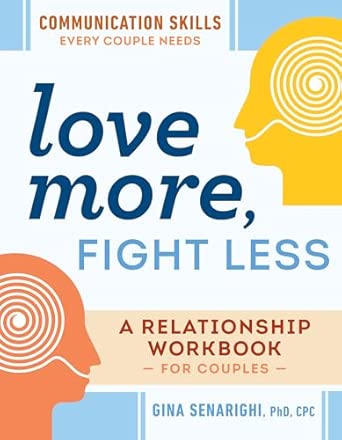
Love More, Fight Less: Communication Skills Every Couple Needs: A Relationship Workbook for Couples
I’d choose this workbook when trust conversations keep turning into arguments and the couple needs to work on how they speak and listen. Its stated focus is communication skills, which gives it a narrower entry point than The Complete Couples Therapy Workbook, described as covering trust, intimacy, conflict, and emotional distance. That focus can help couples practice clearer exchanges before tackling more charged repair work, but the available product details do not confirm betrayal-specific exercises, a sequence of activities, or a guided timeline. Compared with How to Stay Married After Betrayal, it appears less tailored to post-betrayal routines and scripts. I’d treat it as a communication-focused workbook for couples whose trust work is stalled by poor dialogue, not as a clearly documented betrayal-recovery program.
Pros:- Centers the work on communication skills, a practical starting point for difficult trust conversations
- Framed as a workbook for couples rather than a general relationship guide
- Its focused topic may suit couples who feel broader therapy work would be too diffuse
Cons:- Product details do not confirm exercises specifically for betrayal or trust repair
- No program length or step-by-step structure is provided
- The supplied information does not specify particular communication techniques or activities
Best for: Couples who want to improve listening and reduce unproductive arguments before working through trust-related conversations
Not ideal for: Couples seeking explicitly described betrayal-repair scripts, weekly routines, or a structured recovery timeline
- ASIN:0593196651
- Format:Relationship workbook
- Audience:Couples
- Primary topic:Communication skills
- Stated focus:Communication skills every couple needs
- Product type:Workbook
Our verdict“Choose this for communication-focused groundwork, but pick How to Stay Married After Betrayal for more explicitly described post-betrayal routines.”
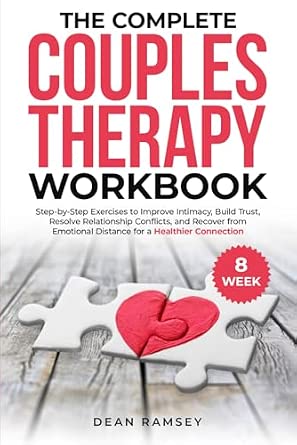
The Complete Couples Therapy Workbook
This is the broadest repair-focused choice in this group: its step-by-step exercises cover trust, intimacy, conflict resolution, and emotional distance. That range makes it more flexible than Love More, Fight Less, which is described specifically around communication, and less narrowly focused than How to Stay Married After Betrayal, whose scripts and weekly routines target betrayal recovery. The breadth is useful when trust problems sit alongside several other strains, since couples can address more than one part of their connection. The tradeoff is that the supplied description does not show how much space the workbook gives to trust repair or whether it follows a set schedule. I’d favor it for couples wanting varied exercises, but not for those who need a clearly betrayal-specific plan.
Pros:- Step-by-step exercises offer a practical format for doing relationship work together
- Includes trust-building alongside conflict resolution and intimacy
- Addresses emotional distance, extending its scope beyond communication alone
- Its broad topic mix suits couples with several connected relationship concerns
Cons:- The product description does not specify a timeline or progression for the exercises
- Betrayal-specific tools are not identified in the supplied details
- The broad scope may offer less targeted guidance than a workbook centered on betrayal recovery
Best for: Couples facing trust concerns alongside conflict, reduced intimacy, or emotional distance who want exercises across several areas
Not ideal for: Couples who want a clearly defined betrayal-recovery sequence, named weekly schedule, or detailed repair scripts
- ASIN:B0DR2MM3LL
- Format:Couples therapy workbook
- Audience:Couples
- Exercise format:Step-by-step exercises
- Topics:Intimacy, trust, conflict resolution, emotional distance
- Stated aim:Develop a healthier connection
Our verdict“Pick this when trust is one of several relationship challenges, and choose How to Stay Married After Betrayal for a more targeted betrayal-repair format.”
How to Stay Married After Betrayal: Scripts, Checklists, and Weekly Routines for Couples Rebuilding Trust
For couples dealing directly with betrayal, this is the most specifically framed option in the batch. The scripts, checklists, and weekly routines give partners concrete formats for conversations and repeated repair work, unlike I Love You but I Don’t Trust You, whose supplied description names the goal of restoring trust but gives no comparable tools. That structure may be especially helpful when partners need shared prompts and a recurring rhythm rather than a general discussion of relationship problems. The title centers staying married, so it may fit less well for couples who have not decided whether to continue the relationship. The description also does not clarify the routines’ length or whether the approach addresses different kinds of betrayal. I’d put its specificity ahead of broader workbooks for couples seeking guided, ongoing repair.
Pros:- Explicitly addresses rebuilding trust after betrayal
- Scripts can give couples a starting point for difficult conversations
- Checklists turn repair intentions into concrete tasks
- Weekly routines provide a recurring structure for ongoing work
Cons:- Its marriage-centered framing may not fit unmarried couples or partners undecided about staying together
- The supplied details do not state how long the weekly routine continues
- The description does not specify which forms of betrayal the material addresses
Best for: Married couples who have chosen to work through betrayal and want scripts, checklists, and recurring repair routines
Not ideal for: Couples unsure whether to remain together, or partners seeking a broad workbook for relationship concerns beyond betrayal
- ASIN:949350106X
- Format:Guide
- Audience:Couples rebuilding trust
- Relationship context:Marriage after betrayal
- Included tools:Scripts, checklists, weekly routines
- Primary focus:Maintaining and repairing a marriage
Our verdict“Choose this if both partners are committed to repairing a marriage after betrayal and want structured weekly tools.”
I Love You but I Don’t Trust You: The Complete Guide to Restoring Trust in Your Relationship
This title puts restoring trust at the center, making it a plausible fit for couples whose main concern is the gap between affection and confidence in one another. Its supplied description, however, does not identify exercises, scripts, or a schedule. That leaves it harder to judge as a hands-on workbook than How to Stay Married After Betrayal, which specifically lists checklists and weekly routines, or The Complete Couples Therapy Workbook, which describes step-by-step exercises. The title calls it a complete guide, but I would not assume that means a particular format or level of structure without more product details. It may suit readers looking for trust-focused guidance, while couples who need clearly specified activities should favor one of the more detailed options in this lineup.
Pros:- Makes trust restoration the central stated subject
- Relationship-wide framing may fit trust concerns not limited to marriage
- The title speaks directly to the tension between love and mistrust
Cons:- The supplied description lists no exercises, scripts, or checklists
- No program length or sequence is provided
- Its practical format is less clear than the step-by-step workbook and weekly-routine options
Best for: Couples whose primary relationship concern is restoring trust and who are comfortable choosing a guide without listed exercises or a timeline
Not ideal for: Couples who need confirmed workbook activities, betrayal-specific scripts, or a structured week-by-week plan
- ASIN:B01GSMOKFY
- Format:Guide
- Audience:People restoring trust in a relationship
- Primary topic:Restoring trust
- Relationship context:Romantic relationship
- Product type:Relationship guide
Our verdict“Consider this for a trust-centered guide, but choose The Complete Couples Therapy Workbook if you want confirmed step-by-step exercises.”
Relationship Workbook for Couples: An 8-Week Program
The clearest reason to choose this workbook is its eight-week structure: it gives couples a defined period for working on trust, conflict, communication, and intimacy. That schedule makes it more time-bound than The Complete Couples Therapy Workbook, whose description lists step-by-step exercises but no program length. Its topic range is also broader than Love More, Fight Less, which centers communication skills. The tradeoff is that the available details do not explain what happens each week, how much time activities require, or whether betrayal receives dedicated attention. Couples who want a calendar-like framework may value the stated duration, while partners dealing with a specific betrayal may prefer the scripts and weekly routines named in How to Stay Married After Betrayal. I’d rank it for structure, not for proven depth in any one topic.
Pros:- Eight-week program gives couples a stated timeframe for their work
- Covers trust and conflict alongside communication and intimacy
- Workbook format supports working through relationship topics together
- Offers a broader plan than a communication-only resource
Cons:- The supplied description does not show the content or goals of individual weeks
- No betrayal-specific scripts or activities are identified
- The details do not state the time commitment or how partners should complete the program
Best for: Couples who want an eight-week framework covering trust, communication, conflict, and intimacy
Not ideal for: Couples seeking detailed betrayal-specific exercises or a week-by-week outline before committing to a program
- ASIN:B0DW985LFT
- Format:Workbook
- Audience:Couples
- Program length:8 weeks
- Topics:Trust, conflict resolution, communication, intimacy
- Stated approach:Practical strategies
Our verdict“Choose this for a defined eight-week plan across several relationship topics, but pick How to Stay Married After Betrayal for named betrayal-repair tools.”
12-Step Couples Therapy Workbook: Build Trust, Restore Intimacy, Repair Conflict, and Create a Lasting Relationship
The 12-step structure gives couples a defined sequence for working on trust, intimacy, and conflict rather than treating each concern as a separate issue. That broad scope makes it a flexible choice for partners who want to repair their relationship without a betrayal-only focus. Compared with Rebuilding Trust After Betrayal: A Connected Couple Workbook for Healing and Repair, this workbook appears better suited to couples facing several relationship challenges, while the Connected Couple title speaks more directly to recovery after betrayal. The tradeoff is that the available details do not explain what each step involves, how long the program takes, or whether exercises are designed for independent use. I’d choose it for the clear sequence, but not if you need a detailed account of its methods before starting.
Pros:- A 12-step format gives couples a clear sequence to follow.
- Addresses trust, intimacy, and conflict in one workbook.
- Broad relationship focus may suit couples dealing with several connected issues.
Cons:- The available product details do not describe the content of individual steps.
- No program duration or exercise format is specified.
- Its broad scope may feel less targeted than a workbook focused specifically on betrayal.
Best for: Couples who want a defined sequence that addresses trust alongside intimacy and recurring conflict.
Not ideal for: Partners seeking a clearly betrayal-specific recovery plan or detailed information about exercise types and pacing before choosing a workbook.
- Format:Workbook
- Program structure:12 steps
- Primary focus:Building trust
- Additional focus:Restoring intimacy
- Additional focus:Repairing conflict
- Intended audience:Couples
Our verdict“Choose this workbook if a 12-step sequence across trust, intimacy, and conflict suits your needs better than a betrayal-specific program.”
Rebuilding Trust After Betrayal: A Connected Couple Workbook for Healing and Repair
Betrayal recovery is the clear focus here, making this the most directly targeted pick in this group for couples trying to heal a breach of trust. Its place in The Connected Couple Series also gives it a named series identity, though the available details do not explain how that approach works. Compared with the broader 12-Step Couples Therapy Workbook, this title is more specific to healing after betrayal; the 12-step option also names intimacy and conflict as explicit areas of work. That focus is a strength if the rupture is central, but less helpful for couples whose trust concerns stem from ongoing communication or conflict problems. I’d favor this title for its clear subject, while noting that the description offers little information about exercises, pacing, or the recovery process.
Pros:- Explicitly focuses on rebuilding trust after betrayal.
- Frames the work around healing and repair for couples.
- Identified as part of The Connected Couple Series.
Cons:- The available details do not describe the workbook’s exercises or methods.
- No program length or pacing is specified.
- The narrow betrayal focus may not match couples seeking broader relationship support.
Best for: Couples working to repair trust after betrayal who want a workbook explicitly centered on healing and repair.
Not ideal for: Couples looking for a disclosed step-by-step schedule, specific exercise formats, or a broader workbook covering intimacy and conflict in equal detail.
- Format:Workbook
- Series:The Connected Couple Series
- Primary focus:Rebuilding trust after betrayal
- Additional focus:Healing
- Additional focus:Repair
- Intended audience:Couples
Our verdict“Pick this title when betrayal is the central trust issue and a clearly focused workbook matters more than a disclosed schedule.”
The Stronger Relationship Couples Therapy Workbook: A 10-Week Plan to Rebuild Trust and Improve Communication
A 10-week plan gives this workbook a more defined calendar than Rebuilding Trust After Betrayal: A Connected Couple Workbook for Healing and Repair, which does not specify its duration in the available details. Its mix of trust and communication work is especially relevant when partners need to rebuild reliability while changing how they talk to each other. The added attention to emotional and physical intimacy makes its scope broader than a trust-only program, but it may also be more than couples want if they need focused support after betrayal. The description does not explain the weekly workload or how the exercises are organized, so the schedule is clear but the day-to-day commitment is not. I’d choose it over the 12-step workbook when a week-based plan and communication are priorities.
Pros:- A 10-week structure gives couples a defined program length.
- Pairs trust rebuilding with communication improvement.
- Includes emotional and physical intimacy among its stated topics.
Cons:- The available details do not specify the exercises or weekly workload.
- Its several topics may be less focused than a betrayal-centered workbook.
- No exercise duration or format is provided.
Best for: Couples who want a time-bounded plan that combines trust repair with communication and intimacy work.
Not ideal for: Partners who need a workbook focused narrowly on betrayal recovery or who want details about weekly exercises and workload before beginning.
- Format:Workbook
- Program length:10 weeks
- Primary topic:Trust
- Additional topic:Communication
- Additional topic:Emotional intimacy
- Additional topic:Physical intimacy
- Intended audience:Couples
Our verdict“Choose this workbook if you want a 10-week schedule that links trust repair with communication and intimacy.”
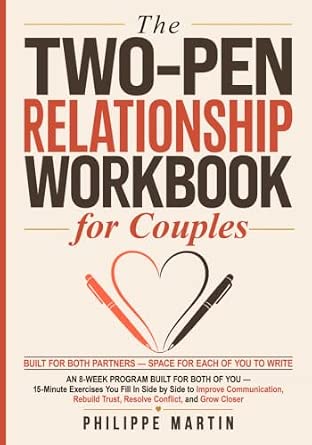
The Two-Pen Relationship Workbook for Couples
Fifteen-minute, side-by-side exercises set this workbook apart for couples who struggle to make time for longer sessions. The shared format gives both partners an immediate way to participate, while the eight-week program offers more structure than the undated approach described for Rebuilding Trust After Betrayal: A Connected Couple Workbook for Healing and Repair. Its focus on trust, conflict resolution, and closeness can support relationship repair, though the description does not identify betrayal recovery as its central purpose. Brief exercises may make it easier to keep showing up, but they may not provide enough room for couples who need extended discussions about a serious rupture. I’d put this ahead of longer or less-defined options for partners seeking manageable, scheduled work together, not a detailed account of a specific betrayal-recovery method.
Pros:- Fifteen-minute exercises offer a manageable time commitment.
- Side-by-side activities encourage both partners to participate.
- An eight-week program provides a defined schedule.
- Addresses trust, conflict resolution, and closeness.
Cons:- Brief exercises may leave limited room for complex conversations.
- The description does not identify betrayal recovery as a specific focus.
- No further details about the exercise content or weekly sequence are provided.
Best for: Busy couples who can set aside short, regular sessions and prefer to complete exercises together.
Not ideal for: Couples who need a betrayal-specific plan or longer sessions for complex trust issues that require extended discussion.
- Format:Side-by-side exercises for couples
- Program length:8 weeks
- Exercise duration:15 minutes
- Primary focus:Trust
- Additional focus:Conflict resolution
- Additional focus:Growing closer
- Intended audience:Couples
Our verdict“Choose this workbook if short, shared exercises make it more likely that you and your partner will keep working together.”

How We Picked
I compared the 14 titles by how directly they address rebuilding trust, how clearly their stated formats support couples working together, and whether they offer a defined structure such as weekly plans, guided activities, scripts, or checklists. I gave greater weight to focused betrayal-recovery support for readers seeking help after a breach of trust, while also keeping broader communication and relationship workbooks in the lineup for couples whose difficulties are less specific.
The ranking reflects fit, not a claim that one workbook can repair every relationship. A direct trust focus earns a higher position for this search, while structured schedules, practical tools, and accessible formats distinguish other picks. Because the supplied product information is limited to titles, I avoid claims about specific exercise quality, clinical outcomes, or features not stated in those titles; readers should check the book’s description and sample pages before choosing.
| rebuilding trust workbooks for couple | Audience |
|---|---|
| Couples Therapy Workbook: Stra | — |
| The Rebuilding Trust Workbook | Couples |
| Rebuilding Trust: Guided Thera | — |
| 12-Week Relationship Therapy W | Couples |
| Rebuilding After the Affair: A | — |
| Love More | Couples |
| The Complete Couples Therapy W | Couples |
| How to Stay Married After Betr | Couples rebuilding trust |
| I Love You but I Don’t Trust Y | People restoring trust in a relationship |
| Relationship Workbook for Coup | Couples |
| 12-Step Couples Therapy Workbo | — |
| Rebuilding Trust After Betraya | — |
| The Stronger Relationship Coup | — |
| The Two-Pen Relationship Workb | — |
Factors to Consider When Choosing Rebuilding Trust Workbooks For Couples
Choosing among rebuilding trust workbooks means matching the book’s focus and working style to what both partners can manage now. I would start with the kind of breach or conflict you are addressing, then weigh structure, shared participation, and whether a workbook feels supportive rather than pressuring.
Match the workbook to the reason trust was damaged
Trust can be affected by infidelity, repeated dishonesty, broken agreements, or conflict that has made one partner feel emotionally unsafe. A title focused on betrayal or infidelity may speak more directly to a specific rupture than a general couples therapy workbook. A broader guide can make more sense when trust problems sit alongside communication habits or recurring arguments. Avoid choosing based on the word “trust” alone; check the book’s description for the situation it is designed to address. One common mistake is expecting a general relationship workbook to guide a couple through the particular questions raised by an affair. If the breach is not infidelity, a narrowly specialized workbook may also feel like a poor fit.
Choose a pace both partners can sustain
An 8-, 10-, or 12-week plan can help couples make regular time for the work instead of postponing difficult conversations. A defined schedule also creates a shared reference point: partners can agree to complete one section before their next discussion. The tradeoff is that a calendar may turn healing into a deadline, especially if one partner needs more time to process. Flexible activity-based books may suit couples who want to move at their own pace, though they may require more initiative to keep going. Before buying, decide whether you want a weekly commitment or a resource you can open when a specific issue comes up. A slower pace is not a sign that the workbook has failed.
Look for a format that supports equal participation
Some couples work best with prompts they can answer separately and then discuss; others prefer scripts, checklists, or activities they complete together. A shared format can prevent one partner from becoming the sole organizer or the person responsible for driving every conversation. The Two-Pen Relationship Workbook signals a paired approach in its title, while script- and routine-focused books point toward practical conversation support. Neither format is automatically better: writing may help partners who struggle to speak in the moment, while a checklist can feel overly procedural to couples who want open discussion. Consider whether both people are willing to write, talk, or follow a routine before committing to a format. If only one partner is ready, choose a tool that allows individual reflection without forcing a shared pace.
Distinguish self-guided work from therapy support
A workbook can provide prompts and structure, but a title that uses the word “therapy” is not the same as care from a licensed professional. Couples may use guided exercises to prepare for counseling or to support conversations between sessions. If discussions repeatedly become hostile, one partner feels intimidated, or a breach involves ongoing harm, a workbook alone may not offer enough support. Avoid treating completion of exercises as proof that trust has been restored. Look for books that make room for reflection and choice rather than assuming both partners will reach agreement at the same speed. When safety is a concern, seek qualified help before trying exercises that ask for vulnerable disclosures.
Treat the title as a starting point, not a full preview
Titles can indicate whether a book emphasizes betrayal recovery, communication, or a timed program, but they cannot show the depth, tone, or reading level of the actual exercises. Review the contents, sample pages, and publisher description when available. Check whether the language feels respectful to both the hurt partner and the partner who caused harm; blame-heavy or overly simplistic framing can make shared work harder. Also look for practical details such as how partners are meant to complete the exercises and whether the format suits your available time. A book with an appealing promise may still be a mismatch if its method feels uncomfortable. Choose based on the work inside, not only on a reassuring title.
Frequently Asked Questions
Should we choose a workbook specifically about infidelity or a general trust workbook?
Choose an infidelity-focused workbook when the breach involves an affair and you want material framed around betrayal recovery. A broader trust workbook may fit better when the issue involves broken promises, ongoing conflict, or communication patterns rather than infidelity. Compare the book’s stated focus with the situation you need to address, not just its title. If the problem includes several layers, a general relationship workbook may help with communication while professional support addresses the specific rupture. You do not need to force a workbook designed for a different experience.
Can we work through a trust workbook if only one partner is ready?
You can begin with individual reflection, but exercises that require mutual disclosure or agreement may not work well if one partner is unwilling. Start by discussing what each person is comfortable doing and what topics should wait. A workbook with flexible prompts may be easier to approach than a strict week-by-week plan. Avoid using the book to pressure a partner into forgiveness or a particular timeline. If readiness is sharply divided, a couples therapist can help set a pace that does not put all the emotional work on one person.
Is a scheduled 8-, 10-, or 12-week workbook better than an open-ended one?
A scheduled program can help couples build a routine and make steady time for conversations. An open-ended format may be a better fit when work schedules are unpredictable or partners process difficult topics at different speeds. A longer timeline is not automatically more thorough, and a shorter one does not mean the work must be rushed. Decide whether structure will keep you engaged or make you feel behind. You can also use a program flexibly, pausing when an exercise raises issues that need more discussion.
What should we do if workbook exercises make our arguments worse?
Pause the exercise rather than pushing through a conversation that is escalating. Agree on a calmer time to revisit it, or set limits such as taking turns, stopping when either person feels overwhelmed, and focusing on one prompt at a time. A workbook is a self-guided resource, not a mediator, so repeated hostile or frightening exchanges call for outside support. If either partner feels unsafe, prioritize safety and seek help from a qualified professional or relevant local service. Completing every page matters less than having conversations that both people can engage in safely.
How can we tell whether a workbook’s format will suit both of us before buying?
Read the contents and sample pages when available, and check whether the book relies on writing, spoken discussion, scripts, checklists, or a weekly schedule. Ask each partner which format feels manageable rather than assuming one person’s preference represents both. Look at the stated time commitment and whether the exercises appear designed for joint work or individual reflection. If you are unsure, a title with a clearly described structure is easier to evaluate than one whose format is unclear. The best match is the one both partners are willing to use, not necessarily the one with the most ambitious plan.
Conclusion
For most couples seeking a direct, practical starting point, I recommend The Rebuilding Trust Workbook for Couples as the best overall fit. Couples comparing options on format and pacing can treat it as a focused baseline, then choose a more specialized guide if the situation calls for one. Best for infidelity recovery: Rebuilding After the Affair, whose title signals a clinical couples-workbook focus. Best for practical routines: How to Stay Married After Betrayal, with scripts, checklists, and weekly routines called out in its title. Best for beginners: Love More, Fight Less may feel like a more approachable entry point for couples who need communication skills before tackling deeper trust work. Best for a scheduled plan: choose among the 8-, 10-, and 12-week workbooks based on the pace you can sustain together. Best for a paired writing approach: The Two-Pen Relationship Workbook. Before buying, check the sample material and confirm that both partners are comfortable with its style; seek professional support when conversations feel unsafe or unmanageable.