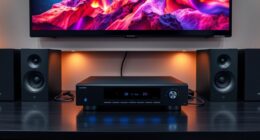
Finding the right home NAS drive for Plex 4K streaming involves balancing performance, storage capacity, and ease of setup. The Synology 4-Bay DiskStation DS925+ stands out as the best overall choice thanks to its reliable software and robust hardware. For those seeking a more budget-friendly option, the Asustor Drivestor 4 Gen 2 offers great value with decent performance. Meanwhile, the UGREEN NAS DH4300 Plus provides a user-friendly experience with advanced features like AI photo albums and remote access. The main tradeoffs in this category revolve around choosing between raw power, ease of use, and price. Keep reading for a detailed breakdown of these options to help you pick the best NAS for your Plex 4K needs.

Get gifts for the two of you delivered free with Prime
- Fast, free delivery on millions of items
- Prime Video, Amazon Music and more included
- Member-only deals all year
Key Takeaways
- The best overall NAS for Plex 4K combines reliable performance, user-friendly software, and expandability, exemplified by the Synology DS925+.
- Budget options like the Asustor Drivestor 4 offer good performance at a lower price but may lack some advanced features or expandability.
- Pre-installed drives simplify setup but reduce flexibility; diskless models offer customization but require more technical knowledge.
- Network interfaces like 2.5GbE or higher are increasingly important for smooth 4K streaming, especially with multiple clients.
- Ease of use and remote management features are key for users new to NAS or those who want minimal setup fuss.




| home nas drives for plex 4k | Network |
|---|---|
| Synology 4-Bay DiskStation DS9 | — |
| UGREEN NAS DH4300 Plus 4-Bay | 2.5GbE |
| BUFFALO TeraStation Essentials | — |
| BUFFALO LinkStation SoHo 220 8 | Gigabit Ethernet |
| Asustor Lockerstor 4 Gen2+ AS6 | Dual 5GbE |
| BUFFALO LinkStation 210 4TB 1- | — |
| Asustor Drivestor 4 Gen 2 AS12 | 2.5GbE |
| BUFFALO LinkStation 710 4TB 1- | — |
| TERRAMASTER F4-425 4-Bay NAS S | 2.5GbE |
More Details on Our Top Picks
Synology 4-Bay DiskStation DS925+ (Diskless)
The Synology DS925+ stands out for its balanced combination of performance, stability, and rich software ecosystem, making it a reliable choice for Plex 4K streaming. With up to 522/565 MB/s read/write speeds, it can handle multiple 4K streams smoothly, outperforming budget options like the Buffalo TeraStation in raw speed. Its dual 2.5GbE ports not only provide fast transfer rates but also add redundancy, which is vital for streaming households. Compared to the Asustor Lockerstor 4+ with its advanced caching and HDMI output, the DS925+ excels in long-term reliability and extensive app support, though it lacks the direct media output features. This model is best suited for users who prioritize consistent streaming performance and data safety over ultra-high-end hardware features.
Pros:- Supports high sequential read/write speeds ideal for 4K streaming
- Dual 2.5GbE ports for fast, redundant network connectivity
- Strong software ecosystem with integrated media, virtualization, and surveillance tools
Cons:- Higher price point compared to entry-level options
- Lacks built-in HDMI or direct 4K transcoding capabilities
Best for: Home users who want a dependable, scalable NAS with excellent Plex support and data protection.
Not ideal for: Media creators or tech enthusiasts seeking built-in HDMI output or advanced hardware acceleration.
- Max Sequential Read/Write Speed:522/565 MB/s
- Network Ports:Dual 2.5GbE
- Compatibility:Supports drives on official list
- Warranty:3-year limited
Our verdict“This NAS is perfect for users demanding reliable, high-performance streaming and data protection in a home environment.”
UGREEN NAS DH4300 Plus 4-Bay, Support Capacity up to 128TB (Diskless)
The UGREEN NAS DH4300 Plus offers a user-friendly experience combined with substantial storage capacity, making it suitable for newcomers who want a straightforward setup and ample space for 4K media. Its 8GB RAM and support for Plex via Docker provide decent performance, though it doesn’t match the speed of the Synology DS925+ for streaming. Its support for up to 128TB of storage and automatic backups makes it an attractive choice for those with large media libraries, but it’s limited to wired Ethernet and lacks virtual machine support. Compared to the Buffalo TeraStation, it provides more flexibility with Plex via Docker, but the latter’s pre-installed drives and RAID simplicity appeal to users seeking hassle-free, out-of-the-box operation. This pick is ideal for users wanting large capacity and easy access, with some technical comfort.
Pros:- Massive storage capacity up to 128TB
- User-friendly setup with support for Plex via Docker
- Supports automatic backups and remote access from multiple devices
Cons:- Limited to wired Ethernet, no Wi-Fi support
- Speed may lag behind higher-end models during multiple 4K streams
Best for: Home users with extensive media libraries seeking a straightforward, expandable NAS for Plex and backups.
Not ideal for: Advanced users needing virtual machine support or ultra-fast network speeds for multiple simultaneous 4K streams.
- Maximum Capacity:128TB
- RAM:8GB LPDDR4X
- Network:2.5GbE
- Supports Plex:via Docker
Our verdict“This NAS caters to large media collections and ease of use, especially for users starting with Plex in a home setting.”
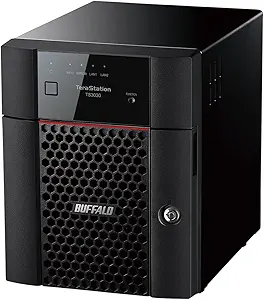
BUFFALO TeraStation Essentials 2025 4-Bay 32TB with Hard Drives Included
The Buffalo TeraStation 2025 provides a cost-effective, ready-to-use NAS with hard drives pre-installed, making it appealing for small businesses or home users seeking reliable storage with minimal setup. While it offers RAID 5 for redundancy and up to 24TB of usable space, its hardware is more basic compared to Synology or Asustor models, and its network speeds are capped at 2.5GbE, which might limit streaming smoothness for multiple 4K streams. Compared to the Buffalo LinkStation 210, the TeraStation’s professional-grade features and included drives make it more suitable for serious backups and Plex serving, though the latter’s slimmer hardware limits its performance. This device is well-suited for users prioritizing value and straightforward data protection over high-end media features.
Pros:- Pre-installed hard drives with RAID configured out of the box
- Supports high-speed data transfer with native 2.5GbE port
- 3-year warranty plus data recovery support
Cons:- Limited performance for multiple 4K streams
- Basic hardware that may struggle with intensive media tasks
Best for: Small businesses or home users wanting reliable, out-of-the-box RAID storage with included drives.
Not ideal for: Power users needing high-speed streaming or advanced media transcoding capabilities.
- Usable Capacity:24TB (RAID 5)
- Network Speed:2.5GbE
- Hard Drives Included:Yes
- Warranty:3 years
Our verdict“This NAS offers a solid, affordable solution for reliable storage and backups, especially suited for small-scale use.”
BUFFALO LinkStation SoHo 220 8TB (2x4TB) with Hard Drives Included
The Buffalo LinkStation SoHo 220 provides an accessible, simple NAS option for small home offices or personal cloud storage. Its RAID 1 configuration offers data redundancy with 4TB usable capacity, suitable for users who want secure file sharing without complex setup. While it’s easy to connect and manage, its network performance is limited to standard Gigabit Ethernet, which may bottleneck 4K media streaming if multiple devices are active simultaneously. Compared with the Asustor Drivestor 4, the SoHo 220’s simplicity and included drives make it more suitable for basic backup and media serving, but it lacks advanced features like HDMI output or M.2 SSD caching. This device is best for users seeking a straightforward, low-cost solution for basic Plex streaming and local backups.
Pros:- Includes hard drives and RAID 1 for data safety
- Simple setup with network sharing
- Affordable, subscription-free personal cloud
Cons:- Limited network speed for multiple 4K streams
- Lacks advanced media features like HDMI or SSD caching
Best for: Home users or small offices wanting simple, reliable data sharing and backup with minimal fuss.
Not ideal for: Enthusiasts or content creators seeking high-speed streaming or advanced media features.
- Capacity:8TB (RAID 1)
- Network:Gigabit Ethernet
- Included Drives:Yes
- Support:Basic file sharing and backup
Our verdict“This NAS suits users wanting easy, reliable, and affordable local storage and media sharing for basic Plex use.”
Asustor Lockerstor 4 Gen2+ AS6704T v2 4 Bay NAS
The Asustor Lockerstor 4+ Gen2 offers robust hardware tailored for demanding media tasks, including hardware 4K transcoding and dual 5GbE ports. Its support for NVMe SSD caching, expandable RAM, and HDMI output makes it stand out for Plex users who want seamless 4K streaming, even during multiple simultaneous streams. Compared to the Synology DS925+ with its software ecosystem, the AS6704T v2 emphasizes raw hardware power and multimedia features, but it might require more technical setup and management. Its flexible hybrid storage supports both SATA and NVMe drives, making it suitable for content creators and small studios. However, it isn’t as streamlined for simple backups or casual streaming as the Synology. This NAS is best suited for users who prioritize high-performance media serving and creative workflows.
Pros:- Supports hardware 4K transcoding and HDMI output
- Dual 5GbE ports for fast network throughput
- Supports NVMe SSD caching for performance boost
Cons:- Higher complexity in setup and management
- Premium hardware comes at a higher cost
Best for: Content creators or tech-savvy users needing hardware-accelerated 4K media streaming and editing.
Not ideal for: Average home users who only need basic Plex support and simple file sharing.
- Processor:Intel Celeron N5105
- Network:Dual 5GbE
- RAM:4GB DDR4, expandable to 16GB
- M.2 SSD Slots:4
Our verdict“This NAS is ideal for creators and power users demanding high-quality 4K media handling and flexible storage options.”
BUFFALO LinkStation 210 4TB 1-Bay NAS Network Attached Storage with HDD Hard Drives Included NAS Storage that Works as Home Cloud or Network Storage Device for Home
This model stands out for its straightforward setup and included HDD, making it ideal for users new to NAS devices. Compared to the BUFFALO LinkStation 710, the LS 210 offers a more affordable entry point, though it lacks the higher performance and cloud features of its successor. Its single bay limits expansion and redundancy options, which could impact long-term reliability for Plex 4K streaming. The built-in RAID support helps protect your media library, but with only one drive, data redundancy isn’t possible. This pick is excellent for small households that prioritize ease of use and cost savings, but less so for those expecting heavy multi-user 4K streaming or multi-drive configurations. Its 4TB capacity is sufficient for modest media collections, and the system’s SSL encryption adds a layer of security. However, the absence of advanced hardware transcoding capabilities means streaming 4K content might require external devices or direct media playback from other sources.
Pros:- Affordable entry-level price point with included HDD
- Easy setup and management with Buffalo’s US-based support
- Secure file transfer with SSL encryption
Cons:- Limited to a single drive—no RAID redundancy
- Basic hardware limits 4K transcoding and multi-user streams
Best for: First-time NAS users or small families seeking a simple, cost-effective Plex 4K solution
Not ideal for: Power users needing multi-drive redundancy or high-performance transcoding for multiple simultaneous 4K streams
- Capacity:4TB
- Drive Bays:1
- Included Drives:Yes
- RAID Support:Yes
- Supported OS:Windows, macOS
- Encryption:SSL
Our verdict“This NAS is well-suited for beginners or small households focused on basic 4K media sharing without high redundancy needs.”
Asustor Drivestor 4 Gen 2 AS1204T, 4 Bay NAS, Quad-Core 1.7GHz CPU, 2.5GbE Port, 1GB DDR4, 3 USB 3.0, Best Budget Home Cloud, Small Office Backup, 4K Media Center, Network Attached Storage (Diskless)
This model makes the most sense for users seeking balanced performance and flexibility at a lower price point. Its quad-core processor and 2.5GbE port outperform many competitors like the BUFFALO LinkStation 210, especially in handling multiple Plex 4K streams simultaneously. The support for RAID 0/1/5/6/10 allows for customized redundancy levels, though it requires users to purchase drives separately—an added cost compared to pre-installed models. While its 1GB RAM may limit heavy multitasking, it remains capable of smooth 4K media playback and backups in small to medium households. The Btrfs support enhances data protection with snapshots, a feature absent in simpler NAS options. This pick is ideal for tech-savvy users who want a budget-friendly device that can handle 4K transcoding, remote access, and multi-drive configurations, but it may fall short for those requiring enterprise-grade performance or extensive hardware upgrades.
Pros:- Supports multiple RAID configurations for data safety
- 2.5GbE port provides faster network speeds for streaming and backups
- Supports 4K media playback with hardware transcoding
Cons:- Requires separate purchase of drives; no pre-installed HDDs
- Limited 1GB RAM may restrict heavy multitasking
Best for: Tech-savvy homeowners or small offices needing a flexible, budget-friendly 4K media server with RAID options
Not ideal for: Users expecting plug-and-play simplicity or extensive hardware upgrades, as it requires manual drive setup and some technical know-how
- CPU:Quad-Core 1.7GHz
- RAM:1GB DDR4
- Network:2.5GbE
- Drive Bays:4
- Supported RAID:0/1/5/6/10
- Media Support:4K transcoding
Our verdict“This NAS strikes a balance between affordability and performance, making it suitable for users comfortable with manual setup and seeking 4K streaming capabilities.”
BUFFALO LinkStation 710 4TB 1-Bay NAS Network Attached Storage with HDD Hard Drives Included NAS Storage that Works as Home Cloud or Network Storage Device for Home
This pick is ideal for users who want a more robust NAS experience without stepping into enterprise territory. It offers significantly faster performance than the LS 200 series—up to 7x—making it suitable for multiple Plex 4K streams and larger media libraries. The inclusion of cloud integration and compatibility with macOS 26 enhances remote access and data management, competing with more advanced models like the TerraMaster F4-425. Its single drive setup limits redundancy unless paired with cloud backups, but it provides a straightforward, reliable solution for home media sharing. The 4TB capacity is adequate for many households, though larger collections might require expansion. The device’s ease of setup and 24/7 US-based support make it accessible for users wanting a step-up from simple solutions, but power users seeking multi-drive redundancy or hardware transcoding should look elsewhere.
Pros:- Up to 7x faster than previous LS 200 models
- Supports macOS 26 and cloud synchronization
- Easy setup with US-based support
Cons:- Single drive bay limits redundancy options
- No hardware transcoding, relying on direct media playback
Best for: Home users seeking faster performance and cloud features for 4K media streaming and backups
Not ideal for: Users requiring multi-drive RAID redundancy or extensive hardware expansion, as it’s limited to one drive bay
- Capacity:4TB
- Drive Bays:1
- Performance:Up to 7x faster than LS 200
- Compatibility:Windows, macOS 26
- Support:24/7 US support
- Encryption:SSL
Our verdict“This NAS offers improved speed and cloud connectivity, making it a solid choice for users with moderate media needs who prioritize performance.”
TERRAMASTER F4-425 4-Bay NAS Storage – Intel x86 Quad-Core CPU, 4GB RAM, 2.5GbE LAN, Network Attached Storage Multimedia Server for Home Users (Diskless)
Compared with the other options, the TerraMaster F4-425 is clearly aimed at users who need heavy-duty 4K transcoding and multitasking. Its Intel x86 CPU and 4GB RAM handle multiple Plex streams effortlessly, making it a strong contender for media-rich households or small offices. The 2.5GbE LAN port ensures rapid file transfers, surpassing basic gigabit models like the BUFFALO LinkStation 210. Its hardware-level 4K H.265 decoding supports seamless playback on multiple devices, and the support for AI photo albums and extensive storage (up to 120TB with 4x30TB drives) makes it a versatile media hub. The mobile app integration simplifies remote management, though the setup process may be more involved for less tech-savvy users. This model is best for power users needing maximum performance, but it may be overkill for small households with modest streaming needs or those seeking an easy, plug-and-play device.
Pros:- Powerful Intel x86 quad-core processor
- Supports hardware 4K transcoding with HD media playback
- Up to 120TB capacity and flexible RAID options
Cons:- Requires technical knowledge for optimal setup
- Higher price point due to advanced hardware
Best for: Power users or small offices requiring robust 4K transcoding and multitasking for Plex streaming
Not ideal for: Casual users or households with modest media collections, as its advanced features and setup complexity might be unnecessary
- CPU:Intel x86 Quad-Core
- RAM:4GB
- Network:2.5GbE
- Maximum Storage:120TB
- Media Support:Hardware 4K transcoding
- App Support:AI albums, remote sync
Our verdict“This NAS is a top choice for demanding users who need reliable, high-performance 4K streaming and multitasking capabilities.”
How We Picked
The products in this roundup were evaluated based on performance benchmarks relevant to 4K streaming, build quality, ease of setup, and software features. Since Plex 4K demands a powerful CPU and sufficient RAM to handle high-bitrate videos smoothly, models with quad-core processors and 4GB+ RAM scored higher. We also considered expandability options, such as M.2 SSD slots and network interfaces, which improve long-term usability. Value was assessed by comparing price-to-performance ratios, and user-friendly features like remote access and pre-installed drives influenced rankings. Our goal was to highlight options suitable for various budgets and technical skill levels while ensuring reliable streaming quality for 4K content.Factors to Consider When Choosing Home Nas Drives For Plex 4k
Choosing the right home NAS drive for Plex 4K involves understanding several key factors. Not all NAS devices are equally capable of handling high-bitrate 4K streams, so selecting a model with the right hardware is essential. Additionally, ease of setup and ongoing management can vary widely, especially for users unfamiliar with network storage. Storage capacity and expandability also matter, as your media library grows. Finally, network connectivity options like 2.5GbE or higher are critical for smooth 4K playback across multiple devices. Carefully weighing these factors will ensure you select a NAS that meets your streaming needs now and in the future.Hardware Performance & Processing Power
For Plex 4K streaming, the NAS’s CPU and RAM are foundational. A quad-core processor with at least 4GB of RAM ensures the device can handle high-bitrate videos without buffering. Devices with more powerful CPUs, such as Intel x86 chips, tend to support transcoding more effectively, which is often necessary for streaming to various devices. Cheaper models with ARM processors may struggle with multiple simultaneous streams or high-quality 4K content, leading to choppy playback. Therefore, investing in a NAS with robust hardware is key for a seamless Plex experience.
Network Connectivity & Speed
High-speed network interfaces like 2.5GbE or 10GbE significantly impact streaming quality, especially when multiple devices access 4K content simultaneously. Standard gigabit Ethernet can be limiting, causing stalls or buffering during high-bitrate streams. If you plan to serve several devices or stream large files regularly, choosing a NAS with faster network ports is wise. Also, ensure your home network infrastructure supports these speeds, otherwise, the benefits of a high-performance NAS won’t be fully realized. Prioritizing network speed can make a noticeable difference in your Plex 4K experience.
Ease of Use & Software Features
User-friendly interfaces and robust app ecosystems simplify setup and ongoing management. Devices like Synology or Asustor offer intuitive software that makes configuring Plex and other services straightforward, even for beginners. Advanced features like remote access, automatic backups, and multimedia management enhance usability. Conversely, more complex or less polished software may require more technical skill and time to set up properly. If you’re new to NAS, prioritizing devices with proven, easy-to-use software will save frustration and ensure a better streaming experience.
Storage Capacity & Expandability
Capacity needs depend on your media library size. 4-bay NAS devices often support multiple drives, allowing for large volumes—ideal for storing extensive 4K collections. Pre-installed drives offer immediate use but limit flexibility, while diskless models let you choose your drives, potentially saving costs and enabling future upgrades. Consider the number of bays and drive compatibility if you anticipate expanding your library. Additionally, check for SSD slots or cache options that can boost performance during high-demand streaming sessions, especially with multiple users or large files.
Price & Long-Term Value
While budget models may suffice initially, they often lack the processing power or expandability needed for continuous 4K streaming as your library grows. Investing in a slightly higher-priced NAS with better hardware can offer greater longevity and performance stability. Balance upfront costs with your anticipated usage and future needs—sometimes paying more upfront prevents costly upgrades or replacements later. Also, consider ongoing costs such as drives, maintenance, and network upgrades to get a complete picture of value.
Frequently Asked Questions
Can I stream 4K content from a budget NAS?
Streaming 4K content from a budget NAS is possible but often limited. Low-cost models may lack the processing power needed for smooth transcoding, especially if multiple devices are involved. They might also have slower network interfaces, causing buffering or lag. For reliable 4K streaming, particularly with multiple simultaneous streams, investing in a more powerful device with a quad-core CPU and 2.5GbE or higher network ports generally provides a better experience. Budget models can work if your media files are pre-transcoded and your network is fast enough, but flexibility might be limited.
Is pre-installed storage better than diskless NAS for Plex?
Pre-installed storage offers immediate setup convenience, making it easier for beginners to start streaming quickly. However, it limits flexibility since you’re locked into specific drives and capacities. Diskless NAS allows you to choose your own drives, which can be more cost-effective and scalable over time. For Plex users planning to expand their library or customize their storage, a diskless model provides more control. The choice depends on your technical comfort level and future storage plans—pre-installed drives simplify initial setup, while diskless models offer greater adaptability.
How important is network speed for Plex 4K streaming?
Network speed is a critical factor for smooth 4K streaming, especially in multi-device households. A standard gigabit Ethernet connection can become a bottleneck when streaming high-bitrate 4K files, leading to buffering or degraded quality. Upgrading to 2.5GbE or 10GbE ports allows faster data transfer, maintaining high-quality playback across multiple devices. Additionally, your home network’s overall performance—including router and switch capabilities—must support these speeds. Investing in faster network hardware ensures your NAS can deliver 4K content seamlessly without interruptions.
Should I prioritize a NAS with hardware transcoding for Plex?
Yes, hardware transcoding can significantly improve your Plex experience by converting media on-the-fly to compatible formats for your devices. A NAS with a capable CPU, such as Intel x86 processors, handles transcoding more efficiently than ARM-based models, reducing buffering and ensuring smooth playback. If you stream to multiple devices or use a variety of platforms (smart TVs, tablets, smartphones), hardware transcoding becomes even more valuable. However, it often comes at a higher cost, so weigh this feature against your streaming complexity and budget before choosing.
Is expandability important for a home Plex NAS?
Expandability is key if you plan to grow your media library significantly. Many 4-bay NAS devices support additional drives or SSD caching, which can boost performance and capacity over time. Devices with M.2 slots or easy drive replacement options make future upgrades simpler, extending the useful life of your investment. For users with large or evolving media collections, prioritize models offering easy expandability and compatibility with larger drives. This approach provides flexibility and helps prevent bottlenecks as your media needs expand.
Conclusion
For most users, the Synology 4-Bay DiskStation DS925+ offers the best overall balance of performance, ease of use, and expandability, making it ideal for serious Plex 4K streamers. Budget-conscious buyers will find the Asustor Drivestor 4 to deliver solid value with adequate performance for casual use. Those new to NAS can start with models like the BUFFALO LinkStation 210 or BUFFALO TeraStation Essentials, which simplify setup and management. For power users or those with demanding setups, investing in a high-end model like the Terramaster F4-425 ensures future-proof performance. Ultimately, your choice should align with your media library size, technical comfort, and streaming demands.
Halloween Picks
halloween
As an affiliate, we earn on qualifying purchases.