
For a home theater that needs reliable local-file playback, I’d start with the Zidoo Z9X 8K HDR Media Player as the best overall pick for its theater-focused format and HDR support. The NEUMI Atom 4K Max is a simpler fit for USB and memory-card libraries, while the FiiO R9 suits buyers who want a network player that also serves as a high-end audio hub. The main tradeoff is between broad format and network capabilities, simple plug-and-play playback, and compatibility with an older TV or receiver. Not every device here is a full streaming box: several are designed mainly for files on USB drives or SD cards. Read on for the full breakdown and guidance on matching a player to your theater.

Get gifts for the two of you delivered free with Prime
- Fast, free delivery on millions of items
- Prime Video, Amazon Music and more included
- Member-only deals all year
Key Takeaways
- Zidoo Z9X 8K leads for a dedicated theater setup where HDR handling and advanced local-media playback matter more than simplicity.
- NEUMI Atom 4K Max is the clearest choice for straightforward 4K playback from local USB or card storage, without paying for a broader Android audio platform.
- The lineup splits sharply between network-capable players and basic USB or SD playback devices; a product described as a media player may not provide the apps or network library access a buyer expects.
- Legacy connections change the shortlist: the AGPTEK 4K offers HDMI, VGA, and AV output, while the Sony Blu-ray player adds disc playback but is limited to Full HD.
- The FiiO R9 is the most specialized option, combining network playback with a touchscreen and audio features; home theater buyers who only need video playback may be better served elsewhere.
| Micca Speck 4K USB and microSD Media Player |  | Best for Compact 4K Local Playback | Maximum video resolution: 4096 × 2304 at 30 fps | Video output: 3840 × 2160 pixels | Connectivity: USB, HDMI, analog AV | VIEW ON AMAZON | See Our Full Breakdown |
| Mini 1080p HDMI and AV Media Player | 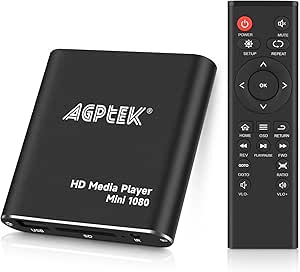 | Best for Older 1080p Home Theater Displays | Video output resolution: 1080p at 60 Hz | Connectivity: HDMI, composite AV, USB 2.0/3.0, SD card | USB flash drive support: Up to 512 GB | VIEW ON AMAZON | See Our Full Breakdown |
| NEUMI Atom 4K Lite Digital Trigger Media Player for USB Drives and SD Cards | 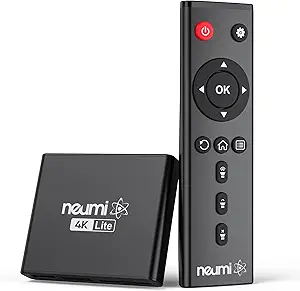 | Best for 4K Playback with Interactive Triggering | Video resolution: 2160p at 60 Hz | Supported video formats: MP4, MKV, AVI, TS/TP, MOV, VOB, M2TS | Supported music formats: MP3, WMA, OGG, FLAC, APE, AAC | VIEW ON AMAZON | See Our Full Breakdown |
| 4K Media Player for USB Drive & MicroSD, Ultra HD Digital Signage Player with HDMI/AV Output |  | Best for Continuous 4K Display Playback | Listed video resolution: 4096 × 2304 at 30 fps | HDMI output: 4K/60Hz | Connectivity: HDMI and AV | VIEW ON AMAZON | See Our Full Breakdown |
| AGPTEK 4K HDMI Media Player with HDMI, VGA, and AV Output |  | Best for Mixed-Display Connections | Connectivity: HDMI, VGA, AV | Maximum video output: 4K at 30 Hz | Listed video output resolution: 1920 × 1080 pixels | VIEW ON AMAZON | See Our Full Breakdown |
| 4K 60Hz Networkable Media Player with Advertising Subtitles |  | Best for Scheduled Playback | Video output: 4K at 60Hz (3840 × 2160) | Video codecs: H.265, MPEG-1, MPEG-2, MPEG-4, VC-1, DivX | Connectivity: HDMI, USB, Wi-Fi, Ethernet | VIEW ON AMAZON | See Our Full Breakdown |
| Sony BDP-S1700U Full HD 1080p Blu-ray DVD Player with HDMI Cable |  | Best for Blu-ray and DVD Collections | Video resolution: Full HD 1080p | DVD upscaling: Upscaling to near-HD quality | Connectivity: HDMI | VIEW ON AMAZON | See Our Full Breakdown |
| NEUMI Atom 4K Max Network Media Player |  | Best for Local and Network Library Flexibility | Video output: HDMI up to 2160p at 60Hz | Video codecs: H.265/HEVC, H.264 | Network playback: Wi-Fi, Ethernet, Windows SMB shares | VIEW ON AMAZON | See Our Full Breakdown |
| NEUMI Atom 1080P Full-HD Digital Media Player for USB Drives and SD Cards |  | Best Compact Full-HD Player | Video resolution: 1080p at 60Hz | Supported video formats: MP4, MKV, AVI, TS/TP, MOV, VOB, M2TS | Supported photo formats: JPG, JPEG, BMP, GIF, PNG | VIEW ON AMAZON | See Our Full Breakdown |
| Zidoo Z9X 8K HDR Media Player |  | Best Premium Home Theater Hub | Processor: Amlogic S928X-K ARM Cortex-A76+Cortex-A55 quad-core | Memory and storage: 6 GB DDR4; 64 GB eMMC | Operating system: Android 11 | VIEW ON AMAZON | See Our Full Breakdown |
| FiiO R9 Android Media Streamer, Network Player, HDMI/MQA Full Decode, USB DAC, DSD512 PCM768kHz/32Bit Bluetooth 5.0, 6-inch HD Touchscreen |  | Best for Headphone-Focused Home Theater Audio | Storage: 64 GB | Display: 6-inch Full HD LCD touchscreen | Audio formats: DSD512, PCM up to 768kHz/32-bit | VIEW ON AMAZON | See Our Full Breakdown |
| network media players for home theater | Connectivity |
|---|---|
| Micca Speck 4K USB and microSD | USB, HDMI, analog AV |
| Mini 1080p HDMI and AV Media P | HDMI, composite AV, USB 2.0/3.0, SD card |
| NEUMI Atom 4K Lite Digital Tri | — |
| 4K Media Player for USB Drive | HDMI and AV |
| AGPTEK 4K HDMI Media Player wi | HDMI, VGA, AV |
| 4K 60Hz Networkable Media Play | HDMI, USB, Wi-Fi, Ethernet |
| Sony BDP-S1700U Full HD 1080p | HDMI |
| NEUMI Atom 4K Max Network Medi | — |
| NEUMI Atom 1080P Full-HD Digit | — |
| Zidoo Z9X 8K HDR Media Player | HDMI, Bluetooth 5.2, Gigabit Ethernet, Wi-Fi 6, USB |
| FiiO R9 Android Media Streamer | Bluetooth 5.0, HDMI, USB, Wi-Fi, DLNA, AirPlay, Roon Ready |
More Details on Our Top Picks
Micca Speck 4K USB and microSD Media Player
I’d choose the Micca Speck 4K for a home theater centered on locally stored files rather than streaming apps. It plays from USB drives up to 8 TB or microSD cards up to 1 TB, so a viewer can keep a substantial library close to the display without adding a network device. Its small 2.95-inch body and HDMI plus analog AV output also make it easy to place beside a modern TV or connect to an older screen.
Compared with the NEUMI Atom 4K Lite, the Speck offers similar compact local playback and useful autoplay controls, but its listed 4K maximum is 30 fps, not 60 fps. That matters for fast-motion material. It also lacks streaming and relies on external storage, so I’d skip it if you want apps, online services, or a single hub for every source.
Pros:- Plays 4K video over HDMI and supports common video codecs including H.265/HEVC and H.264/AVC.
- Reads USB drives up to 8 TB and microSD cards up to 1 TB.
- Autoplay, looping, and resume suit repeat viewing or a display used for continuous playback.
- Analog AV output offers a connection option for older displays.
Cons:- Listed maximum 4K playback is 30 fps, which is less suited to fast-motion video than 60 fps models.
- Requires a separate USB drive or microSD card and does not provide streaming services.
- Supported audio formats listed are MP3, WAV, and FLAC, limiting format flexibility compared with the NEUMI Atom 4K Lite.
Best for: Home theater owners who want a very small player for personal video, music, and photo files stored on USB or microSD, including users connecting to older AV displays.
Not ideal for: Viewers who want streaming apps, network playback, or 4K at higher frame rates for fast-moving content.
- Maximum video resolution:4096 × 2304 at 30 fps
- Video output:3840 × 2160 pixels
- Connectivity:USB, HDMI, analog AV
- Maximum USB drive capacity:8 TB
- Maximum microSD capacity:1 TB
- Supported file systems:FAT, FAT32, exFAT, NTFS
- Video codecs:H.265/HEVC, H.264/AVC, MPEG1/2/4, VC1
- Dimensions:2.95 × 2.52 × 0.59 in
Our verdict“Choose the Micca Speck 4K for a compact, storage-based home theater setup, but skip it if streaming or higher-frame-rate 4K is a priority.”
Mini 1080p HDMI and AV Media Player
The Mini 1080p HDMI and AV Media Player makes the most sense when a home theater display is Full HD and the priority is straightforward playback from removable storage. It accepts USB drives, SD cards, and hard drives, with hard-drive support listed up to 8 TB, and its remote offers practical controls such as resume, subtitles, seeking, and file management. That flexibility can be more useful than 4K support if the screen itself tops out at 1080p.
Against the Micca Speck 4K, this model gives up Ultra HD output but adds SD-card playback and a 60 Hz 1080p output specification. It also has a meaningful limitation: HDMI and composite AV cannot run at the same time. I’d avoid it for a 4K-first theater or anyone needing simultaneous feeds to a TV and another display.
Pros:- Outputs 1080p at 60 Hz, a suitable match for Full HD displays.
- Supports USB storage, SD cards, and hard drives up to 8 TB.
- Remote playback controls include resume, subtitles, time selection, and fast forward or rewind.
- Composite AV provides a way to connect older screens.
Cons:- Does not support 4K output, unlike the Micca Speck 4K and NEUMI Atom 4K Lite.
- HDMI and AV cannot output video at the same time.
- USB flash drive support is listed up to 512 GB and SD card support up to 128 GB, below the capacities offered by some 4K options.
Best for: Owners of 1080p TVs or projectors who want local playback from USB, SD cards, or a hard drive, plus hands-on file and subtitle controls.
Not ideal for: Buyers building a 4K home theater or needing HDMI and composite AV outputs to operate simultaneously.
- Video output resolution:1080p at 60 Hz
- Connectivity:HDMI, composite AV, USB 2.0/3.0, SD card
- USB flash drive support:Up to 512 GB
- SD card support:Up to 128 GB
- Hard drive support:Up to 8 TB (MBR partition)
- Playback features:Loop, shuffle, repeat, zoom, fast forward, rewind, rotation, resume, time selection
- Material:Aluminum alloy
- Dimensions:2.48 in long × 0.51 in high
Our verdict“Pick this player for a 1080p theater that needs broad local-storage options and useful remote controls, not for a 4K upgrade.”
NEUMI Atom 4K Lite Digital Trigger Media Player for USB Drives and SD Cards
For a home theater that also serves as an interactive or automated display, I’d put the NEUMI Atom 4K Lite ahead of simpler file players. It supports 2160p at 60 Hz, reads USB drives up to 8 TB and SD cards up to 1 TB, and includes a trigger sensor input alongside autoplay and looping. That combination can start locally stored media when an external sensor is activated, a capability the Micca Speck 4K does not list.
The tradeoff is that the trigger sensor is sold separately, and the player has no streaming functions; it is built around files on removable storage. For a conventional theater focused on watching movies, the trigger feature may add little, while the Micca is a simpler alternative with similar storage capacity. I’d choose the Atom when 60 Hz 4K and trigger-based playback serve a real use, not just as a general smart-TV replacement.
Pros:- Supports 2160p at 60 Hz for higher-frame-rate 4K playback than the Micca Speck 4K.
- Accepts USB drives up to 8 TB and SD cards up to 1 TB.
- Trigger input, autoplay, and looping support automated or interactive playback.
- Compact body fits easily into a crowded theater cabinet or behind a display.
Cons:- Trigger sensor is sold separately, adding a separate component for interactive use.
- Does not offer streaming or internet-based media features.
- Designed for local file playback rather than replacing a full network media hub.
Best for: Home theater owners who also run an interactive media display or want 4K/60 playback from USB or SD storage with optional sensor-triggered starts.
Not ideal for: People seeking streaming apps or a plug-and-play trigger setup, since the player is local-media-only and the sensor is separate.
- Video resolution:2160p at 60 Hz
- Supported video formats:MP4, MKV, AVI, TS/TP, MOV, VOB, M2TS
- Supported music formats:MP3, WMA, OGG, FLAC, APE, AAC
- USB drive capacity:Up to 8 TB
- SD card capacity:Up to 1 TB
- File systems:FAT32, exFAT, NTFS
- Outputs:HDMI and analog AV
- Trigger input:Yes; sensor sold separately
Our verdict“Choose the NEUMI Atom 4K Lite when 4K/60 local playback and optional sensor-triggering matter more than streaming convenience.”
4K Media Player for USB Drive & MicroSD, Ultra HD Digital Signage Player with HDMI/AV Output
This 4K USB and MicroSD Media Player is the most signage-oriented pick here, with autoplay, looping, resume, and screen rotation aimed at media that should keep running without regular input. In a home theater, those features make sense for a dedicated demo screen, a rotating visual display, or a TV that plays a prepared library on startup. It supports USB storage up to 8 TB and MicroSD up to 1 TB, matching the Micca Speck 4K on capacity while adding compatibility with an air mouse.
Its specifications need a careful read: the listed video resolution is 4096 × 2304 at 30 fps, while HDMI output is also described as 4K/60Hz. I would not assume every file reaches 4K/60 without confirming the supported mode. Compared with the NEUMI Atom 4K Lite, it emphasizes continuous-display controls rather than trigger input. Like both, it lacks streaming and depends on external media.
Pros:- Autoplay, loop, and resume support unattended playback routines.
- Supports USB drives up to 8 TB and MicroSD cards up to 1 TB.
- HDMI and AV output offer options for modern and older displays.
- Screen rotation and air-mouse compatibility add flexibility for signage-style setups.
Cons:- The listed video resolution is 4096 × 2304 at 30 fps, while HDMI output is separately specified as 4K/60Hz, leaving the playback-rate details unclear.
- No streaming or internet features are listed.
- Format compatibility or setup may take extra checking for buyers with a varied local media library.
Best for: Home theater owners using a dedicated display for looping local video, rotating visuals, or automatic playback from USB or MicroSD.
Not ideal for: Buyers who want streaming apps, network playback, or unambiguous 4K/60 format support for fast-motion movies.
- Listed video resolution:4096 × 2304 at 30 fps
- HDMI output:4K/60Hz
- Connectivity:HDMI and AV
- USB support:Up to 8 TB
- MicroSD support:Up to 1 TB
- Supported video formats:MKV, MP4, AVI, MOV, MPG, VOB, TS, M2TS
- Playback features:Auto-play, loop, resume, rotation at 90°, 180°, and 270°
- Remote compatibility:IR remote; wireless air mouse compatible
Our verdict“Choose this player for automated, looping local media on a dedicated theater display, but verify its frame-rate support before buying for 4K action content.”
AGPTEK 4K HDMI Media Player with HDMI, VGA, and AV Output
The AGPTEK 4K HDMI Media Player is the most adaptable choice for a theater or media room with more than one kind of display connection. HDMI, VGA, and AV outputs let it work with a mix of TVs, monitors, and older equipment, while simultaneous HDMI/VGA output up to 1080p can feed two displays at once. That is a distinct advantage over the Mini 1080p player, whose HDMI and AV outputs cannot operate simultaneously.
Its storage support is uneven: external hard drives can reach 14 TB, but USB drives and SD cards are listed only up to 256 GB. The product data also lists 4K at 30 Hz alongside a 1920 × 1080 output resolution, so I would confirm the intended output mode before building a 4K-first setup. Compared with the NEUMI Atom 4K Lite, this model favors connection flexibility over 4K/60 playback and interactive trigger support.
Pros:- Provides HDMI, VGA, and AV output options for mixed-generation theater equipment.
- Can send output to HDMI and VGA simultaneously at up to 1080p.
- Supports external hard drives up to 14 TB.
- Screen rotation at 90°, 180°, and 270° can help with portrait-oriented displays.
Cons:- Simultaneous HDMI and VGA output is limited to 1080p.
- The specifications list 4K at 30 Hz and 1920 × 1080 output resolution, so output capability needs clarification for a 4K theater.
- USB drive and SD card support is limited to 256 GB, below the capacities listed for the Micca Speck 4K and NEUMI Atom 4K Lite.
Best for: Home theater owners connecting older VGA or AV equipment alongside an HDMI display, especially when simultaneous HDMI and VGA output is useful.
Not ideal for: Buyers who want clearly specified 4K/60 playback or primarily use USB flash drives and SD cards larger than 256 GB.
- Connectivity:HDMI, VGA, AV
- Maximum video output:4K at 30 Hz
- Listed video output resolution:1920 × 1080 pixels
- Simultaneous HDMI/VGA output:Up to 1080p
- External hard drive support:Up to 14 TB
- USB drive and SD card support:Up to 256 GB
- Screen rotation:90°, 180°, and 270°
- Storage capacity:8 GB
Our verdict“Pick the AGPTEK when connection options and dual HDMI/VGA output matter more than straightforward, clearly specified high-frame-rate 4K playback.”
4K 60Hz Networkable Media Player with Advertising Subtitles
For a home theater built around locally stored files and timed playback, this player offers more setup flexibility than the NEUMI Atom 1080P, which tops out at Full HD. Its 4K at 60Hz output, Ethernet and Wi-Fi, and support for drives up to 8 TB make it a practical hub for a sizeable media library. The 11 GB of internal storage can also hold selected files without a connected drive, while scheduled playback and customizable subtitles suit rooms where playback needs to start or display a certain way.
The tradeoff is that it is less specialized for a polished streaming experience than a full-featured Android player such as the Zidoo Z9X 8K. Photo playback lacks random shuffle, and browsing or app downloads depend on network access. I’d choose it for flexible local playback, not as a guaranteed replacement for dedicated streaming services.
Pros:- Outputs 4K video at up to 60Hz.
- Connects by HDMI, USB, Wi-Fi, or Ethernet.
- Supports scheduled playback, subtitle customization, and screen rotation.
- Has 11 GB of internal storage and supports HDDs up to 8 TB.
Cons:- Cannot randomize photo playback.
- Web browsing and app downloads depend on network connectivity.
- Its broad playback features do not make it as clearly positioned for advanced HDR and audio formats as the Zidoo Z9X 8K.
Best for: Home theater owners who want scheduled 4K playback, customizable subtitles, and support for large USB or network-connected media libraries.
Not ideal for: Viewers seeking a dependable all-in-one streaming interface or randomized photo slideshows.
- Video output:4K at 60Hz (3840 × 2160)
- Video codecs:H.265, MPEG-1, MPEG-2, MPEG-4, VC-1, DivX
- Connectivity:HDMI, USB, Wi-Fi, Ethernet
- Internal storage:11 GB
- Maximum HDD capacity:8 TB
- Maximum USB drive capacity:256 GB
- Card and file-system support:MicroSD; FAT32, exFAT, NTFS
- Controls:Remote control, mouse, and keyboard
Our verdict“Choose this player if timed playback and flexible local storage matter more than a dedicated, feature-rich streaming platform.”
Sony BDP-S1700U Full HD 1080p Blu-ray DVD Player with HDMI Cable
This Sony is the straightforward disc choice in a lineup otherwise centered on files, network shares, and higher resolutions. It plays Full HD Blu-ray and upscales DVDs, making it a better fit for a shelf of discs than the NEUMI Atom 4K Max, which is built around USB, microSD, and network playback rather than a Blu-ray drive. The included HDMI cable and quick-start mode also reduce setup friction in a simple theater system.
That focus comes with clear limits: output stops at 1080p, the stated Blu-ray region is A, and the product data lists HDMI only, with no Wi-Fi or streaming capability. Compared with the Zidoo Z9X 8K, it gives up modern high-resolution and network-media flexibility, but its appeal is easier to understand if discs are the main event. I’d skip it as a general network media hub.
Pros:- Plays Full HD Blu-ray discs and DVDs.
- Upscales DVDs to near-HD quality.
- Includes an HDMI cable for a simpler initial setup.
- Quick-start mode helps reduce waiting before playback.
Cons:- Limited to Full HD 1080p rather than 4K.
- Blu-ray playback is limited to region A.
- No Wi-Fi or streaming capability is listed.
Best for: Home theater owners with a Blu-ray and DVD collection who want a compact player for a Full HD display.
Not ideal for: Buyers who need 4K output, network-share playback, Wi-Fi streaming, or Blu-ray playback outside region A.
- Video resolution:Full HD 1080p
- DVD upscaling:Upscaling to near-HD quality
- Connectivity:HDMI
- Blu-ray region:A
- DVD region:1
- Included accessory:HDMI cable
Our verdict“Pick this Sony for uncomplicated Blu-ray and DVD playback, but choose a network-focused player if your home theater revolves around digital files.”
NEUMI Atom 4K Max Network Media Player
The Atom 4K Max is a strong middle ground for a theater that uses both attached drives and shared files. It reads from USB, microSD, and Windows SMB shares, and adds phone casting, screen mirroring, and playback tools such as auto play and folder looping. That makes it more adaptable for mixed home setups than the NEUMI Atom 1080P, while remaining more focused on media playback than the Android-based Zidoo Z9X 8K.
Its headline 4K output needs qualification: the product data describes network playback as smoothest up to 1080p, with high-bitrate 4K best played from USB or microSD. For a reliable 4K movie library, that means choosing the right source rather than assuming every network share will deliver the same result. I also like the listed optical and analog outputs for accommodating older audio gear, though buyers need to supply the remote’s AAA batteries.
Pros:- Outputs up to 4K at 60Hz over HDMI.
- Plays files from USB, microSD, and Windows SMB shares.
- Includes auto play, video resume, and folder looping.
- Offers optical, analog AV, and RAW surround passthrough audio outputs.
Cons:- Network playback is described as smoothest up to 1080p.
- High-bitrate 4K playback requires USB or microSD media.
- Remote-control AAA batteries are not included.
Best for: Home theater owners who want one compact player for USB or microSD media, SMB shares, phone mirroring, and unattended playback.
Not ideal for: Buyers who expect smooth high-bitrate 4K streaming over their network or want a broad Android app platform.
- Video output:HDMI up to 2160p at 60Hz
- Video codecs:H.265/HEVC, H.264
- Network playback:Wi-Fi, Ethernet, Windows SMB shares
- Storage inputs:Two USB ports and microSD slot
- File systems:FAT32, exFAT, NTFS
- Audio outputs:Optical, analog AV, RAW surround passthrough
- Playback features:Phone casting and mirroring, auto play, video resume, folder looping
- Operation and warranty:Fanless operation; one-year warranty
Our verdict“Choose the Atom 4K Max if you want several ways to feed a local media library, provided demanding 4K files can play from attached storage.”
NEUMI Atom 1080P Full-HD Digital Media Player for USB Drives and SD Cards
This tiny player suits a secondary theater, projector, or display where 1080p file playback is enough and a small footprint matters more than network features. It handles video, music, and photos from USB drives or SD cards, with HDMI and analog AV outputs that let it serve both newer displays and older equipment. Compared with the NEUMI Atom 4K Max, it gives up 4K output, Wi-Fi, and network-share playback, but keeps the job simple: play locally stored media without a larger box.
Automatic playback, looping, and trigger input also make it useful for installations that need to start content on cue. That trigger functionality depends on separately sold sensors, so it is not a ready-made interactive setup. For a main home theater with a 4K screen, the 1080p ceiling is a meaningful compromise; I’d reserve it for Full HD systems or a compact secondary room.
Pros:- Compact design is smaller than a deck of cards.
- Supports a broad range of video, photo, and music formats.
- Provides HDMI and analog AV outputs.
- Supports USB drives up to 8 TB and SD cards up to 1 TB.
Cons:- Maximum output is 1080p, not 4K.
- No network playback or Wi-Fi is listed.
- Trigger sensors for interactive playback are sold separately.
Best for: Owners of a Full HD projector or secondary theater who need a very small player for USB or SD-card media.
Not ideal for: Buyers building a 4K home theater or wanting Wi-Fi, network-share access, or interactive triggering without separate sensors.
- Video resolution:1080p at 60Hz
- Supported video formats:MP4, MKV, AVI, TS/TP, MOV, VOB, M2TS
- Supported photo formats:JPG, JPEG, BMP, GIF, PNG
- Supported music formats:MP3, WMA, OGG, FLAC, APE, AAC
- USB drive support:Up to 8 TB
- SD card support:Up to 1 TB
- File systems:FAT32, exFAT, NTFS
- Outputs and trigger input:HDMI, analog AV; push-button or motion-sensor input
Our verdict“Choose this Atom for compact, locally stored Full HD playback; choose its 4K Max sibling if your theater needs 4K or network access.”
Zidoo Z9X 8K HDR Media Player
The Zidoo Z9X 8K has the broadest high-end format and connection brief here, making it the standout for a theater built around advanced displays, surround sound, and substantial local or network storage. It supports 8K at 60Hz, Dolby Vision and other HDR formats, plus lossless audio including DSD512 and Dolby Atmos passthrough. Its Wi-Fi 6, Gigabit Ethernet, SATA bay, and multiple USB ports offer more room to build a large library than the NEUMI Atom 4K Max, whose key strength is simpler playback from removable media and network shares.
This capability is more than many Full HD or basic 4K theaters need, and the listing does not support 3D output. Android 11 and 64 GB of storage add flexibility, though the product data does not establish that every streaming service or app will behave like it does on a dedicated streaming box. I’d choose it for format-rich home media, not just occasional USB playback.
Pros:- Supports 8K at 60Hz and multiple HDR formats, including Dolby Vision.
- Handles Dolby Atmos passthrough, Dolby TrueHD passthrough, and DSD512.
- Combines Wi-Fi 6, Gigabit Ethernet, SATA, and multiple USB ports.
- Supports drives up to 24 TB and includes 64 GB of internal storage.
Cons:- Does not support 3D output.
- Its advanced video and audio capabilities may be unnecessary for Full HD or basic 4K systems.
- Remote-control batteries are not included.
Best for: Home theater enthusiasts with an 8K or HDR display, a surround-sound system, and large local or network media libraries.
Not ideal for: Buyers with a Full HD or basic 4K setup who only need simple USB playback, or anyone requiring 3D output.
- Processor:Amlogic S928X-K ARM Cortex-A76+Cortex-A55 quad-core
- Memory and storage:6 GB DDR4; 64 GB eMMC
- Operating system:Android 11
- Maximum video resolution:8K at 60Hz, 12-bit
- HDR formats:HDR10, HLG, HDR10+, Dolby Vision
- Audio support:Dolby Atmos, Dolby TrueHD passthrough, DSD512, PCM up to 192 kHz
- Connectivity:HDMI, Bluetooth 5.2, Gigabit Ethernet, Wi-Fi 6, USB
- Ports and drive support:1 SATA 3.0, 3 USB 3.0, 2 USB 2.0; drives up to 24 TB
Our verdict“Choose the Zidoo for a high-spec theater that can use its 8K, HDR, lossless-audio, and large-storage support rather than for basic file playback.”
FiiO R9 Android Media Streamer, Network Player, HDMI/MQA Full Decode, USB DAC, DSD512 PCM768kHz/32Bit Bluetooth 5.0, 6-inch HD Touchscreen
The FiiO R9 is the outlier in this roundup: it is built chiefly as a high-end desktop audio streamer and headphone amplifier, rather than as a straightforward movie-library player like the Zidoo Z9X 8K HDR Media Player. Its Android touchscreen, Wi-Fi, DLNA, AirPlay, and Roon Ready support suit listeners who want streaming apps and network audio at an audio-focused seat. The dual ES9038PRO DACs and powerful headphone output are meaningful advantages for demanding headphones, while HDMI and multiple outputs let it join a broader home setup. The tradeoff is that its feature set prioritizes audio, not a dedicated video-center experience; buyers seeking a simple TV-connected player may find the NEUMI Atom models a more direct fit. Its large desktop footprint also calls for space beside the system.
Pros:- Android and a 6-inch Full HD touchscreen provide direct control and app access.
- Supports high-resolution audio up to DSD512 and PCM 768kHz/32-bit.
- 7300 mW per channel into 32 Ω can drive demanding headphones.
- Wi-Fi, Bluetooth 5.0, HDMI, USB, DLNA, AirPlay, and Roon Ready support offer varied connection options.
Cons:- Its desktop size takes more space than compact TV-focused players such as the NEUMI Atom models.
- Audio and headphone features take priority, making it less suited to buyers whose main need is a dedicated video-library player.
Best for: Home theater listeners who want a desktop network streamer and powerful headphone amp for high-resolution music alongside their AV setup.
Not ideal for: Buyers seeking a compact, plug-and-play device focused on organizing and playing a video library on a television.
- Storage:64 GB
- Display:6-inch Full HD LCD touchscreen
- Audio formats:DSD512, PCM up to 768kHz/32-bit
- DAC and amplifier:Dual ES9038PRO DACs; THX AAA 788+
- Output power:7300 mW per channel into 32 Ω
- Connectivity:Bluetooth 5.0, HDMI, USB, Wi-Fi, DLNA, AirPlay, Roon Ready
- Supported media:SD card
- Color:Black
Our verdict“Choose the FiiO R9 if high-resolution network audio and headphone listening matter more to your home theater setup than a compact, video-first player.”

How We Picked
I ranked these players by how well their stated capabilities map to a home theater job: playing local media reliably, fitting into modern HDMI systems, supporting the resolution and HDR needs buyers may have, and offering a usable route to content. I also weighed setup simplicity, connection flexibility, and whether a device’s extra functions add value or complexity for a typical theater. A high resolution label alone did not earn a top position; the player also needed to make sense as part of a living-room system.
The ranking favors dedicated theater playback first, then capable and approachable local-media options, followed by devices whose strengths suit narrower needs. Network and app expectations matter: several products in this list focus on USB or SD playback rather than functioning as full streaming platforms. Older outputs, Full HD limits, and audio-first features lower a product’s general home theater fit, but can make it the right pick for a specific setup. I treated the Sony as a disc player with media playback, not as a direct substitute for a network streamer.
Factors to Consider When Choosing Network Media Players For Home Theater
Before choosing a player, I’d map the device to the whole signal path: where your files live, what your display accepts, how sound reaches the receiver, and whether you need online apps at all. Those decisions often matter more than a headline resolution number.
Decide What “Network” Means for Your Library
Some buyers use “network player” to mean a device that browses a media server or shared drive; others mean a box with subscription apps. Those are different jobs, and a USB-focused player may not do either over a home network. Before buying, check how the device accesses files—direct storage, a network share, or a service app—and whether it supports your library’s organization method. A common mistake is assuming Wi-Fi or the word “network” guarantees a familiar app store or easy server browsing. If most content sits on an external drive, a simple local player may be less troublesome than a more complex platform. If your collection lives on a NAS, prioritize explicit support for your sharing protocol and test that requirement against the product documentation.
Match Resolution and HDR to the Entire System
A player’s maximum resolution only helps when the TV or projector, receiver, and cables can all pass the same signal. Check HDR format support as well as resolution, since an 8K label does not by itself confirm compatibility with every HDR format or provide a visible benefit on a 4K display. Buyers with a 1080p projector may get more value from dependable playback and easy controls than from higher-resolution capability. Also check whether the receiver sits between the player and display; older receivers can limit video passthrough even when the screen is current. Avoid paying for a format your display cannot show unless you plan to upgrade soon. Matching the weakest link in the chain is a more useful approach than shopping by the largest number on the box.
Plan Audio Routing Before You Buy
Home theater sound can travel from the player to a receiver over HDMI, or through other digital or analog outputs depending on the equipment. Confirm that the player’s output and supported audio formats fit the receiver and your speaker setup. A player with audio-focused features may be attractive for a stereo listening room, but those extras may not improve a conventional surround system. Buyers sometimes focus on video compatibility and only later discover that a receiver cannot decode a desired format or that a connection bypasses their preferred sound processing. If the receiver handles all audio decoding, prioritize clean passthrough and a compatible HDMI path. If the player will also serve music listening, a dedicated audio feature set can justify a more specialized device.
Choose Storage and File Support Around Real Use
USB drives and memory cards offer a direct route to playback, but check supported capacities, file systems, codecs, and subtitles before building a library around them. A file container such as MKV does not guarantee every video or audio codec inside it will play. Subtitle rendering and handling of multiple audio tracks can also matter for film collections, especially when files come from varied sources. A useful habit is to test a few representative files before moving a large collection to a new storage format. Network libraries avoid swapping drives, though they add dependence on the home network and server configuration. Pick the least complicated storage path that fits how often you add, organize, and watch media.
Treat Connections as a Compatibility Checklist
HDMI is the natural fit for most current home theaters, but older televisions, projectors, and displays may rely on composite AV or VGA. Those legacy outputs can rescue an existing setup, yet they usually mean accepting lower image quality or fewer modern format options. Check the actual ports on both ends rather than assuming an adapter will preserve every function; passive adapters do not always convert signals in both directions. Also account for control: a player that needs a separate remote or awkward input changes may be less convenient in a system already managed by a universal remote. If you expect to replace the display soon, favor a modern connection rather than choosing around equipment you will soon retire. For a fixed older installation, legacy outputs can be more valuable than cutting-edge resolution.
Pay for Simplicity or Flexibility, Not Spec Sheets Alone
A dedicated local player can be easier to operate than a device with apps, network services, audio tools, and extra menus. More flexibility can be useful when one component must serve several roles, but it can also mean more setup and a steeper learning curve. Consider who will use the system: a family room often benefits from clear controls and predictable playback, while an enthusiast may welcome library options and detailed configuration. Think about maintenance too, including software support, updates, and how easily the device can be replaced without rebuilding your media workflow. A premium feature is worth paying for when it solves a real limitation in your setup, such as a missing format or a second audio role. Otherwise, a simpler player that matches your current chain is often the more satisfying choice.
Frequently Asked Questions
Are all of these products full network streamers with movie apps?
No. Several models in this roundup are primarily designed to play files from USB drives or memory cards, and that is not the same as offering a broad library of streaming apps or network-server access. Check the exact content sources supported before buying, especially if you expect to browse a NAS or use subscription services. A product name that includes “network” does not by itself confirm app support or every home-network protocol. If apps are your main need, choose a device whose platform and supported services are clearly documented. If your collection is stored locally, a USB-focused model may suit you better.
Will an 8K player improve picture quality on my 4K TV?
Not automatically. An 8K-capable player can be useful for compatibility or future system changes, but a 4K screen cannot display native 8K detail. The result also depends on the source file, HDR support, receiver passthrough, and the player’s processing. For a current 4K theater, format compatibility and dependable playback are usually more relevant than the highest resolution label. I would pay extra for 8K capability only if it supports a specific future plan or feature you need today. Confirm every component in the HDMI path can handle the signal you intend to use.
Can I connect an older projector or television to a 4K media player?
Possibly, but compatibility depends on the player’s physical outputs and the display’s inputs. Some devices in this roundup include legacy connections such as AV or VGA, while others are centered on HDMI. Adapters can introduce signal conversion limits, so verify direction, resolution, and audio handling rather than assuming any plug will work. If the display only accepts an older analog signal, it cannot show 4K even when the player supports it. For a long-term theater setup, weigh the cost and convenience of a compatible player against upgrading the display.
Should I choose a USB media player or a network-connected player for a home theater?
Choose based on where your media lives and how often you change it. A USB player is straightforward when you keep a drive near the system and do not need shared access from other rooms. A network-connected option can make a central library easier to reach, but it depends on compatible sharing features and a stable home network. Network playback can also add setup work that a direct drive avoids. Before choosing, confirm support for your file formats, subtitles, and storage method rather than treating either connection type as a guarantee of compatibility.
Is the FiiO R9 a sensible choice if I mainly watch movies?
It can fit a theater system, but its appeal is strongest for someone who also wants a more involved music-listening setup. Its touchscreen and audio-oriented functions may be useful when one device needs to serve as both a network player and an audio hub. If your only goal is video playback, those extra capabilities may add cost and operating complexity without improving the parts of your system you use. Compare its outputs and video support with your receiver and display before making it the center of the theater. For a movie-first setup, a dedicated video player is usually the more direct match.
Conclusion
For most theater-focused buyers, I’d choose the Zidoo Z9X 8K as the best overall option because it is the lineup’s most purpose-built pick for advanced local video playback. The NEUMI Atom 4K Max is my best value-style choice for buyers who mainly need uncomplicated 4K playback from local storage, while the FiiO R9 is the best premium fit for someone combining home theater media with serious audio use. Beginners who want a simple file player should favor the NEUMI Atom 4K Max over a feature-heavy audio platform, after checking that its storage and file support match their collection. For older displays, the AGPTEK 4K stands out for its range of outputs; for disc playback, the Sony BDP-S1700U is the distinct Full HD option. I’d skip any model whose content source, resolution, or connection does not match the rest of your system—the right player is the one that removes a specific bottleneck, not the one with the longest feature list.