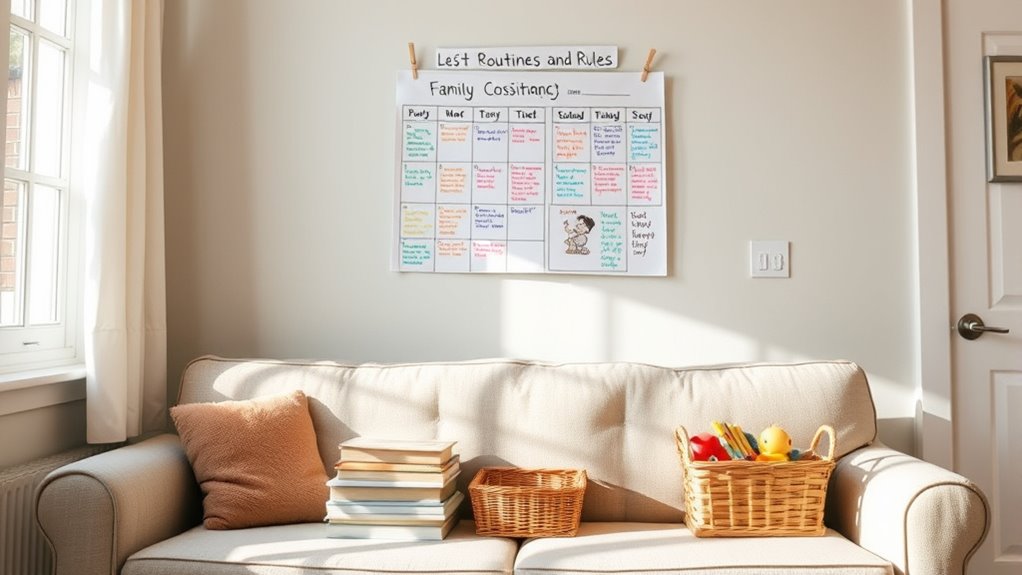

To create consistency between households, clearly establish shared responsibilities like chores and meal prep, and agree on routines such as bedtimes and screen time. Communicate regularly using respectful language and shared calendars to stay aligned. Use written lists and routines to reinforce expectations and reduce confusion. Stay flexible and patient, recognizing it takes time to adjust. By working collaboratively, you’ll build a stable environment—if you continue, you’ll discover more effective strategies to make it work smoothly.

Get gifts for the two of you delivered free with Prime
- Fast, free delivery on millions of items
- Prime Video, Amazon Music and more included
- Member-only deals all year
Key Takeaways
- Collaborate to establish shared routines and rules for chores, bedtime, and screen time to ensure consistency across households.
- Use clear communication, regular check-ins, and shared calendars to coordinate schedules and expectations effectively.
- Divide responsibilities clearly and create written lists to promote accountability and reduce household confusion.
- Maintain a predictable environment by organizing spaces and creating stable routines that offer children a sense of security.
- Practice patience, flexibility, and ongoing dialogue to adapt routines and resolve conflicts collaboratively over time.

Have you ever struggled with maintaining consistent routines or standards between households? It’s a common challenge, especially when trying to ensure that children experience stability and predictability. The key is establishing clear shared responsibilities and effective communication strategies. When both households work together, it becomes easier to create a unified environment where expectations are consistent and everyone feels supported.
Start by openly discussing responsibilities with everyone involved. This means talking about who handles specific chores, bedtime routines, homework checks, and meal preparations. When responsibilities are clearly divided, it reduces confusion and prevents tasks from falling through the cracks. Make sure everyone agrees on what needs to be done and when. Writing down these shared responsibilities can serve as a helpful reminder and promote accountability. When everyone understands their role, routines become smoother, and the household runs more harmoniously.
Effective communication strategies are crucial in maintaining consistency. Regularly check-in with each other to discuss what’s working and what isn’t. Use clear, respectful language and be open to feedback. For example, if you notice that a certain rule isn’t being followed consistently, address it calmly and collaboratively. Using tools like shared calendars or messaging apps can help keep everyone on the same page about schedules, rules, and changes. Consistent communication ensures that both households stay aligned, reducing misunderstandings and conflicting expectations.
It’s also important to agree on core routines and rules. Decide together on bedtime hours, screen time limits, chores, and mealtime habits. When all parties stick to these standards, children see a consistent message about expectations, no matter which house they’re in. This consistency not only helps children feel secure but also makes discipline and routine enforcement more straightforward. When rules differ markedly between households, children may become confused or test boundaries more often, which can complicate efforts to create stability.
Additionally, incorporating home improvement principles such as maximizing organization and decluttering can help create a more predictable environment, making routines easier to follow. This includes creating designated zones for activities and keeping common areas tidy, which fosters a sense of order and reduces stress.
Lastly, be flexible and patient as you establish these routines. It takes time to coordinate schedules and align expectations. Recognize that some differences are inevitable, but with ongoing communication and shared responsibilities, you can work through challenges. Remember, the goal is to create a supportive environment where routines are predictable and rules are fair. When everyone contributes and communicates openly, you build a foundation of stability that benefits everyone involved, especially the children.
As an affiliate, we earn on qualifying purchases.
Frequently Asked Questions
How Can I Handle Disagreements About Routines With My Co-Parent?
When disagreements about routines arise, you should focus on open communication strategies and conflict resolution. Talk calmly with your co-parent, listening to their concerns and expressing yours clearly. Find common ground by prioritizing your child’s best interests. Stay flexible and patient, working together to create consistent routines. Remember, respectful dialogue helps prevent conflicts and fosters cooperation, making routines smoother for everyone involved.
What Are Effective Ways to Introduce New Rules to Children?
Introducing new rules is like planting seeds in a garden; you start small, nurturing each one gradually. Use positive reinforcement to celebrate your child’s efforts, making the change feel rewarding rather than overwhelming. Implement rules gradually, allowing your child to adapt comfortably. This gentle approach builds trust and understanding, turning the process into a positive experience that encourages cooperation and growth over time.
How Do We Maintain Consistency During Holidays and Special Occasions?
During holidays and special occasions, you can maintain consistency by clearly communicating your expectations and routines beforehand. Prepare for holiday disruptions by creating flexible schedules that still incorporate key routines, like mealtimes or bedtime. Involve children in planning to help them adapt. Stick to familiar rules as much as possible, and gently remind them of routines to create a sense of stability amidst the excitement of special occasions.
What Tools Can Help Us Track and Enforce Household Routines?
Think of digital apps and visual charts as your household’s compass and map. These tools help you navigate routines by setting clear expectations and tracking progress. Use digital apps for reminders, checklists, and alerts, while visual charts offer a colorful overview of daily tasks. Together, they keep everyone on the same path, ensuring routines stay steady even when the scenery changes, making enforcement simpler and more engaging.
How Do We Address Resistance From Children When Changing Routines?
To address resistance from children when changing routines, start with positive reinforcement to encourage cooperation. Explain the benefits clearly and involve them in planning, making the shift smoother. Use gradual implementation to gradually introduce new routines, giving your child time to adapt. Consistency and patience are key, and praising their efforts along the way helps foster a positive attitude toward change.
Conclusion
By weaving routines and rules like a sturdy tapestry, you create a seamless fabric of consistency between households. This harmony acts as a guiding lighthouse, lighting the way through any stormy moments. When you nurture this connection, your shared rhythm becomes a gentle river, flowing smoothly and confidently. In this dance of cooperation, every step you take builds trust, turning chaos into calm and making your blended home a safe harbor for everyone.
Fall Picks
fall essentials
As an affiliate, we earn on qualifying purchases.